It was so clear that a minute was left” 🗣 “Perfect statement from SPFL” 🗣 “Thats only what can bring back the integrity of the league” SPFL releases official statement to address this invasion of celtic fans👀

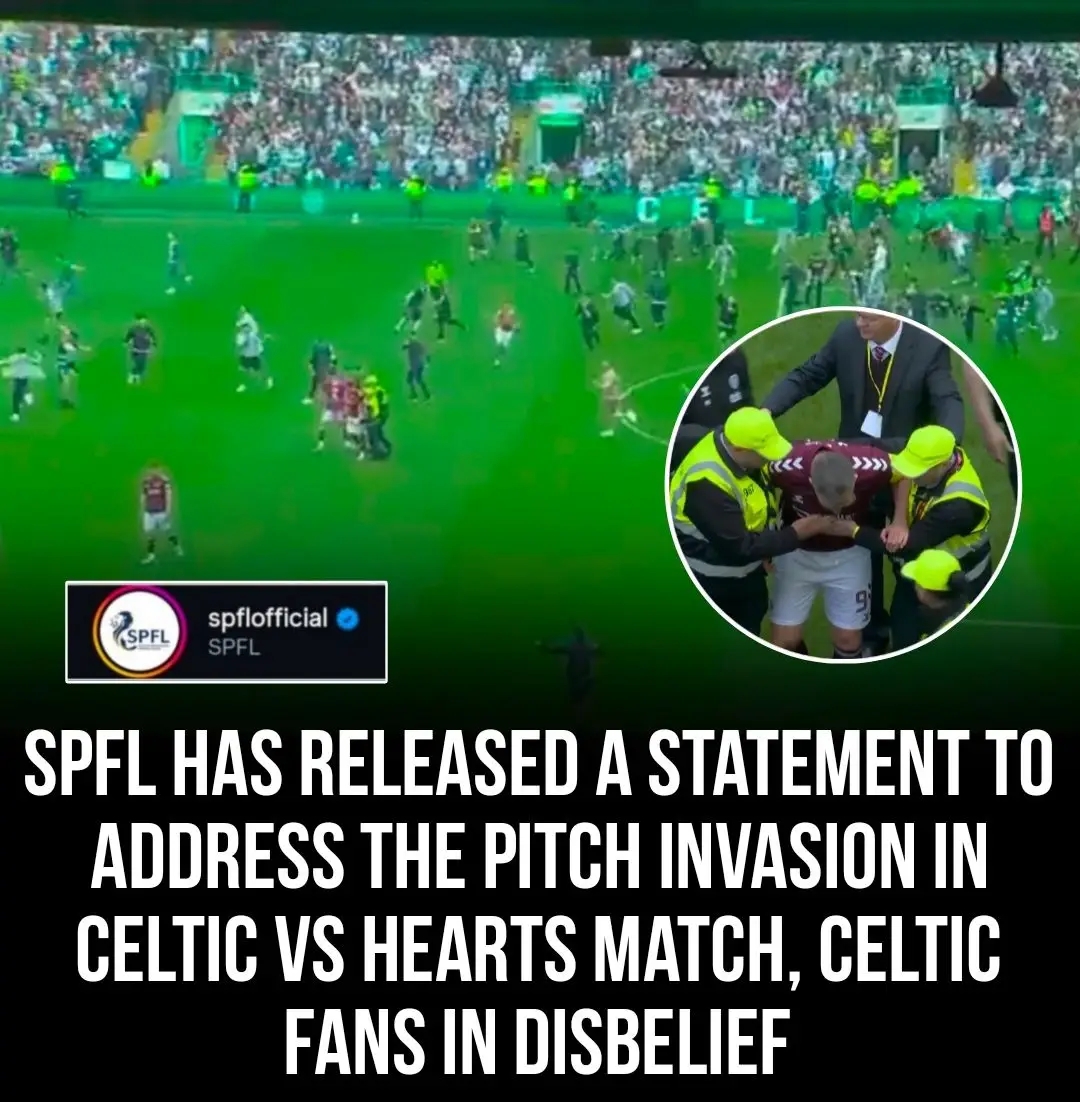
They thought they had seen every kind of drama Scottish football could produce, but what followed this latest SPFL statement pushed emotions even higher, dragging fans, clubs, and officials back into another storm of arguments, accusations, and heated debate about the integrity of the league. The reaction came fast, loud, and emotional, with supporters from all sides refusing to stay quiet.
It all started after a controversial match situation involving Celtic fans and a chaotic ending that many believe should have been handled differently. The SPFL has now released an official statement addressing what they described as an “invasion of Celtic fans,” and the response has split football fans right down the middle.
For some, the statement is a long-awaited act of authority, a clear attempt to restore order and control in a league that has been under constant pressure over officiating decisions, crowd behaviour, and VAR controversies. For others, it is yet another example of football authorities reacting too late, or focusing on the wrong issues while deeper problems remain unsolved.
The official words from the SPFL were firm and direct. One part of the reaction highlighted how crucial timing and game management should always be respected. Supporters pointed out a key phrase from the statement, where it was said, “It was so clear that a minute was left,” referring to the added time situation that sparked the original tension.
That single line has now been replayed across social media, dissected by fans who believe it confirms what they had been shouting about for days. For them, it is proof that clarity existed, but was not properly enforced in real time on the pitch. In their view, this is not just about one incident, but about a pattern of confusion and inconsistency that continues to damage trust in Scottish football.
Many supporters praised the SPFL for finally speaking out. One fan reaction that spread widely online called it a “perfect statement from SPFL,” suggesting that the league had finally taken the correct step in addressing the situation openly rather than hiding behind silence or vague comments.
For these fans, the importance of communication cannot be overstated. They believe football in Scotland has reached a point where every controversial moment becomes a national debate, and only clear, decisive leadership can stop the constant cycle of anger and speculation. In their eyes, this statement is at least a move in the right direction.
Another popular reaction described the statement as “what can bring back the integrity of the league.” That phrase quickly gained traction among supporters who feel that Scottish football has been struggling with trust issues for years. Between VAR disagreements, referee decisions, and fan confrontations, many believe the image of the league has taken repeated hits.
To them, integrity is not just a word, but the foundation of competition. Without it, they argue, every result becomes questionable, every decision becomes suspicious, and every victory is followed by doubt rather than celebration.
But not everyone agrees with the SPFL’s approach. Critics argue that statements like this often arrive after the damage has already been done. They claim that issuing official responses after matches does little to change what happened on the pitch, especially when fans feel decisions were inconsistent in real time.
Some also believe the focus on “invasion of fans” shifts attention away from deeper concerns such as officiating standards, VAR delays, and communication between referees and match officials. In their view, crowd reactions are often symptoms of frustration, not the root cause of the problem.
The incident itself, which triggered the statement, has been heavily discussed across Scottish football circles. Eyewitness accounts describe a tense atmosphere in the stadium as emotions boiled over in the final stages of the match. Some fans entered restricted areas or reacted aggressively to decisions they felt had gone against their team.
Security staff were forced to intervene, and stewards worked quickly to restore order. While no major injuries were reported, the situation was enough to raise serious concern among league officials and led directly to the SPFL’s public response.
Inside the stadium, players and coaches were also visibly affected. Some were seen arguing with officials, while others attempted to calm the situation. The emotional intensity of the match added fuel to an already heated environment, turning a normal post-match scene into something far more chaotic.
The SPFL’s statement aimed to draw a clear line between passionate support and unacceptable behaviour. It emphasized that while Scottish football is known for its intense fan culture, there are boundaries that must not be crossed. The league stressed the importance of safety, respect, and proper conduct at all times.
However, the reaction from fans suggests that trust remains fragile. Many supporters feel that authorities only act strongly when incidents become public scandals, rather than consistently managing issues before they escalate. This perception continues to create tension between governing bodies and the football community.
On social media, the debate quickly expanded beyond the original incident. Fans began comparing this situation to previous controversial matches, bringing up old VAR decisions, disputed penalties, and past disciplinary actions. What started as a single statement soon turned into a wider discussion about the state of Scottish football as a whole.
Some fans even called for structural changes within the SPFL, arguing that the league needs stronger communication systems, better referee training, and improved transparency in decision-making. Others defended the current system, insisting that mistakes are part of football and that emotions are naturally high in such competitive environments.
Football analysts have also weighed in, suggesting that the SPFL is under increasing pressure to modernize how it handles incidents like this. With technology playing a bigger role in the game, expectations for accuracy and accountability are higher than ever before. Any perceived mistake is now magnified instantly by millions of viewers online.
One of the biggest issues highlighted in discussions is the timing of decisions. The phrase “it was so clear that a minute was left” has become symbolic of the frustration many fans feel about game management. Whether referring to added time, stoppage time decisions, or VAR delays, the sense of confusion over timing continues to frustrate supporters across Scotland.
The SPFL, in its statement, attempted to reassure fans that measures are in place to prevent similar incidents in the future. They also reminded clubs of their responsibility to ensure proper conduct from players, staff, and supporters. But whether these assurances are enough remains to be seen.
For Celtic fans, the reaction has been mixed. Some feel unfairly targeted by the wording of the statement, arguing that passion should not be confused with misconduct. Others accept that certain moments crossed the line and believe the club must also take responsibility for controlling crowd behaviour.
Rival fans, meanwhile, have used the statement to fuel ongoing debates about fairness and bias in Scottish football. As always, every major incident becomes a battleground for opinion, with each side interpreting events through their own experiences and frustrations.
What is clear, however, is that this latest controversy has once again highlighted how emotionally charged Scottish football has become. Every decision, every statement, and every reaction is now magnified, analyzed, and debated in real time across social media platforms.
The SPFL now faces the challenge of turning words into action. Fans are no longer satisfied with statements alone. They want consistency, transparency, and visible improvements in how matches are managed and how decisions are communicated.
Until then, incidents like this will continue to spark outrage, division, and endless debate. And in a league where passion runs deep and rivalries are fierce, even a single phrase from an official statement is enough to ignite the entire football community once again.