🚨😱 Celtic fans are ABSOLUTELSFA update on the Celtic vs Hearts showdown ☘️🔥⚽ Social media has erupted with wild rumours, shocking accusations, and growing outrage — but there’s STILL no official confirmation from the authorities 👀📢 Now supporters are DEMANDING the truth as the controversy spirals completely out of control 😮💥 You won’t believe what’s being said online right now

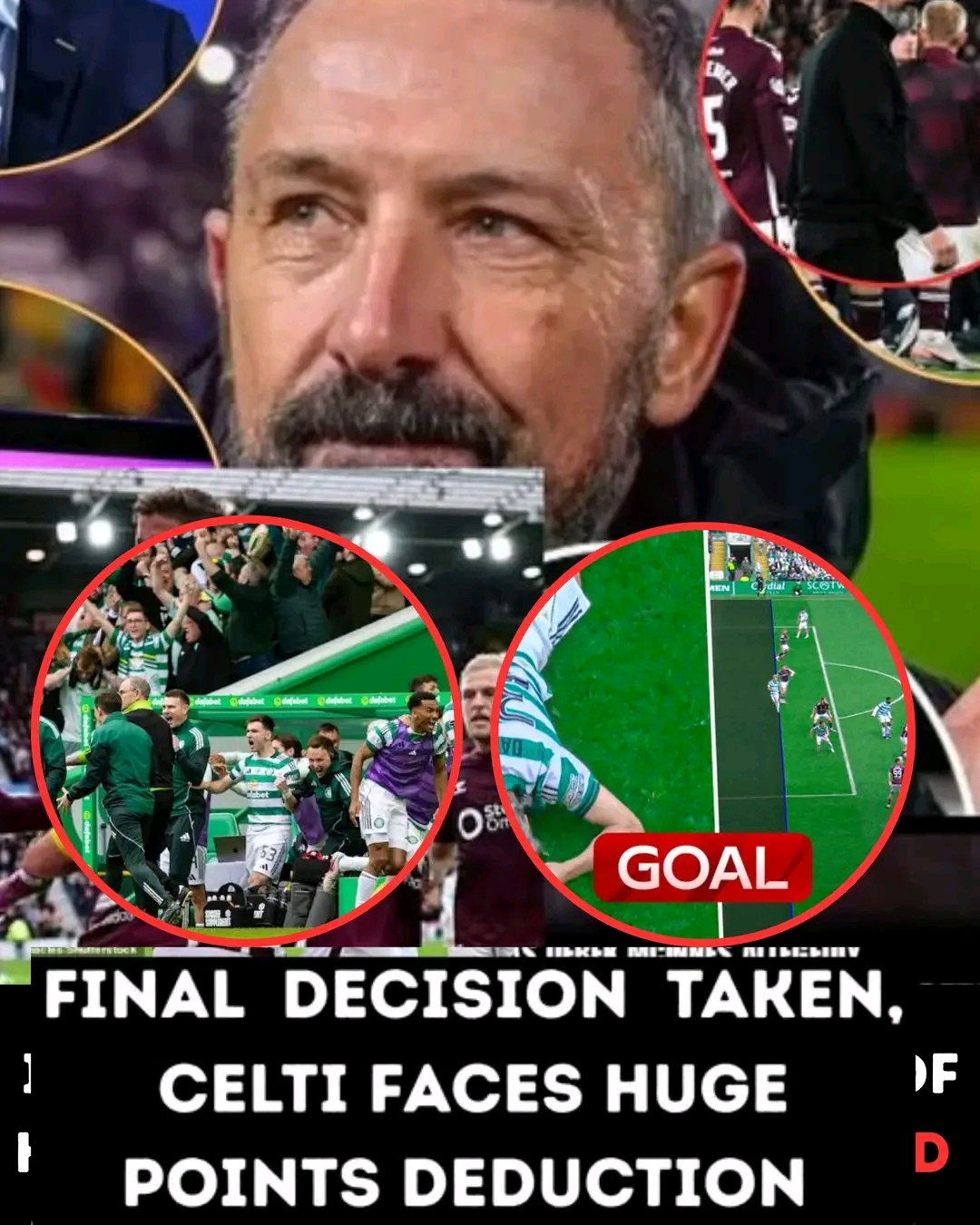
A wave of controversy has taken over Scottish football online after explosive claims began circulating surrounding the recent Celtic versus Hearts match and an alleged update involving the Scottish Football Association. What started as normal post-match discussion has now grown into a full-blown social media storm, with fans reacting in anger, confusion, and disbelief as rumours continue to spread faster than official clarification.
At the centre of the storm are supporters of Celtic F.C. and Heart of Midlothian F.C., who have flooded social platforms with claims, counter-claims, and emotional reactions following what they believe were controversial incidents during the match. However, despite the intensity of the online reaction, there has been no official confirmation or detailed statement from the Scottish Football Association addressing many of the claims currently being shared.
This silence has only intensified the situation.
In modern football, especially in high-pressure environments like the Scottish Premiership, the space between official communication and fan speculation often becomes a breeding ground for rumours. And in this case, that gap has grown rapidly into a storm of confusion.
The match itself was already high tension even before the controversy began. Celtic and Hearts have developed a competitive edge in recent seasons, with Hearts increasingly pushing to challenge the traditional dominance of Glasgow clubs. Every meeting between the two sides now carries extra pressure, with supporters expecting intensity, drama, and decisive moments.
But after this particular match, attention quickly shifted away from the football itself and onto alleged incidents that fans believe may have influenced the outcome.
Within hours of the final whistle, clips, screenshots, and edited video angles began circulating online. Some supporters claimed certain refereeing decisions were inconsistent. Others focused on VAR moments that they felt required more explanation. And as is often the case in the modern football era, each fan base interpreted the same incidents in completely different ways.
What makes this situation more complicated is the lack of official clarity.
No comprehensive explanation has yet been issued to directly address the claims being circulated. While routine match reports and referee summaries are expected after games, supporters are demanding more detailed answers regarding specific incidents that they believe were decisive.
This vacuum of information has allowed speculation to grow rapidly.
On social media platforms, posts questioning the integrity of decisions during the Celtic vs Hearts match have gained significant traction. Some users are claiming there were “serious inconsistencies” in officiating decisions, while others are accusing rival fans of deliberately misrepresenting incidents to create controversy.
However, it is important to note that none of these claims have been officially verified.
Despite this, emotions continue to rise.
Celtic supporters, in particular, have expressed frustration online, arguing that similar incidents in previous matches have not always been handled in the same way. Many feel that decisions involving marginal calls or VAR reviews are not applied consistently across different games.
Hearts supporters, on the other hand, have strongly defended the outcome of the match. They argue that refereeing decisions are part of the game and that emotional reactions after defeats or controversial moments often exaggerate incidents beyond their actual impact.
This divide has only made the online debate more intense.
As the discussion continues, the situation has taken on a life of its own. What began as match analysis has now evolved into a broader conversation about trust, transparency, and consistency in Scottish football officiating.
For many fans, this is not just about one game. It is about a pattern they believe has developed over time. Every controversial match adds another layer to existing frustrations, and every unclear decision becomes evidence for competing narratives.
The Scottish Football Association, which oversees refereeing and disciplinary matters, now finds itself at the centre of growing pressure. Supporters are calling for clearer communication, faster explanations, and more transparency regarding VAR decisions and officiating interpretations.
However, the governing body has remained largely silent on the specific allegations currently trending online.
This silence is being interpreted in different ways depending on perspective.
Some fans believe it simply reflects standard procedure, where internal reviews are conducted before any public statement is made. Others see the lack of immediate response as suspicious or concerning, further fuelling speculation.
The reality, however, is likely more procedural than dramatic.
Football associations typically avoid reacting to social media storms in real time, preferring to review match incidents through official channels before releasing any formal clarification. But in the fast-paced world of modern online discussion, delays often lead to growing frustration and increasingly extreme interpretations.
As the debate continues, former players and pundits have also weighed in, offering mixed opinions on the situation. Some have urged calm, reminding supporters that emotional reactions after big matches are normal and that refereeing decisions are rarely as straightforward as they appear in slow motion replays.
Others, however, have acknowledged that VAR and officiating consistency remain ongoing issues in football, not just in Scotland but across the global game.
One of the key challenges highlighted is the subjective nature of certain decisions. While technology has improved accuracy in areas like offside calls and goal-line decisions, interpretation-based incidents still leave room for disagreement. Fouls, handballs, and physical contact in the box often depend on context, positioning, and referee judgment.
This subjectivity is often where controversy begins.
And in this case, it appears to be the main source of disagreement among fans discussing the Celtic vs Hearts match.
Online, the debate has become increasingly emotional. Some supporters are sharing frame-by-frame breakdowns of incidents, attempting to prove their interpretation of events. Others are dismissing these analyses as selective or biased.
As more content circulates, the conversation becomes harder to follow and even harder to resolve.
This is a familiar pattern in modern football discourse.
A controversial moment occurs.
Replays are shared.
Opinions divide.
Narratives form.
And without a clear official explanation, those narratives grow independently across different fan communities.
In this case, the speed at which the situation escalated has surprised even regular observers of Scottish football debates.
Within a short time, the topic moved from post-match reaction to full-scale online controversy.
The phrase “controversy spiraling out of control” has been widely used by fans themselves, reflecting how quickly emotions have intensified.
However, it is also important to separate online reaction from verified fact.
At present, there is no confirmed evidence supporting many of the strongest claims being circulated. No official ruling has been issued suggesting misconduct or wrongdoing, and no formal disciplinary action has been announced.
What exists instead is a mixture of frustration, interpretation, and speculation.
Still, that has not stopped supporters from demanding answers.
Celtic fans, in particular, are calling for clarity on specific incidents, asking for detailed explanations from match officials and governing bodies. Some are requesting audio transparency from VAR discussions, while others want clearer communication protocols after high-profile matches.
Hearts supporters, meanwhile, are urging focus on the football itself, arguing that the match should not be overshadowed by controversy and online debate.
They point out that their team earned their performance on the pitch and that constant disputes over officiating undermine the achievements of players.
This clash of perspectives reflects a broader tension in modern football culture.
On one side is the demand for complete transparency and accountability in officiating. On the other is the belief that football must maintain flow, authority, and respect for referee decisions even when disagreements arise.
Balancing these two expectations has become increasingly difficult in the VAR era.
Every major league in the world is currently facing similar challenges.
Technology has improved accuracy in some areas, but it has also increased scrutiny, slowed down emotional moments, and amplified disagreements over marginal calls.
In Scotland, where football rivalries are already intense, these issues often become even more magnified.
The Celtic vs Hearts controversy is simply the latest example of how quickly a single match can evolve into a national talking point.
As of now, supporters are waiting for clarity.
They want official explanations.
They want transparency.
They want consistency.
And above all, they want trust restored in the process that governs key decisions in their matches.
Until that happens, the debate is likely to continue online, with new interpretations, reactions, and arguments emerging every hour.
What is clear, however, is that this situation highlights a growing reality in modern football: the gap between fans and officiating bodies is widening, and without timely communication, even ordinary match incidents can escalate into major controversies.
For now, everything remains unconfirmed.
But the noise around the Celtic vs Hearts match shows no sign of slowing down.
And in the world of football, where passion always runs high, silence often speaks louder than answers.