Manchester City Refuse to Rush “Suffering” Rodri Back as Guardiola Warns Against Risky Return

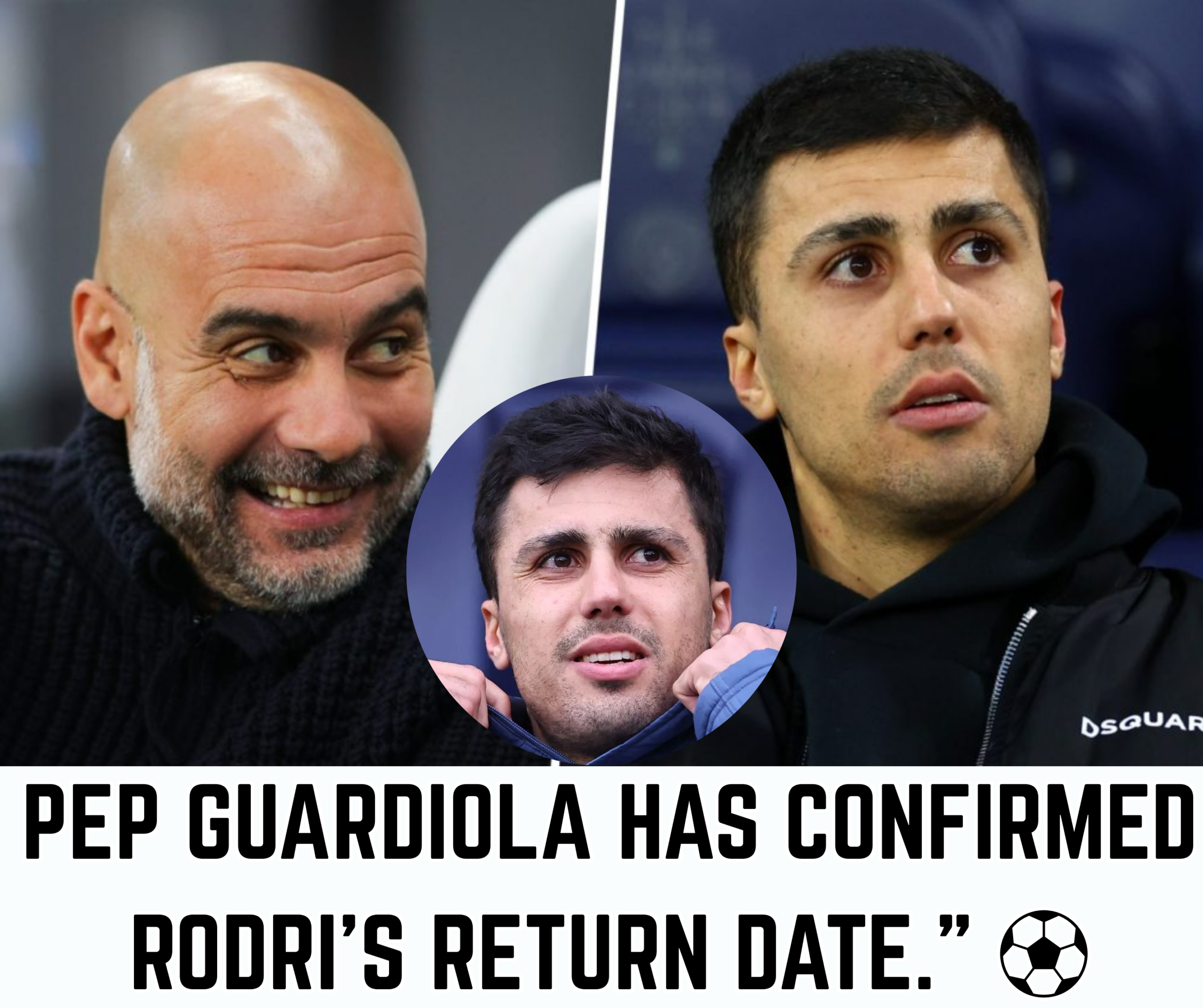
For Manchester City, the past two seasons have made something painfully clear: life without Rodri feels incomplete. The Spanish midfielder—often praised as the heartbeat of Pep Guardiola’s system—has spent far more time on the sidelines than either he or his club would have ever imagined. And now, even as City chase yet another Premier League title and prepare for another Champions League knockout run, their manager insists that the club must resist the temptation to hurry him back.
Rodri, 29, is still wrestling with the lingering effects of a hamstring problem that has severely limited his involvement this season. Guardiola, who spoke at length about the midfielder’s condition, admitted that his star player is “suffering” both physically and emotionally as he attempts to regain full fitness after a long and complicated recovery period.
Although Rodri did briefly return for a single minute earlier in November, he has not yet been deemed ready for consistent action. Guardiola emphasised that any return must be cautious and carefully managed, even as his team faces a crucial stretch of fixtures.
A Struggle Stretching Across Two Seasons
Rodri’s current setback stems from an injury he suffered during Manchester City’s Premier League match against Brentford on 5 October. In that game, he lasted barely 22 minutes before signalling that something was wrong. What initially appeared to be a minor issue has since evolved into a prolonged struggle, with Rodri featuring only once—coming on as a late substitute against Bournemouth on 2 November—during a two-month period.
Guardiola insisted that the midfielder is progressing and that his condition continues to improve, but the City manager refused to be drawn into committing to any precise return date. His message was clear: Rodri will only take the field again once City’s medical staff are absolutely confident he faces no risk of reinjury.
“He is getting better,” Guardiola said. “He will be ready in a few weeks, but I cannot say exactly when.”
For most players, a two-month absence would be significant. For Rodri, however, it comes on the back of a much more disruptive period. Since September 2024, his career has been overshadowed by the after-effects of a major knee injury—an ACL issue sustained against Arsenal in a 2–2 draw at the Etihad Stadium. That setback cost him almost an entire season and altered the physical balance that had previously allowed him to play 60–70 games a year with remarkable consistency.
Rodri’s Central Role in Guardiola’s City
Since joining Manchester City in the summer of 2019 from Atlético Madrid, Rodri has grown into the ultimate Guardiola midfielder—press-resistant, intelligent, tactically disciplined, and unfailingly reliable. His presence has been central to City’s recent domination of both domestic and European football.
Over the course of his Manchester City career, he has helped the club collect:
- Four consecutive Premier League titles
- A UEFA Champions League trophy
- An FA Cup victory
- A UEFA Super Cup
- A FIFA Club World Cup
Rodri became synonymous with control. When he played, City appeared calm, organised, and confident. When he was absent, chaos—comparative chaos, by City’s standards—tended to creep in.
That reality has become increasingly obvious as Guardiola continues to navigate this season with Rodri largely unavailable. City, still brilliant on their day, have shown unusual vulnerabilities in big moments, often struggling to protect leads or manage matches in the way they easily did when the Spaniard was orchestrating everything from the centre of the pitch.
Guardiola has never been shy about expressing Rodri’s importance, but his latest comments offer an unusually emotional glimpse into how deeply the team feels the midfielder’s absence.
Guardiola: “We Are Missing the Best Player in the World”
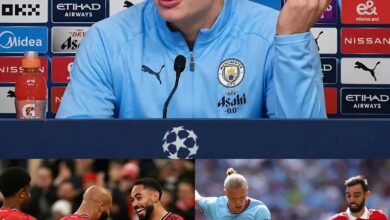
During his press conference ahead of City’s match against Sunderland, Guardiola reflected on the disruptive impact of playing without Rodri for such a long stretch.
At one moment, he was asked how the team had adjusted.
His response was passionate:
“Do you know what it means to play without the best player in the world two seasons ago? Our main player. When we won the Treble, he played almost 70 games.”
He paused before emphasising the scale of the loss:
“And now, a year and a half without him. Do you know what we miss? It’s a lot.”
Guardiola’s words underline more than tactical dependence; they reveal a sense of loss, a kind of emotional vacuum created when a leader and stabiliser is no longer present. Rodri has been a figure of quiet authority, someone the players instinctively rely on to maintain structure in moments of turbulence.
The manager’s assessment of Rodri’s current state was equally striking:
“He is suffering, he is struggling, because he wants to come back. But I want to protect him. I want to minimise the risk. I want him now—right now. For Madrid, for the next one, for all of them. But I cannot.”
It is not often Guardiola reveals this kind of vulnerable internal conflict—between his strategic instincts and his emotional desire to have a key soldier back in the squad.
But he knew what rushing a player back from such an injury could mean.
“After an ACL injured player, the body is completely different,” he reminded reporters. “If we push him now and he’s gone again for six weeks, what sense does that make?”
The Ballon d’Or, the Comeback, and the Setback
Rodri’s personal journey over the past year has been nothing short of dramatic.
Just one month after suffering his ACL injury in 2024, he was named the winner of the Ballon d’Or, recognising him as the world’s best footballer for the year. The award reflected both his near-flawless campaign for City and his stunning performances for Spain, who he helped guide to victory at the 2024 European Championship.
His remarkable consistency, intelligence, and tactical dominance had earned him global acclaim, culminating in football’s most prestigious individual honour.
But the triumph was bittersweet. He collected the award while wearing a knee brace, unable to walk without assistance, knowing he would face a long and grueling recovery before returning to the pitch.
Rodri eventually made his return at the tail end of the 2024–25 season, featuring in City’s final Premier League match and then participating in the Club World Cup in the United States, where he played in all four of City’s games.
But just when it seemed he was back for good, his body broke down again.
During City’s shock Club World Cup defeat to Al-Hilal, Rodri suffered another setback, this time involving muscular problems that later evolved into the current hamstring issue. This forced him to miss preseason and start the new campaign at less than full fitness.
So far this season, Rodri has played only eight matches across the Premier League and Champions League, logging just 415 minutes. For a player used to being among the most-utilised in Europe, the reduction has been drastic.
Absence Felt in City’s Most Chaotic Game of the Season
When Manchester City beat Fulham 5–4 earlier this week, many fans walked away exhilarated—but Guardiola was left with mixed emotions. Despite City building a 5–1 lead, Fulham nearly completed an improbable comeback.
Rodri watched from the sidelines.
Guardiola was asked whether the midfielder’s calmness and presence might have changed the chaotic final stages of the match.
His response was emphatic:
“Rodri is on another level. If he comes on, just for the last twenty minutes, do you know what the effect is? Even if he does not touch the ball, the other ten players feel safe. They play better.”
Guardiola compared Rodri’s absence to a professional suddenly being unable to do the work they love or excel at for long stretches.
“What would you do,” he asked the journalists, “if for eighteen months you could not do your job? You want to write, to express yourself, to show your quality, and you can’t. How would you feel?”
He answered his own question:
“You would feel bad. Of course he is sad. And I would be worried if he were not sad. That would mean he did not care.”
This emotional connection between Guardiola and Rodri reflects not just manager-player loyalty but a shared understanding of how central the midfielder is to City’s identity.
Upcoming Fixtures Add Pressure—But Guardiola Stays Firm
Manchester City’s schedule offers no relief. After facing Sunderland in the Premier League, they head to Spain to face Real Madrid—a team Guardiola respects immensely—in a crucial Champions League tie.
For City, these are the moments when Rodri’s leadership and balance are most needed.
But despite the importance of the matches ahead, Guardiola reiterated his determination not to succumb to pressure—whether from fans, pundits, or even Rodri himself.
“I want him desperately right now. In Madrid. Or the game after. But what if he plays and then misses six more weeks? That makes no sense.”
The message was unmistakable: Manchester City will not take short-term risks with their long-term cornerstone.
Rodri’s Emotional and Physical Battle
Though Guardiola did not share every detail of Rodri’s emotional state, he was candid enough to reveal that the player is dealing with more than just the physical frustration of being out injured.
Rodri’s personality has always been defined by discipline, humility, and an intense focus on self-improvement. He is known as one of the most meticulous professionals in the game, someone who studies opponents, tracks personal performance metrics, and constantly seeks ways to enhance his contribution.
For such a player, being unable to express himself on the pitch is especially painful.
Guardiola acknowledged this:
“He is strong, but he is human. And sometimes he is sad or frustrated. But that is normal. If he did not feel this way, if he was not concerned, that would worry me.”
There was another telling comment:
“Ahead of us, we have many things to face. Many difficult things. He needs to be there. And he will be there.”
This final statement carried both reassurance and urgency—proof that Guardiola sees Rodri as central to City’s ambitions, but also as a player who must be handled with care if he is to return in his full capacity.
Why Manchester City Cannot Afford Another Rodri Setback
Rodri’s importance becomes even clearer when considering the role he plays tactically.
1. He is City’s structural anchor.
No one else in the squad possesses the same combination of positional awareness, physical strength, passing range, and defensive timing. Without him, City often rely on makeshift solutions—John Stones stepping into midfield, Mateo Kovačić playing deeper, or youngsters like Rico Lewis taking on greater responsibility.
2. He prevents counterattacks almost single-handedly.
Guardiola’s system requires extremely high positioning from full-backs and midfielders. Without Rodri’s ball-winning and spatial management, City are easier to transition against.
3. He makes everyone around him calmer.
This is perhaps the most understated aspect of his influence. As Guardiola put it, Rodri’s presence alone can lower the team’s heartbeat and raise the level of everyone around him.
4. He is the leader with and without the ball.
While City boast other vocal and experienced players, Rodri’s leadership is expressed through stability and intelligence—a captain without the armband.
All these realities explain why Guardiola refuses to rush him back and why the club are adopting a conservative approach to his rehabilitation.
City’s Midfield Without Rodri: A Work in Progress
In Rodri’s absence, Guardiola has tried various midfield combinations.
- Matheus Nunes has been used more frequently, adding dynamism but lacking Rodri’s positional discipline.
- Kovačić has offered experience but not the same commanding presence.
- Lewis brings energy and versatility but is still young.
- Stones, when fit, provides control but cannot shoulder defensive midfield duties alone.
- Bernardo Silva can play anywhere but is not a natural replacement for the Spaniard.
The result is a midfield that occasionally sparkles but often lacks Rodri’s equilibrium. Matches become more open, more chaotic, and more reliant on individual brilliance than on collective control.
Guardiola’s Long-Term Thinking
The broader picture is clear: Guardiola is playing the long game. The manager knows that pushing Rodri too soon could jeopardise not just this season but next season as well.
An ACL injury followed by a complicated muscular recovery is not something any club can rush through safely. Guardiola himself acknowledged that a body recovering from a ligament rupture must adapt to altered biomechanics—muscles, tendons, and ligaments all react differently, making re-injury a real threat.
“We want to be smart,” he said. “Not emotional. Not desperate. Smart.”
It was a reminder that while football is built on passion and urgency, sports science requires patience and discipline.
Conclusion: Rodri Will Return—But Only on City’s Terms
Manchester City supporters may be desperate to see Rodri back on the pitch. Guardiola certainly is. And Rodri himself, by all accounts, is more than eager to return.
But the message coming from Manchester City is clear:
There will be no shortcuts. No gambles. No risky decisions.
Rodri will return only when his body is fully ready, when his movement is natural again, and when the medical staff give him the green light without hesitation.
Until then, Manchester City will have to adapt, improvise, and survive—just as they have done over the past eighteen months. But if Guardiola’s tone is any indication, the wait will be worth it.
City’s hopes for the rest of the season may depend on it