NEIL MAKES HIS CASE AS McINNES WEIGHS UP CROWDED FIELD OF CANDIDATES TO SUCCEED TAVERNIER AS RANGERS CAPTAIN


Derek McInnes still has a genuinely difficult decision on his hands when it comes to appointing his first Rangers captain, and the latest name to throw his hat firmly into the ring is summer arrival Dan Neil, whose composed and thoughtful interview on the subject has done nothing to hurt his chances of landing the armband before the new Scottish Premiership campaign gets under way. With James Tavernier’s eleven-year reign as captain now officially at an end, McInnes finds himself facing one of the more consequential early calls of his Ibrox tenure, and the sheer volume of credible candidates currently on his books only underlines just how much the summer rebuild has reshaped the leadership profile of his squad heading into the new season.
Tavernier’s departure leaves an enormous void to fill, both practically and symbolically. Handed the armband back in 2018 by then-manager Steven Gerrard, the attacking full-back went on to become one of the most decorated and consistent captains in the club’s recent history, guiding Rangers to major honours and a Europa League final while racking up eleven years of service in Govan. Replacing a figure of that stature was never going to be straightforward for any incoming manager, and McInnes has been careful throughout pre-season not to rush the decision, instead using the various warm-up fixtures as an extended audition process for a handful of candidates he clearly believes are capable of shouldering the responsibility.
Neil’s own path into that conversation has been a rapid one. The midfielder arrived at Ibrox as a free transfer following his contract departure from Sunderland, one of seven fresh faces to join the club this summer as part of a squad overhaul that has also seen four established names depart Govan. Given how recently he has walked through the Ibrox door, it might have seemed unlikely that Neil would already be considered a serious contender for the captaincy, but he was entrusted with the armband during Rangers’ behind-closed-doors friendly against South African side Kaizer Chiefs at the very start of the summer, an early show of faith from the coaching staff that has clearly continued to inform his standing within the squad as pre-season has progressed.
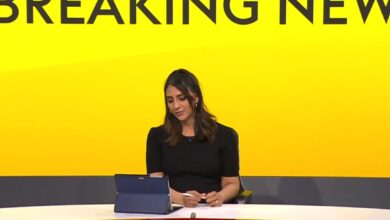
Speaking to Sky Sports News about the situation, Neil struck a notably measured tone, making clear that the decision ultimately rests with McInnes and stressing that he has not yet been told anything definitive about his own chances of landing the role. He indicated that were the responsibility to fall to him, he would embrace it without hesitation, but was equally quick to steer the conversation away from any sense that the captaincy should be viewed as a prize resting on a single individual. Instead, Neil expressed the view that Rangers are best served by cultivating a wider leadership culture spread across the dressing room, suggesting that everybody’s got leadership qualities in their own right rather than concentrating responsibility solely in whoever happens to wear the armband on a given matchday.
That kind of response, thoughtful, inclusive and notably free of any sense of entitlement, is precisely the sort of answer a manager weighing up a genuinely open captaincy decision would want to hear from one of his leading candidates. It suggests a player who understands that leadership in a modern dressing room extends well beyond the visible symbolism of the armband, and who is comfortable positioning himself as part of a broader collective rather than angling for personal recognition. Whether that mentality proves decisive in McInnes’s eventual thinking remains to be seen, but it certainly does Neil no harm to be seen articulating exactly the kind of team-first philosophy that managers up and down the country consistently look for when assessing potential captains.
Neil is far from the only name under serious consideration, however, and the list of alternatives McInnes has to weigh up illustrates just how much depth of leadership experience now exists within his squad. Ben Godfrey has also worn the captain’s armband at various points during pre-season since arriving at the club this summer, giving him his own claim to the role based on the trust already shown in him by the coaching staff. Should McInnes prefer to lean toward a more familiar face given the scale of change the squad has undergone, Dujon Sterling represents another option entirely, a player McInnes already knows well having called upon him earlier in the summer. Beyond those two, further leadership experience exists among the club’s other new arrivals, with both Lawrence Shankland and Vanja Dragojevic having previously captained their respective clubs, Shankland at Hearts and Dragojevic at Partizan, giving McInnes an unusually rich pool of leadership candidates to choose from as he finalises his decision.
Assembling that many credible options within a single summer transfer window is no small achievement in itself, and it speaks to a deliberate recruitment strategy that has prioritised bringing in players with genuine leadership pedigree rather than simply focusing on raw technical or physical attributes. Whether by accident or design, McInnes now finds himself with an embarrassment of riches when it comes to candidates capable of taking on the captaincy, a situation that, while undoubtedly a pleasant problem to have compared to a squad short on leadership qualities altogether, still requires him to make a definitive call that will inevitably disappoint some of those under consideration while elevating just one man to the position Tavernier occupied for over a decade.
The presence of so many credible options also raises interesting questions about how McInnes might choose to structure leadership more broadly within his squad, regardless of who ultimately ends up wearing the armband on matchday. Neil’s own comments hint at exactly this kind of thinking, floating the idea of a genuine leadership group operating across the dressing room rather than concentrating all responsibility in a single figurehead. Many modern football clubs have moved toward exactly this sort of model in recent years, appointing an official captain while also formally or informally recognising a wider circle of senior players who share responsibility for setting standards, managing dressing-room discipline and supporting younger or newly arrived teammates through the inevitable challenges of a long competitive season. Given the sheer number of new faces Rangers have brought in this summer, distributing leadership responsibilities more widely across several trusted figures, rather than placing the entire burden on one individual so early into their time at the club, might well represent the most sensible approach for McInnes to take as his rebuilding project gets under way.
There is also a broader symbolic dimension to this decision that McInnes will be acutely aware of given the significance Tavernier’s captaincy carried for Rangers supporters over the past decade. Whoever succeeds him inherits not just a role but a legacy, and the scrutiny that comes with being compared, fairly or not, to a captain who delivered major honours and led the club to European success will weigh differently depending on which candidate McInnes ultimately selects. A player like Shankland, already established as a boyhood Rangers supporter with prior captaincy experience at Hearts, might carry an emotional resonance with the fanbase that a more recently arrived figure like Neil or Godfrey simply cannot replicate, regardless of how well either of them has performed during pre-season. Equally, however, appointing a player with deep personal ties to the club is no guarantee of success in the role, and McInnes will be conscious that temperament, consistency and the ability to handle the unique pressures of Ibrox matter considerably more in the long run than sentimental considerations alone.
The timing of this decision also matters a great deal, with Rangers’ opening Scottish Premiership fixture against Dundee United fast approaching and supporters increasingly keen to know exactly who will be leading the team out at Tannadice. McInnes has shown no obvious signs of rushing the process purely to satisfy that external pressure, continuing to rotate the armband among various candidates throughout the pre-season programme rather than settling on a single leader well in advance of the competitive campaign beginning. That approach carries its own risks, potentially leaving the captaincy question unresolved right up until the eleventh hour and generating exactly the kind of prolonged speculation that has characterised media coverage of the situation throughout the summer, but it also reflects a manager determined to make the correct decision rather than a hasty one, using every available opportunity in pre-season to properly assess how each candidate handles the added responsibility before committing to his final choice.
For Neil specifically, being included so prominently in this conversation after such a short time at the club represents a significant early marker of the impression he has made since arriving on a free transfer from Sunderland. Free transfers can sometimes carry an unfair stigma in modern football, occasionally perceived as a lower-cost alternative to a more expensive permanent deal rather than a genuine statement of intent from a buying club, but Neil’s rapid integration into conversations about the captaincy suggests Rangers and McInnes see considerably more in him than simply a bargain addition to the midfield. His prior experience leading a Sunderland side through the demands of a promotion campaign will have given him a genuine taste of what it takes to captain a team under pressure, even if the specific demands of leading Rangers, one of Scottish football’s two dominant institutions, operate on an entirely different scale to anything he will have previously experienced south of the border.
Ultimately, McInnes’s final decision will likely come down to a combination of factors that extend well beyond simply identifying the most talented individual within his squad. Consistency of performance, the ability to communicate effectively both on the pitch and in the dressing room, resilience under the unique media scrutiny that comes with representing a club of Rangers’ size, and a genuine connection with the supporters will all factor into his eventual thinking, and it remains entirely possible that the eventual answer could differ from whichever name currently appears to be the most obvious frontrunner based purely on pre-season media coverage and public perception. What is clear, regardless of which candidate ultimately wins out, is that Rangers now possess considerably greater strength in depth when it comes to leadership qualities across the dressing room than they perhaps have for some time, a genuinely encouraging sign for a club in the early stages of a significant rebuilding project under new management.
There is also a lesson to be drawn from how other clubs have historically approached the aftermath of losing a long-serving captain, a situation that Rangers now find themselves navigating for the first time in over a decade. Clubs that have handled these transitions well tend to share a common thread: rather than searching purely for a direct stylistic replica of the outgoing captain, the most successful appointments often come from identifying whichever player within the current squad best embodies the values and standards the club wishes to project going forward, even if that player’s on-field profile looks nothing like their predecessor’s. Tavernier, an attacking full-back who redefined what leadership from that position could look like, was himself something of an unconventional choice when Gerrard first handed him the armband back in 2018, and the fact that appointment went on to prove such an enduring success offers McInnes some reassurance that conventional wisdom about which positions typically produce captains need not necessarily dictate his own thinking this time around.
It is also worth considering how the captaincy decision might interact with the broader tactical framework McInnes is looking to build at Ibrox. A defensive midfielder like Neil, operating in a position from which he can see the whole pitch unfold in front of him and organise teammates both in and out of possession, arguably occupies one of the more naturally advantageous locations on the field from which to exercise on-field leadership, in contrast to a forward whose focus during matches is necessarily concentrated on finding space in the final third rather than dictating the broader shape of the team. That is not to suggest positional logic alone should determine McInnes’s final decision, since plenty of history exists across football of strikers and wide players proving outstanding captains despite occupying less obviously commanding vantage points on the pitch, but it does offer one additional layer of consideration McInnes will likely be weighing up as he finalises his thinking.
The involvement of Kaizer Chiefs in Neil’s early captaincy audition is itself a small but interesting detail worth dwelling on. Behind-closed-doors friendlies of that nature rarely attract significant public attention, and the decision to hand Neil the armband in a fixture played away from the scrutiny of supporters and media suggests McInnes may have been using that particular match specifically as a low-pressure environment in which to assess how the midfielder handled the responsibility, free from the kind of external noise that inevitably accompanies more high-profile pre-season fixtures against clubs like Saint-Etienne or West Ham United. If that was indeed the thinking behind the decision, it would represent a shrewd piece of man-management from McInnes, allowing Neil the chance to grow into the role gradually rather than being thrust into the position for the very first time in front of a packed Ibrox crowd or live television cameras.
As the countdown to the new Scottish Premiership season continues, all eyes will remain fixed on Ibrox for confirmation of exactly who McInnes has settled on to lead his side into the new campaign. Neil’s composed and team-oriented response to questions about the captaincy has done his own case no harm whatsoever, but with Godfrey, Sterling, Shankland and Dragojevic all offering their own compelling arguments for consideration, McInnes faces what genuinely looks like one of the more finely balanced captaincy decisions any Rangers manager has had to make in recent memory. Whoever he ultimately chooses will do so knowing they carry the weight of Tavernier’s considerable legacy on their shoulders, but with such a strong supporting cast of leaders now assembled around them, whoever wears the armband first will at least do so within a dressing room clearly not short of individuals willing and able to share that responsibility.