Hearts’ Midfield Mirage: The Devlin Departure and the Mendy Pursuit That Highlights a Struggling Club

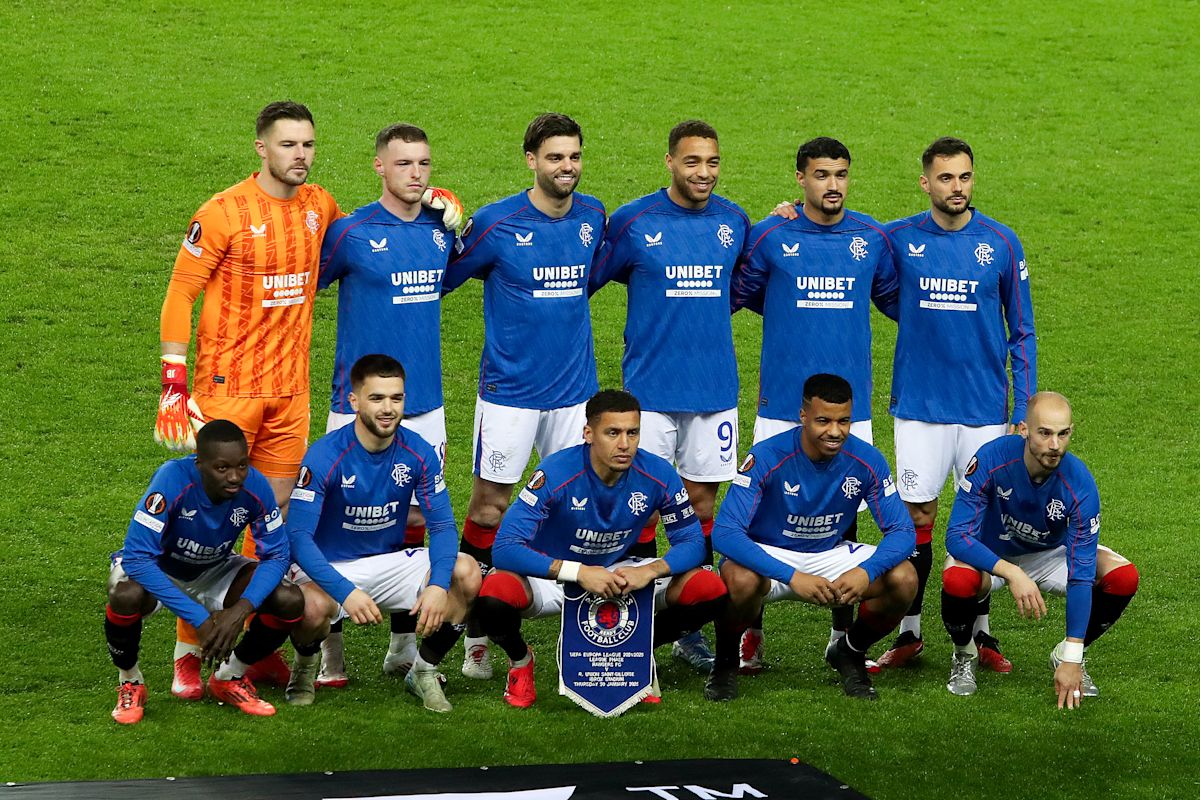
Hearts Football Club has experienced a particularly difficult summer as Glasgow Rangers has systematically identified and acquired some of the Edinburgh club’s most important players. The exodus from Tynecastle represents far more than coincidental departures; it reflects a deliberate and remarkably effective recruitment strategy executed by Derek McInnes and the Rangers hierarchy that has left Hearts in a significantly weakened competitive position.
The departures began with Derek McInnes himself, the manager who had provided Hearts with a period of stability and direction following his appointment. While managerial changes are relatively routine in professional football, the specific circumstances of McInnes’ departure to Rangers carried particular significance. McInnes did not merely depart as a manager seeking a new opportunity; he departed possessing intimate knowledge of Hearts’ playing personnel, tactical systems, and competitive vulnerabilities. This knowledge, combined with Rangers’ financial resources, created the foundation for a systematic recruitment campaign targeting Hearts’ best players.
The subsequent acquisition of Lawrence Shankland represented the departure of Hearts’ most important attacking player. Shankland had established himself as one of the Scottish Premiership’s most consistent goalscorers, representing Hearts’ primary source of offensive threat. His departure to Rangers left Hearts with a significant void in their attacking lineup and removed a player who had been central to the club’s competitive identity.
Most recently, the departure of Cammy Devlin has completed a trio of significant losses that fundamentally weakens Hearts’ competitive prospects. Devlin’s acquisition by Rangers, reuniting him with McInnes under circumstances where the manager understands the player thoroughly, deprives Hearts of an important midfield contributor and signals an apparent lack of strategic resistance to Rangers’ recruitment advances.
This systematic dismantling of Hearts’ squad represents perhaps the most damaging element of the summer’s transfer activity for the Leith club. Rather than representing coincidental player departures, the pattern reveals an effective recruitment strategy by Rangers that has exposed Hearts’ fundamental vulnerability as a smaller institution competing against better-resourced rivals.
Cammy Devlin’s departure leaves Hearts with a genuine midfield crisis. The Australian midfielder, despite struggling initially with the demands of Scottish football, had established himself as an important contributor to Hearts’ competitive structure. His work-rate, defensive contribution, and ability to disrupt opposition play represented qualities that Hearts will struggle to replace easily or quickly.
During the previous season, Devlin ranked among the division’s most active midfielders in terms of defensive contribution. His 113 tackles during the season—the most in the entire division—represented an extraordinarily high level of defensive engagement and disruption. Beyond pure tackle numbers, Devlin’s positioning, game intelligence, and ability to read opposition play made him a genuinely valuable player within Hearts’ midfield structure.
The loss of Devlin’s contributions represents far more than losing a single player’s statistics. It represents the loss of a midfielder who understood Hearts’ tactical requirements, had developed familiarity with teammates, and had progressively established himself as a reliable performer. Replacing such a player requires finding an individual possessing similar qualities—defensive intensity, work-rate, tactical intelligence, and experience at the appropriate competitive level.
Hearts’ subsequent pursuit of Laurent Mendy from Forest Green Rovers appears motivated by recognition of this requirement. However, examining this pursuit reveals the precarious position Hearts now occupies in the transfer market and the particular challenges confronting the Edinburgh club as it attempts to rebuild following the departures of McInnes, Shankland, and Devlin.
The pursuit of Laurent Mendy represents Hearts’ attempt to address their midfield deficiency through acquisition of an established performer from a lower-level English club. Forest Green Rovers operates in the English National League—a level of football several rungs below the English Football League itself. The fact that Hearts is pursuing a midfielder from this level speaks volumes about the Edinburgh club’s current market position and competitive leverage.
Mendy, at 29 years old, represents an established performer who has functioned effectively at lower English football levels. His previous experience with Macclesfield FC and current performances at Forest Green Rovers under Robbie Savage suggest a player of some quality, but also a player whose career trajectory has stalled at relatively modest competitive levels. A midfielder of significant quality would typically advance from the National League to higher English football tiers or secure opportunities at Scottish Premiership level; Mendy’s presence at Forest Green Rovers at age 29 suggests limited upward career trajectory.
However, for Hearts’ immediate purposes, Mendy potentially offers something valuable: experience, established midfield capability, and the kind of player who understands professional football demands. A player like Mendy, transitioning from National League football to the Scottish Premiership, would require adaptation to the elevated quality and pace of Scottish football. Yet he would simultaneously provide experience and professionalism that might address Hearts’ immediate midfield deficiency.
The problem confronting Hearts’ pursuit involves not the player’s suitability but rather Forest Green Rovers’ unwillingness to facilitate his departure. Robbie Savage, the Forest Green Rovers manager, has been explicit in stating that Mendy is not for sale. Rather than viewing Mendy as a player available for transfer, Savage describes him as integral to Forest Green’s promotion ambitions and explicitly states that the club has no intention of selling their “best player” at this crucial stage of the season.
Savage’s stance, while frustrating for Hearts, reflects sound strategic thinking. Forest Green Rovers operates in a league where success requires maintaining squad stability and preventing the departure of key players who might influence promotion prospects. Mendy’s departure to the Scottish Premiership would represent exactly the kind of loss that could materially impact Forest Green’s competitive prospects. Savage’s refusal to facilitate the transfer, despite Hearts’ apparent interest, demonstrates that lower-level clubs can maintain negotiating power when confronted with interest from higher-level institutions.
The Mendy pursuit and Forest Green Rovers’ refusal to facilitate his departure reveal something crucial about Hearts’ current market position within football’s hierarchy. Hearts has historically represented one of Scottish football’s significant institutions, possessing resources, supporter base, and competitive history sufficient to function as a major club.
However, the systematic departures of McInnes, Shankland, and Devlin have exposed Hearts’ vulnerability to better-resourced competitors. While Hearts operates as a respectable Scottish Premiership club, Rangers possesses greater financial resources and competitive standing. When Rangers identifies Hearts players it desires, the Glasgow club can typically acquire them—Shankland and Devlin were acquired despite Hearts’ apparent desire to retain them.
This competitive imbalance has begun affecting Hearts’ transfer market leverage even with lower-level institutions. Forest Green Rovers, operating several divisions below Scottish football’s top tier, maintains confidence that refusing Hearts’ interest in Mendy will not result in catastrophic consequences. The club can resist Hearts’ pursuit because alternative options exist and because maintaining squad stability at their level takes precedence over accommodating bids from higher-level clubs.
For Hearts, this represents a particularly uncomfortable position. The club cannot compete with Rangers’ financial resources and cannot leverage significantly greater competitive standing when dealing with much smaller institutions. Hearts is effectively squeezed between superior competitors above and confident competitors at lower levels.
Amid Hearts’ struggles following Devlin’s departure, an intriguing alternative possibility has emerged: the potential return of John Souttar to Tynecastle. Souttar, the Scottish centre-back, departed Hearts for Rangers in 2022, representing part of the larger movement of Hearts players to Ibrox that has accelerated during summer 2026.
Souttar’s potential return to Hearts would represent a remarkable reversal of fortune and would highlight the fundamental instability characterizing his Rangers career. Despite being a Scotland international and an established performer, Souttar has been relegated to peripheral status at Rangers under Derek McInnes. His exclusion from pre-season preparations in Spain signals clearly that McInnes does not envision Souttar as part of his future plans.
The prospect of Souttar returning to Hearts carries multiple dimensions. From Hearts’ perspective, Souttar would represent the recovery of an established defender who understands the club, knows Scottish Premiership demands, and possesses the kind of mental toughness necessary for elite-level football. His return would represent an acknowledgment of Hearts’ willingness to rebuild and a potential signal of institutional humility—accepting a returning player who had previously departed.
From Souttar’s perspective, a return to Hearts would offer the certainty of regular first-team football, recovery of his starting role at a significant Scottish club, and the opportunity to rehabilitate a Rangers career that has stalled under McInnes’ management. Rather than remaining at Rangers in peripheral status with limited competitive opportunities, Souttar could secure regular playing time at Hearts.
However, the prospect of Souttar returning also highlights institutional failure on Hearts’ part. That a defender who was sufficiently valuable to be acquired by Rangers in 2022 can now be discarded by Rangers and potentially return to his previous club speaks volumes about the deterioration of Hearts’ competitive standing and the specific failures characterizing the club’s management and strategic positioning.
The departure of Derek McInnes to Rangers has left Hearts without established, proven management. The appointment of Wouter Vrancken as head coach represents a transitional solution, but the circumstances suggest some degree of reactive decision-making rather than strategic planning.
Vrancken’s task involves taking over management of a club that has just lost three important players to Rangers, that faces significant midfield deficiency, and that has been destabilized by the unexpected departure of the previous manager. He inherits a squad requiring reinforcement and a club needing to demonstrate that it remains a viable competitive institution despite the departures and setbacks of the summer.
The challenge confronting Vrancken involves establishing credibility and direction at a club that has experienced significant disruption. Rather than representing a carefully planned managerial succession, his appointment appears somewhat reactive—a necessary response to McInnes’ departure to Rangers rather than part of a predetermined long-term strategy.
What has become apparent from the summer’s transfer activity is that Hearts occupies a significantly weakened position within Scottish football’s competitive hierarchy. While Hearts remains a substantial Scottish Premiership club, the systematic departures to Rangers have exposed fundamental vulnerabilities in the club’s ability to retain important players or to resist larger competitors’ recruitment advances.
This diminished status has implications extending beyond simply the loss of important players. It affects Hearts’ ability to attract new talent, to negotiate effectively with lower-level institutions, and to project an image of a club capable of sustained competitive success. When Rangers can systematically acquire Hearts’ best players, and when Forest Green Rovers can confidently refuse Hearts’ interest, it suggests that Hearts is no longer perceived as a premier destination or as an institution capable of leveraging superior competitive standing.
As Hearts contemplates its transfer strategy moving forward, the club faces limited practical options. The budget constraints that characterize most Scottish football institutions become more acute when attempting to replace departing quality players. Rather than seamlessly replacing Devlin, Shankland, and McInnes with equivalent quality, Hearts faces the reality that recruitment must target players at lower competitive levels than those being lost.
The pursuit of Laurent Mendy represents this downward trajectory. While Mendy may prove adequate for Scottish Premiership football, he represents a step down from the quality represented by Devlin. Hearts is not simply replacing Devlin with an equivalent; the club is replacing him with an alternative operating from reduced competitive levels.
This pattern of replacement-at-reduced-quality is sustainable only if Hearts can identify talented players at lower levels capable of developing into significant performers. The Mendy pursuit, from this perspective, represents more than simply filling a midfield void—it represents an attempt to acquire emerging talent at lower levels who might subsequently develop into important performers.
However, Forest Green Rovers’ refusal to facilitate Mendy’s departure suggests that identifying and acquiring such talent requires negotiating with institutions confident in their valuations and unwilling to sell key players simply because higher-level clubs express interest.
Hearts’ situation reflects the fundamental pressures affecting smaller clubs competing in a landscape dominated by better-resourced rivals. While Hearts is not genuinely “small” in absolute terms—the club remains a significant Scottish Premiership institution—it is relatively small when competing against Rangers and Celtic.
This relative smallness becomes apparent in the transfer market. Hearts cannot match Rangers’ financial capacity, cannot offer equivalent prestige or resources, and consequently cannot compete effectively when Rangers decides to recruit from Hearts. Hearts also cannot leverage significantly greater standing when negotiating with lower-level institutions, who increasingly view Hearts as simply another option rather than as an institution possessing obvious hierarchical superiority.
Managing within these constraints requires sophisticated strategic thinking, effective institutional planning, and realistic assessment of competitive positioning. The evidence from summer 2026 suggests that Hearts is struggling to execute this kind of strategic thinking and realistic assessment.
Wouter Vrancken’s task at Hearts involves attempting to rebuild a squad that has been significantly weakened by departures and to establish Hearts as a competitive force despite the club’s diminished market position. This represents a genuine managerial challenge requiring both tactical capability and strategic vision.
Vrancken must identify players capable of functioning effectively at Scottish Premiership level while operating within the budget constraints that characterize Hearts. He must establish credibility at a club experiencing significant transition and must demonstrate that Hearts remains a viable competitive institution despite the setbacks and departures of the summer.
The Mendy pursuit suggests Vrancken’s recruitment strategy will emphasize identifying quality players at lower competitive levels and attempting to develop them for Scottish Premiership football. This approach is entirely rational and potentially effective—many players have successfully transitioned from lower levels to Scottish Premiership success.
However, the success of this approach depends entirely on Vrancken’s ability to identify talent, to develop players effectively, and to build a cohesive team from players arriving from diverse backgrounds and competitive levels.
The possibility of John Souttar returning to Hearts carries symbolic weight extending beyond simple player acquisition. Souttar’s departure to Rangers in 2022 represented confidence that Rangers represented a superior destination and that Souttar would progress in his career through the transfer.
His potential return, following diminished status at Rangers, would represent a reversal of that trajectory. It would suggest that the 2022 transfer was not the career progression it appeared to represent and that Hearts remains a viable destination even for players who have departed for apparently superior opportunities.
For Hearts as an institution, Souttar’s return would require accepting a player who had previously left the club—an acknowledgment of past judgment that the player was not sufficiently important to resist his departure. Simultaneously, the return would represent an attempt to recover institutional standing by successfully recruiting an established defender capable of functioning at Scottish football’s highest levels.
The summer of 2026 has exposed Hearts’ fundamental vulnerability within Scottish football’s competitive hierarchy. The systematic departures to Rangers, combined with difficulties recruiting replacements at equivalent quality levels, have highlighted the Edinburgh club’s limited ability to resist larger competitors and to project confidence within the transfer market.
Hearts faces a critical juncture. The club must demonstrate that it can successfully rebuild following the Shankland, Devlin, and McInnes departures. Success requires identifying quality talent at lower competitive levels, developing that talent effectively, and constructing a cohesive team capable of competing at the highest Scottish levels.
The Mendy pursuit, while representing a reasonable recruitment strategy, also highlights Hearts’ diminished market position. A Scottish Premiership club should possess sufficient leverage to acquire talented midfielders from lower English levels; that Forest Green Rovers can confidently refuse Hearts’ interest suggests Hearts is no longer perceived as possessing obvious hierarchical superiority.
Wouter Vrancken’s managerial task involves rebuilding Hearts from this diminished position. The club must recover competitive standing, reestablish institutional credibility, and demonstrate that Hearts remains a viable destination for players and a genuine contender for Scottish football’s major honors.
Whether Vrancken can accomplish this task remains to be determined. What is certain is that Hearts’ summer of 2026 has exposed significant institutional vulnerabilities and has demonstrated the particular pressures facing Scottish clubs competing against better-resourced rivals like Rangers. The coming season will prove crucial in determining whether Hearts can successfully navigate these challenges or whether the club will face a prolonged period of competitive difficulty and institutional instability.
The Mendy pursuit and the potential Souttar return represent Hearts’ attempts to address immediate deficiencies and maintain competitive standing. Whether these recruitment strategies prove sufficient to restore Hearts’ competitive position and institutional standing remains one of the most intriguing questions facing Scottish football heading into the new season.