Manchester City Eye Premier League Rival’s Manager as Pep Guardiola’s Potential Successor: Comprehensive Analysis of the Succession Planning at the Etihad

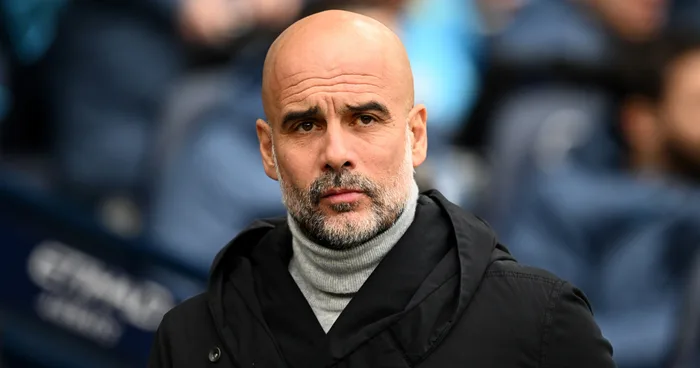
The timing of these reports is particularly intriguing given that Guardiola only recently committed his future to Manchester City by signing a contract extension in November 2024 that keeps him at the Etihad Stadium until June 2027. However, the nature of modern football management, combined with Guardiola’s own previous statements about his future, has created an atmosphere where succession planning has become not just prudent but essential for a club of Manchester City’s stature and ambitions.
The manager who has emerged as a leading candidate to potentially succeed the legendary Catalan is none other than Enzo Maresca, currently performing admirably in his role as Chelsea manager. This connection is far from random, as Maresca has deep roots within the Manchester City organization, having served in various coaching capacities at the club before taking his talents to Stamford Bridge. The Italian tactician’s familiarity with City’s philosophy, playing style, and organizational structure makes him an intriguing and logical candidate for what would undoubtedly be one of the most pressure-filled appointments in world football
Before delving into potential successors, it’s crucial to understand the magnitude of what Pep Guardiola has achieved at Manchester City since his arrival in 2016. The Catalan manager has fundamentally transformed the club, elevating it to unprecedented heights both domestically and in European competition. His trophy haul includes six Premier League titles, making Manchester City the dominant force in English football over the past decade. The crowning achievement came in the 2022-23 season when City completed the treble, winning the Premier League, FA Cup, and Champions League – a feat that cemented Guardiola’s place among the greatest managers in football history.
Beyond the silverware, Guardiola has revolutionized how Manchester City plays football. His intricate passing patterns, positional play, and tactical flexibility have set new standards in the Premier League and influenced coaching philosophies across the globe. The way City builds from the back, suffocates opponents through possession, and creates scoring opportunities through patient, methodical build-up play has become the benchmark against which other teams measure themselves
Guardiola’s influence extends far beyond match results and trophy cabinets. He has fundamentally altered Manchester City’s identity, transforming them from a club known primarily for its financial resources into an institution recognized for its footballing excellence and innovation. The academy has been restructured to reflect Guardiola’s principles, ensuring that young players develop with an understanding of the playing style they may eventually be asked to implement at the senior level. This holistic approach to club development represents perhaps Guardiola’s most enduring legacy.
The infrastructure improvements implemented during Guardiola’s tenure have been equally impressive. The training facilities at the City Football Academy have been enhanced to provide players with every possible advantage, from cutting-edge sports science facilities to tactical analysis rooms equipped with the latest technology. These investments reflect Guardiola’s meticulous approach to preparation and his belief that marginal gains in multiple areas can combine to create significant competitive advantages
Despite the contract extension signed in November 2024, there is reportedly “growing anticipation” within football circles that Guardiola may depart Manchester City at the end of the current season or the one following. This speculation isn’t based merely on rumor or conjecture but rather on Guardiola’s own words and his well-documented history of relatively short tenures at his previous clubs, Barcelona and Bayern Munich.
The pattern is clear: Guardiola typically stays at a club for a defined period, implements his vision, achieves remarkable success, and then moves on before the inevitable staleness that can affect even the most successful coach-team relationships sets in. At Barcelona, he spent four intensely successful seasons before stepping away, citing the mental and physical exhaustion that comes with managing at the highest level. His three-year stint at Bayern Munich, while successful, ended with similar themes emerging about the demands of the job and the need for renewal
The most revealing insights into Guardiola’s thinking come from his own statements, particularly those made to ESPN Brasil in May. In characteristically frank terms, the 53-year-old manager stated: “After my contract with City, I’m going to stop. I am sure. I don’t know if I’m going to retire, but I’m going to take a break.” These words carry significant weight, suggesting that Guardiola has already mentally mapped out his timeline at Manchester City and envisions a period away from the relentless pressure of elite-level management.
This admission aligns with comments made by Carles Planchart, Guardiola’s former assistant, who has publicly suggested that his longtime colleague needs a break from the game. Planchart’s insights are particularly valuable given his intimate knowledge of the demands Guardiola places on himself and the toll that his all-consuming approach to management takes on his physical and mental wellbeing.
However, Guardiola also demonstrated his continued commitment and passion for the job in more recent comments. When asked about his future plans and the suggestion that he should take a break, Guardiola responded with characteristic determination: “At the moment, I think I have the energy with my players to simply make a better season than last season. There is the margin that we can do better in many aspects and that gives me the energy that it’s not job done. It’s completely unfinished business. That’s why I am here.
These seemingly contradictory statements – commitment to stopping after his contract while simultaneously expressing hunger for improvement – capture the complexity of Guardiola’s situation. He remains deeply invested in Manchester City’s project and driven by the pursuit of perfection, yet he’s also acutely aware of the toll this relentless pursuit takes and the need for eventual renewal, both for himself and potentially for the club.
The identification of Enzo Maresca as a potential successor to Guardiola is far from arbitrary. The 44-year-old Italian has extensive connections to Manchester City that span multiple roles and provide him with an intimate understanding of the club’s culture, philosophy, and operational methods. This insider knowledge could prove invaluable in what would be an extraordinarily challenging transition.
Maresca’s relationship with Manchester City began during the 2020-21 season when he was appointed to lead the club’s under-21 team. This role, while perhaps not grabbing headlines, was crucial in his development as a manager. It provided him with direct exposure to the Manchester City way of doing things, from the training ground routines to the tactical principles that underpin the club’s playing style. More importantly, it gave him experience working within the City Football Group’s structure, understanding how decisions are made, how resources are allocated, and how the various teams within the organization interact and support each other.
After a brief period away from the club, Maresca returned to Manchester City in 2022, this time in an even more influential capacity as a first-team assistant coach. This position placed him directly alongside Guardiola, providing a masterclass in elite-level management from one of the game’s greatest tactical minds. Day-to-day exposure to Guardiola’s methods, his preparation routines, his team talks, and his in-game adjustments would have been an invaluable education for any aspiring manager.
Working as Guardiola’s assistant also gave Maresca insight into the human side of managing a squad full of world-class talent. He would have witnessed firsthand how Guardiola manages egos, rotates players, handles pressure from media and ownership, and maintains standards during both successful periods and challenging moments. These experiences are impossible to replicate in any other setting and make Maresca uniquely qualified to understand what succeeding Guardiola at Manchester City would entai
Maresca’s current role as Chelsea manager represents his opportunity to prove he can succeed at the highest level of club management. Now in his second season at Stamford Bridge, he faces perhaps the most challenging managerial job in English football. Chelsea’s recent history has been characterized by managerial instability, with the club cycling through coaches at an alarming rate under various ownership regimes. The current ownership, led by Todd Boehly and Clearlake Capital, has continued this trend, making decisive changes when results don’t meet expectations.
The job Maresca inherited at Chelsea was particularly complicated. The club had invested heavily in new players, creating a bloated squad that needed careful management and integration. The pressure to deliver immediate results while also developing long-term playing patterns and team cohesion has tested Maresca’s managerial abilities. How he has navigated these challenges, balanced competing demands, and begun to impose his tactical vision on a team in transition will be closely watched by Manchester City’s decision-makers
Chelsea’s contract with Maresca, which runs until 2029 with an option to extend for an additional twelve months, demonstrates the club’s commitment to the Italian manager. This long-term deal suggests Chelsea views Maresca as central to their future plans, making any potential move to Manchester City complicated from a practical standpoint. Extracting Maresca from this contract would likely require significant compensation, adding another layer of complexity to Manchester City’s succession planning.
One of the most compelling aspects of Maresca’s candidacy is his tactical philosophy, which has been significantly influenced by his time working under Guardiola. Like his potential predecessor, Maresca favors a possession-based approach to football, emphasizing technical quality, intelligent movement, and positional superiority. His teams are encouraged to build patiently from the back, using the goalkeeper as an additional outfield player and rotating possession until gaps appear in the opposition’s defensive structure.
At Chelsea, Maresca has attempted to implement these principles despite the challenges posed by a squad not originally assembled with this playing style in mind. His success in gradually shifting Chelsea’s approach toward a more controlled, possession-oriented game demonstrates both his tactical conviction and his ability to adapt his methods to the players available. This flexibility would be crucial at Manchester City, where he would inherit a squad built for Guardiola’s specific requirements but would need to add his own ideas and innovations.
Maresca’s tactical approach also emphasizes high pressing and quick transitions. When possession is lost, his teams are coached to immediately pressure the ball carrier, preventing opponents from settling into their own build-up patterns. This aggressive defensive approach aligns with Manchester City’s current methods and would ensure continuity in this crucial aspect of the team’s identity.
Whoever eventually succeeds Pep Guardiola at Manchester City will face one of the most daunting tasks in modern football management. The expectations will be impossibly high, with anything less than continued domestic dominance and regular Champions League success likely to be viewed as failure. This pressure has defeated managers at other elite clubs who have attempted to follow legendary predecessors.
The comparisons to Sir Alex Ferguson’s retirement at Manchester United provide a cautionary tale. Ferguson’s departure created a void that proved impossible for his immediate successors to fill, leading to a period of relative decline that the club is still working to overcome more than a decade later. While Manchester City’s situation differs in several important respects – including more recent success, better infrastructure, and arguably a more stable organizational structure – the fundamental challenge of maintaining excellence after losing a transformative leader remains the same
One of the key questions facing Manchester City’s hierarchy is how much continuity they desire in playing style after Guardiola departs. Do they seek a manager who will maintain the current approach with minor modifications, or do they want someone who will implement a significantly different tactical philosophy? This decision will fundamentally shape the characteristics they prioritize in Guardiola’s successor.
Maresca’s candidacy suggests Manchester City is leaning toward continuity. His experience within the club’s system and his tactical similarity to Guardiola indicate a desire to preserve the core elements of City’s playing identity while allowing for natural evolution and the new manager’s personal touches. This approach minimizes disruption and capitalizes on the existing squad’s familiarity with possession-based football.
However, continuity also carries risks. Players who have spent years working under Guardiola may struggle to respond to even subtle changes in training methods, tactical emphasis, or man-management style. The new manager would need to assert their authority while respecting what has come before, a delicate balancing act that requires exceptional emotional intelligence and leadership skills
By the time Guardiola potentially departs, Manchester City’s squad will likely be in various stages of transition. Several key players from the current era will be at or approaching the end of their prime years, necessitating careful squad renewal. The new manager will inherit the responsibility of identifying which players remain central to the club’s future plans and which need to be phased out and replaced.
This transition period could actually work in favor of a new manager, providing an opportunity to put their stamp on the squad through recruitment and tactical adjustments. Maresca, if appointed, would likely have significant input into transfer strategy, allowing him to target players who fit his specific requirements and complement the existing talent at the club.
One advantage Manchester City possesses that should ease the transition from Guardiola is the strength of the club’s broader organizational structure. Unlike some clubs where success is almost entirely dependent on the manager, City has built a robust infrastructure that extends far beyond the first-team coaching staff. The recruitment department, led by Director of Football Txiki Begiristain and his team, has consistently identified and acquired top talent. The sports science and performance teams utilize cutting-edge technology and methodologies to maximize player availability and performance. The academy continues to produce promising young players who understand the club’s playing principles from an early age.
This organizational strength means that even a managerial change, while significant, need not trigger a wholesale transformation of the club’s operations. The new manager would slot into an existing structure rather than having to build one from scratch, providing stability during what will inevitably be a period of adjustment
Manchester City also benefits from being part of the City Football Group, a global network of clubs that share resources, knowledge, and personnel. This network could prove valuable during a managerial transition, potentially providing opportunities for the new manager to work with other clubs in the group, developing relationships and implementing ideas in lower-pressure environments before applying them at Manchester City.
The City Football Group structure also facilitates succession planning by creating pathways for coaches to develop within the organization. Maresca’s own trajectory – from under-21 coach to assistant to potential first-team manager – exemplifies how the system can nurture internal talent and prepare them for senior roles
While Maresca is described as being “high among the candidates” to succeed Guardiola, Manchester City would be negligent if they didn’t maintain a broader list of potential successors. The football landscape can change rapidly, with promising managers emerging and others falling out of favor based on recent results. Several other names have been mentioned in connection with elite managerial positions and could conceivably be considered by Manchester City.
Managers who have proven themselves capable of winning major honors while implementing attractive, possession-based football would naturally appeal to City’s hierarchy. Additionally, managers with experience handling the unique pressures of coaching at a club with championship expectations and intense media scrutiny would have an advantage over those whose careers have been spent primarily at mid-table or smaller clubs.
It’s also worth noting that Guardiola’s eventual departure, while being planned for, is far from certain to occur at the end of his current contract. Football management is inherently unpredictable, and circumstances could change in ways that convince Guardiola to extend his stay at Manchester City beyond 2027. A particular challenge – perhaps building a new team after significant squad turnover or pursuing a specific trophy – might reignite his competitive fire and persuade him to commit to an additional period at the club.
Manchester City’s ownership has demonstrated a willingness to back Guardiola with whatever resources he requires to compete at the highest level. If he were to decide he wanted to continue beyond his current deal, there’s little doubt the club would enthusiastically agree to an extension. This possibility means that while succession planning is prudent, it remains contingent on Guardiola’s own decisions about his futur
The revelation that Manchester City has identified Enzo Maresca as a potential successor to Pep Guardiola represents smart, forward-thinking organizational management. Rather than waiting until Guardiola’s departure is imminent and potentially being forced into a rushed decision, the club is carefully evaluating options and preparing for various scenarios. This proactive approach should help ensure continuity and minimize disruption when the managerial transition eventually occurs.
Maresca’s candidacy makes considerable sense given his deep connections to Manchester City and his tactical alignment with the club’s current philosophy. His time working within the organization has provided him with invaluable insights into how the club operates and what succeeding at the Etihad Stadium requires. His current role at Chelsea is testing his ability to manage at the elite level, handle pressure, and implement his vision within a challenging environment – all crucial preparation for potentially taking over at Manchester City.
However, significant uncertainties remain. Guardiola’s exact departure date is unclear, with the manager himself seemingly conflicted between his stated intention to take a break and his continued passion for improvement and achievement at Manchester City. Chelsea’s long-term commitment to Maresca could complicate any potential move, particularly if he continues to progress at Stamford Bridge and becomes increasingly valuable to that project. Additionally, the football landscape is constantly evolving, and other candidates may emerge or fall away based on their performances over the coming seasons.
What is clear is that Manchester City is approaching this crucial transition with the same professionalism and strategic thinking that has characterized the club’s operations during the Guardiola era. By identifying potential successors early, monitoring their development, and preparing for various scenarios, the club is doing everything possible to ensure that when Guardiola eventually does depart, Manchester City will be ready to begin the next chapter of their story without missing a beat.
The coming years will reveal how this succession plan unfolds, whether Maresca remains the preferred candidate, and ultimately whether Manchester City can maintain their position at the pinnacle of English and European football even after losing the manager who elevated them to such heights. For now, Guardiola remains firmly in place, focused on adding to his already remarkable legacy, while the club quietly prepares for the day when they will need to move forward without him. It is a testament to Manchester City’s maturity as an organization that they are planning so carefully for this eventuality while still fully supporting and backing their current manager’s pursuit of excellence.