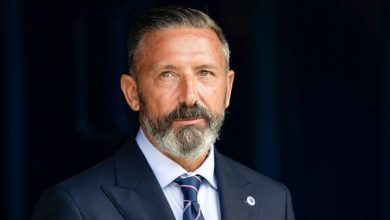
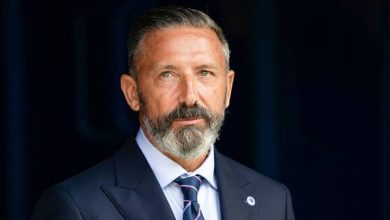
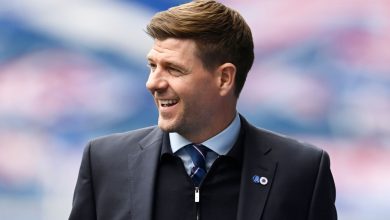
Who would you want to take over from Pep Guardiola when he eventually steps down? — Vincent Kompany — Cesc Fàbregas — Xabi Alonso — Julian Nagelsman


Manchester City is once again at the center of intense speculation as reports suggest the club is preparing to appoint a new head coach in the near future. This development has sparked widespread discussion across the football world, especially given the stability and success the club has enjoyed under their current long-term manager, Pep Guardiola. For many fans and analysts, the idea of Manchester City making a managerial change marks the beginning of a potentially significant new chapter in the club’s history.
Over the past decade, Manchester City has transformed into one of the most dominant forces in world football. Their rise has been built on consistency, smart recruitment, tactical innovation, and strong leadership at both managerial and executive levels. Much of that success has been closely tied to Pep Guardiola, whose influence has shaped the team’s identity, playing style, and winning mentality.
However, as with all great cycles in football, change is always on the horizon. Even the most successful managers eventually move on, and clubs must prepare for life after their defining figures. The growing narrative around Manchester City preparing to sign a new coach suggests that the club is thinking ahead, planning carefully for a transition that could ensure continuity while also introducing fresh ideas.
Pep Guardiola’s tenure at Manchester City has been nothing short of remarkable. Since his arrival, he has overseen multiple Premier League titles, domestic cup victories, and consistent deep runs in European competitions. His tactical philosophy, centered on possession, positional play, and high pressing, has not only brought success but also redefined how the team approaches the game. Players have developed under his guidance, adapting to a system that demands intelligence, versatility, and discipline.
Despite this success, Guardiola’s contract situation and long-term future have often been topics of speculation. In football, even the most successful partnerships eventually reach a natural conclusion, whether due to personal decisions, new challenges, or the need for a fresh direction. Reports suggesting that Manchester City are preparing to appoint a new coach could indicate that the club is already considering how to manage a future beyond Guardiola’s era.
The process of selecting a new head coach for a club like Manchester City is not straightforward. It involves careful evaluation of potential candidates, alignment with the club’s philosophy, and consideration of how the new manager will fit into an established system. Manchester City’s football structure, which includes strong input from sporting directors and analysts, ensures that any managerial appointment is made with long-term planning in mind.
One of the key challenges in replacing a manager like Guardiola is maintaining the standards he has set. His influence extends beyond tactics; it includes player development, dressing room culture, and overall club identity. Any new coach will be expected not only to continue winning but also to uphold the style of play that fans have come to associate with Manchester City.
This is why the reported readiness to appoint a new coach is generating so much interest. It raises questions about who the club might target, what qualities they are looking for, and how they intend to manage the transition period. For a club that competes at the highest level in both domestic and European competitions, the stakes are extremely high.
Potential candidates for such a role would need to possess a strong tactical understanding, experience at the top level, and the ability to manage elite players. In addition, they would need to adapt to the expectations that come with managing a squad filled with world-class talent. Manchester City’s current squad includes players who are accustomed to success, and maintaining that winning mentality will be crucial for any incoming manager.
Another important factor is continuity. Manchester City have built a system that goes beyond just the manager. Their recruitment strategy, player development pathways, and analytical approach all contribute to the club’s success. A new coach would need to integrate into this structure rather than attempt to overhaul it completely. This makes the selection process even more critical, as the chosen individual must align with the club’s broader vision.
Fans of Manchester City have reacted with a mix of curiosity and concern to the news of a potential managerial change. On one hand, there is excitement about the possibility of a new era and the fresh ideas that a different coach could bring. On the other hand, there is a sense of uncertainty about how the team might perform without Guardiola’s guidance, given how closely his identity has been tied to the club’s achievements.
The players themselves will also play a key role in this transition. Many members of the current squad have spent several years working under Guardiola, adapting to his methods and understanding his tactical demands. A new manager will need to earn their trust and ensure that the transition does not disrupt the harmony within the dressing room.
Historically, clubs that manage smooth managerial transitions tend to maintain their competitiveness. The key lies in timing, preparation, and clarity of vision. If Manchester City are indeed preparing to appoint a new coach, it suggests that they are planning ahead rather than reacting to sudden circumstances. This proactive approach has been one of the reasons behind the club’s sustained success over the years.
Another aspect to consider is the impact on transfer strategy. Managers often influence recruitment decisions, either by identifying specific players or by shaping the overall profile of the squad. A new coach may bring different preferences in terms of playing style and personnel, which could lead to adjustments in future transfer windows. However, given Manchester City’s structured approach, it is likely that recruitment will remain aligned with the club’s long-term philosophy rather than being entirely dependent on managerial changes.
The global football community will be watching closely as this situation develops. Manchester City’s managerial decisions have always attracted attention, not only because of the club’s status but also because of the influence such decisions can have on the broader football landscape. A new coach at City would not only inherit a talented squad but also the responsibility of continuing a legacy of excellence.
Pep Guardiola’s potential departure, whenever it eventually happens, will undoubtedly mark the end of an era. His time at Manchester City has been defined by innovation, dominance, and a relentless pursuit of perfection. Replacing a figure of his stature is never easy, but it also presents an opportunity for evolution and renewal.
For the club’s hierarchy, the challenge will be to find a coach who can balance continuity with innovation. The ideal candidate would not only maintain the team’s competitive edge but also introduce subtle changes that keep the squad fresh and adaptable. Football is constantly evolving, and successful teams must evolve with it.
As speculation continues, one thing remains clear: Manchester City are not standing still. Whether the reports of a new coach are part of a long-term succession plan or an immediate transition, they reflect a club that is always thinking ahead. Their approach to management, recruitment, and performance has consistently been forward-looking, and this situation appears to be no different.
In the coming months, more details are likely to emerge regarding potential candidates, timelines, and the club’s overall strategy. Until then, fans and analysts will continue to debate, analyze, and speculate about what the future holds for Manchester City and how a managerial change could shape the next phase of their journey.
What is certain is that Manchester City’s next managerial appointment will be one of the most closely watched decisions in modern football. The club’s recent history, combined with its current level of success, means that expectations will be extremely high. The new coach will step into a role that carries both opportunity and pressure in equal measure.
Ultimately, the story of Manchester City preparing to sign a new coach is not just about change—it is about evolution. It represents the natural progression of a club that has reached the pinnacle of the game and is now looking to sustain that level for years to come. Whether this transition happens soon or further down the line, it will mark a defining moment in the club’s ongoing story.
For now, the football world waits with anticipation, knowing that whatever decision Manchester City make will have a significant impact not only on their own future but also on the wider landscape of elite football.