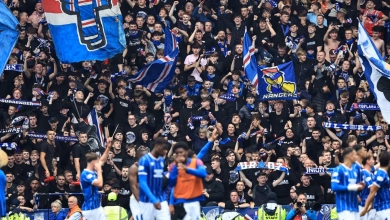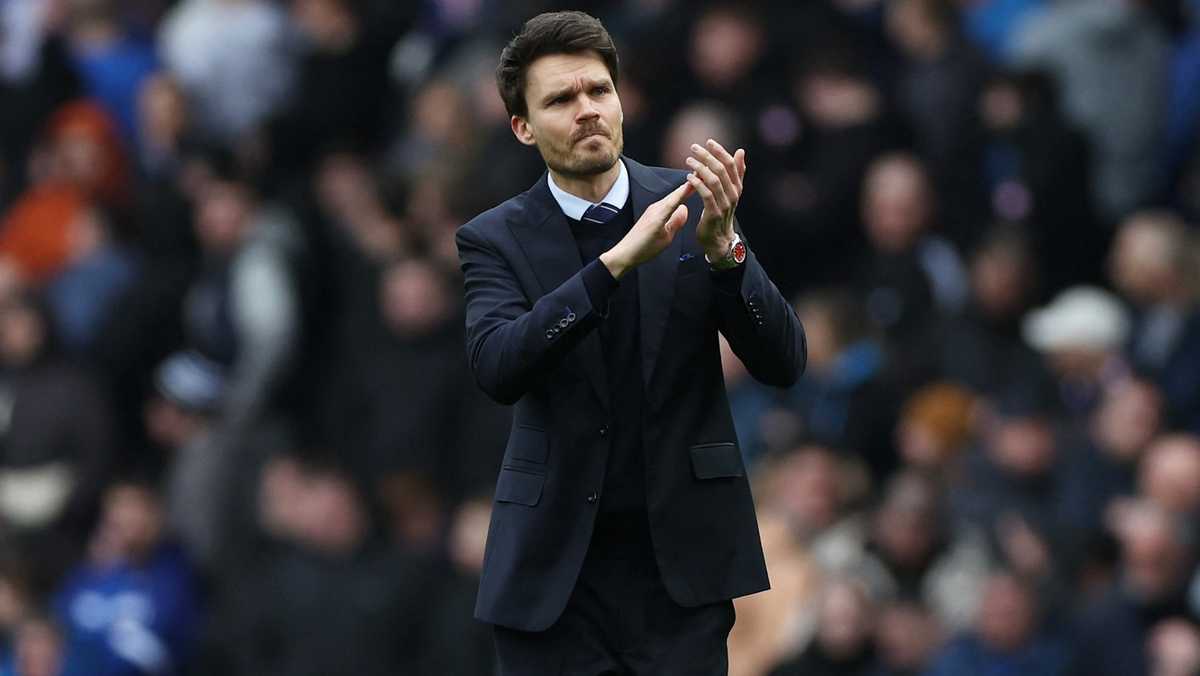
Glasgow Rangers are once again facing a moment that could change everything about their future, their direction, and the identity of the club going forward, as uncertainty grows around their current head coach Danny Röhl, who has suddenly become a major target for Austrian side RB Salzburg.
What looked like a settled project at Ibrox has quickly turned into another stressful summer story, with reports suggesting Salzburg are now in active talks over bringing Röhl in as their next manager. The situation is not yet final, but the direction is clear enough to cause concern inside the Rangers boardroom. The Scottish giants are already preparing for the possibility that their head coach could leave just as they were trying to build stability after a difficult season.
Röhl’s time at Rangers has been full of pressure from the start. He arrived with a strong reputation, having worked in elite environments in Germany and England, including experience at Bayern Munich and within the German national team structure. Fans expected a modern style of football, more control in matches, and a long-term rebuild that could finally close the gap with Celtic in the Scottish Premiership.
There were moments that showed promise, but consistency was always the issue. Rangers ended the season in third place, ten points behind champions Celtic, and the final stretch of the campaign raised serious questions. After the league split, the team lost four of five matches, a run that immediately damaged confidence in the project. The only bright moment came on the final day, when they beat Falkirk 5–2 in a match that had no real impact on their league position.
Even though the club publicly supported Röhl and insisted they believed in long-term progress, football is a results business, and the end of the season left doubts hanging in the air. Those doubts have now grown stronger because of Salzburg’s interest, and suddenly Rangers are not just dealing with poor form, but also the risk of losing their manager entirely.
Importantly, Röhl is not believed to be forcing a move. Sources close to the situation suggest he is not pushing to leave Ibrox. Instead, the situation depends heavily on negotiations between Rangers and Salzburg, particularly over compensation. If the Austrian club meets the financial demands, the opportunity to move to a new project abroad could become very difficult for him to refuse.
For Rangers supporters, this feels like déjà vu. The club has been in similar situations before, where a manager shows early promise or arrives with excitement, only for uncertainty to take over. Stability has been the missing ingredient in recent years, and every managerial change resets the project once again.
Inside the club, discussions have already started about what comes next if Röhl does leave. Rangers do not want to be caught unprepared. They know how important the next appointment will be, especially at a time when Celtic remain strong domestically and competition at the top of Scottish football is not getting easier.
According to reports, the club has already drawn up a shortlist of possible replacements. The name that keeps appearing near the top is Derek McInnes, currently in charge at Hearts, and a manager who has quietly rebuilt his reputation in Scottish football once again.
McInnes is not a new name in this conversation. He has been linked with top jobs in Scotland multiple times over the years, including Rangers in earlier managerial searches. What makes him stand out now is not just his experience, but the clear improvement he has delivered at Hearts in a very short space of time.
When he arrived at Hearts, expectations were moderate. The club had finished the previous season in a disappointing position, sitting in the bottom half of the table with 52 points. There was frustration among supporters, and not much belief that they could quickly become a top side again. But McInnes changed that narrative faster than many expected.
In his first full season, Hearts transformed into one of the most competitive teams in the league. They jumped from mid-table struggle to a second-place finish, pushing Celtic closer than most teams have managed in recent years. At one stage, they were even in contention for the title race heading into the final day, a situation few would have predicted before the season started.
Their improvement was not just about results, but about structure and identity. Hearts became more organised defensively, more direct in attack, and more confident in big matches. The team conceded significantly fewer goals than the previous season and increased their goal output, showing a balance that had been missing before.
Players responded strongly to his methods. Some individuals who were underperforming previously suddenly found form again. Others stepped into new roles and improved under his guidance. One of the biggest examples of his impact has been the development of Lawrence Shankland, who thrived in front of goal and became a key figure in Hearts’ attacking play.
That connection is particularly interesting for Rangers. The club recently secured Shankland permanently after his impressive performances, and a reunion with McInnes could make sense in terms of tactical understanding and squad continuity.
McInnes’ reputation in Scottish football has always been built on overachievement. At Aberdeen, he consistently finished near the top of the league despite having a smaller budget than Celtic and Rangers. He guided them to multiple second-place finishes and regularly challenged stronger squads. At Kilmarnock, he also achieved strong results, including stabilising the club after promotion and making them competitive in the top division.
This is why some analysts believe McInnes represents a safe but effective option for Rangers. He may not be the most glamorous appointment, but he understands Scottish football deeply, knows how to organise teams, and has proven he can build consistent results over time.
There is also a growing narrative among supporters and pundits comparing him to former Rangers manager Steven Gerrard. When Gerrard arrived at Ibrox, he brought authority, discipline, and belief back to the club. He ended Celtic’s dominance by leading Rangers to an unbeaten league season in 2020/21, a campaign that still stands as one of the most dominant in modern Scottish football history.
McInnes has not achieved that level of silverware success yet, but the argument is about impact rather than trophies alone. Like Gerrard, he is seen as a manager who improves players, builds structure, and raises standards quickly. That is why some believe he could have a similar effect if given the Rangers job at the right moment.
Journalists have even suggested that McInnes is currently emerging as an early frontrunner for the role if Röhl departs. That puts him ahead of other potential candidates, including names with stronger international reputations but less experience in Scottish football.
One of McInnes’ strongest qualities is tactical flexibility within a disciplined system. He is often described as a 4-4-2 coach, but that label does not fully capture how his teams actually play. His sides are compact without the ball, aggressive in pressing moments, and efficient in transition. They may not dominate possession, but they are difficult to break down and quick to punish mistakes.
That style could suit Rangers, especially in matches where pressure is high and results matter more than aesthetics. In Scottish football, consistency often wins titles, and McInnes has shown he can deliver that consistency over long seasons.
However, the appointment would also come with debate. Some supporters prefer a more modern, attacking philosophy similar to what Röhl promised when he first arrived. Others believe Rangers need stability and experience in the Scottish league above all else. That divide makes the potential decision even more important for the board.
The situation is also complicated by timing. Rangers are not just planning for one season; they are trying to rebuild a long-term project capable of challenging Celtic again. Every managerial decision now has consequences that could last several years.
If Röhl leaves, Rangers will have to act quickly. They cannot afford a long search process that disrupts pre-season planning or transfer activity. Players need clarity, recruitment needs direction, and the squad must understand who will lead them into the next campaign.
At the same time, Hearts will not want to lose McInnes easily. His success has made him one of the most respected managers in the league again, and the club would likely demand strong compensation if Rangers made an official approach.
For McInnes himself, the decision would be significant. Moving to Rangers would be one of the biggest jobs in Scottish football, with pressure from fans, media scrutiny, and the expectation of immediate success. But it would also be an opportunity to manage one of the country’s biggest clubs and compete for trophies regularly.
As things stand, everything depends on what happens with Danny Röhl and Salzburg. If negotiations move quickly and a deal is agreed, Rangers will immediately shift focus to replacements. If not, Röhl could still remain at Ibrox, and the entire situation could calm down within days.
But in football, uncertainty rarely stays quiet for long. At a club like Rangers, every rumour becomes a story, and every story becomes pressure. Right now, the pressure is building again, and the next decision could shape the club’s future for years to come.