Despite Guardiola’s praise, he was nowhere near the England 2026 World Cup squad

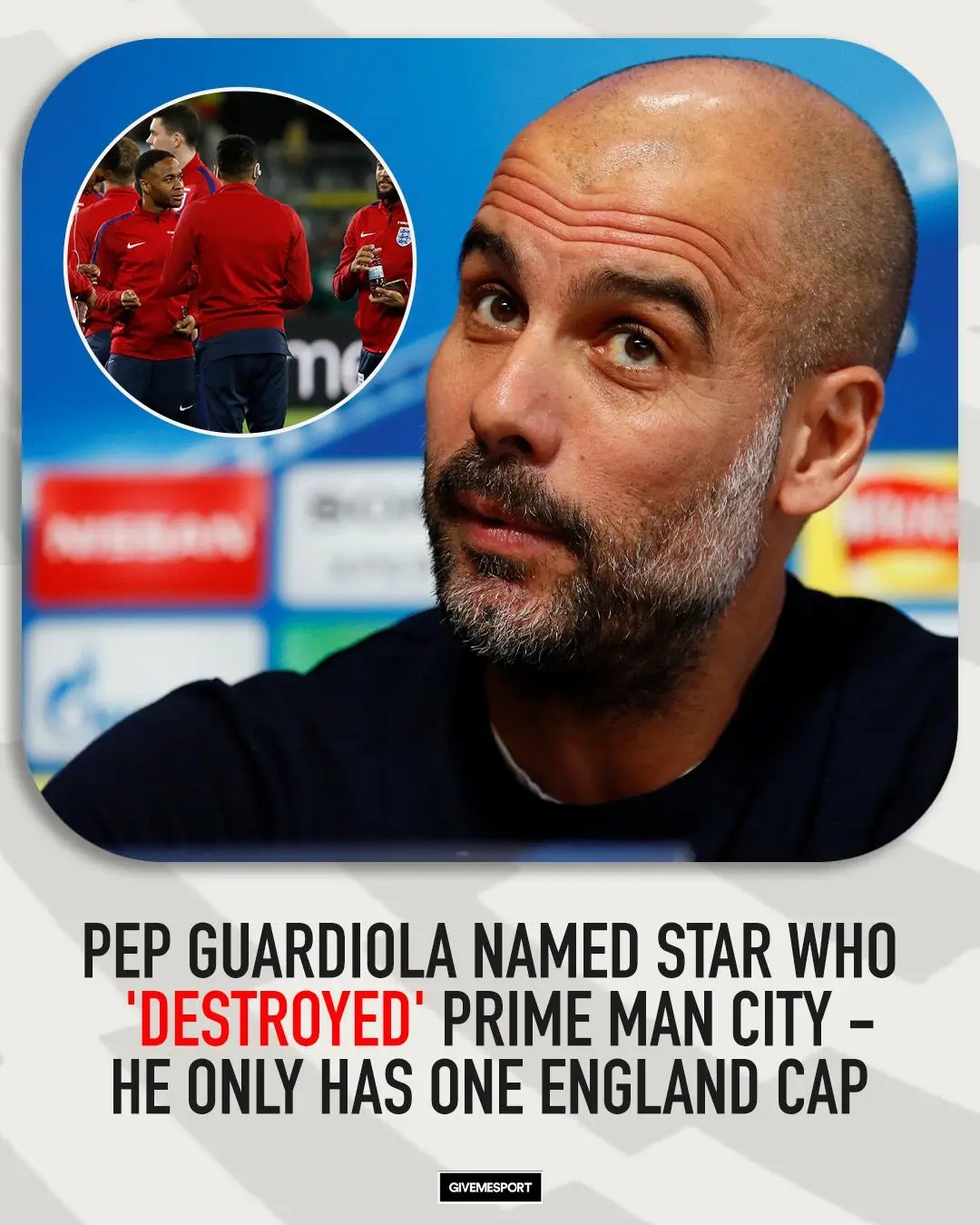
Pep Guardiola has spent his entire football life surrounded by greatness. As a player, he was part of the famous Ronaldo Nazário moments in Spain, shared the pitch with Luis Figo, and learned the game at a level most players never reach. As a manager, he has coached some of the most talented footballers in history, including Lionel Messi, Xavi Hernandez, Kevin De Bruyne, and Erling Haaland.
Because of that, when Pep Guardiola praises a player, it carries real weight. It is not normal praise. It is not casual talk. It is the kind of praise that comes from someone who has seen football at its highest level for more than two decades.
And one of the most interesting moments of his career came in England, after a match between Manchester City and Southampton FC, when Guardiola spoke about a player many fans had already started to forget, but who once caused him real problems on the pitch.
That player was Nathan Redmond.
It was November 2017. Manchester City had just beaten Southampton 2–1 in a tight Premier League match. City were already becoming one of the most dominant teams in England under Guardiola, playing fast passing football, controlling possession, and pressing high. Southampton, meanwhile, were trying to survive in a difficult league season, but they still had moments of quality in their squad.
After the final whistle, something unusual happened.
Guardiola, who is normally focused on his own players and tactical discussions, made a direct and emotional approach to Nathan Redmond on the pitch. He spoke to him face to face, in front of cameras and journalists. It was not a quick handshake or a polite “good game” moment. It was longer, more intense, and full of respect.
Later, Guardiola explained exactly why.
He said he had remembered Redmond from a previous match the season before. In October 2016, Southampton had played Manchester City at the Etihad Stadium and the match ended 1–1. In that game, Redmond was one of the most dangerous players on the pitch. His pace, movement, and direct attacking style caused serious problems for City’s defence.
In fact, Guardiola admitted something rare. He said Redmond had “destroyed” Manchester City in that match.
For a manager like Guardiola, that is a strong statement. He does not often use emotional or dramatic words about opponents. But in Redmond’s case, he was clearly impressed.
Guardiola later said, “I told Redmond how good a player he is. Last season he destroyed us here. I didn’t know him before, but I realised how good he is.”
This was not just polite praise. It was recognition from one of the greatest football minds in history.
Nathan Redmond at that time was seen as one of England’s most exciting young attackers. He had come through the English youth system and was known for his speed, dribbling ability, and confidence on the ball. He had already made a name for himself at youth international level and was even named England Under-21 Player of the Year 2016.
Many people believed he was on his way to becoming a regular in the senior England team.
He was playing for Southampton, a club known for developing talented English players. At his best, Redmond could run past defenders, create chances, and play on either wing. He had the kind of profile England managers usually like: quick, direct, and fearless.
But football careers are never simple.
Even though Guardiola saw something special in him, Redmond’s career did not take the expected path.
Just months after the famous praise from Guardiola, Redmond finally made his senior debut for England national football team. It was a big moment for him. He came on as a substitute, replacing Adam Lallana in a friendly match. It looked like the start of something bigger.
But that was also where things started to slow down.
Despite his early promise, Redmond only made one more appearance in an England squad without actually playing again on the pitch. He remained on the fringe, never becoming a regular part of the national team setup.
At the same time, competition for attacking positions in England became extremely strong. Players like Raheem Sterling, Marcus Rashford, Jadon Sancho, and others were all fighting for the same wide attacking roles. England suddenly had more depth than ever before in those positions.
That made it harder for Redmond to break through.
Even though Guardiola saw a player who could “destroy” top teams on his day, England managers at the time were looking for consistency at the highest level, week after week, against top opposition.
Redmond was talented, but his performances were not always consistent enough to secure a long-term international role.
Southampton also started to struggle as a team. When a club is not performing well, it becomes harder for attacking players to shine. Fewer chances are created, confidence drops, and individual brilliance becomes harder to show.
This affected Redmond’s visibility even more.
Over time, his early hype began to fade. He was still a useful Premier League player, still capable of moments of speed and skill, but the expectation that he would become a major England star slowly disappeared.
Meanwhile, Guardiola’s Manchester City continued to rise. They became one of the most dominant teams in English football history, breaking records for points, goals, and performances. Players like De Bruyne and Haaland became global stars, while City continued to evolve into a football machine under Guardiola’s system.
In that environment, Redmond’s moment of brilliance against them in 2016 became more and more of a memory than a turning point.
Still, Guardiola never forgot it.
That is what makes the story interesting.
In football, managers often face hundreds of opponents each season. Most players fade from memory quickly. But some leave a mark. Redmond clearly did.
Guardiola’s praise shows something important about football at the highest level: even players who do not become global superstars can still have moments where they match or even outperform the very best teams in the world.
Redmond had one of those nights.
But football careers are not decided by one night.
After his time in England with Southampton, Redmond eventually moved abroad, joining Beşiktaş J.K. in Turkey. It was a new challenge, a chance to restart his career in a different environment. Players often move to different leagues when their career in England slows down, looking for fresh motivation and more playing time.
However, his time there was short.
He later returned to England, signing for Burnley FC on a two-year deal. The move was seen as a chance to rebuild his reputation in the Premier League. Burnley were a club known for their hard work, discipline, and defensive structure, very different from the attacking style Redmond was used to at Southampton.
But once again, consistency was the issue.
By the time he left Burnley in May 2025, his international career was already long over. The dream of becoming a regular England winger had fully disappeared.
After that, his career became more unstable. He had a short spell with Sheffield Wednesday, making only a few appearances, and later moved to Blackburn Rovers, where he played only a handful of matches.
At this stage, Redmond was no longer the rising star people once talked about. He was now a veteran player trying to extend his career and contribute where possible.
Now in his early thirties, his future in professional football is uncertain. His contract situation suggests he may be approaching the end of his playing journey at the top level.
Looking back, the story of Nathan Redmond is both inspiring and slightly sad at the same time.
It is inspiring because a manager like Pep Guardiola, who has seen everything in football, once stopped to praise him in such strong terms. Not many players can say that. To “destroy” a Guardiola team, even for one match, is something special.
But it is also a reminder of how difficult football is at the highest level.
Talent alone is not enough.
Timing matters. Team performance matters. Confidence matters. Injuries, competition, and tactical fit all play a role.
Redmond had talent, but he was competing in an era where England had a huge wave of attacking talent. He also played in Southampton teams that were often inconsistent, which made it harder for him to shine regularly on the biggest stage.
Guardiola’s comment now feels like a snapshot of what could have been.
A moment where one of the best managers in history saw something explosive in a player who, on his day, could change games against anyone.
But football is not built on moments alone.
It is built on repetition, consistency, and long-term performance.
For Guardiola, that 2016 match was enough to remember Redmond as a dangerous opponent. For Redmond, it was one of the peaks of his Premier League career.
And for fans, it remains an interesting “what if” story.
What if Redmond had been more consistent?
What if he had joined a bigger club at his peak?
What if England had given him more chances?
These questions will never have answers.
But the moment Guardiola stopped, praised him, and called back to that game where he “destroyed” Manchester City will always remain one of the most memorable highlights of Redmond’s career.
Because when Pep Guardiola speaks about a player in that way, it means something.
Even if the player never becomes a global superstar, that recognition alone shows the level he once reached.
And in football, that is sometimes enough to define a career in the eyes of the world.