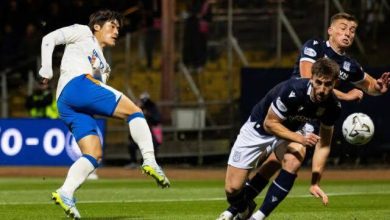
There is a particular flavour of transfer regret that only football can produce: watching a player released, sold, or allowed to walk away for nothing go on to flourish somewhere else entirely, forcing a club to reckon with a decision made years earlier that, in hindsight, looks like a serious misjudgement. Rangers may now be staring down exactly that scenario with Robbie Ure, the striker who left Ibrox in the summer of 2023 having rejected a new contract, and who has spent the past year turning himself into one of the most talked-about goalscorers in Scandinavian football.
Ure’s rise has been gradual rather than instant, and it has taken place almost entirely away from the Scottish spotlight, first in Belgium and then in Sweden. But his recent form for IK Sirius has become impossible to ignore. A four-goal haul in a wild 4-4 draw against reigning Allsvenskan champions Mjällby has thrust him back into the conversation north and south of the border, and reports in the Scotsman now claim that Champions League regulars Red Bull Salzburg and Lyon are both monitoring the 22-year-old, with Bundesliga side Hoffenheim also credited with interest. For a Rangers hierarchy that has spent much of this summer being praised for smart, disciplined business under the ownership of Andrew Cavenagh and the 49ers Enterprises group, the Ure situation is a reminder that even well-run clubs can get things wrong — and that sometimes the biggest transfer mistakes are the ones that go unnoticed for years.
The academy product who couldn’t force his way in
Ure’s Rangers story began, as these stories so often do, with genuine promise. A product of the club’s Auchenhowie academy setup, he was watched by scouts from both halves of the Old Firm as a boy before making what he has since described as an easy decision to join Rangers rather than Celtic, drawn in by the size and intensity of the rivalry even before he had kicked a ball for either club. He signed a contract extension in June 2021 to tie him to Ibrox until the summer of 2023, and two years later he made his senior debut in the most memorable fashion possible: starting a League Cup tie at home to Queen of the South in August 2022 and scoring inside the opening ten minutes.
That kind of dream start, though, proved to be something of a false dawn in terms of first-team opportunities. Ure had to wait almost three months for his next senior appearance, a late substitute cameo away to St Mirren in November 2022, and by the time his contract was set to expire the following summer, he had made just three competitive appearances for the club he had supported as a boy. Faced with the prospect of remaining on the fringes at Ibrox or seeking regular first-team football elsewhere, Ure chose to reject fresh terms and leave Rangers on a free transfer in May 2023, a decision he has since confirmed was driven by a desire for a new challenge after failing to break into Michael Beale’s first-team plans.
It was, on paper, an unremarkable exit — the kind of story that plays out at every top-flight club every summer, as promising academy graduates who cannot force their way past more experienced options move on in search of opportunity. Few would have predicted at the time that it would eventually be framed as one of the more costly departures of the Cavenagh ownership era.
Two lost years in Belgium
Ure’s first destination after Ibrox was Anderlecht, one of Belgian football’s grandest and most historically successful clubs, who signed him in September 2023 with what appeared to be genuine long-term ambitions for the young Scot. The reality of life in Belgium, however, turned out to be even more restrictive than the one he had left behind at Rangers. Ure was placed almost entirely with RSCA Futures, Anderlecht’s reserve outfit competing in the Challenger Pro League, Belgium’s second tier, rather than being integrated into the senior squad.
He performed creditably at that level, scoring 11 goals in around 38 appearances for the Futures side, numbers that hinted at genuine goalscoring instinct even in a developmental environment. But two full seasons in Belgium yielded just a single senior first-team appearance for Anderlecht’s actual first team, a startling statistic for a player who had arrived with what looked like a clear pathway to regular football. Having left Rangers specifically in search of first-team opportunities, Ure found himself in an almost identical holding pattern in Belgium — talented enough to dominate reserve-level football, but still unable to convince a big club to trust him with senior minutes.
By March 2025, with his contract situation at Anderlecht clearly not working in his favour, Ure made the decision to move again, this time somewhere far less conventional for a young British striker: Sweden’s Allsvenskan, and Uppsala-based side IK Sirius, a club more readily associated with the city’s famous university than with producing footballing talent of continental interest. He signed with Sirius on a contract running until the end of 2029, becoming the club’s record signing at a fee of around 8 million Swedish krona, or roughly £620,000 — a deal that, in hindsight, now looks like one of the shrewder pieces of business conducted by any club in Scandinavian football over the past two years.
Finally given the platform to perform
Sweden proved to be exactly the environment Ure needed. He made an immediate impact on his Allsvenskan debut, setting up two goals in a 2-1 away win over Vänersborg’s Varnamo, and speaking to Swedish outlet Upsala Nya Tidning at the time, he explained that his game was modelled on Harry Kane, citing the England captain’s instincts inside the penalty box and his ability to link play from deeper positions as qualities he was actively trying to incorporate into his own game.
The goals soon followed in earnest. Ure scored 16 times and provided five assists in 35 total appearances across his first full season with Sirius in 2025, numbers that marked a dramatic uptick from his goal return in Belgian reserve football and finally offered tangible proof that the raw instincts Rangers fans had glimpsed during his brief senior cameos in 2022 had not disappeared through two years of frustration elsewhere. That form continued into the opening months of the 2026 Allsvenskan campaign, and by the spring, some sections of the Rangers support and Scottish media were already beginning to ask whether the club that had let him leave for nothing three years earlier ought to be considering bringing him back to Ibrox.
Those calls have only grown louder in recent weeks. Ure entered the summer as the Allsvenskan’s second-highest scorer, having netted seven goals in just ten appearances before the mid-season break, and his red-hot form continued upon the league’s resumption. His four-goal contribution in Sirius’s extraordinary 4-4 draw with reigning champions Mjällby was the clearest statement yet of a player who has genuinely arrived as a senior-level goalscorer, and it is that performance which appears to have triggered the latest wave of concrete transfer interest from clubs well beyond Scandinavia’s borders.
Salzburg, Lyon and Hoffenheim join the queue
The interest now being reported around Ure reads like a shortlist of clubs with genuine pedigree in developing and monetising young attacking talent. Red Bull Salzburg have built one of the most efficient player-trading models in European football over the past decade, repeatedly identifying underappreciated attacking talent, developing it within their well-resourced Austrian setup, and selling players on for many multiples of their original outlay — a pathway that has taken previous Salzburg forwards to some of the biggest clubs in world football. Lyon, meanwhile, are simultaneously being linked with a move for Rangers’ own Youssef Chermiti as they search for a replacement for Endrick following his return to Real Madrid, underlining the scale of their rebuilding project up front this summer and the breadth of options Paulo Fonseca’s recruitment team are currently exploring. Hoffenheim complete the reported list of suitors, a Bundesliga club with a long-standing reputation for giving young talent regular first-team opportunities in one of Europe’s most competitive top divisions.
Speaking about the interest directly, Ure has been candid rather than coy about his ambitions. “If I get the opportunity to take my career to the next level, it would be hard to turn down,” he said, while stressing that no transfer decision had yet been made. “The honest answer now is that I don’t know about a transfer yet. But I don’t feel any stress about the situation – I’m just excited to play and help the team as long as I’m here. I would love to win the league here and that’s still my aim. But I’ll have to wait and see what happens.”
That balance of ambition and patience is a notable departure from the player who, at 19, felt compelled to leave Rangers in search of first-team opportunities he wasn’t being given. Three years and two further transfers later, Ure now finds himself in the considerably more comfortable position of being the one clubs are chasing, rather than the one having to force his way into consideration — a reversal of fortune that will not have gone unnoticed inside Ibrox.
Scotland recognition edges closer
Beyond the club-level interest, Ure’s form has also reignited discussion of his international prospects. Eligible to represent both Scotland, through his upbringing in Glasgow, and Ukraine, a qualification that has occasionally surfaced in Swedish football media coverage of his career, Ure remains a Scotland Under-21 international who has yet to earn a senior cap. His red-hot form in the buildup to this summer’s World Cup prompted a number of Tartan Army supporters to publicly call on then-Scotland head coach Steve Clarke to consider including him in his squad for the tournament, though those calls ultimately went unanswered. Continued performances of the calibre he produced against Mjällby, however, will keep his name firmly in the conversation for future Scotland squads, adding an international dimension to what is already shaping up as a compelling breakout year.
Why Rangers’ recent striker business makes the regret sting more
The context that makes Ure’s situation particularly uncomfortable reading for Rangers supporters is the club’s own well-documented struggles to settle on a reliable centre-forward option in the years since his departure. Since 2023, Rangers have invested heavily and repeatedly in the striker position without ever fully solving the problem. Bojan Miovski, Ryan Naderi, Danilo, Cyriel Dessers and Sam Lammers have all arrived at Ibrox at various points for a combined outlay in the region of £20million, a substantial sum for a position that has continued to generate debate and inconsistency among supporters and pundits alike.
Youssef Chermiti’s arrival from Everton, in a deal worth £8.5million, has offered some encouragement, with the young Portuguese forward finishing his first Scottish Premiership season with 11 goals to his name — respectable numbers, though not so overwhelming as to have fully answered the question of whether Rangers have finally found their long-term answer up front. Question marks over squad depth and consistency at centre-forward have persisted throughout this period, precisely the kind of uncertainty that a player of Ure’s developing profile, given time and opportunity, might conceivably have helped address had circumstances at Ibrox in 2022 and 2023 unfolded differently.
There is a reasonable counterargument, of course, that hindsight makes fools of us all in the transfer market, and that Rangers’ decision not to fight harder to retain a teenager who had made just three senior appearances was, at the time, an entirely defensible one. Plenty of young players who leave boyhood clubs in search of first-team football fail to make the step up elsewhere; Ure’s own two lost years at Anderlecht are proof enough of how easily that particular gamble can misfire. What separates his situation from the standard “one that got away” story is the scale of what Rangers have subsequently spent trying to solve the very problem a homegrown alternative might, in an alternate timeline, have gone some way toward addressing at a fraction of the cost.
The financial dimension: a lost sell-on opportunity
Beyond the immediate question of squad needs, there is a second, more straightforwardly financial layer to Rangers’ potential regret. Had the club found a way to retain Ure beyond 2023 — whether by tying him down to fresh terms with a clearer pathway to first-team football, or by selling him for even a modest initial fee rather than letting his contract simply expire — they would now be in a position to benefit from any subsequent move to Salzburg, Lyon, or Hoffenheim, either through a direct sale or via a sell-on clause negotiated as part of his original departure from Ibrox.
Instead, having left as a free agent, any profit generated by a move to one of the three clubs currently circling him will accrue in full to IK Sirius, the Swedish side who paid a modest £620,000 to sign their new record acquisition and who now stand to make many multiples of that fee back should Ure secure the “next level” move he has openly admitted would be hard to turn down. It is a pattern familiar across football: a smaller club identifies value in a player discarded by a bigger one, develops him further, and reaps a financial reward that the original club, through its own recruitment or retention miscalculation, is left to watch unfold from the outside.
A club operating smarter, even if this one slipped through
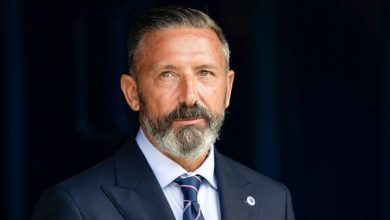
It would be unfair, however, to characterise the Ure situation as symptomatic of any broader dysfunction at Ibrox. If anything, it stands in fairly sharp contrast to the pattern of recruitment Rangers have displayed under Cavenagh and the 49ers Enterprises ownership group more recently, particularly across this summer’s transfer window. The arrivals of Lawrence Shankland, Ross McCrorie, Ben Godfrey, Ivor Pandur and Dan Neil under new manager Derek McInnes have, so far, been broadly well received, characterised by a clear recruitment philosophy built around experienced, proven characters rather than developmental gambles on unproven potential.
Ure’s departure predates that current ownership and management structure by several years, and it would be a stretch to lay the responsibility for a 2023 contract decision at the door of an ownership group and manager who arrived considerably later. If anything, the broader lesson Rangers appear to have absorbed from cases like Ure’s is reflected precisely in the type of transfer business the club has conducted this summer: prioritising senior players with track records over developmental prospects whose trajectory remains uncertain, minimising the risk of exactly this sort of costly what-if scenario recurring in future.
What comes next for Ure
For Ure himself, the situation now carries a satisfying symmetry. Having left Rangers at 19 in search of an opportunity he wasn’t being given, and having endured two frustrating years in Belgium in which that opportunity still failed to materialise at senior level, he has finally found in Sweden the platform to prove that his early Ibrox instincts were no fluke. Whether his next move takes him to Austria with Salzburg, France with Lyon, or Germany with Hoffenheim, all three would represent a considerable step up in level from the Allsvenskan and would offer the kind of continental exposure that could, in time, put him firmly back on the radar of Scotland’s senior national set-up.
As for Rangers, there is little to be done now beyond acknowledging the missed opportunity and applying its lessons going forward. A player released for nothing at 19 who ends up attracting genuine interest from Champions League and Bundesliga clubs by 22 is precisely the sort of outcome that will occasionally happen no matter how well a club runs its academy and recruitment department; the true test lies in whether such cases prompt smarter contract and retention decisions further down the line. Given the calibre of business Rangers have conducted so far this summer under McInnes, there are reasonable grounds for supporters to believe those lessons have already begun to be applied — even if, in Robbie Ure’s case, the regret has already been banked.