SFA Hand Down Verdict On Derek McInnes As Ex-Referee Chief Reacts To Ibrox Bombshell

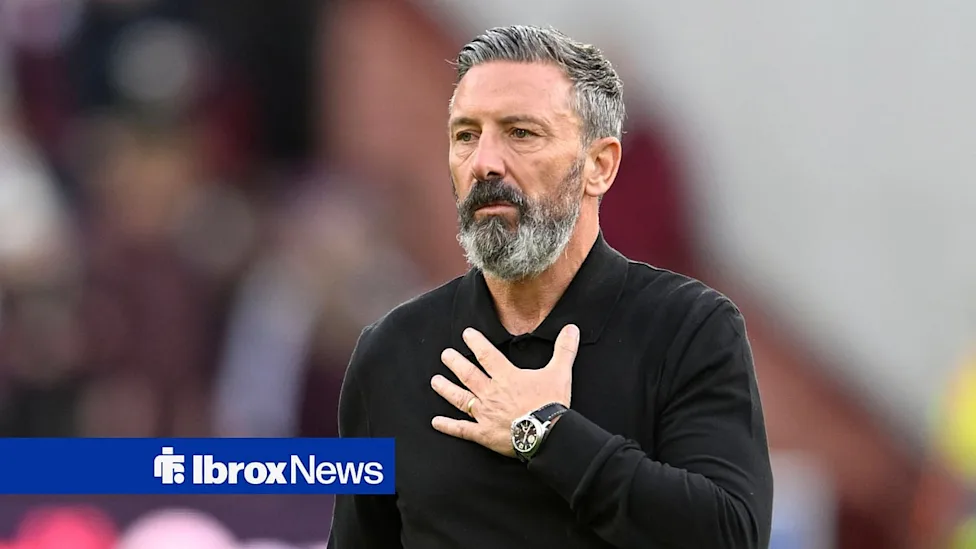
Derek McInnes will begin life in the Rangers dugout under the shadow of a touchline ban, after the Scottish FA confirmed the new Ibrox boss has been hit with a four-game suspension, with one of those four games suspended. The punishment relates to a notice of complaint issued against McInnes for allegedly breaching rule 72 of the SFA’s guidelines, stemming from comments he made while still in charge of Hearts last season, when he described a penalty award for Celtic against Motherwell as “disgusting.”
That single word, delivered in the heat of the moment following a decision that clearly angered him at the time, has now followed McInnes into his new role and resulted in one of the more eye-catching disciplinary rulings of the summer. With Rangers preparing to take on Ligue 2 side Saint-Etienne in a pre-season friendly, the focus within Scottish football has shifted firmly onto the decision-makers at Hampden Park and the reasoning behind such a significant sanction.
Offering an outside perspective on the situation, exclusively to Ibrox News, was former Premier League referee and ex-PGMOL general manager Keith Hackett, whose background at the top end of officiating in England gives him a particularly informed view on how disciplinary panels tend to weigh up cases of this nature.
Ibrox News reported that McInnes’ hearing had actually been delayed from its original date, having been scheduled to take place the previous week before eventually going ahead on 22 July. The Scottish Sun added further detail, reporting that McInnes attended the hearing in person, choosing to defend his position directly in front of the panel rather than simply submitting a written response to the charge.
Despite those efforts, Hackett’s reading of the outcome is that McInnes ultimately got off relatively lightly compared to what could have been handed down. His comments struck a notably balanced tone, acknowledging the frustration McInnes must have felt at the time of the original incident while also defending the governing body’s wider responsibility to protect match officials and uphold the standing of the game.
“McInnes was stuck between a rock and a hard place having witnessed a poor decision that impacted on him and his team and club’s season,” Hackett said. “The SFA have to consider the image of the game and protect the match officials. Whilst McInnes will be disappointed with the sanction, it could have been bigger.”
It’s a measured take from someone who has sat on the other side of these situations throughout his career, recognising both the legitimate frustration a manager can feel after a costly refereeing call and the institutional need to maintain discipline and protect officials from public criticism, however understandable the emotional reaction may have seemed at the time.
With the new Scottish Premiership season now barely more than a week away, the practical fallout from this ban is becoming clearer, and the timing could hardly be worse for a manager still finding his feet at a new club. Rangers open their domestic campaign away at Dundee United on Friday, 31 July, a fixture McInnes will now be forced to watch from outside the dugout rather than overseeing in his usual matchday capacity. He would also miss home fixtures against Hibernian and St Mirren, meaning three of Rangers’ opening Premiership assignments under his stewardship would take place without him present pitch-side.
Should he serve the ban in full, the suspension would stretch even further, ruling him out of a trip to former club Aberdeen at the end of August — a fixture that would have carried obvious extra weight given his history at Pittodrie. There is, however, some reprieve buried within the fixture list. Sandwiched between those domestic matches are Rangers’ Europa League qualifying ties against Polish side Jagiellonia Białystok, and because Scottish FA touchline bans apply only to domestic competition, McInnes would be expected to take his place in the dugout for those European qualifiers regardless of how the rest of his ban unfolds.
Still, there’s a strong case that this punishment feels excessive given what actually prompted it. McInnes has effectively been banned for a minimum of three matches — four, minus the one suspended — purely as a consequence of a single word used to describe his reaction to a penalty decision that went against his team last season. Managers reacting strongly to contentious refereeing calls is about as routine a feature of football as they come, happening in press conferences up and down the country most weekends, and it’s fair to question whether the scale of this sanction truly reflects the nature of the original offence.
There’s also an uncomfortable optic to the whole affair. Scottish football has faced persistent scrutiny over refereeing standards and contentious decisions in recent seasons, and against that backdrop, a four-game ban handed to a manager for criticising a call that plenty of neutral observers may also have questioned risks looking less like protecting the integrity of officials and more like the governing body shielding itself from further scrutiny of its own decision-making standards.
For Rangers, the practical consequence is a manager unable to oversee three of his opening four competitive fixtures from his usual vantage point, right at the moment he’s attempting to integrate a host of new summer signings into a settled system. Assistant coaches will need to take on a heavier in-game role during that period, relaying instructions and making real-time calls that would ordinarily fall to McInnes himself — not an insurmountable challenge, but an unwelcome complication all the same, just as the serious business of a new season gets under way.