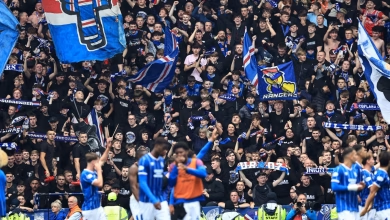
Where Does Football Draw the Line on Abusive Chanting? Inside Scottish Football’s Ongoing Battle With the Terraces

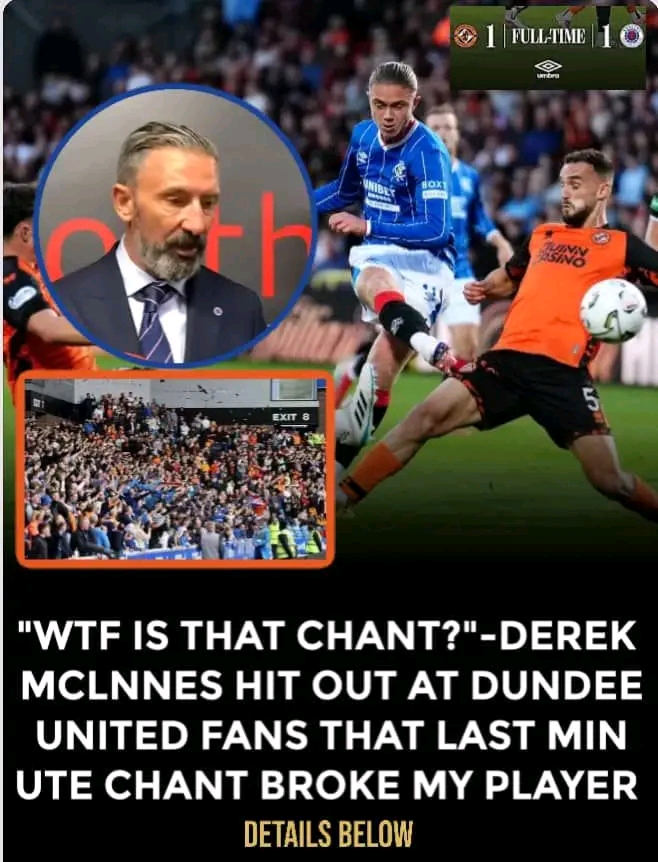
Few subjects generate as much heat around Scottish football as the question of what supporters should and shouldn’t be allowed to sing from the stands. It is a debate that resurfaces after almost every controversial matchday, one that pits deeply held traditions of terrace culture against growing concerns about player welfare, discrimination, and the basic safety of the matchday experience. While the specifics of any single flashpoint tend to dominate headlines for a news cycle or two before fading, the underlying tension between passionate support and genuinely abusive behaviour has been simmering across Scottish football for well over a decade, and it shows no sign of being fully resolved any time soon.
At the heart of the issue sits a genuinely difficult balancing act. Football has always thrived on noise, rivalry, and intimidation as part of the spectacle, and few would argue that stadiums should be sanitised into silence. Fans have long used chants to rattle opposition players, needle rival managers, and create the kind of hostile atmosphere that makes away trips memorable and home advantage meaningful. Yet there is a clear and widely recognised difference between boisterous banter and content that targets a person’s race, religion, sexuality, disability, or other protected characteristics, or that is designed simply to cause genuine psychological distress rather than to support one’s own team. Drawing that line in practice, match by match, chant by chant, has proven to be one of the more persistent headaches for governing bodies north of the border.
Scotland’s football authorities have not been shy about legislating on the subject over the years, even if the results of those efforts have been mixed and often contested. The most high-profile attempt to tackle offensive conduct directly through the law came in the form of the Offensive Behaviour at Football and Threatening Communications (Scotland) Act, legislation introduced specifically to target sectarian and other offensive behaviour, including chanting and singing, as well as related threats made through channels such as social media. The Act was framed around tackling offensive behaviour and threats connected to football supporters, with particular attention paid to sectarian and related conduct expressed through chanting or singing, extending even to online communications. The law proved deeply controversial from the outset, and years later it became the subject of a repeal bill in the Scottish Parliament, with the member bringing that legislation forward arguing that existing laws already covered the relevant conduct and that the original Act was therefore no longer necessary. That tension, between wanting robust legal tools to tackle sectarianism and offensive chanting on one hand, and concerns about how workable and proportionate such laws are in practice on the other, has never fully gone away.
Away from Holyrood, the football authorities themselves have spent years wrestling with their own internal rules and enforcement mechanisms. The Scottish FA operates a detailed disciplinary framework that covers offensive, insulting or abusive conduct connected to protected characteristics, with Disciplinary Rule 81 explicitly prohibiting offensive, insulting or abusive language or actions referencing ethnic origin, colour, race, nationality, religion or belief, gender, gender reassignment, sexual orientation or disability, as well as acts of victimisation or discrimination as defined under the Equality Act 2010. That framework applies primarily to those under the Scottish FA’s direct jurisdiction, such as clubs, officials, and players, rather than to supporters in the stands directly, which is part of why the question of how to regulate fan behaviour specifically has required a somewhat different set of tools and, at times, separate negotiations between the SFA and the Scottish Professional Football League over where responsibility should sit.
That distinction between player and club conduct on one side, and crowd behaviour on the other, has been a recurring source of friction. Some years ago, when the SFA pushed to create tougher rules around offensive chanting following an incident involving sectarian singing during a Scottish Championship fixture, the governing body offered to work alongside the SPFL to build a stronger set of regulations specifically designed to stamp out sectarian singing, while the league itself had, at the time, operated under a policy where no action would be taken against a club if it could demonstrate it had taken reasonable steps to try to prevent such chanting from its own supporters in the first place. That approach stood in contrast to the stricter liability model favoured by UEFA at European level, where clubs can be punished for the behaviour of their fans even when the club itself has done everything it reasonably could to prevent the incident, with sanctions ranging from stadium bans and partial closures through to points deductions and fines. The gap between Scotland’s more forgiving domestic approach and UEFA’s stricter continental standard has remained a talking point ever since, particularly whenever Scottish clubs find themselves punished by European authorities for conduct that might not have triggered the same consequences under home rules.
The debate over strict liability specifically, essentially the principle that a club should bear responsibility for what its fans do regardless of what preventative steps were taken, has flared up repeatedly over the years without ever being fully settled. Clubs themselves have historically been resistant to the idea, having previously voted against moving toward a strict liability model when the proposal was put to them, wary of being punished for the actions of a small minority of supporters they cannot fully control inside a stadium holding tens of thousands of people. That resistance has not stopped governing bodies from steadily expanding their powers in other areas, however, particularly around the increasingly visible problem of pyrotechnics. The Scottish FA gained the power to ban clubs from the Scottish Cup altogether if their fans throw pyrotechnics, mirroring powers already held by the SPFL across the domestic leagues and League Cup, with punishments ranging from fines and ticket allocation restrictions up to expulsion from the competition itself, even as the association’s own leadership stressed a preference for education and prevention over reaching for the most severe sanctions available. Multiple senior clubs, including both halves of the Old Firm, have previously been charged after fans disrupted major cup fixtures with flares, resulting in reduced ticket allocations for subsequent matches, illustrating that the threat of tangible, practical consequences such as smaller away allocations has, according to governing body officials, had a measurable deterrent effect where financial fines alone sometimes have not.
The League body overseeing Scotland’s domestic competitions has continued to push for stronger measures around fan conduct more broadly, not limited solely to chanting or pyrotechnics. The SPFL has publicly called for greater use of football banning orders to address what it has described as dangerous, irresponsible and selfish behaviour from a minority of supporters, while also engaging directly with Police Scotland and the Scottish government on how best to tackle the issue collaboratively rather than leaving individual clubs to manage it in isolation. Notably, this push for tougher sanctions has coincided with genuinely healthy overall attendance figures across the Scottish game, with crowds across all leagues, cups and play-off matches totalling more than 5.3 million in one recent season, a rise of nearly 185,000 on the year before, a detail regularly cited by campaign groups and supporter organisations who argue that framing Scottish football’s atmosphere as being in a state of general decline does not fully reflect the reality of consistently strong match-going numbers.
That pushback from supporter advocacy groups forms an important part of the wider picture and should not be overlooked. Organisations representing fans have consistently argued that characterising Scottish football’s crowd culture as worsening overall is not well supported by the evidence, pointing out that Scotland has been reported, drawing on UEFA data via the SPFL, as having the highest top-flight attendance per capita anywhere in Europe, a pattern these groups argue sits awkwardly alongside any narrative of widespread deterioration in the match-going experience. These same voices have also expressed concern that the policy response from governing bodies has increasingly leaned toward enforcement and punitive measures rather than structured engagement, harm reduction, and genuine supporter liaison, cautioning that an overly enforcement-heavy approach can itself generate tension and mistrust, particularly among younger fans who feel unfairly targeted by blanket assumptions about crowd behaviour. That tension between wanting a safer, more welcoming environment for all supporters and avoiding an overly punitive, top-down approach that alienates the majority of fans behaving entirely reasonably is one of the more nuanced and often under-discussed threads running through this whole debate.
At the same time, it would be a mistake to dismiss the genuine concerns some fans have expressed about safety and comfort inside Scottish stadiums. Consultation exercises examining supporter behaviour have surfaced real and specific worries, with several respondents citing concerns specifically about sectarian behaviour, particularly singing and chanting, as a factor discouraging attendance, alongside broader concerns about intimidation, fighting and violence between rival groups of supporters. Some parents responding to consultations described genuinely difficult personal circumstances, with individual submissions describing how concerns over antisocial behaviour meant children no longer felt comfortable attending matches at all. These are not abstract policy debates; they reflect real families making real decisions about whether football remains a welcoming environment for them, which is precisely why governing bodies continue to feel pressure to act even as they try to avoid overcorrecting into heavy-handed enforcement that punishes the majority for the actions of a minority.
The political dimension of this debate has also continued to evolve. Ahead of recent elections, various political parties have staked out notably different positions on how aggressively fan behaviour should be policed. Some parties have pushed for what amounts to a zero-tolerance approach, proposing that clubs be given greater power to issue lifetime bans for hooliganism or sectarian chanting without the usual accountability that comes through the courts and the wider legal system, a stance that has itself proven controversial among civil liberties advocates and supporter groups concerned about due process being bypassed in the pursuit of tougher enforcement. Others have favoured a lighter-touch, market-driven approach that leans away from direct intervention in matchday culture altogether. That political disagreement mirrors, in many ways, the broader split within the football family itself between those who want firmer, faster sanctions and those who worry about the unintended consequences of clubs and private bodies being handed sweeping disciplinary powers with limited external oversight.
Where does all of this leave the specific and recurring question of chants that target individual players, rather than broader sectarian or discriminatory singing aimed at rival communities or institutions? This remains one of the trickier grey areas within the wider framework. Targeted abuse of individual players by name, particularly where it strays into territory involving a player’s background, family, or personal circumstances rather than simply their footballing ability, sits closer to harassment than to traditional footballing banter, and most reasonable observers within the game would draw a fairly clear distinction between the two. Clubs, managers and players’ associations have periodically raised concerns about the psychological toll that sustained, personal abuse from the stands can take, even when that abuse falls short of the kind of overtly discriminatory language explicitly covered under existing disciplinary rules. Football authorities across the UK have increasingly acknowledged that player mental health and wellbeing deserve the same seriousness of consideration as physical safety, a shift in thinking that has gradually filtered into how clubs approach supporter conduct issues, even if formal rules and sanctions have been slower to catch up with that broader cultural shift.
Recent independent reviews into specific high-profile incidents have also shone a light on just how wide-ranging in-stadium misbehaviour can be during a single fixture, extending well beyond chanting alone. A review into events surrounding one major Scottish Cup fixture earlier this year documented a range of concerning behaviours in the lead-up to a pitch invasion, including sectarian chanting, racial abuse, objects such as coins and vapes being thrown, flares being ignited and thrown, and provocative use of mascots and music aimed at away supporters. Reviews of that nature underline just how many different strands of matchday conduct governing bodies are now expected to monitor and address simultaneously, from language and chanting through to physical safety concerns around thrown objects and pyrotechnics, all within the same ninety minutes of football. It is little wonder that disentangling any single controversial chant from this much broader web of ongoing concerns can prove genuinely difficult for clubs and authorities trying to respond appropriately and proportionately in the aftermath.
For clubs themselves, the practical response to concerns about chanting tends to operate on several levels simultaneously. Matchday stewarding and CCTV monitoring remain the first line of defence, with clubs expected to identify and eject or report individuals engaging in clearly discriminatory or threatening chanting where possible. Beyond the stadium itself, clubs increasingly rely on supporter liaison officers and fan engagement programmes to try to shift culture from within, working alongside supporter groups to discourage problematic chanting before it becomes entrenched as part of a section’s matchday repertoire. Education campaigns, often delivered in partnership with anti-discrimination charities and campaign groups, have become a more prominent feature of how both the SFA and individual clubs approach the issue, reflecting a broader recognition that punitive measures alone are unlikely to produce lasting cultural change without accompanying efforts to shift attitudes over the longer term.
None of this makes the underlying tension between passionate, noisy support and genuinely harmful conduct any easier to resolve in the moment, particularly in the white heat of a contentious fixture where emotions on both sides of the technical area are already running high. What does seem clear, based on the trajectory of policy discussions in Scottish football over recent years, is that governing bodies, clubs and supporter groups alike are being pushed toward a more sophisticated, multi-layered response than simply reaching for blanket bans or ignoring the issue altogether. Whether that translates into meaningfully different behaviour on the terraces in the years ahead, or simply into an ever-expanding rulebook that struggles to keep pace with what actually happens inside grounds on a matchday, remains an open question that Scottish football as a whole continues to grapple with, fixture by fixture and season by season.
There is also a generational dimension worth considering as this debate continues to evolve. Younger supporters who have grown up with camera phones, instant social media clips, and a culture of matchday moments being dissected online within minutes of occurring are operating in a very different environment to previous generations of fans, for whom a controversial chant might have been forgotten by the time everyone had left the stadium car park. That shift has fundamentally changed the stakes involved in any single incident. A chant that once might have been heard by a few thousand people inside a ground and quickly faded from memory can now be clipped, shared, and scrutinised by hundreds of thousands of people within hours, often stripped of context and replayed endlessly across platforms long after the final whistle has blown. This has arguably raised the reputational cost to clubs of any perceived failure to act, while simultaneously making it considerably harder for authorities to verify exactly what was said, by whom, and in what tone, before rushing to judgement based on a short clip circulating online.
That dynamic has fed directly into a recurring word of caution from supporter organisations and, at times, from clubs themselves: the importance of not spreading unverified recordings or accusations before the full picture is properly established. In an environment where outrage can spread far faster than verified fact, there is a genuine risk of individuals or groups being wrongly accused, or of entirely fabricated incidents gaining traction online before anyone has had the chance to confirm whether they happened at all. That caution applies just as much to media coverage of alleged incidents as it does to individual social media users sharing clips, and it is a reminder that responsible reporting on matchday conduct requires the same rigour and verification standards as any other area of football journalism, even when the pressure to publish quickly during a fast-moving news cycle is considerable.
Looking at the picture as a whole, Scottish football finds itself navigating a genuinely difficult set of competing pressures. On one side sits a proud and deeply rooted tradition of vocal, passionate, at times fiercely partisan support that many within the game consider central to what makes Scottish football distinctive and special. On the other sits a growing and entirely legitimate awareness that some conduct crosses a line from passionate support into genuine harm, whether that takes the form of discriminatory chanting, targeted personal abuse, or behaviour that makes matches feel unsafe or unwelcoming for particular groups of fans. Governing bodies, clubs, players and supporters themselves will continue to wrestle with exactly where that line should sit, how it should be enforced, and by whom, for as long as football remains the emotionally charged, communally experienced spectacle it has always been. What seems unlikely to change any time soon is the intensity of the debate itself, given how deeply these questions cut into issues of identity, tradition, safety and respect that extend well beyond the touchline and into the wider fabric of communities across the country.