McINNES DEMANDS SPEED AS RANGERS CLOSE IN ON YOKOTA WITH SQUAD STILL SHORT ON GENUINE WINGERS

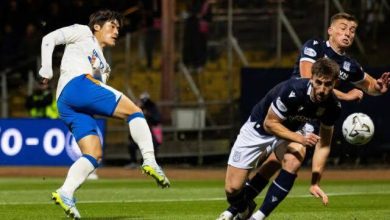
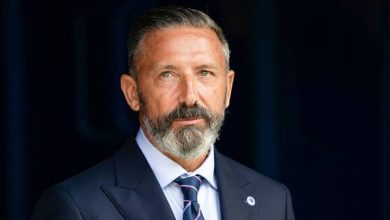
Derek McInnes has made his frustration plain, and it appears Rangers’ recruitment department have listened. In the immediate aftermath of a stuttering opening-day draw with Dundee United, the Ibrox boss did not hide behind diplomatic platitudes about the transfer window still having time to run; instead he stood in front of the media and effectively told his own club’s hierarchy that the clock was ticking louder than they might like to admit. Within days, Fabrizio Romano was reporting a verbal agreement between Rangers and Hannover for winger Daisuke Yokota, a deal reportedly worth €3.3million plus a further €700,000 in potential add-ons, taking the total package to around €4million, or roughly £3.4million at current exchange rates. Whether that timing is coincidence or evidence of a club moving with real urgency in response to its manager’s public prompting, the outcome is the same: a ninth summer signing appears imminent, and it is one that goes directly to the heart of a specific, glaring problem in McInnes’s current squad.
It is also worth noting the source of this particular report, given how much weight transfer journalism now carries in shaping supporter expectations before a single document has actually been signed. Romano has built his reputation on precisely this kind of story, tracking deals from their earliest verbal stages through medicals and official announcements with a level of accuracy that has made his reporting close to essential reading for fans of clubs across Europe, Rangers included. When Romano describes an agreement as verbal rather than simply speculative interest or a bid submitted, it typically indicates negotiations have progressed considerably further than the more tentative, early-stage reports that circulate constantly throughout any transfer window. That distinction matters for a Rangers support who have grown accustomed over the years to sifting through varying degrees of transfer credibility, and it is part of why this particular update has generated such immediate and widespread attention among Ibrox followers keen for concrete evidence of movement on the winger front.
That problem is a straightforward numbers issue as much as anything else. For all the volume of incoming business conducted at Ibrox this summer, Rangers currently have only three recognised out-and-out wingers on their books in Djeidi Gassama, Ross McCausland and Findlay Curtis, a remarkably thin collection of specialist wide options for a club expected to compete on multiple fronts across a long domestic campaign and continental qualification football. Some of the squad’s strikers and attacking midfielders can, of course, be pushed out to the flanks in a pinch, and McInnes has shown willingness in pre-season to experiment with more fluid attacking shapes, but there is a meaningful difference between a makeshift wide option filling in for a game or two and a genuine specialist who understands the nuances of stretching a defence, beating a full-back in isolation, and delivering end product from wide areas on a consistent basis. It is precisely that gap in specialist quality which appears to have pushed Yokota to the very top of the club’s shortlist this week, ahead of other names that had circulated throughout the window without ever quite crystallising into concrete agreements.
Looking more closely at the three existing wide options already on Rangers’ books only reinforces just how urgent this particular piece of business has become. Djeidi Gassama, still a relatively young talent by the standards of a first-team winger, has shown flashes of genuine ability but remains a player very much still developing the consistency required to be relied upon week in, week out at the top end of the Scottish Premiership. Ross McCausland, homegrown and long seen as a promising academy graduate, has similarly shown moments of real quality without yet having established himself as a guaranteed starter capable of carrying the creative burden across a full, demanding season. Findlay Curtis, meanwhile, represents another younger option still very much in the process of proving himself at senior level. None of that is to dismiss the potential any of the three might eventually fulfil, but it does explain why McInnes, assessing his options honestly after the Dundee United draw, would have concluded that his squad lacked a proven, experienced wide presence capable of being trusted with a regular starting berth from day one, rather than a collection of promising but unproven alternatives still finding their feet at the highest level of Scottish club football.
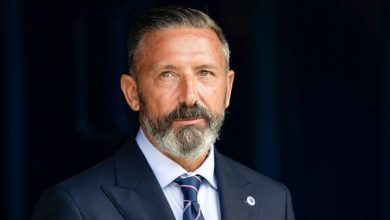
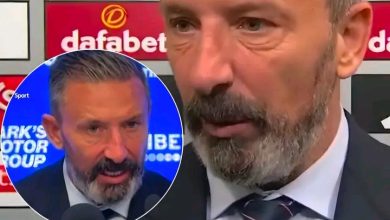
McInnes’s comments following the 1-1 draw at Dundee United carried an unmistakable edge of urgency that supporters would do well to take note of, because managers rarely speak that candidly about incoming transfer business unless they feel genuinely that the situation demands it. Reflecting on his side’s underwhelming start to the campaign, he acknowledged plainly that the evidence from that opening fixture suggested there remained loads and loads still to do in terms of squad building, even after a summer that has already brought in eight new faces. Crucially, though, he did not stop at simply acknowledging the scale of the task. McInnes went further, stating in no uncertain terms that the new signings needed to land pretty soon, a phrase that will have registered clearly inside Ibrox’s recruitment department as a public marker being laid down by their head coach. He was careful to credit the effort already made by those working to get the right players through the door, but the underlying message was unmistakable: encouragement over long-term project-building was, for now, being tempered by a very real need to get bodies into the building quickly enough to make a genuine difference to a congested run of important upcoming fixtures.
That kind of public pressure from a head coach on his own hierarchy is not something managers apply lightly, particularly not in their opening months in the job when the temptation is often to project unity and patience rather than visible urgency. McInnes’s willingness to be this direct suggests either a strong existing relationship of trust with the recruitment staff around him, allowing for candid public comments without fear of undermining that working relationship, or a genuine concern that without applying some outward pressure, the pace of incoming transfer activity risked stalling at precisely the wrong moment of the season. Either way, the swift emergence of concrete, advanced talks over Yokota within days of those comments being made will likely be read by supporters as evidence that the message has landed exactly where it needed to.
Turning to Yokota himself, the testimonials emerging from those who have worked closely with him paint an encouraging picture of a player whose qualities extend well beyond the surface-level statistics that so often dominate transfer coverage. Hannover’s sporting director Ralf Becker, reflecting on the forward’s debut season in German football, described a player who made a strong first impression and contributed several crucial goals across the campaign, explaining that it became clear relatively early in the season that the club wanted to exercise the option to convert his arrangement into a permanent contract. That kind of unprompted institutional endorsement, delivered by the very sporting director whose job it is to assess whether a player merits long-term investment, carries real weight, and it suggests that whatever fee Rangers are now paying to prise Yokota away, Hannover themselves valued him highly enough to have already committed to signing him permanently before ever countenancing a sale.
Perhaps even more revealing, though, was the assessment offered by Hein Vanhaezebrouck, the experienced Belgian coach who previously managed at Gent and has therefore overseen his fair share of talented technical players over a long managerial career. Vanhaezebrouck’s description of Yokota focused less on statistical output and more on the intangible qualities that so often determine whether a technically gifted player actually succeeds in a new, more physically demanding environment. He characterised Yokota as a smaller player physically, but one blessed with genuine pace, comfortable in possession, equipped with good vision, capable of operating across multiple positions, and, in Vanhaezebrouck’s own words, a genuinely intelligent footballer. That combination of attributes, coming from a coach with no particular incentive to inflate the reputation of a player who was never actually his own, offers a valuable independent perspective on exactly what Rangers might be getting, distinct from the more self-interested praise a selling club’s own sporting director might understandably offer during transfer negotiations.
The suggestion that Yokota can operate across several positions is worth dwelling on, given the specific squad-balance issue McInnes is trying to solve. A winger capable of playing multiple roles within an attacking system offers considerably more tactical value than a rigid, single-position specialist, particularly for a manager overseeing a squad still being rebuilt from close to first principles. Whether deployed as a traditional wide outlet looking to isolate opposition full-backs in one-on-one situations, tucked inside as a secondary creative presence linking play between midfield and attack, or even utilised in a more advanced, inverted role cutting inside onto a stronger foot, that kind of positional versatility would give McInnes genuine tactical flexibility to adjust his approach depending on the opposition and the specific demands of any given fixture, rather than being locked into a single, predictable attacking pattern that opposition analysts could plan against with relative ease.
Concerns about physical stature, of the kind Vanhaezebrouck’s comments touch on, will inevitably prompt some debate among a Rangers support well aware of just how physically uncompromising Scottish Premiership football can be, particularly during the demanding winter months when pitches deteriorate and games are frequently decided by duels won and lost as much as by technical quality. Smaller, technically gifted wingers have not always found the transition to Scottish football straightforward, with some struggling to cope with the sheer physical intensity that full-backs and wide midfielders bring to Premiership contests. However, the same profile of player, when equipped with genuine pace and quick decision-making, as Vanhaezebrouck’s assessment suggests Yokota possesses, has just as often thrived precisely because that combination of speed and intelligence allows a player to avoid the kind of prolonged physical confrontations that can otherwise expose a lack of natural bulk. McInnes and his coaching staff will have factored all of this into their assessment before pushing this deal toward completion, and it will be fascinating to see exactly how they look to protect and utilise Yokota’s attributes once he is settled into the group.
The financial structure of the deal itself is worth examining a little more closely too, given the slightly differing figures that have emerged across various reports. The core agreement appears to be worth in the region of €3.3million, with a further €700,000 available through performance-related and appearance-based add-on clauses, together taking the total potential value of the package to approximately €4million, translating to somewhere in the region of £3.4million once converted into sterling at current exchange rates. That structure, weighted toward a solid guaranteed fee with meaningful additional incentives attached, is fairly typical of modern transfer negotiations involving players moving from continental European leagues to Scottish football, allowing the selling club some protection against undervaluing a player who goes on to significantly outperform expectations at his new club, while giving Rangers themselves a degree of control over their immediate cash outlay during what has already been an unusually busy and expensive summer of squad reconstruction.
Set in the context of Rangers’ wider summer rebuild, Yokota’s expected arrival as a ninth new signing underlines just how comprehensively McInnes has set about reshaping his squad since taking charge at Ibrox. The incoming business already conducted this summer spans almost every area of the pitch, with Lawrence Shankland arriving to lead the line, Dan Neil and Cammy Devlin strengthening the central midfield, defensive reinforcements added in the form of Vanja Dragojevic, Olwethu Makhanya and Ben Godfrey, Ross McCrorie returning to provide homegrown steel and versatility, and Ivor Pandur brought in to contest the goalkeeping jersey. Against that backdrop of near wholesale renewal across defence, midfield and attack, the specific and persistent gap in genuine wide options has stood out as one of the few remaining unresolved issues in an otherwise thoroughly reshaped squad, which goes a long way toward explaining both the urgency in McInnes’s public comments and the speed with which Rangers appear to have moved once serious talks over Yokota gathered momentum.
There remains, of course, the not insignificant matter of adaptation. Moving from German second-tier football, however productive an individual campaign might have been there, into the unique pressures of Scottish Premiership football at a club with the history, expectation and permanent scrutiny that follows every Rangers signing is rarely a seamless transition, no matter how encouraging the underlying data or the character references from those who have worked closely with a player. Yokota will need time to settle into a new country, a new dressing room, a new style of football and an entirely different level of external scrutiny than anything he is likely to have experienced during his time in Germany. Given McInnes’s own public comments about wanting new arrivals to make an impact quickly rather than requiring an extended bedding-in period, there is likely to be limited patience available for a gradual introduction, placing real pressure on both player and coaching staff to accelerate that adaptation process as efficiently as possible once the move is finalised.
There is also the small matter of European football to factor into the timeline of Yokota’s potential integration. With Rangers still working through Europa League qualification against Jagiellonia Bialystok in the coming weeks, McInnes will be conscious that any new signing needs to be available and match-ready as quickly as possible, not only for domestic fixtures but for continental ties that carry their own unique physical and tactical demands. European qualifiers of this nature often turn on fine margins, and having a settled, in-form winger capable of stretching opposition defences and offering a genuine outlet on the counter-attack could prove decisive in ties that Rangers will be expected, but by no means guaranteed, to navigate successfully. That additional context adds further weight to McInnes’s public insistence that new arrivals need to land and integrate quickly, since the club’s European ambitions this season are running on a parallel and equally demanding timeline to the domestic title race.
For a Rangers support that has watched their side struggle for genuine width and end product from wide areas for much of the past year, and who sat through a frustrating opening-day stalemate against Dundee United that exposed exactly those shortcomings in painfully obvious fashion, the swift progress toward a Yokota deal will be viewed as a significant and welcome response to a problem that had become increasingly difficult to ignore. Whether he proves capable of solving it in practice, rather than simply on paper and in the glowing character references of those who previously coached and worked alongside him, remains to be seen once he actually pulls on the light blue jersey in competitive action. But with McInnes having made his own expectations publicly and unambiguously clear, and with Rangers’ recruitment department appearing to have responded with genuine urgency, all the early signs point toward a club that, at the very least, is listening carefully to its own head coach as it enters the closing weeks of what has already been one of the busiest transfer windows in the club’s recent history.
There is a wider governance story running underneath all of this too, one that will not be lost on a Rangers support who have grown increasingly attentive to how ownership and management interact behind the scenes at Ibrox. A head coach publicly stating that new signings need to arrive quickly is, in its own quiet way, a form of accountability being placed on those responsible for delivering the transfer business, and how swiftly and effectively that message is acted upon says a good deal about the working relationship between McInnes and the recruitment infrastructure around him. Early indications, with a ninth signing now closing in on completion within days of those comments being made, suggest a club structure capable of moving with real purpose when its manager applies pressure publicly. Should that pattern continue through the remainder of the window, and should Yokota himself settle quickly enough to have a genuine early impact, it would represent an encouraging sign of alignment between the football side of the operation and the manager tasked with delivering results on the pitch, something that has not always been guaranteed at Ibrox in recent years regardless of managerial regime.