YOKOTA SET FOR IBROX MEDICAL AS RANGERS FINALLY LAND THEIR WIDE-MAN AFTER WHIRLWIND SUMMER OF SEARCHING

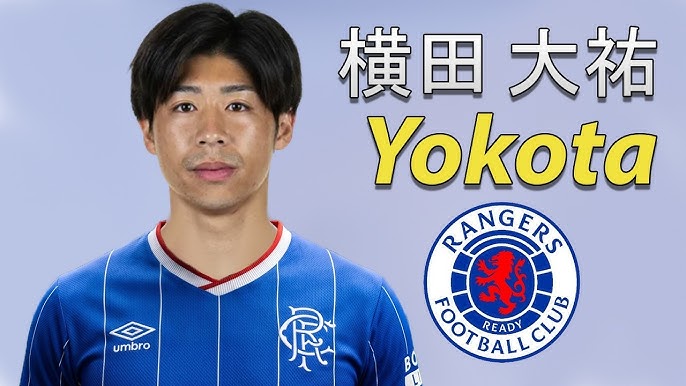
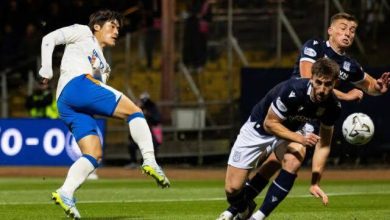
Rangers appear to have finally found the winger they have spent the entire summer hunting for, with Daisuke Yokota set to undergo a medical at Ibrox as the club close in on what would become their ninth signing of the transfer window. The pursuit of fresh creativity out wide has been one of the defining storylines of Derek McInnes’ first summer in charge, and it is a search that took on renewed urgency after a Rangers side short of invention and cutting edge could only draw 1-1 with Dundee United on the opening day of the Scottish Premiership season. That underwhelming afternoon appears to have crystallised something for McInnes and his recruitment staff, and the club have wasted little time in acting on the lessons taken from it, moving decisively in the market to address the shortfall in width and craft that was so evident against a well-organised United side.
The 26-year-old had not necessarily been the most prominent name on Rangers’ radar throughout the window. In recent weeks supporters have grown used to hearing Amario Cozier-Duberry, Vaclav Cerny and Jahnoah Markelo mentioned in connection with the club’s search for attacking reinforcements, each name representing a different profile of winger and a different level of risk and reward for a Rangers recruitment department working under considerable pressure to get this rebuilding window right. Yet it now appears that the club’s focus has shifted decisively toward Yokota, whose move from Hannover 96 looks to be advancing rapidly toward completion, a reminder that in modern football’s transfer landscape, the players occupying the headlines for weeks are not always the ones who end up walking through the door. Recruitment departments operate on data, video analysis and behind-the-scenes negotiating leverage that supporters rarely see in real time, and Yokota’s emergence as Rangers’ actual target rather than any of the previously touted names speaks to exactly that dynamic.
Each of the previously linked names carried its own complications that may ultimately have pushed Rangers toward an alternative route. Cozier-Duberry, still tied to Brighton and viewed as a longer-term development prospect rather than an immediate first-team fixture, would likely have required a loan structure or a fee reflecting his considerable potential rather than his current level of first-team experience. Cerny, an established and productive performer in his own right, may simply have proven too costly or too difficult to prise away from his current situation within the tight financial framework Rangers are operating under this summer, having already committed significant resources elsewhere in the squad rebuild. Markelo, meanwhile, has continued to generate speculation without any of it translating into concrete negotiations, the kind of situation that can drag on for weeks without ever producing genuine momentum. Against that backdrop, Yokota’s availability, his statistical profile and the comparatively smooth nature of negotiations with Hannover appear to have combined to make him the most realistic and efficient solution to a problem Rangers had been trying to solve since the early weeks of the window.
Rangers have reportedly agreed a deal worth in the region of £2.8million with the German second-tier club, a fee that, while not enormous by the standards of some of Europe’s bigger leagues, represents a significant outlay for a player arriving from the 2. Bundesliga into Scottish football, and one that reflects the value Rangers’ analysts have clearly identified in Yokota’s underlying performance data. The structure of the deal, and the pace at which it has moved from reported interest to an imminent medical, suggests a negotiation that has been conducted efficiently and without the kind of prolonged haggling that has characterised some of Rangers’ other business this summer, including the protracted sagas surrounding departing players such as Nicolas Raskin.
The trusted transfer insider Fabrizio Romano was the first to confirm that a verbal agreement had been struck between the two clubs, breaking the news on Monday evening and setting off a wave of anticipation among the Ibrox support that had been waiting patiently for concrete progress on the winger front. Romano’s initial reporting outlined the core financial terms of the deal, before further detail emerged that pushed the overall package, including add-ons, toward a figure in the region of £3.4million once performance-related and appearance-based incentives are factored into the final structure. Add-on clauses of that nature have become increasingly common in modern transfer negotiations, allowing selling clubs like Hannover to protect themselves against undervaluing a player who goes on to exceed expectations at his new club, while giving buying clubs like Rangers the flexibility to manage their upfront outlay more carefully in what has already been an expensive summer of squad reconstruction under new ownership scrutiny.
Sky Germany’s well-connected reporter Florian Plettenberg followed up Romano’s initial story with further specifics, confirming that the Japanese international would travel for his medical examination on Tuesday, the final procedural hurdle before pen can be put to paper on a permanent transfer. Plettenberg’s reporting characterised the deal as a strongly negotiated piece of business on Hannover’s part, guided by sporting director Jonas Boldt, suggesting that while Rangers have secured their man, the Bundesliga.2 club have not simply waved their asset out the door on the cheap. Instead, the terms appear to reflect a negotiation in which Hannover extracted reasonable value for a player who enjoyed a productive campaign in German football last season, while Rangers, for their part, have moved with the kind of conviction and speed that suggests genuine confidence in Yokota’s profile and suitability for Scottish football.
According to Plettenberg’s update, Yokota is expected to sign a long-term contract with the Glasgow club once the medical has been successfully completed, a detail that underlines the level of commitment on both sides to seeing this deal through to a swift and clean conclusion. Long-term contracts of this nature are increasingly the norm in modern recruitment strategy, allowing clubs to protect the value of their investment, provide players with security as they settle into a new country and a new style of football, and avoid the kind of expiring-contract anxieties that have complicated situations involving other players at Ibrox in recent windows. For a club that has already conducted so much transfer business this summer, adding a further multi-year commitment to the books is a clear signal of the medium-term planning underpinning this rebuild, rather than the kind of short-term, reactive dealing that has sometimes characterised previous Rangers windows under different management structures.
Turning to the question of exactly what kind of player Rangers are getting, the underlying data from Yokota’s season at Hannover paints an encouraging picture for a Rangers support desperate for genuine creativity and end product from the flanks. Operating predominantly as a right-winger, Yokota registered four goals and five assists across 30 appearances in the 2. Bundesliga last season, numbers that, while not eye-catching in isolation, take on considerably more significance when set against the underlying output metrics that so often inform modern recruitment decisions. According to Fotmob’s statistical tracking, Yokota averaged 2.18 shots per 90 minutes, a healthy volume for a wide player that suggests a willingness to get into dangerous positions and take responsibility in front of goal rather than simply functioning as a provider. Alongside that, he created 1.45 chances per game on average, a figure that speaks to a genuine creative influence on his side’s attacking play, while his 5.65 touches in the opposition box per 90 minutes indicate a player who consistently finds his way into the most dangerous areas of the pitch rather than drifting to the periphery of matches.
Perhaps just as significant for a McInnes side built around a clear defensive structure and a willingness to work without the ball, Yokota’s defensive numbers suggest a winger who does not shirk his responsibilities out of possession. His 1.14 tackles per 90 minutes, combined with 3.53 recoveries and 0.67 clearances per game, paint the picture of a wide player who contributes meaningfully to his team’s defensive stability rather than simply waiting to receive possession in transition. In an era of Scottish Premiership and European football where wingers are increasingly expected to press, track back and contribute to a team’s overall defensive shape, that kind of all-round profile will have been a significant factor in why Rangers’ recruitment department identified Yokota as a target worth pursuing with real conviction, rather than settling for a purely attack-minded specialist who might struggle to adapt to the physical and tactical demands McInnes places on his wide players.
It is not difficult to see why a player offering that particular combination of attacking output and defensive diligence would appeal to a Rangers recruitment team working closely with McInnes to build a squad capable of competing on multiple fronts this season. The data suggests a modern, two-way winger rather than a luxury player, precisely the kind of profile that fits a manager known for demanding work-rate and tactical discipline from his attacking players just as much as end product. Whether that translates seamlessly into the different physical and tempo demands of Scottish football remains, of course, the great unknown that accompanies every transfer of this nature, but the statistical foundation Rangers have clearly built their decision upon offers genuine grounds for optimism among a fanbase who have watched their side struggle for craft and penetration out wide for much of the past year.
Given the scale of the challenge facing Rangers this season, and the sheer volume of incoming and outgoing business already conducted under McInnes, there is considerable pressure attached to every one of this summer’s signings delivering an impact relatively quickly rather than requiring an extended adaptation period. Yokota arrives into a Rangers side that has already undergone wholesale changes across almost every area of the pitch, with Lawrence Shankland brought in to spearhead the attack, Dan Neil and Cammy Devlin added to strengthen the midfield, Vanja Dragojevic and Olwethu Makhanya bolstering defensive options, Ben Godfrey bringing Premier League experience to the back line, Ross McCrorie returning to add homegrown versatility, and Ivor Pandur arriving to contest the goalkeeping jersey. Should Yokota’s move be finalised as expected, he would become the ninth new face integrated into the squad this summer, a remarkable scale of turnover that speaks to just how comprehensively McInnes and his recruitment team have set about reshaping the Ibrox squad in a single window.
That scale of investment and squad turnover inevitably raises the stakes considerably, both for the new manager and for the ownership group overseeing the club’s recruitment strategy. The 49ers Enterprises group, led by Andrew Cavenagh, has taken an increasingly hands-on role in shaping Rangers’ recruitment approach since assuming control of the club, bringing with it a more data-driven, analytically rigorous methodology that has clearly informed the decision to pursue a player like Yokota, whose underlying numbers stack up favourably even if his name recognition among the wider Rangers support may be more limited than some of the alternatives previously linked with a move to Ibrox. Should this rebuild fail to deliver silverware or a genuine title challenge this season, however, there is little doubt that every one of these recruitment decisions will come under intense retrospective scrutiny from supporters and media alike, with the ownership group’s broader transfer strategy inevitably drawn into that conversation regardless of the statistical logic underpinning any individual signing.
There is also a broader footballing narrative worth considering here, one that extends beyond Ibrox and speaks to a wider shift in how European clubs, including those in Scotland, now approach the Japanese market. Japanese players have become an increasingly prominent and increasingly trusted commodity across European football in recent years, prized not only for their technical ability and tactical intelligence but for a professionalism and adaptability that has seen a growing number of them thrive after moves to England, Germany, Belgium and beyond. Clubs across the continent have taken note of the pathway that sees promising talents progress through Japan’s domestic J.League before testing themselves in Europe’s second-tier competitions, using that experience as a stepping stone toward bigger opportunities, and Yokota’s own career trajectory fits that increasingly familiar pattern. Rangers will hope that the qualities so often associated with Japanese imports elsewhere in Europe — discipline, tactical intelligence and a willingness to adapt quickly to new environments — prove just as evident in Yokota’s case as he adjusts to life in Scottish football.
It is worth remembering, too, that the transition from German second-tier football to the physical and tactical demands of the Scottish Premiership, along with the added pressure and expectation that comes with representing a club of Rangers’ size and history, is not always a straightforward one for players arriving from less prominent leagues. Scottish football carries its own unique challenges: a compressed fixture calendar, physically demanding opposition, intense media scrutiny in a country where football dominates back-page coverage, and the weight of expectation that surrounds every Old Firm fixture and cup tie. Yokota will need time to adjust to those particular demands, even allowing for the encouraging underlying numbers he produced in Germany, and how quickly he manages that adaptation could well determine how his Ibrox career is ultimately remembered by a support that has grown understandably demanding after a difficult recent period in terms of major honours.
Given the importance McInnes and his coaching staff have clearly placed on solving the creativity issues exposed during the opening-day draw with Dundee United, there will be an expectation that Yokota is eased into the side relatively quickly once the paperwork and medical formalities are complete, rather than being left to settle gradually on the periphery of the squad. With the Scottish Premiership season already under way and the small matter of Europa League qualification against Jagiellonia Bialystok also occupying space in the fixture calendar in the weeks ahead, Rangers simply do not have the luxury of allowing new signings extended settling-in periods if the club’s ambitions for the season are to be taken seriously. McInnes will be acutely aware that patience among supporters, media and ownership alike is likely to be in shorter supply than it might otherwise be for a summer signing of Yokota’s relatively modest profile, given the sheer number of changes already made to the squad and the accompanying financial outlay across the window as a whole.
For a Rangers support that has watched a stream of winger targets come and go throughout the summer without a deal materialising, the swift and largely straightforward nature of the Yokota negotiation will likely be viewed as a welcome change of pace after some of the more drawn-out sagas that have characterised aspects of this transfer window. The efficiency with which this deal appears to have progressed, from initial reports of a verbal agreement through to a confirmed medical date within the space of little more than a day, stands in fairly stark contrast to situations like the ongoing Raskin saga toward Villarreal, or the earlier collapse of interest in Tromso’s Jens Hjerto-Dahl, both of which dragged on for considerably longer without the kind of clean resolution Rangers appear to be enjoying with Yokota’s arrival.
There is also a squad-balance dimension to this signing that deserves attention. McInnes inherited a Rangers side short not just of creativity but of tactical flexibility out wide, with previous regimes often criticised for becoming predictable in their approach down the flanks. A winger with Yokota’s combination of directness, chance creation and defensive work-rate offers the new manager a genuine alternative option to rotate into his attacking setup, whether that means deploying him as an out-and-out wide threat looking to isolate full-backs in one-on-one situations, or using him in a slightly deeper, more creative role feeding runners ahead of him. That kind of tactical versatility matters enormously across a long Scottish Premiership campaign that also includes European commitments, where squad depth and the ability to alter approach from game to game can often be the difference between sustaining a title challenge and falling away during the more congested periods of the fixture calendar.
Ultimately, though, judgement on this particular signing, as with every piece of business conducted by McInnes and his recruitment staff this summer, will rest not on the elegance of the underlying data or the smoothness of the negotiation, but on performances delivered on the pitch once the season gathers momentum. Rangers fans have become understandably wary of judging transfers purely on reputation or reported fee after a period in which underwhelming Ibrox careers have sometimes followed promising underlying statistics, and Yokota will be given every opportunity in the early weeks of the season to prove that his numbers from German second-tier football translate meaningfully to the different rhythms, physicality and pressure of Scottish top-flight competition. Should he settle quickly and begin contributing the kind of end product his statistical profile suggests he is capable of, Rangers may well look back on this piece of business as one of the shrewder, more efficiently executed deals of an otherwise sprawling and eventful summer rebuild under Derek McInnes