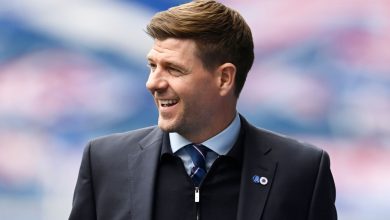
LEWIS FERGUSON’S CROSSROADS: BOLOGNA READY FOR CRUNCH TALKS AS RANGERS CIRCLE A FAMILY LEGACY

Bologna’s boardroom is bracing for a conversation that could shape the next stage of Lewis Ferguson’s career, and Rangers are among the clubs watching closely as that conversation draws near. The 28-year-old midfielder has only just touched back down from World Cup duty with Scotland, and rather than easing back into pre-season, he now finds himself at the centre of a genuine crossroads moment: fighting to reclaim a first-team starting berth under new head coach Domenico Tedesco, while simultaneously facing questions about whether his long-term future still lies at the Renato Dall’Ara at all. For a player who once ran Bologna’s midfield with the armband on his sleeve and captained the club into Champions League contention, this uncertainty is a striking departure from the trajectory he seemed set on only eighteen months ago. And for supporters at Ibrox, the interest carries a weight that goes well beyond a standard transfer scouting exercise, because Ferguson’s name has always been entangled with Rangers in a way few other targets can claim.
The past year has been a brutal one for Ferguson measured against his own lofty standards. Having built a reputation as one of the most complete box-to-box midfielders operating outside Europe’s traditional super-leagues, the former Aberdeen captain suffered an anterior cruciate ligament injury that derailed his momentum for the best part of a campaign. Anyone who follows football closely knows just how cruel an ACL injury can be: it is not simply a matter of missing a few months, but of enduring a slow, grinding rehabilitation process that tests a player physically and mentally in equal measure, before the harder task even begins of rediscovering rhythm, sharpness and full confidence once cleared to play again. Ferguson went through that entire process under Vincenzo Italiano, the coach who had taken the reins at a Bologna side still riding the emotional high of a historic Coppa Italia triumph, only to watch results and his own influence dip as the club searched for continuity amid a turbulent period on and off the pitch.
There is something symbolic in the fact that Ferguson’s captaincy, worn so proudly through some of the most memorable European nights in the club’s recent history, became emblematic of exactly the kind of struggles Bologna endured last season. A captain who cannot consistently take the field is, by definition, a captain whose influence is diminished, no matter how much respect he continues to command in the dressing room. It is against that backdrop that Tedesco’s arrival takes on real significance for Ferguson’s situation. The German-Italian coach, whose managerial background spans spells in the Bundesliga and on the international stage, is understood to regard the Scotland international as a central figure in the plans he is building for the season ahead. That is precisely the kind of vote of confidence that would normally settle a player’s future rather than complicate it — and yet a change of head coach alone cannot resolve every layered question hanging over Ferguson’s situation, which is exactly why Bologna’s hierarchy are moving now to sit down with the player and thrash matters out directly.
Sporting director Marco Di Vaio, the former Italy international whose recruitment instincts have played no small part in elevating Bologna into a fixture of the wider European conversation, struck a notably candid tone when addressing Ferguson’s circumstances before the World Cup got under way. Di Vaio effectively confirmed that club and player had reached an understanding: talks would take place once international duty was out of the way, precisely because Ferguson might wish to weigh up offers that come his way. That is not the kind of statement clubs typically make about their most prized assets, and the willingness to say it publicly tells its own story. It suggests Bologna recognise that Ferguson’s stock, injury notwithstanding, remains high enough to attract serious interest elsewhere. It also speaks to a mutual respect built over four years of service, including a period captaining the side through its most successful modern chapter — Ferguson has, in the eyes of the club’s hierarchy, earned the right to explore his options rather than be shut down by a boardroom unwilling to engage honestly with him.
For Rangers, any interest in Ferguson is about far more than simply landing a talented Scotland international entering the peak years of his career. There is a layer of sentiment and unfinished business here that stretches back further than this transfer window, further even than his move to Italy. Ferguson’s father Derek wore the light blue jersey during his own playing days, as did his uncle Barry — one of the most decorated and celebrated captains in the club’s modern era. Both men are woven into Rangers’ history, and it has been suggested by the family themselves in the past that the younger Ferguson was determined to follow that same path when he left Pittodrie in 2022. The approach from Ibrox never materialised at the time, and that near miss has lingered quietly in the background of his career ever since — the kind of what-might-have-been that resurfaces every time his name is mentioned in connection with a move back to Scotland, adding an emotional undercurrent to this round of speculation that few of Rangers’ other summer targets could hope to match.
Instead of Ibrox, Ferguson chose Serie A in 2022, a decision that raised eyebrows at the time given how few young Scottish players have historically gravitated toward Italian football rather than England or elsewhere on the continent. In hindsight, it looks like one of the shrewdest moves of his career. Bologna’s project across successive coaching regimes has been built on unearthing undervalued talent and shaping it into a cohesive, front-foot unit capable of punching well above the club’s traditional weight, and Ferguson rapidly became indispensable to that machine. His stamina, tactical awareness and knack for arriving late into the penalty area made him a persistent headache for opposition defences, while his leadership qualities saw him handed the captaincy remarkably quickly for a foreign import in Serie A — a rare honour that underlined just how highly he was regarded inside the club. The high-water mark of that spell arrived with Bologna’s run to Champions League qualification alongside their memorable Coppa Italia success, achievements that transformed Ferguson from a promising Scottish export into a genuine continental performer with a reputation extending well beyond Italy’s borders.
That reputation is exactly why prising him away from Bologna this summer will not come cheap, nor will it be simple. Rangers’ interest has reportedly taken the form of exploratory contact with the Italian club, with suggestions circulating that any prospective package could be structured around a combination of a transfer fee and a player exchange. Bologna’s own interest in Rangers midfielder Connor Barron adds a genuinely intriguing layer of complexity to the picture, with reports indicating the Italian side could look to fold the young Scot into any deal, potentially alongside a substantial fee understood to be in the region of seventeen million pounds. Barron has developed steadily through successive Rangers regimes, and interest of that magnitude from a club playing regular continental football says a great deal about how highly he is now rated within Italian scouting circles. Were a swap-style arrangement of that kind to be pursued in earnest, it would rank among the more unusual and eye-catching transfer structures involving a Scottish Premiership club in recent memory, weaving outgoing and incoming interest into a single, delicately balanced negotiation.
Complicating matters further is the mention of Nicolas Raskin’s name in connection with any prospective deal. The Belgian midfielder, who has been the subject of persistent transfer speculation of his own throughout the window, remains strongly linked with a move to Villarreal, and his situation continues to be one of the most closely followed sagas at Ibrox as the summer progresses. Raskin has been a combative and important presence in the Rangers midfield since arriving from Standard Liege, and any departure would leave a considerable void for Derek McInnes to address, whether or not that void ends up being filled by Ferguson himself. Whether the suggestion of Raskin’s name being woven into Ferguson discussions reflects genuine structural thinking behind the scenes, or is simply speculation attaching itself to two parallel storylines circulating at the same time, it illustrates just how fluid and interconnected Rangers’ midfield rebuild has become as McInnes works to reshape the squad in his own image.
McInnes, who took charge at Ibrox ahead of the new campaign, has made little secret of his desire to add further quality and creative spark to his midfield options as he builds a squad capable of competing on multiple fronts both domestically and in Europe. The Scottish Premiership title race shows no sign of becoming any less competitive, Rangers face the ongoing demands of Europa League qualification against Jagiellonia Bialystok, and the new manager is acutely aware that strengthening the middle of the park will be central to any serious challenge across the season ahead. His pursuit of a genuine playmaking presence has already hit at least one bump in the road this summer, with an approach for Tromso’s Jens Hjerto-Dahl reportedly falling away entirely after that deal collapsed — a reminder that not every target pursued by a rebuilding Rangers side under new management is destined to come off. Ferguson’s profile, as a proven performer operating at a higher level than the Scottish Premiership and one who offers precisely the physical and tactical attributes McInnes is understood to prize, would represent an entirely different calibre of addition were a deal to be completed, and one that would send a considerable statement of intent to rivals both at home and abroad.
The broader context of Rangers’ summer rebuild under McInnes has been one of the most eventful transfer windows the club has experienced in years. Already there has been a striking blend of experience and emerging promise brought through the door, with Lawrence Shankland arriving to spearhead the attack, Dan Neil and Cammy Devlin bolstering the midfield engine room, Vanja Dragojevic and Olwethu Makhanya adding to the options at the back, Ben Godfrey bringing Premier League pedigree into the defence, Ross McCrorie returning to offer homegrown steel and versatility, and Ivor Pandur arriving to contest the goalkeeping jersey. The outgoing side of the ledger has been just as eventful: Raskin’s protracted saga toward Villarreal continues to rumble on, Oliver Antman has completed his move to Anderlecht, and the futures of both John Souttar and Nedim Bajrami remain subjects of continued speculation as the window edges toward its climax. Set against that backdrop of wholesale squad renewal, a serious pursuit of a player of Ferguson’s stature would rank among the marquee deals of the entire window — arguably eclipsing anything achieved so far in terms of pure name recognition and proven pedigree at the top level of the European game.
It is worth pausing to consider exactly what Ferguson would bring to Ibrox were any deal to eventually be struck. At his best, he is a relentless, high-energy central midfielder capable of covering vast areas of the pitch, breaking up opposition attacks at source, and arriving late into the penalty area to devastating effect — a trait that produced impressive goal returns from midfield during his peak seasons in Serie A. His leadership qualities, forged through captaining Aberdeen at a young age and subsequently leading Bologna in a foreign league, would add real maturity and on-pitch authority to a Rangers dressing room still finding its shape under a new manager. There is also the not insignificant matter of his involvement with the national team; as a full Scotland international who has represented his country at a World Cup, Ferguson’s presence would immediately raise the competitive temperature in both training and matchday squads, giving McInnes access to a genuinely proven performer at the highest level Scottish football can realistically hope to attract.
Yet significant hurdles remain before such a deal could be considered anywhere close to completion. Bologna, for all Di Vaio’s candour about a post-World Cup conversation, are not a selling club desperate to offload their captain to the first side that comes calling. Their continued participation in European competition, the financial windfall that comes attached to continental football, and Tedesco’s evident desire to build his new project around Ferguson all point toward a club that will drive a hard bargain rather than accept the first offer that lands on the desk. The reported involvement of Barron and figures stretching toward seventeen million pounds hints at the scale of investment that could ultimately be required — a sum that would represent one of the more ambitious single outlays in recent Rangers history, and one that would need to be weighed carefully against the club’s other priorities in what has already been an expensive summer of squad reconstruction.
There is also the deeper question of whether Ferguson himself, having spent four years rebuilding his career and reputation in Italy, would be willing to step back into the Scottish Premiership at this particular stage of his development. Serie A remains a significantly higher standard of competition than Scottish football in terms of both quality and global visibility, and players who have successfully established themselves abroad do not always relish the prospect of returning home, even to a club as historically significant to their own family as Rangers are to the Fergusons. A great deal may hinge on how Ferguson assesses his prospects of regular football under Tedesco, the trajectory of Bologna’s project following its recent run of European exploits, and the emotional pull of potentially completing a family journey his father and uncle began decades earlier. Football decisions of this magnitude rarely turn on sentiment alone — but in a situation already carrying such a distinctive family narrative, it would be naive to suggest that element carries no weight whatsoever in how Ferguson ultimately weighs his options.
For Rangers supporters, even the possibility of a Ferguson arrival taps into a deep vein of nostalgia and unfinished business. Barry Ferguson remains one of the most revered captains in the club’s recent history, a player whose leadership and quality helped define an entire era at Ibrox, and the prospect of his nephew eventually following in those footsteps — even considerably later than originally anticipated back in 2022 — would carry symbolic weight stretching well beyond the purely footballing considerations. Whether that narrative ultimately translates into a completed transfer remains to be seen, particularly given the complexity of the structures reportedly under discussion and Bologna’s own evident reluctance to simply wave their captain out the door without receiving proper value in return.
There is a wider dimension to this story too, one that speaks to how the landscape of Scottish recruitment has shifted in an era where finances at the top end of the Premiership have grown considerably more sophisticated. A decade ago, the notion of Rangers seriously competing for the captain of a Champions League-standard European club — even one recovering from a long-term injury — would have seemed fanciful outside of loan arrangements or players moving on frees at the tail end of their careers. The fact that McInnes and his recruitment team feel confident enough to explore a structured deal involving a significant transfer fee and a player exchange underlines just how far the ambitions of the Ibrox hierarchy have shifted heading into this campaign. Whether or not the Ferguson deal ultimately materialises, the willingness to even table such an approach signals a genuine appetite for elite-level Scottish talent plying its trade abroad, rather than settling solely for proven Premiership performers or lower-tier continental imports, a pattern that has often characterised previous windows.
It also reflects a broader trend rippling across Scottish football this summer, with several clubs showing renewed confidence in pursuing Scotland internationals based overseas rather than waiting for those players to drift toward England or fall out of favour before making a move. Ferguson’s situation, complicated as it is by Bologna’s European commitments and the layered nature of any prospective deal, nonetheless fits squarely within that pattern of ambition. Should Rangers succeed in prising him away from the Dall’Ara, it would not only strengthen McInnes’s midfield options considerably but would also send a message to clubs across the continent that Rangers remain a genuinely viable and attractive destination for top-level Scottish talent, rather than simply a stepping stone en route to bigger leagues elsewhere.
None of that, of course, guarantees anything close to a swift resolution. Deals of this complexity — involving multiple clubs, a possible makeweight in Barron, financial figures reaching into the tens of millions, and a player still working his way back to full match sharpness following a serious injury — rarely move quickly, even when all parties are broadly aligned on the direction of travel. Bologna’s own priorities, shaped by their continued involvement in continental competition and Tedesco’s clear ambition to build around a settled core of players, add further layers of negotiation that will need careful management on both sides before any agreement can realistically be reached. Ferguson himself must weigh not only the purely footballing arguments but the emotional and legacy-driven pull of potentially joining the club his family has long been associated with, against the reality of stepping back from one of Europe’s stronger leagues at a stage when he remains very much in the prime years of his career.
As things stand, the situation remains fluid, with Bologna’s hierarchy set to engage directly with Ferguson in the coming days to establish precisely where his priorities lie before any transfer business can meaningfully progress. Rangers will continue to monitor developments closely, mindful of the layered family connection, the calibre of player under discussion, and the broader context of a summer rebuild under Derek McInnes that has already reshaped significant portions of the Ibrox squad. With the Europa League qualifier against Jagiellonia Bialystok looming and the Scottish Premiership season already under way following the opening-day draw at Dundee United, time is not unlimited for McInnes to conclude his midfield business — whether that ultimately means completing a deal for Ferguson, pivoting toward alternative targets, or working with the resources already at his disposal. For now, all eyes turn toward those crunch talks in Bologna, conversations that could yet determine whether one of Scottish football’s most storied footballing dynasties is about to add another remarkable chapter at Ibrox