Rangers were left to reflect on a frustrating night after failing to make the most of several clear scoring opportunities in a performance that has sparked intense debate among supporters. While football often comes down to small moments, this was one of those matches where the difference between celebrating an important victory and suffering a disappointing result came down to poor finishing in front of goal. The players created enough chances to take control of the game, but time after time they failed to find the back of the net, allowing their opponents to stay alive and eventually punish them. It was a performance that has raised serious questions about the attacking quality within the Rangers squad and whether changes could now be on the horizon.
Manager Derek McInnes has repeatedly spoken about the importance of being ruthless in both domestic and European competitions. Teams competing at the highest level simply cannot afford to waste opportunities, especially away from home where every goal can have a massive impact on the outcome of a tie. Rangers entered the match with confidence after showing encouraging signs in previous games, but confidence alone is never enough. Football rewards teams that convert chances, and Rangers failed to do exactly that when it mattered most.
Throughout the opening stages, Rangers looked comfortable in possession and moved the ball well across the pitch. Their midfield controlled long spells of the game and created several promising attacks that stretched the opposition defence. The movement from the attacking players caused problems, while crosses into the penalty area regularly found Rangers shirts. Supporters watching the match believed it was only a matter of time before the breakthrough arrived. Instead, frustration slowly began to build as one chance after another went begging.
One of the biggest talking points came when a dangerous cross found a Rangers attacker inside the six-yard box. It was the type of opportunity that professional forwards are expected to convert more often than not. The player managed to make contact with the ball, but the effort failed to hit the target, leaving the travelling supporters with their heads in their hands. Moments like that can completely change the direction of a football match. Had Rangers taken the lead, the game may have opened up even further, allowing them to control possession and force their opponents to chase the match.
The frustration continued only minutes later. Another well-worked attacking move ended with the ball falling kindly inside the penalty area. Once again, Rangers had a golden opportunity to score, yet the finish lacked the composure needed at this level. The goalkeeper was left relieved as the chance disappeared, while the Rangers bench could hardly believe another opportunity had been wasted. Managers often speak about creating chances being the difficult part, but converting them is what separates good teams from great ones.
As the game continued, the opposition grew in confidence. Every missed chance gave them renewed belief that they could survive the pressure. Football has always been a sport where momentum can change in an instant. Instead of Rangers taking complete control, their opponents slowly became more aggressive, pressing higher up the pitch and attacking with greater confidence whenever possession was won. The atmosphere inside the stadium reflected that growing belief, with the home supporters sensing that Rangers were allowing them back into the contest.
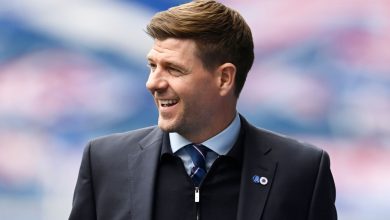
Derek McInnes cut a frustrated figure throughout the match. Standing in his technical area, he could be seen constantly encouraging his players while also expressing disappointment whenever another opportunity was wasted. Every manager knows that missed chances can become costly, particularly in European football where the margins between success and failure are incredibly small. Although McInnes never publicly blamed any individual player during the match itself, his body language told its own story. Like every Rangers supporter watching, he knew his side should have been comfortably ahead.
The biggest concern for Rangers is that this was not simply about one isolated miss. It was a series of missed opportunities that prevented the team from putting the match beyond doubt. Successful teams develop a habit of punishing opponents whenever they are on top. Rangers enjoyed enough possession and territorial advantage to score multiple goals, yet the final touch repeatedly let them down. That failure to capitalise ultimately shifted the pressure back onto themselves.
Supporters quickly took to social media after the final whistle to express their frustration. Many praised the team’s overall performance but criticised the lack of clinical finishing. Others questioned whether Rangers have enough quality in the final third to compete consistently at the highest level. Some fans even suggested that the club may need to strengthen its attacking options before the transfer window closes if they are serious about achieving their ambitions this season.
The transfer market naturally becomes part of the conversation whenever performances like this occur. Rangers have already shown a willingness to invest in improving the squad, but missed chances in important matches inevitably increase calls for further additions. Clubs across Europe know that reliable goalscorers are among the most valuable players in football, and Rangers may now face important decisions about whether additional attacking reinforcements are required before the window closes.
Despite the disappointment, McInnes is unlikely to make emotional decisions based on one performance alone. Experienced managers understand that every striker misses chances during the course of a season. The real challenge is deciding whether those missed opportunities represent a temporary loss of confidence or a deeper issue that requires changes to the starting eleven. Training performances, previous form and the player’s mentality will all influence the manager’s thinking ahead of the next match.
Competition for places has always been an important part of successful football clubs. Players know they must consistently perform if they want to remain in the starting lineup. When opportunities are repeatedly missed, teammates waiting on the bench begin to believe they deserve their chance. Healthy competition often improves standards across the entire squad, and McInnes may decide that fresh attacking options are needed simply to increase that competition.
Rangers supporters expect their team to challenge for every trophy available this season. That ambition brings enormous pressure, particularly for attacking players who are judged largely on goals and assists. Missing one clear chance can be forgiven, but wasting several in the same match inevitably attracts criticism from supporters, pundits and former players alike. The challenge now is how the team responds. Great players often produce their best performances immediately after disappointing displays, using criticism as motivation rather than allowing it to damage their confidence.
As attention now turns to Rangers’ next fixture, the focus will remain firmly on whether the team can rediscover its clinical edge in front of goal. McInnes will undoubtedly spend time on the training ground working with his attacking players, encouraging sharper movement, calmer finishing and better decision-making inside the penalty area. Rangers proved they can create opportunities against quality opposition. The next step is making sure those opportunities end up in the back of the net, because if they continue to waste chances like they did on this occasion, the consequences could become even more costly as the season progresses.