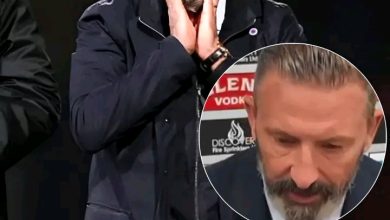
Derek McInnes Demands Attacking Reinforcements as Rangers Launch £6.4m Bid for PSV Winger Following Jagiellonia Disappointment

Rangers have moved swiftly and decisively to address their concerning attacking deficiencies, with manager Derek McInnes demonstrating clear frustration at the club’s current left-wing options following another deeply disappointing European display. The Light Blues suffered a disheartening 2-1 defeat to Polish side Jagiellonia Bialystok in the first leg of their Europa League qualifier, a result that has prompted immediate and concrete action in the transfer market as McInnes seeks to inject genuine quality and cutting edge into his frontline before the critical second leg at Ibrox.
According to multiple credible reports, Rangers have now submitted an official bid worth approximately £6.4 million for PSV Eindhoven’s highly regarded winger Couhaib Driouech, making an emphatic statement about their determination to strengthen their attacking department during the final stages of the summer transfer window. The move represents a clear indication of McInnes’ resolve to transform Rangers’ creative and attacking capabilities before the window closes, ensuring the club has the necessary firepower to compete effectively on both domestic and European fronts throughout the remainder of the campaign.
Rangers’ performance in Poland exposed numerous troubling issues that have clearly alarmed McInnes and the club’s technical staff. Despite taking an early lead through which Rangers momentarily gained the upper hand, the Scottish giants failed to capitalise on their advantage and subsequently capitulated to allow Jagiellonia to turn the match decisively in their favour. The collapse was particularly frustrating given that Rangers possessed territorial dominance and created several promising attacking situations throughout the contest, yet lacked the necessary clinical finishing and creative penetration to convert those opportunities into meaningful goal-scoring returns.
The performance highlighted a pattern that has become increasingly worrying for the Ibrox faithful: Rangers’ attacking play, while occasionally creating openings and generating promising positions, consistently lacks the consistency and quality needed to break down organised defensive structures, particularly when facing opposition willing to sit deep and concentrate defensive numbers. This is precisely the type of tactical challenge that often defines European football, where teams from less prominent leagues frequently employ compact defensive systems designed to frustrate and limit the space available to attacking players.
McInnes has recognised that his current squad possesses insufficient quality in the wide attacking areas to consistently penetrate these defensive setups, a realisation that has prompted the urgent search for additional creative firepower. The manager understands that European competition demands a different calibre of attacking player – one capable of producing moments of genuine individual brilliance when conventional passing lanes become congested and crowded.
The addition of Japanese winger Daisuke Yokota from Hannover during the summer transfer window was intended to address these exact concerns. However, the twenty-two-year-old’s competitive debut in Poland proved distinctly underwhelming, failing to make the desired impact despite his prior reputation for pace and technical ability. Yokota’s quiet display only intensified McInnes’ realisation that the club may require additional attacking options beyond what has already been brought in during the current transfer window.
Conversely, substitute teenager Findlay Curtis provided a genuine ray of hope during Rangers’ second-half performance, demonstrating the kind of energy, directness and attacking intent that the manager clearly desires from his wide players. Curtis’s impressive cameo appearance off the bench actually suggested that youth development could potentially provide solutions, yet McInnes is clearly unwilling to rely entirely on young talent when facing the demanding fixture schedule that awaits Rangers across both domestic and European competition throughout the season ahead.
Couhaib Driouech represents precisely the profile of player that McInnes is actively targeting as he seeks to transform Rangers’ attacking capabilities. The twenty-four-year-old Moroccan international has established himself as one of the Eredivisie’s more exciting and mercurial attacking talents during his time with PSV Eindhoven, a player whose performances have demonstrated considerable ability to produce moments of genuine quality and brilliance against elite-level opposition.
Throughout his time in the Dutch top flight, Driouech has proven particularly effective in European competition, where his pace, technical ability and willingness to take risks in possession have frequently created problems for opposing defensive structures. His profile as a player capable of delivering consistently at the highest levels of club football makes him an exceptionally attractive prospect for Rangers as they seek to bridge the significant gap between their current attacking capabilities and the level required to compete meaningfully in European football.
Driouech’s inconsistency during periods of his PSV career represents the only genuine concern regarding the potential transfer. There have been phases where the Moroccan international has failed to maintain the consistency required at the very highest level, leading to questions about whether he possesses the mentality and application necessary to deliver week after week at an elite institution. However, McInnes has clearly decided that Driouech’s undeniable peaks of performance outweigh concerns about his occasional dips in form, particularly given the urgency of Rangers’ current attacking requirements.
The £6.4 million bid submitted by Rangers appears strategically calculated to land close to PSV’s valuation of their winger, a factor that significantly increases the likelihood of negotiations eventually yielding a successful conclusion. Dutch reports suggest that PSV remain open to selling the player during the current transfer window, particularly as they themselves seek to generate revenue for potential summer acquisitions and squad improvements ahead of their own European campaign.
However, the existence of a formal bid from Rangers does not automatically guarantee a swift conclusion to negotiations. PSV may well attempt to drive the price higher through a period of negotiating theatre, whilst Rangers will conversely seek to maintain pressure on the Dutch side by demonstrating genuine competing interest from alternative sources or by suggesting they possess backup options should PSV demand becomes unreasonable.
Even more crucially, according to reports from Eindhovens Dagblad, Rangers have not yet succeeded in reaching a personal agreement with Driouech himself regarding contract terms and salary expectations. This represents a significant complication in the transfer process, as even if Rangers successfully negotiate an acceptable fee with PSV, they must simultaneously satisfy the player’s own financial and competitive ambitions before any deal can be finalised and completed.
The player’s preference regarding a potential move to Scotland must not be underestimated as a factor in the equation. Driouech will need to be genuinely convinced that joining Rangers represents an attractive proposition – both from a sporting perspective in terms of competing opportunities and from a financial standpoint in terms of personal remuneration. A player of Driouech’s proven quality may harbour alternative options or require convincing that Rangers represents a club capable of offering genuine competitive advantage and career development.
Derek McInnes has established himself as a manager with clear and defined tactical principles centred around dynamic attacking play and the capacity to manufacture numerical advantages in midfield. His football emphasises width, pace and penetration, requiring attacking players capable of operating with genuine independence whilst also functioning effectively within a structured tactical framework.
The frustration evident in McInnes’ response to the Jagiellonia performance stems from a fundamental mismatch between his desired tactical approach and the current quality of personnel available to execute that strategy at the highest level. The manager requires wingers capable of delivering consistent end-product through both crosses and cut-backs, as well as possessing the ability to create space through individual dribbling and take-on capability when conventional attacking patterns are sufficiently congested to require alternative approaches.
Driouech’s profile aligns more closely with these requirements than the current options available to McInnes. The PSV winger possesses genuine pace, the technical capability to beat defenders in one-on-one situations, and the creative intelligence required to identify and execute moments of genuine individual brilliance when the match demands exactly such contributions from attacking players.
Rangers’ pursuit of Driouech must be understood within the broader context of the club’s Europa League ambitions and the competitive requirements necessary to progress through European qualification stages. The second leg against Jagiellonia at Ibrox represents a significant challenge, as Rangers must now overturn a one-goal deficit against opposition that has already demonstrated tactical competence and defensive solidity across ninety minutes at their own ground.
European football demands a different calibre of attacking player than is often required in domestic Scottish football. Whilst Rangers can frequently dominate possession and territory in Scottish Premier Division matches against less technically capable opposition, European football regularly presents tactical challenges requiring genuine quality in wide areas – players capable of creating advantages through individual ability when standard patterns of play prove insufficiently effective.
The urgency evident in McInnes’ transfer activity stems directly from this recognition. The manager understands that Rangers cannot afford to limp through European qualification stages with insufficient attacking firepower, as such an approach risks early elimination and the considerable financial implications that would follow. A genuine competitive winger like Driouech could potentially prove the difference between successful progression and disappointing knockout stage elimination.
The competitive context of Scottish football cannot be separated from Rangers’ transfer urgency. Celtic’s ongoing dominance of the domestic league continues to place immense pressure on Rangers to maximise every advantage they can generate, whether through domestic acquisition or the strategic recruitment of proven quality from overseas markets.
McInnes is acutely aware that Rangers cannot afford to fall further behind Celtic during the current campaign. Any perception that Rangers lack the attacking ambition or quality to challenge for domestic honours would only reinforce Celtic’s position of dominance and potentially demoralise the Rangers support base. The pursuit of a player of Driouech’s calibre sends an important message about McInnes’ commitment to building a competitive squad capable of challenging across multiple fronts throughout the season.
The manager’s frustration with current attacking options must be understood partly as a function of the gap between Rangers and their principal rivals. Whilst Rangers continue to struggle with inconsistent attacking play, Celtic boasts significantly more depth and quality in their attacking arsenal. Addressing this disparity through recruitment represents one of the few methods available to narrow the competitive gap during the current campaign.
The timing of Rangers’ pursuit of Driouech cannot be separated from the imminent closure of the summer transfer window. European football operates within strict financial regulations regarding squad registration deadlines, meaning that any player acquired must be registered within specific timeframes to be eligible for European competition. This timeline pressure works both in Rangers’ favour – by creating urgency for PSV to conclude negotiations – and against them by limiting their negotiating flexibility should alternative options require consideration.
McInnes will be acutely aware that the coming days represent a crucial period where transfer momentum can shift rapidly. A successful conclusion to negotiations with PSV and agreement with Driouech could theoretically be reached relatively quickly if all parties demonstrate genuine commitment to completing the deal. Conversely, should negotiations stall or complications arise regarding personal terms, Rangers may find their window of opportunity quickly closes, forcing them to either pursue alternative targets or accept strengthening their squad with limited alternatives.
Beyond the immediate tactical requirements, Driouech’s potential acquisition would provide Rangers with considerably improved squad depth in attacking areas. The current situation sees Rangers overly reliant on a limited number of attacking options, a reality that becomes particularly problematic during periods of injury or suspensions to key personnel.
Yokota’s underwhelming debut performance highlights the risks inherent in over-reliance on single summer signings, particularly when those players require an adjustment period to acclimatise to Scottish football and the specific tactical demands of Rangers’ system. By securing an additional attacker of proven quality, McInnes would significantly improve the flexibility available to him in terms of team selection and tactical deployment across the fixture schedule.
The investment of £6.4 million, whilst representing a meaningful expenditure for Rangers, appears justified given the potential impact such a player could deliver across a full season of domestic and European football. A player capable of influencing matches through creative contributions and goal-scoring potential could easily justify such an investment through the additional points generated in domestic competition and the extended European participation secured through successful progression in continental tournaments.
The intensity of McInnes’ transfer activity also reflects the mounting pressure on the manager to deliver results befitting Rangers’ status and financial resources. The early-season struggles against Jagiellonia represent precisely the type of disappointing performance that can quickly undermine managerial confidence and generate supporter frustration if not addressed through concrete corrective action.
By aggressively pursuing attacking reinforcements, McInnes demonstrates clear commitment to addressing identified weaknesses and implementing solutions capable of improving performance. This proactive approach contrasts sharply with the passivity that might characterise a manager less confident in his tactical analysis or less assured in his position within the club hierarchy.
The manager’s evident frustration following the Jagiellonia defeat appears rooted in confidence that identified problems possess identifiable solutions through strategic recruitment. Rather than accepting the squad’s current limitations, McInnes appears determined to augment his attacking options with genuine quality capable of transforming Rangers’ competitive position during the remainder of the campaign.
The forthcoming second leg at Ibrox against Jagiellonia assumes enormous significance within Rangers’ season trajectory. A successful overturning of the one-goal deficit would provide genuine relief and maintain European participation at a level befitting Rangers’ status. Conversely, elimination at this stage would represent a genuine crisis for the club and potentially place McInnes’ position under considerable scrutiny.
The acquisition of Driouech or a similar-calibre attacker could feasibly provide the additional creative firepower necessary to manufacture the goals required to progress. European football frequently rewards investment in attacking quality, and Rangers’ pursuit of such reinforcement demonstrates clear strategic thinking regarding the tactical requirements necessary for successful progression through the competition’s qualifying stages.
Supporters will eagerly await developments in this transfer pursuit over the coming days, as the club’s attacking ambitions for the remainder of the campaign may well depend upon successfully concluding negotiations with PSV and securing Driouech’s services. McInnes’ evident determination to strengthen his attacking resources sends an unmistakable message: Rangers remain genuinely committed to competing at the highest levels of European football and will invest strategically in addressing identified shortcomings through judicious recruitment from the continental market.