The Reckoning: Rangers’ 2-1 Home Defeat to Hibernian Exposes McInnes’ Early Managerial Crisis and Questions His Entire Tactical Vision


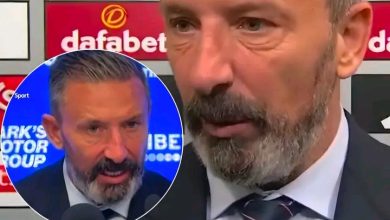
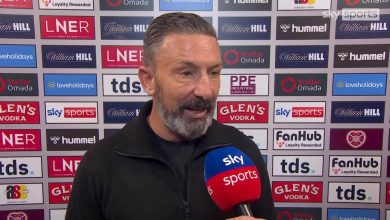
Derek McInnes’ claim that Rangers “aren’t as bad as people think” following a humiliating home defeat to Hibernian rings hollow when confronted with brutal competitive reality: the club now stands five points behind Celtic after merely two league games, remains winless in three competitive matches, and has suffered damaging home loss that should not have been remotely competitive given resource differential.
The manager’s post-match comments—defending his team’s performance, questioning the penalty decision, emphasizing “effort” and claiming Rangers were “the better team”—represent precisely the kind of defensive rationalization that characterized failed managerial regimes throughout football history. When managers begin explaining away defeats through external factors (refereeing decisions, injuries, VAR controversy) rather than acknowledging tactical deficiencies and performance inadequacy, the slippery slope toward organizational dysfunction becomes evident.
The Hibernian defeat represents far more than single fixture disappointment. The loss crystallizes emerging reality regarding whether McInnes’ tactical approach, squad integration, and managerial competence can satisfy Rangers’ competitive demands or whether the appointment represents fundamental organizational error that will require addressing through managerial change.
The 4-3-3 formation McInnes selected—featuring three midfielders and width-based attacking emphasis—proved catastrophically unsuited for defending organized opposition. Rather than generating attacking advantage through additional midfield control, the formation sacrificed defensive stability while failing to produce compensatory attacking threat sufficient for compensating defensive vulnerability.
Hibernian, operating from disciplined defensive structure, systematically exploited the defensive gaps McInnes’ formation created. The Edinburgh side’s goal-scoring moments directly resulted from Rangers’ defensive organization failures—failures that McInnes’ tactical framework appears inadequate for preventing.
The penalty decision—while perhaps controversial—emerged from Rangers’ defensive positioning and organization deficiency. A better organized defensive team does not find itself in circumstances where controversial penalty decisions determine match outcome. McInnes’ focus on the refereeing decision represents deflection from acknowledging his own tactical vulnerability.
The 4-3-3 formation choice revealed McInnes’ misreading of what Rangers required against organized opposition. Rather than attempting attacking innovation, McInnes should have prioritized defensive solidity and controlled possession preventing Hibernian’s counterattacking opportunities. Instead, the manager gambled on attacking threat that never materialized while leaving defensive foundation exposed.
Examining Rangers’ defensive performance reveals systematic organization failure that transcends individual player error. While Tuur Rommens may have struggled defensively, the primary failure involved McInnes’ tactical framework providing inadequate defensive screening and organizational structure.
Olwethu Makhanya’s debut, rather than providing defensive stability, exposed the risk of introducing untested player against organized opposition. The South African defender, lacking elite-level competitive experience, struggled with positional demands that Scottish Premiership football’s organized defending requires. McInnes’ gamble on Makhanya backfired completely.
Emmanuel Fernandez, rather than anchoring defensive organization, found himself constantly unsupported and forced into reactive defending against Hibernian’s intelligent attacking movement. The experienced center-back could not adequately organize defensive structure without competent partner support.
The fullback positioning similarly proved problematic, with Rangers’ wide players unable to maintain defensive responsibility while contributing attacking width. Hibernian’s attackers exploited the tactical gaps McInnes’ formation created.
Rather than acknowledging these systematic defensive failures, McInnes’ post-match comments emphasized effort and external factors. This represents classic deflection from managerial accountability
The loss of Youssef Chermiti to injury during the match represents additional calamity compounding McInnes’ immediate tactical failure. Chermiti, Rangers’ most dangerous attacking player and subject of Galatasaray’s club-record £22 million bid (which Rangers rejected), represents irreplaceable attacking asset.
The knee injury requiring boot and brace creates genuine concern regarding extended absence affecting Rangers’ season trajectory. Chermiti’s loss, following competitive disappointment and tactical failure, transforms early season challenge into genuine organizational crisis.
McInnes’ post-match comments regarding Chermiti—hoping “he’s been lucky” and suggesting “we could certainly do with that”—represent inadequate response to potentially season-defining injury. The manager should be implementing contingency planning and tactical adjustment rather than hoping for favorable injury assessment.
The Chermiti injury, compounded by three consecutive matches without victory and growing defensive vulnerabilities, suggests Rangers’ season trajectory potentially compromised far earlier than organizational supporters anticipated.
McInnes repeatedly emphasized the controversial penalty decision, claiming he “didn’t think it was a penalty” and suggesting the VAR referral was inappropriate. While penalty decisions can be subject to interpretation, McInnes’ focus on the refereeing decision represents deflection from his own tactical responsibility.
The penalty emerged from Rangers’ defensive positioning and Vanja Dragojevic’s early-match concentration lapse. A better organized team, operating within coherent tactical framework, minimizes circumstances where controversial decisions determine outcomes.
Elite managers acknowledge refereeing inconsistency while maintaining focus on controllable factors—tactical execution, defensive organization, player performance standards. McInnes’ emphasis on the penalty decision, rather than acknowledging his own tactical vulnerability, represents managerial immaturity.
The penalty decision, while perhaps debatable, should not have determined match outcome if Rangers possessed defensive quality and tactical organization to prevent Hibernian’s second goal. The second goal—described by McInnes as emerging “out of the blue”—suggests inadequate tactical awareness and defensive preparation
Vanja Dragojevic’s first competitive appearance resulted in the penalty decision that McInnes claims cost Rangers the match. The summer signing from Partizan Belgrade, integrated into Rangers’ midfield, appears unprepared for Scottish Premiership’s elite competitive demands.
Dragojevic’s inclusion represented McInnes’ deliberate tactical choice, prioritizing the midfielder over Mohamed Diomande. The selection proves strategically indefensible given the penalty resulted directly from Dragojevic’s reckless challenge on Jason Kerr.
Rather than acknowledging the selection error and Dragojevic’s tactical unsuitability, McInnes focused organizational blame externally through refereeing criticism. This represents clear managerial accountability deflection.
The Dragojevic selection choice raises fundamental questions regarding McInnes’ tactical judgment and his assessment of which personnel suit Rangers’ immediate competitive requirements.
While examining McInnes’ failures, organizational acknowledgment should extend to Hibernian’s competent performance. David Gray’s Edinburgh side demonstrated tactical discipline, defensive organization, and clinical counterattacking execution.
Hibernian’s victory represents legitimate competitive achievement rather than Rangers’ gift through poor tactical execution. The Edinburgh side’s organized approach systematically neutralized Rangers’ attacking threat while exploiting defensive vulnerability through intelligent movement.
Gray’s tactical organization—preventing Rangers from establishing possession rhythm while creating counterattacking opportunities—represents exactly the kind of structured approach McInnes should have anticipated and prevented through superior tactical preparation.
Rangers’ winless start and five-point deficit behind Celtic after merely two games creates immediate competitive crisis. While the season remains early, accumulating competitive disadvantage during opening fixtures historically proves difficult to overcome.
Teams that establish early momentum maintain confidence, tactical coherence, and organizational unity facilitating continued success. Conversely, teams struggling early develop organizational dysfunction, confidence erosion, and psychological fragility making recovery progressively more difficult.
McInnes, rather than confronting the severe nature of Rangers’ early-season trajectory, attempted minimizing the competitive situation through post-match comments. Such minimization, while perhaps protecting short-term morale, demonstrates inadequate grasp of competitive gravity.
Five points after two games represents not minor setback but genuine crisis requiring urgent organizational response and fundamental tactical reassessment
McInnes now enters fourth competitive match without victory. While the sample size remains limited, three consecutive matches without winning raises fundamental questions regarding managerial competence and tactical adequacy.
Elite managers, even during transition periods, typically establish early victories demonstrating tactical competence and player development. McInnes’ inability to secure victories against Dundee United (draw), Jagiellonia Białystok (defeat), and Hibernian (defeat) suggests systematic issues transcending minor personnel complications or transition challenges.
The winless streak’s prolongation will generate increasing organizational pressure. Supporters questioning whether McInnes represents appropriate appointment, staff members questioning managerial direction, and players experiencing confidence erosion all compound competitive difficulties.
McInnes’ summer signings—Cammy Devlin, Lawrence Shankland, Nicolas Raskin, Vanja Dragojevic, and others—have failed to establish competitive impact justifying their recruitment investment. Rather than elevating Rangers’ quality, the new signings appear to have contributed to organizational confusion and tactical incoherence.
Devlin, the experienced midfielder, appears integrated but has not established the decisive influence expected of recent Heart signing. Shankland, the goal-scoring striker, has failed to provide clinical finishing. Dragojevic’s debut resulted in the penalty. Raskin, despite transfer speculation, remains available but appears distracted by external transfer interest.
The signings, while individually possessing respectable quality, appear collectively inadequate for addressing Rangers’ fundamental competitive challenges. McInnes’ recruitment strategy, rather than strengthening the club, may have introduced additional organizational complications.
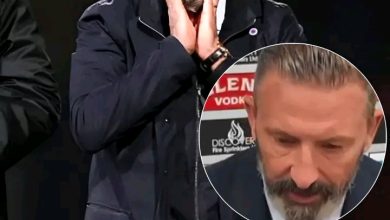
McInnes’ post-match rationalization—emphasizing “effort,” defending effort levels, questioning refereeing decisions—represents failure of leadership accountability. Elite managers, when facing defeat, accept responsibility while identifying specific improvement areas.
McInnes’ assertion that Rangers were “the better team” despite losing represents factually inaccurate and psychologically unhelpful leadership. Losing teams, by definition, were not the better team in match circumstances where victory determines competitive success.
The manager’s framing—that Rangers deserved to win but external circumstances (penalty decision, injuries) prevented proper outcome—represents dangerous psychological messaging. Such framing generates false confidence and delays organizational acknowledgment of actual performance deficiencies
The Hibernian defeat crystallizes emerging reality that Rangers’ season trajectory has potentially deteriorated beyond recovery in early-season competitive timeframe. Five points behind Celtic after two games, winless in three matches, defensive vulnerabilities exposed, and star striker injured creates compound organizational crisis.
McInnes’ early managerial tenure, rather than establishing tactical coherence and organizational stability, has produced confusion, defensive vulnerability, and competitive mediocrity. The appointment’s wisdom has been called into question within merely three competitive matches.
The Hibernian defeat’s implications extend beyond single fixture disappointment into broader seasonal questions regarding whether Rangers can mount legitimate title challenge or whether early-season trajectory has established irreversible competitive disadvantage.
Beyond McInnes’ tactical deficiencies, individual player performances contributed to Rangers’ defeat: Tuur Rommens: The left-back’s defensive struggles, precisely as McInnes recently criticized publicly, contributed to Hibernian’s attacking effectiveness. McInnes’ public criticism, rather than motivating performance improvement, appears to have generated tentative defensive vulnerability.
Olwethu Makhanya: The debutant center-back struggled against organized attacking movement, demonstrating inadequacy for elite-level competitive demands. McInnes’ gamble on introducing untested defender against Hibernian proved strategically misguided.
Lawrence Shankland: The striker’s ineffectiveness in front of goal reflected both Hibernian’s defensive organization and Shankland’s own finishing quality concerns. Expected goal-scoring contributions failed to materialize.
Vanja Dragojevic: Beyond the penalty incident, the midfielder’s overall contribution proved minimal. The selection choice appears increasingly indefensible following such performance
While premature to consider managerial change after three matches, McInnes’ performance already generates questions regarding whether he remains appropriate appointment for Rangers’ competitive demands.
The combination of tactical inadequacy, defensive organization failure, player development ineffectiveness, and accountability deflection through external factor emphasis suggests potential organizational mismatch between McInnes’ capabilities and Rangers’ requirements.
If Rangers’ winless streak extends beyond three matches, or if early-season position deteriorates beyond recovery, organizational leadership must evaluate whether McInnes represents sustainable long-term solution or alternatively represents early managerial error requiring correction.
Rangers’ organizational leadership must respond to crisis through:
Tactical Reassessment: The 4-3-3 formation and attacking emphasis strategy should be reconsidered. Rangers require defensive stability prioritizing possession control and tactical organization over attacking ambition.
Personnel Evaluation: Dragojevic’s continued selection and Makhanya’s integration should be reconsidered. Established performers (Diomande, established defenders) should receive priority over experimental selections.
Injury Assessment: Chermiti’s injury requires comprehensive assessment with contingency planning for extended absence.
Managerial Accountability: McInnes should be required to accept responsibility rather than deflecting blame externally. The manager must demonstrate understanding of tactical deficiencies and commitment to immediate correction.
Derek McInnes’ Rangers honeymoon—the optimistic period where supporter patience and organizational goodwill provide managerial grace period—has effectively ended before it truly began. Three competitive matches have revealed sufficient tactical and organizational deficiency that early-season patience has deteriorated into genuine questioning.
The Hibernian defeat, rather than representing minor setback during transition period, appears emblematic of deeper managerial and organizational challenges requiring urgent attention.
McInnes’ assertion that Rangers “aren’t as bad as people think” rings hollow when competitive reality demonstrates consistent underperformance, defensive vulnerability, and tactical inadequacy. Rangers are precisely as bad as their results indicate—a team struggling to establish basic competitive standards.
The road ahead requires immediate organizational correction, tactical reassessment, and managerial accountability. Whether McInnes can demonstrate adequate response remains uncertain. What appears clear is that Rangers cannot afford to continue current trajectory while maintaining organizational confidence in the manager’s approach.
The competitive realities are harsh. Rangers are five points behind Celtic. McInnes remains winless. Defensive vulnerabilities have been exposed. The season remains early, yet recovery appears increasingly difficult without fundamental organizational intervention.
The Hibernian defeat represents potential inflection point. Whether it becomes catalyst for organizational correction or instead marks beginning of further competitive deterioration will emerge through McInnes’ subsequent decisions and Rangers’ response to this early-season crisis.