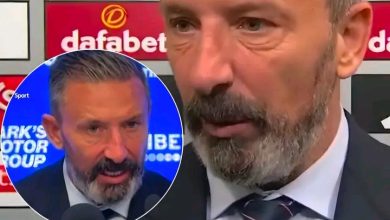
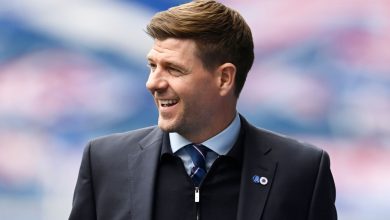
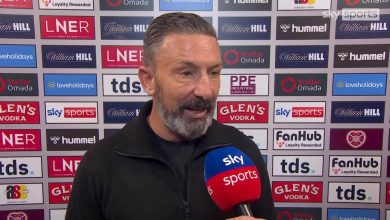
Derek McInnes’ Public Explosion: The Dangerous Line Between Accountability and Managerial Crisis

Derek McInnes’ reported public criticism of Rangers’ left-back following a match defeat represents a critical inflection point in the manager’s early tenure at Ibrox. The decision to publicly single out an individual player—describing him as “a complete passenger”—carries implications extending far beyond addressing specific performance deficiencies into broader managerial credibility and squad cohesion territory.
The timing of McInnes’ explosion proves particularly significant. Having arrived at Rangers with considerable organizational support and positive anticipation, the manager now confronts circumstance where early-season disappointing results have generated sufficient frustration to trigger public player criticism. Five dropped points across recent matches have accumulated into genuine competitive concern, and McInnes’ apparent response involves identifying individual accountability rather than broader systemic analysis.
This represents precisely the kind of managerial moment that defines whether coaching leadership proves sustainable or instead deteriorates into organizational dysfunction. McInnes’ public criticism, while understandable from frustration perspective, simultaneously risks damaging squad morale, undermining the targeted player’s confidence, and establishing precedent where manager-player relationships become fractured under pressure.
The situation illuminates fundamental question regarding early-season managerial challenges: can McInnes maintain organizational stability through adversity, or will mounting frustration trigger decisions that compound rather than resolve underlying competitive problems
McInnes’ reported explosion must be contextualized within Rangers’ recent competitive trajectory. The club has dropped five points across recent league matches—failures that, while perhaps unsurprising during transition periods, have generated sufficient organizational concern that manager frustration appears justified.
The specific frustration involves defensive moments that McInnes apparently views as avoidable errors rather than systemic tactical failures. The left-back’s involvement in moments that changed match momentum suggests individual performance deficiencies contributing to competitive disappointment.
However, McInnes must acknowledge that blaming individual players for five dropped points represents oversimplification of complex competitive reality. Defensive errors reflect not merely individual mistakes but often systemic tactical organization, midfield screening deficiency, or goalkeeper positioning—factors extending beyond single players’ responsibility.
The manager’s decision to publicly identify the left-back as primary culprit, rather than accepting collective responsibility or identifying broader organizational issues, raises important questions regarding McInnes’ managerial judgment under pressure.
The likely target of McInnes’ criticism—Tuur Rommens, Rangers’ Belgian left-back—occupies difficult positional context. The player, already identified as having limited positional alternatives at the club, has been forced into starting role despite concerns regarding his suitability for elite competitive demands.
Rommens’ profile involves attacking-oriented full-back capable of contributing creative elements from wide positions. However, his defensive responsibility and concentration under pressure have reportedly generated concerns among observers. The combination of attacking emphasis and defensive vulnerability creates profile vulnerable to tactical exploitation by organized opposition.
McInnes’ apparent expectation that Rommens must simultaneously contribute attacking width and provide rock-solid defensive organization represents unrealistic demand. Most full-backs specialize in either attacking or defensive contribution; expecting elite-level performances in both dimensions proves inordinately difficult.
The public criticism of Rommens, while perhaps addressing genuine performance issues, simultaneously fails to acknowledge positional constraints and limited alternative options available to the manager. McInnes’ decision to rely upon Rommens as established left-back reflects organizational necessity rather than confidence regarding his suitability.
McInnes’ reported decision to publicly single out Rommens through media represents fundamentally risky managerial strategy carrying multiple potential negative consequences:
Squad Morale Damage: Public criticism of one player reverberates throughout squad creating atmosphere of vulnerability and uncertainty. Teammates observe that poor performance generates public humiliation rather than constructive feedback. The organizational culture shifts toward fear-based accountability rather than positive reinforcement.
Targeted Player Psychological Damage: Rommens, already operating under competitive pressure and awareness of positional difficulties, now confronts public manager criticism creating additional psychological burden. Rather than increasing confidence, the criticism likely generates anxiety and tentative perfomances.
Undermining Confidence: The public nature of McInnes’ criticism suggests manager has lost confidence in the player. Observant players recognize when managers have publicly lost faith; recovery becomes increasingly difficult when organizational confidence deteriorates. Establishing Dangerous Precedent: Other squad members observe that public criticism represents acceptable managerial response to poor performance. The precedent created suggests that managerial frustration will be expressed publicly rather than through constructive private feedback.
Media Narrative Amplification: Public criticism generates media focus that amplifies rather than resolves performance concerns. The left-back becomes story rather than merely player requiring tactical improvement.
Examining how elite managers address similar performance deficiencies reveals alternative approaches offering superior outcomes to public criticism:
Private Accountability Discussions: Managers like Carlo Ancelotti maintain private meetings with underperforming players, addressing specific concerns constructively without public humiliation. The approach preserves player dignity while establishing accountability. Tactical Adjustment and Rotation: Rather than publicly criticizing, elite managers often respond to performance deficiency through tactical repositioning or personnel rotation. The message is communicated through team selection rather than media criticism.
Collective Responsibility Emphasis: Sophisticated managers frequently accept collective responsibility for performance deficiencies rather than identifying individual culprits. The approach maintains squad cohesion while addressing underlying tactical issues. Constructive Performance Improvement: Elite coaching involves identifying specific technical and tactical improvements enabling player development. The approach transforms potential criticism into constructive development pathway.
McInnes’ apparent approach—public identification of individual culpability—represents less sophisticated management strategy than alternatives employed by elite managers navigating similar circumstances.
McInnes’ public explosion raises fundamental questions regarding his leadership capability under pressure circumstances. A manager arriving with significant organizational support and positive anticipation must demonstrate resilience when early-season results prove disappointing.
The transition from constructive feedback approach during pre-season and early training sessions to public player criticism during match adversity suggests McInnes may lack emotional maturity and professional perspective required for managing high-pressure competitive environments.
Elite managers maintain consistent approaches to accountability regardless of circumstances. McInnes’ apparent shift toward public criticism under pressure suggests his leadership philosophy may be more fragile than organizational confidence suggested.
This credibility question becomes particularly significant because McInnes’ long-term Rangers tenure depends upon maintaining organizational stability through inevitable adversity. If public player criticism represents his consistent response to disappointing results, squad morale and competitive performance will likely deteriorate progressively through the season.
While public criticism represents problematic managerial strategy, understanding McInnes’ frustration provides important context. The manager arrived with clear tactical vision and specific performance expectations. Early-season results have fallen below those expectations, creating organizational pressure.
Additionally, the squad depth limitations McInnes inherited mean that personnel gaps cannot be easily addressed through rotation or replacement. Rommens, despite performance concerns, represents the established left-back option without realistic alternative. McInnes’ positional constraints limit tactical flexibility that elite managers typically possess.
The mounting pressure—European failure, domestic draw, five dropped points, supporter questioning—creates environment where managerial frustration becomes psychologically understandable even when professedly managed approaches would prove more effective.
Rangers supporters will likely demonstrate divided responses to McInnes’ public criticism. The manager’s apparent willingness to identify underperformance resonates with supporters frustrated by disappointing results. The message that players must be accountable aligns with supporter expectations regarding elite club culture.
However, other supporters may recognize the managerial risk McInnes has undertaken through public criticism. More sophisticated observers understand that public player humiliation rarely improves performance and frequently damages morale.
The supporter division reflects broader complexity surrounding managerial accountability and player performance. While fans demand excellence and competitive success, they simultaneously recognize that psychological dynamics involving confidence, morale, and organizational cohesion matter as much as tactical execution. The Selection Question: Does Rommens Get Dropped? The most revealing indicator regarding McInnes’ actual convictions emerges through subsequent team selection. The manager must now decide whether to:
Retain Rommens: Selecting the left-back despite public criticism would suggest the criticism represented emotional response rather than genuine loss of confidence. The selection would communicate to Rommens that McInnes maintains organizational support despite disappointing performances.
Drop Rommens: Substituting the left-back would confirm that public criticism reflected genuine tactical decision to move forward without the player. The selection change would validate supporter interpretations of managerial confidence loss.
Conditional Retention: McInnes could maintain Rommens’ selection while modifying tactical approach, reducing defensive responsibility through positional adjustment or additional defensive cover. The selection decision will prove more revealing than public statements regarding McInnes’ actual assessment of the player and his tactical future at Rangers
Sophisticated analysis requires examining whether Rommens’ performance deficiencies reflect individual accountability or systematic tactical organization failures:
Individual Factors: If Rommens consistently demonstrates poor positional discipline, concentration lapses, and defensive uncertainty, individual accountability becomes justified. Personal performance improvement opportunities exist through coaching and psychological preparation. Tactical Factors: If Rangers’ tactical framework places excessive responsibility on the left-back, or if midfield screening proves inadequate for supporting defensive line, systemic issues require addressing through tactical recalibration rather than player criticism.
Squad Depth Factors:If Rommens represents the only available left-back option, McInnes’ criticism must acknowledge that positional limitations constrain options. A manager blaming players for positions unavailable in squad represents management failure.
Elite managerial analysis typically identifies balance between individual accountability and systemic factors. McInnes’ apparent focus on individual blame suggests incomplete tactical understanding.
Examining historical examples reveals how public player criticism frequently triggers negative consequences:Arsène Wenger at Arsenal rarely publicly criticized individual players, instead maintaining squad cohesion through collective accountability messaging. The approach generated sustained organizational stability.José Mourinho has occasionally employed public criticism as motivational tactic, but typically within specific tactical frameworks understanding when public pressure motivates versus when it damages. His inconsistent application of this approach has generated mixed results.
Brendan Rodgers has struggled with squad morale when resorting to public player criticism during pressure periods, with negative morale cascading into deteriorated performance.
The historical precedent suggests that McInnes’ public criticism approach represents risky strategy with limited track record of generating positive performance outcomes.
Rangers’ organizational leadership—including sporting director and ownership—must evaluate whether McInnes’ managerial approach remains appropriate for the club’s circumstances. Support with Guidance: Organizational leadership could provide McInnes with coaching support and psychological resources enabling him to navigate pressure circumstances through constructive approaches rather than public criticism.Performance Monitoring: The organization should monitor whether McInnes’ approach generates improved performance or instead deteriorates squad morale and competitive results.Intervention if Necessary: Should public criticism become pattern rather than isolated incident, organizational leadership must intervene to redirect managerial approach toward more sophisticated strategies.
The organization’s response to this incident will significantly influence whether McInnes’ leadership proves sustainable or whether early managerial dysfunction develops into broader crisis. McInnes must navigate this situation through several specific actions:
Clarify Public Messages: Rather than continuing to discuss individual player performances publicly, McInnes should emphasize collective responsibility and systemic performance improvement requirements. Provide Constructive Feedback Private conversations with Rommens should focus on specific tactical and technical improvements enabling performance enhancement rather than criticism and blame.
Demonstrate Confidence: McInnes must communicate through team selection and public statements that he maintains organizational confidence and belief that competitive form will improve.
Address Systemic Issues: The manager should acknowledge tactical organization elements contributing to defensive concerns rather than focusing exclusively on individual accountability.
Maintain Consistency: Going forward, McInnes must demonstrate consistent approaches to accountability and performance management regardless of circumstances.
McInnes’ situation illuminates fundamental reality regarding managerial excellence: the ability to maintain professional perspective and constructive approaches during pressure periods distinguishes elite managers from those who deteriorate under adversity.
The early-season challenges McInnes currently faces represent relatively minor disappointments compared to genuine crises elite managers navigate. A manager unable to maintain professional demeanor following early-season draws and defeats will likely struggle with sustained pressure throughout competitive seasons.
The learning opportunity for McInnes involves recognizing that long-term managerial success depends upon psychological resilience and sophisticated accountability approaches rather than public player criticism.
Derek McInnes’ reported public criticism of Rangers’ left-back represents critical inflection point in his early tenure. The manager’s decision to respond to disappointing results through individual player blame rather than constructive systemic analysis raises important questions regarding his leadership capability.
The situation is not irretrievable. McInnes possesses opportunity to demonstrate that the public criticism represented isolated emotional response rather than consistent managerial approach. Through subsequent professional conduct and demonstration of confidence in his squad, the manager can navigate past this incident toward more sustainable leadership.
However, the incident has established concerning precedent. Should public criticism become pattern rather than exception, organizational dysfunction and performance deterioration will likely cascade progressively through the season.
Rangers supporters and organizational stakeholders should closely monitor whether McInnes’ subsequent conduct demonstrates professional accountability management or whether the public criticism represents beginning of deteriorating managerial approach compromising the club’s competitive trajectory.
The coming weeks will prove decisive regarding whether this represents temporary managerial frustration or beginning of broader leadership crisis threatening McInnes’ Rangers future. The manager’s professional response will determine whether early-season disappointment transforms into genuine organizational challenge.
For now, the spotlight shines brightly on McInnes and his capacity to navigate pressure circumstances through mature, constructive leadership. The test has begun. How the manager responds will define his Rangers tenure trajectory.