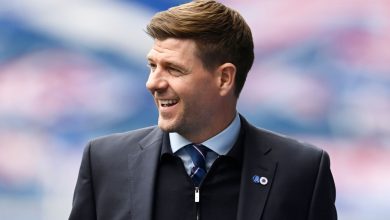
Steven Gerrard has spoken publicly about his decision not to return to Rangers as manager, revealing that a combination of concerns over squad recruitment, the weight of expectation, and family circumstances ultimately persuaded him to stay away from Ibrox when the opportunity arose.
The former Liverpool captain, who enjoyed considerable success during his first spell in charge of Rangers, was strongly linked with a sensational second stint at the club during 2025. That speculation intensified as the Ibrox hierarchy began searching for a successor to Russell Martin, with talks reportedly progressing to the point where a Gerrard comeback looked like a realistic possibility. In the end, though, he chose not to take up the role
According to Gerrard’s own account, one of the most significant factors behind his decision centred on his family situation. Since his time managing in the Saudi Pro League with Al-Ettifaq, his wife and children have remained based in Bahrain, and the prospect of uprooting himself to Scotland — potentially alone, and for extended periods away from his family — was something he was reluctant to commit to. For a manager whose previous spells abroad had already involved periods of separation from loved ones, the idea of another significant relocation, without the certainty that his family could or would follow, appears to have weighed heavily in his thinking.
This kind of consideration is not uncommon among high-profile managers weighing major career moves, but it’s a side of these decisions that rarely receives as much attention as the football and financial factors more commonly discussed in transfer and managerial speculation. Gerrard’s willingness to speak candidly about it offers a reminder that decisions of this magnitude are rarely made on football considerations alone.
Beyond the personal and family dimension, Gerrard also acknowledged that he held genuine reservations about the practical footballing side of a potential return — specifically, doubts about how the squad would be built around him and whether the conditions would be in place for him to succeed quickly. Central to those doubts was the question of pressure and timeframe. Gerrard explained that a second spell in charge at Ibrox would likely have come with an expectation of near-immediate success — pressure to deliver silverware without much room for the kind of gradual project-building that characterised his first spell at the club. That first stint, which culminated in Rangers ending Celtic’s domestic dominance and winning the Scottish Premiership title, was built over time, with Gerrard given the space to shape the squad, embed his methods, and develop the team incrementally before achieving that landmark success.
A second spell, by contrast, seemed unlikely to offer him that same patience. Given how much Rangers, and their supporters, would have wanted an instant return to winning ways, Gerrard appears to have judged that the environment this time around would have demanded immediate results rather than allowing him the same runway to build a project his way — and that mismatch between what would have been expected of him and what he felt was realistically achievable in the short term seems to have been a significant factor in his eventual decision.
Despite ultimately deciding against the move, Gerrard made clear that the decision was not an easy one, nor one he arrived at quickly or dismissively. He acknowledged being seriously tempted by the prospect of taking the job again, going as far as to suggest that he came close to accepting the role at one stage before ultimately concluding that the timing simply wasn’t right for him personally and professionally.
That admission — that he came close to saying yes — will likely resonate strongly with Rangers supporters, many of whom still hold Gerrard in extremely high regard following his transformative first spell as manager. Knowing that a reunion was, by his own account, a real possibility rather than something that was never seriously on the table may offer some comfort to fans disappointed that it didn’t ultimately happen, even as it may also stir some natural sense of what might have been
Importantly, Gerrard was careful not to close the door entirely on the idea of a future return to Ibrox. While he explained clearly why the timing wasn’t right on this occasion, he also stressed that his affection for Rangers remains as strong as ever, and he suggested that supporters should not rule out the possibility of him one day returning to manage the club again in the future. This kind of statement — leaving open the possibility of a reunion down the line, even while explaining why now wasn’t the moment — is a familiar pattern among managers with deep emotional ties to a particular club. It suggests that while practical and personal circumstances prevented this particular opportunity from being taken up, Gerrard’s relationship with Rangers is far from over, and that a different set of circumstances in the future — whether relating to his family situation, his own career stage, or the state of the club at that time — could potentially bring the two parties back together at some later point.
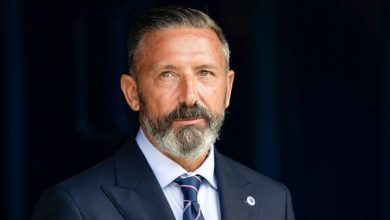
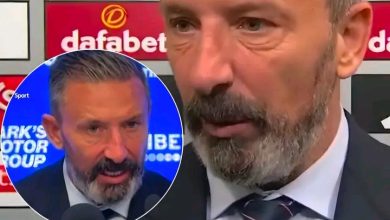
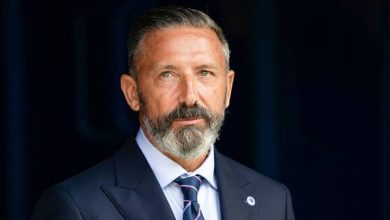
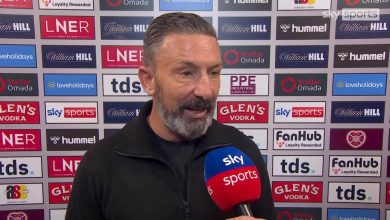
Despite turning down the chance to return himself, Gerrard was keen to voice his support for Derek McInnes, the manager who was ultimately appointed to take charge at Ibrox. He praised the level of backing McInnes has received from the club’s hierarchy since taking over, a nod to the significant summer transfer activity already undertaken at Ibrox as the new regime looks to reshape the squad.
Gerrard also expressed hope that Rangers would continue to strengthen the squad further before the transfer window closes, offering his support to the idea that additional signings would help give McInnes the tools needed to succeed in the role. Coming from a manager with Gerrard’s history and standing at the club, that kind of public backing carries weight, both as encouragement for McInnes himself and as a signal to supporters that a figure as respected as Gerrard sees genuine potential in the current project, even if he was not the one chosen, or ultimately willing, to lead it himself this time around.
Steven Gerrard’s standing among Rangers supporters remains extraordinarily high, rooted primarily in his achievement of guiding the club to a Scottish Premiership title during his first spell in charge — a triumph that ended a lengthy wait for domestic success and remains one of the most celebrated periods in the club’s recent history. That success, combined with the manner in which he departed Ibrox at the time, has left him with a rare and enduring bond with the Rangers fanbase, one that has clearly persisted even as his career has taken him to Aston Villa, Al-Ettifaq, and various other destinations since leaving Glasgow.
While this particular chapter — the prospect of a sensational second spell in charge — did not materialise, Gerrard’s own comments make clear that the connection between himself and the club he once transformed remains very much intact. Whether circumstances eventually align for a future reunion remains to be seen, but for now, Gerrard’s message to supporters appears to be one of patience and reassurance: the decision not to return was about timing and circumstance rather than any diminishing of his feelings for the club, and the current management team has his genuine support as they try to build something of their own at Ibrox.
For Rangers, Gerrard’s comments serve as an interesting parallel to the club’s current situation. Just as Gerrard highlighted the importance of being given time to build a squad and a footballing project, the club’s current ownership and coaching staff — including chairman Andrew Cavenagh, who has spoken separately about the need for patience following a difficult start to this season — appear to be navigating similar tensions between long-term project-building and the short-term pressure for immediate results that comes with managing a club of Rangers’ size and history.
In that sense, Gerrard’s explanation of why he turned down a return offers not just insight into his own personal decision-making, but also a useful reflection of the broader pressures facing anyone who takes charge at Ibrox — pressures that McInnes, the man who did take the job, will be all too aware of as he tries to build his own version of success in Govan.