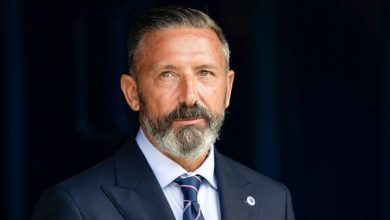
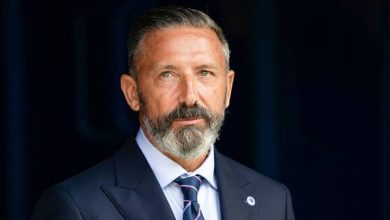
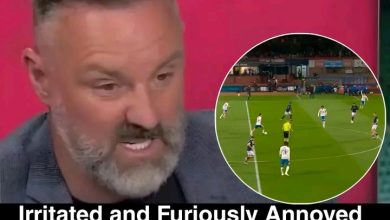
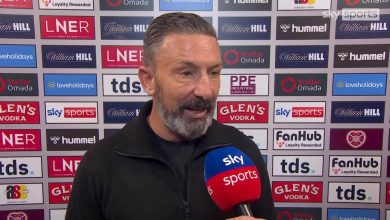
RANGERS VS HIBERNIAN COULD BE REPLAYED! The SPFL has reportedly released an official statement following the controversial VAR penalty decision that has sparked huge debate among fans.

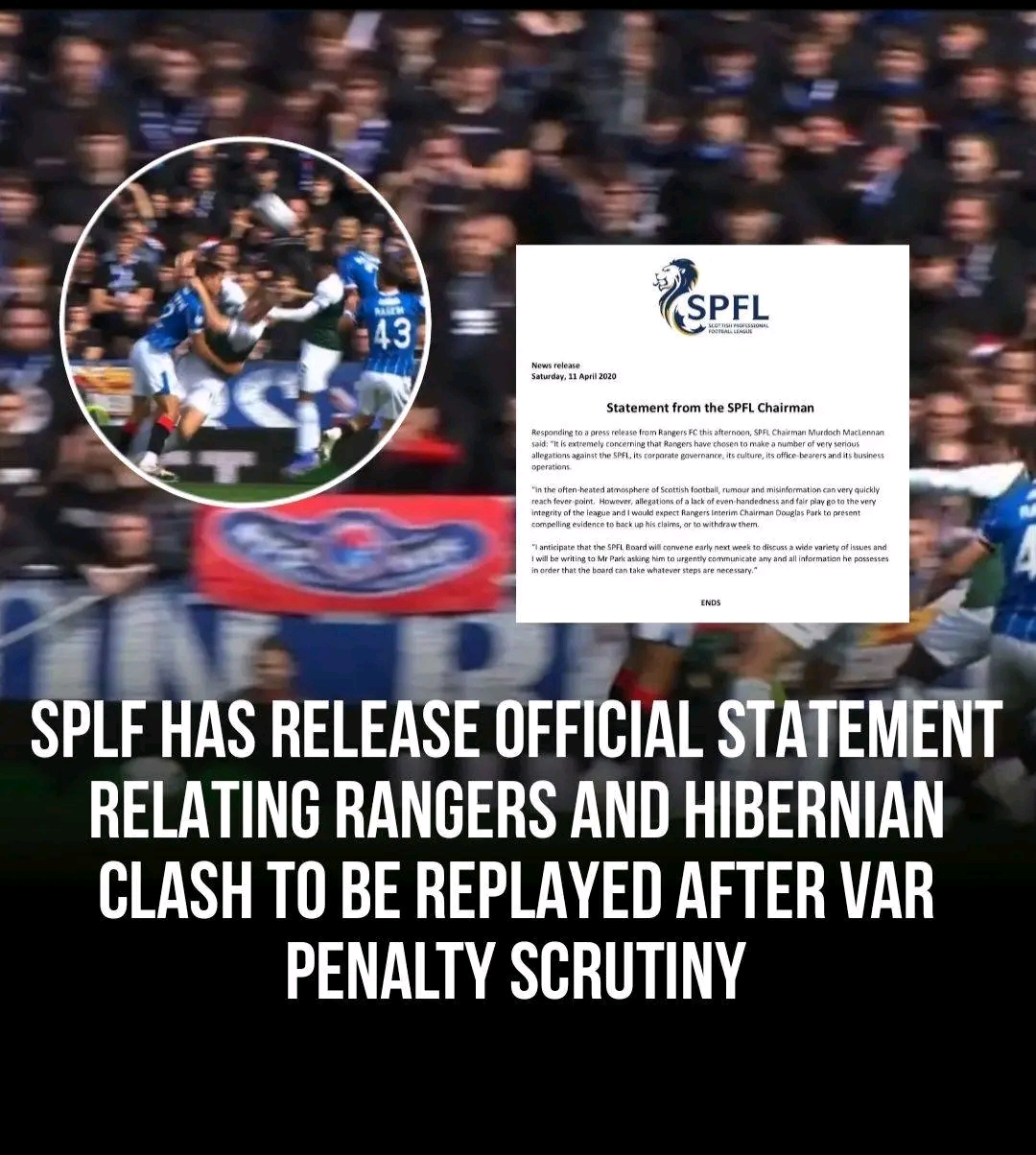
Rangers’ first home league match of the new season under manager Derek McInnes ended in a 2-1 defeat to Hibernian on Sunday 9 August 2026 — a result overshadowed by a first-half VAR intervention that has dominated the conversation in Scottish football ever since, spilling into the club’s shareholder meeting the following morning and reigniting a long-running row over officiating standards in the country.
Hibernian took the lead in the first half after referee Don Robertson, initially allowing play to continue, was sent to the pitch-side monitor by VAR official Matthew MacDermid and reversed his decision, judging that Rangers defender Vanja Dragojević had fouled Hibernian’s Jason Kerr in the box. Josh Campbell converted the resulting penalty. Rangers battled back into the game, equalising through a Miguel Chaiwa header from a Djeidi Gassama cross with around five minutes remaining, only for substitute Callum Wright to score a stoppage-time winner and hand Hibernian a 2-1 victory — their third win over Rangers at Ibrox in as many seasons, and a fourth successive home league defeat for the Ibrox side stretching back to the previous campaign.
For Derek McInnes, appointed as Rangers manager over the summer, it extended a winless start to his competitive career in charge: a 1-1 draw away to Dundee United on the opening weekend was followed by a 2-1 Europa League qualifying defeat in Poland to Jagiellonia Białystok, and now defeat at home to Hibs left his side with a single point from two league games and a difficult tie to salvage in Europe
The central dispute is not really about whether Dragojević made contact with Kerr — Rangers have not seriously disputed that some form of holding occurred — but about whether Robertson’s original on-field call, allowing play to continue, met the threshold required for VAR to intervene at all. Under IFAB protocol as applied in Scottish football this season, video assistant referees are meant to recommend a pitch-side review only in cases of a “clear and obvious” error, rather than simply substituting their own judgement for a borderline call the referee has already made.
That threshold has become the flashpoint. Supporters and club figures alike have questioned why MacDermid felt the initial no-penalty decision met that bar, given the incident occurred amid the general jostling and blocking typical of a defended corner — the kind of contact referees are traditionally given latitude to play through rather than penalise.
It’s worth noting that Scottish football has had a formal mechanism for scrutinising exactly these kinds of calls since the appointment of Willie Collum as the Scottish FA’s head of referees: a weekly “key match incident” panel of five members reviews contentious VAR interventions from the previous round of fixtures and publishes its verdict on whether each intervention was correct. The panel has, at various points across recent seasons, both backed and criticised decisions involving Rangers and Hibernian specifically — on one occasion ruling that Dundee United should not have been awarded a penalty against Hibs after VAR “incorrectly intervened,” and on another concluding that VAR had correctly advised a penalty for Hibernian after a Rangers defender blocked a goal-bound effort with his arm. This is the process — public post-hoc review rather than any power to alter a result — through which contentious calls in Scotland are typically adjudicate
The timing of the defeat proved awkward for Rangers’ hierarchy: the club’s first shareholder meeting under its current ownership had already been scheduled for the following morning at a Glasgow hotel, meaning chief executive Jim Gillespie, chairman Andrew Cavenagh and shareholder Paraag Marathe faced around 650 attendees less than 24 hours after a result — and a penalty decision — that had left supporters fuming.
Gillespie did not hold back. Addressing the incident directly, he told the room that Rangers were “baffled” as to how the decision had come about and said the club “didn’t understand the need for VAR intervention” in the first place. He confirmed that Rangers had already been in contact with Willie Collum to seek an explanation, describing it as something the club hoped to get “clarity” on, while pledging to put forward Rangers’ views “strongly.”
Marathe, the San Francisco 49ers executive who sits on Rangers’ board, echoed the frustration from the floor, saying he “couldn’t believe” the decision to award the penalty. When a shareholder interjected that raising these issues with the governing bodies “isn’t working” and “has been going on for years,” Marathe conceded, “you’re not wrong,” while Gillespie argued that Rangers, as one of the country’s leading clubs, had a responsibility to keep pushing the SFA and SPFL for greater consistency — adding that Rangers wanted a constructive rather than purely combative relationship with the governing bodies, even while holding them to account.
Gillespie also used the meeting to address a separate, related grievance: the four-match touchline ban (one match suspended) handed to McInnes by the Scottish FA over comments he made in his previous role as Hearts manager, when he described a VAR-awarded penalty for Celtic as “disgusting.” Gillespie characterised the sanction as “disproportionate,” and Rangers have lodged a formal appeal against it — a process that, under SFA rules, allows McInnes to continue working from the touchline while the appeal is heard rather than beginning his ban immediately
It’s worth being precise here, because separate reporting elsewhere — including from sites with no verifiable sourcing — has claimed Rangers’ complaints led to the SPFL ordering the Hibernian match to be replayed. There is no evidence that happened, and nothing in the SPFL’s, SFA’s, or Rangers’ own public statements supports it. What has actually taken place is more modest, if still notable: a club formally requesting an explanation from the game’s referee chief, and raising the matter publicly and pointedly with its own shareholders. Scottish football’s dispute-resolution mechanism for VAR calls has, to date, been limited to the weekly incident panel’s published verdicts — a form of public accountability, not a power to alter results already recorded.
Hibernian head coach David Gray offered a starkly different reading of the same incident. Speaking after the match, Gray said the officials had “left [Robertson] no choice” but to award the penalty once sent to review it, framing his side’s win as fully earned rather than a product of a contentious call. Hibs have now beaten Rangers at Ibrox in three consecutive seasons, a run Gray’s side will point to as evidence of a genuine, sustained edge over their opponents rather than one built on refereeing fortune.
Derek McInnes, for his part, was measured in his post-match assessment given the touchline restrictions he was already operating under, but has previously been willing to criticise officiating decisions in strong terms — the same instinct that led to his ongoing ban dispute stemming from his time at Hearts. Rangers as a club have been here before with the SFA: earlier in the year, the governing body fined Rangers £3,000 after former defender John Brown described a separate officiating decision as “corrupt” on the club’s in-house television channel, a sanction Rangers said afterwards meant the SFA “will be watched closely” over how consistently such penalties are applied.
Supporter reaction, unsurprisingly, has been strongly critical of the officiating, with fan forums and social media dominated by criticism of both Robertson’s on-field conduct and MacDermid’s decision to intervene at all. Some supporters, however, have also pushed back on the idea that the penalty was solely responsible for the result, pointing to what they regarded as a below-par attacking performance from Rangers that continued even after the equaliser — an acknowledgement that, while the penalty call remains a legitimate grievance, it wasn’t the only issue on display.
The frustration has also folded into a broader supporter narrative about the club’s relationship with Scottish football’s governing bodies more generally, with some fans linking Sunday’s penalty to earlier disputes — including last season’s controversy over a disallowed Rangers goal against Hibernian that the SFA’s own panel later ruled should have stood, and the discontinuation of a previous statistical review process some supporters felt had usefully highlighted patterns in refereeing decisions across different clubs
None of this exists in isolation from Rangers’ wider difficulties this season. The club is already five points behind Celtic in the early Premiership table, has lost twice and drawn once from its opening three matches, and trails Jagiellonia Białystok in a Europa League qualifying tie that will be decided in Glasgow this week. Against that backdrop, Gillespie and Cavenagh used Monday’s meeting to try to strike a balance between defending the club’s recruitment strategy — reiterating an expectation of three to five further transfer signings before the window closes — and acknowledging supporters’ genuine and immediate frustration over results, officiating, and the pace of change under the club’s ownership.
Whether Rangers’ formal approach to Willie Collum yields any meaningful change in how VAR interventions are applied, or whether McInnes’s touchline ban appeal succeeds, remains to be seen. What is clear is that the Hibernian penalty has become the latest flashpoint in a long-running, unresolved debate in Scottish football over the “clear and obvious error” threshold — one that shows no sign of being settled through any single incident, however much scrutiny it attracts.