MOTHERWELL HIT WITH UEFA WARNING OVER SCOREBOARD VIOLATION AS STEELMEN AND RANGERS BOTH FACE EUROPEAN DISCIPLINE

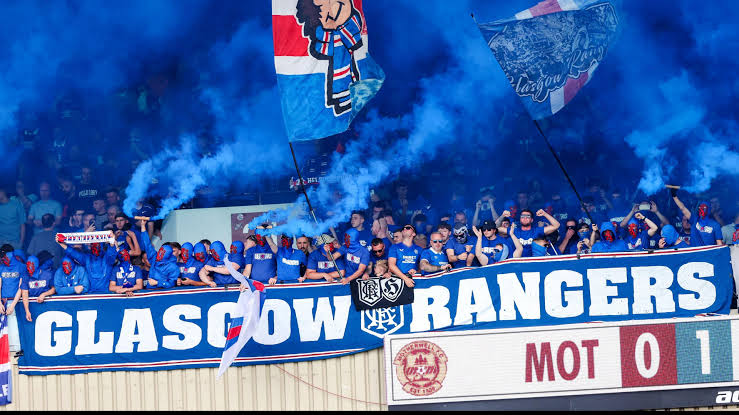
Scottish football’s two most prominent European campaigners this summer have both found themselves on the wrong side of UEFA’s administrative rulebook in recent days, with Motherwell handed a formal warning over a scoreboard clock violation during their Conference League qualifying exploits, while Rangers have been separately hit with a five-figure fine following their own Europa League qualifying exit. It’s a slightly unusual pairing of stories given the very different nature of the two offences involved, but together they offer an interesting window into just how closely UEFA now monitors even the smallest procedural details of continental football matches, right down to how a stadium’s clock is permitted to display time once the 45th or 90th minute has been reached.
Starting with the more straightforward and financially significant of the two situations, Rangers have been fined €15,000, working out to roughly £13,000, by UEFA’s disciplinary body following their Europa League third qualifying round exit at the hands of Polish side Jagiellonia Bialystok. The fine relates specifically to a late kick-off for the away leg of the tie in Poland, with UEFA placing responsibility for the delay on the visiting Rangers side rather than their hosts, though the exact circumstances behind the hold-up haven’t been extensively detailed in reporting on the sanction. It’s a relatively modest financial penalty in the context of a club the size of Rangers, but it arrives as an unwelcome footnote to what was already a thoroughly disappointing European campaign, one that saw Derek McInnes’s side eliminated 3-2 on aggregate and dropped into a Conference League play-off against Czech outfit Jablonec instead of the more lucrative Europa League football the club had been targeting heading into the new season. Rangers have since taken a 1-0 lead into the second leg of that Jablonec tie following a goal from Ryan Naderi at Ibrox, though that match was also not without its own controversy, with Cammy Devlin sent off following a VAR review, leaving Rangers to see out the closing stages with ten men.
The Motherwell situation, while considerably less costly in financial terms given it resulted in a warning rather than an outright fine, is arguably the more curious of the two stories, and it centres on a rule that many supporters, and evidently even some club officials, appear to have been only vaguely aware of prior to this incident. UEFA operates a specific regulation governing how stadium scoreboards and clocks are permitted to display time during matches in its competitions, with the governing body having introduced a change that requires additional time to be shown explicitly, in the format of, for example, 90+2, rather than simply allowing the main match clock to continue counting upwards past the 45th or 90th minute mark as though no distinction existed between regulation time and stoppage time. The rationale behind the rule traces back to preventing potential timewasting or confusion around exactly how much added time remains in a match, a detail that becomes particularly relevant in high-stakes European qualifying ties where every additional second of pressure or defensive resilience can prove decisive. Motherwell fell foul of this specific regulation during their own Conference League qualifying campaign, with match footage showing their in-stadium clock continuing to run past the 45th minute before eventually resetting back to the 45:00 mark rather than displaying the additional time in the manner UEFA now requires, an oversight that was evidently significant enough to draw a formal warning from the governing body even though it stopped short of an accompanying financial penalty.
It’s worth putting both of these incidents into the broader context of just how differently UEFA’s disciplinary processes can play out depending on the nature and severity of the offence in question. A warning, as issued to Motherwell, represents the lightest possible sanction UEFA can hand down, essentially a formal note on the club’s record without any direct financial consequence, whereas the fine imposed on Rangers reflects a more tangible breach that UEFA deemed worthy of an actual monetary penalty. Interestingly, this isn’t the first time Rangers have found themselves on the receiving end of a UEFA warning for improper conduct without further sanction either, with the club previously escaping a fine altogether after a separate incident during a Europa League fixture where several players, including Robin Propper, Nico Raskin, Mohamed Diomande, Hamza Igamane and Ross McCausland, were all booked by the match referee, an episode that drew only a warning rather than a financial penalty from the governing body at the time. It underlines that UEFA’s disciplinary framework operates on something of a sliding scale, with warnings typically reserved for first-time or lower-severity administrative breaches, and fines kept for offences that either carry a repeat element or a more direct impact on the conduct or integrity of a fixture, such as a delayed kick-off.
For Motherwell specifically, this episode arrives during what’s otherwise been a genuinely eye-catching European campaign for the Fir Park club, one that has taken them further into continental competition than they’ve managed in a number of years. Under manager Alfred Johansson, Motherwell navigated their way through two qualifying rounds in some style, thumping HB Tórshavn 5-0 on aggregate in the opening round before edging past HJK Helsinki courtesy of Ibrahim Said’s decisive second-half contributions in the second leg at Fir Park. That run has now taken them into a Conference League play-off tie against Bundesliga side Freiburg, last season’s beaten Europa League finalists, a genuinely daunting assignment for a Scottish Premiership side but one that represents a significant achievement in itself given how competitive the Conference League’s qualifying rounds have become in recent seasons. It’s fair to say that a minor administrative rap on the knuckles over scoreboard protocol is unlikely to dampen what’s otherwise been a source of considerable pride for the Lanarkshire club, even if it does serve as a reminder of just how granular UEFA’s oversight of these fixtures can be.
For Rangers, meanwhile, the timing of this fine couldn’t really have been much worse given everything else that’s been swirling around Ibrox in recent weeks. Derek McInnes has faced mounting scrutiny following the worst start of any permanent Rangers manager in the club’s modern history, a run that included the very Jagiellonia exit that’s now generated this financial penalty, and the drip-feed of negative headlines, from the European elimination itself, to the collapse of the Couhaib Driouech transfer after a failed medical, to now this five-figure UEFA fine, has created a general sense of an operation currently lurching from one small setback to the next, even as the club has simultaneously pushed through a genuinely impressive volume of incoming transfer business and steadied results somewhat with recent wins. It’s the kind of story that, in isolation, would barely register as a footnote, but within the current climate around Ibrox, even a relatively minor administrative fine over a late kick-off has become fodder for renewed discussion about the general standard of organisation and execution at the club during what’s been a turbulent opening stretch to the new season.
There’s also a broader thread here worth touching on regarding how UEFA fines of this nature tend to be received by supporters across Scottish football, and Rangers in particular have something of a well-documented history of finding themselves on the end of European disciplinary action over the years, spanning everything from crowd disturbances and pyrotechnics to more serious charges relating to discriminatory conduct. This particular fine, relating purely to administrative matters around kick-off timing, sits at the more benign end of that spectrum, closer in spirit to previous incidents like the warning received for player conduct rather than anything approaching the more serious sanctions the club has faced in the past for supporter behaviour, including a €30,000 fine imposed a little over a year ago following a banner deemed discriminatory by UEFA’s disciplinary panel, an episode that also carried the threat of a suspended stand closure. Viewed against that backdrop, this latest €15,000 penalty is a relatively minor addition to Rangers’ European disciplinary file, more an administrative inconvenience than a matter of genuine institutional concern, even if it still represents unwanted negative press at a moment when the club could do with some good news dominating the agenda instead.
What both incidents ultimately illustrate, taken together, is the sheer scope of what UEFA now monitors and enforces across its various competitions, extending well beyond the more obviously newsworthy matters of on-field discipline, crowd behaviour or financial fair play into genuinely granular operational details like exactly how a stadium’s game clock is configured to display time once the 45-minute mark has passed. For clubs like Motherwell and Rangers, competing in European competition remains an enormously valuable and prestigious undertaking, both financially and in terms of prestige, but it also comes bundled with an extensive compliance framework that leaves very little room for even seemingly trivial oversights, whether that’s a scoreboard failing to switch to the correct additional-time display format or a kick-off running later than UEFA’s regulations permit. Both clubs will presumably take note and ensure such issues don’t recur as they continue their respective European campaigns, with Motherwell facing a genuinely formidable task against Freiburg in the second leg of their play-off tie, and Rangers looking to see out their own advantage against Jablonec and secure Conference League football that would at least partially offset the disappointment of their earlier Europa League elimination.
Looking slightly further ahead, both these episodes will likely be filed away as minor footnotes rather than anything approaching genuine controversy once the wider narratives of each club’s European campaign continue to unfold. For Motherwell, a positive result against Freiburg would represent one of the most significant European achievements in the club’s history, a story that would rightly dominate coverage far more than any warning over scoreboard protocol. For Rangers, successfully navigating past Jablonec and securing a spot in the Conference League’s league phase would go some considerable way towards salvaging a European campaign that started with genuine promise before unravelling against Jagiellonia, and a €15,000 fine, while an unwelcome addition to an already difficult few weeks for Derek McInnes and his players, is unlikely to register as anything more than a minor administrative footnote once attention turns fully towards results on the pitch. Both clubs, in their own ways, now find themselves with bigger, more consequential battles ahead in Europe, and it’s those outcomes, rather than the finer details of kick-off timing or scoreboard configuration, that will ultimately shape how this particular European campaign is remembered at both Fir Park and Ibrox.