EXPERT: RANGERS HAVE ‘NO CHOICE’ BUT TO ACCEPT CUT-PRICE NICOLAS RASKIN OFFER AS IBROX PREPARE TO CASH IN

Rangers are being told they have no realistic alternative but to accept a reduced fee for Nicolas Raskin this summer, with the Belgian midfielder’s contract situation and the club’s own financial circumstances effectively forcing their hand before the transfer window closes. Former Manchester United chief scout Mick Brown, speaking to Football Insider, was unequivocal in his assessment of the situation, stating that Rangers simply have no choice but to sell if they want to maximise the fee they can extract for one of their most saleable assets, a stark verdict that underlines just how much the picture around Raskin’s Ibrox future has shifted over the course of a turbulent summer.
To understand how Rangers have arrived at this point, it’s worth tracing the arc of Raskin’s rise since he arrived at Ibrox from Standard Liège back in January 2023. The Belgian has grown into one of the most consistently effective midfielders outside Europe’s traditional top five leagues, someone capable of dictating games from deep while also chipping in with a genuinely impressive goal and assist return for a player operating primarily in a central role. He’s registered numbers across recent campaigns that have made him a magnet for scouts across the continent, and that reputation was only enhanced by a standout showing for Belgium at the World Cup earlier this summer, where he started every group match and was widely regarded as one of his country’s most important performers during their run through the tournament. That kind of exposure on the biggest stage in international football has a habit of accelerating transfer interest, and Raskin’s situation has been no exception, with reports throughout the summer detailing interest from an extraordinarily broad spread of clubs, including Tottenham, Leeds United, Hull City, Porto, Fenerbahçe, Besiktas, Villarreal, Real Betis, Roma, Atalanta and Bologna, among others, a list that speaks to the genuine breadth of admiration his performances have generated.
For much of this saga, though, Rangers found themselves in what looked like a strong negotiating position, largely because of the length of contract Raskin had signed at Ibrox. Reports throughout the earlier stages of the transfer speculation consistently referenced Rangers holding out for fees in excess of £20million, with the club’s valuation underpinned by the security of a contract that, depending on the specific reporting, ran either to 2027 or 2028. That contractual security allowed Rangers to essentially dictate terms to any prospective suitor, turning away a series of approaches, including reported interest from Everton and Leeds United that Raskin himself chose to reject in favour of remaining at Ibrox, and later knocking back an offer from newly-promoted Hull City worth somewhere between £12million and £14million, a gap of several million pounds short of Rangers’ stated valuation north of £20million. For a considerable stretch of this saga, the mood music from Ibrox was one of quiet confidence, a belief that Rangers could essentially hold firm and either extract a genuinely substantial fee or simply keep hold of one of their best players for another season.
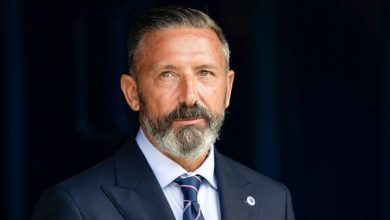
What’s changed the calculus so significantly in recent weeks is a combination of factors that have gradually eroded Rangers’ leverage in these negotiations. Chief among them has been the club’s own turbulent start to the season under new manager Derek McInnes, with the Europa League qualifying exit at the hands of Jagiellonia Bialystok in particular representing a significant financial blow given the gulf in revenue between Europa League and Conference League participation. With Rangers now needing to balance the books more carefully following that European setback, and with the club having already committed substantial funds to what’s been an extraordinarily active summer of incoming transfer business, the pressure to generate income through player sales has intensified considerably, and Raskin, as arguably the most saleable and sought-after asset on the books, finds himself at the centre of that financial calculation whether he particularly wants to be or not.
There’s also the simple matter of time working against Rangers’ negotiating position as the transfer deadline approaches. Brown’s assessment centres specifically on the idea that Rangers need to move now, in the closing stages of the window, if they want to maximise value for Raskin, essentially arguing that the longer this drags on without a concrete departure being finalised, the weaker Rangers’ position becomes, both in terms of the raw economics of a shrinking pool of potential suitors as deadlines pass in various leagues, and in terms of the broader dynamic where a player heading into the final years of his contract naturally sees his market value diminish with every passing window he doesn’t move on. It’s a familiar pattern in modern football recruitment, where selling clubs often find their peak leverage evaporates the longer they wait, and Brown’s warning essentially amounts to a caution that Rangers risk repeating mistakes seen elsewhere in the game if they allow sentiment or an inflated valuation to prevent a deal getting done while genuine interest remains live.
McInnes himself has shown considerable faith in Raskin since taking charge at Ibrox, a detail that adds an interesting layer of complexity to the situation given the widespread expectation that the midfielder will ultimately depart. Despite the swirling transfer speculation, Raskin captained the side during Rangers’ comfortable 5-1 win over St Mirren in the Premier Sports Cup, a clear vote of confidence from a manager who’s shown no hesitation in continuing to select and even lean on his prized midfielder even as his long-term Ibrox future hangs very much in the balance. That’s not an unusual approach for a manager to take with a player who remains under contract and available for selection, but it does underline the somewhat awkward dynamic at play: a manager building his team around a player everyone in Scottish football expects to be sold before the window shuts, a situation that requires careful management both in terms of squad planning and in terms of ensuring the player himself remains fully focused and professional throughout what’s inevitably a distracting period.
The list of clubs still credited with genuine interest as this saga edges towards its conclusion remains substantial, spanning multiple major European leagues and underlining just how highly regarded Raskin has become across the continent. Premier League interest continues to be tracked closely, with Tottenham, Leeds United and Crystal Palace all mentioned as clubs monitoring the situation, alongside Hull City, who despite having an initial approach rebuffed, are understood to retain genuine confidence they could yet find a way to get a deal over the line given their financial capacity following promotion. Beyond England, interest from Serie A, La Liga, the Bundesliga and the Turkish Süper Lig has all been reported at various points throughout the summer, painting a picture of a genuinely international scramble for a player who’s transformed his stock considerably since first arriving at Ibrox from Belgium. Given the sheer breadth of that interest, there’s a reasonable expectation that even a reduced asking price would still generate a fee comfortably into eight figures, even if it falls short of the £20million-plus valuation Rangers had been targeting earlier in the window.
For Rangers supporters, the prospect of losing Raskin, even at a reduced fee, will inevitably sting given just how central he’s become to the team’s identity and performance levels over the past two and a half seasons. He’s the kind of all-action, box-to-box midfielder that Scottish football doesn’t produce or retain very often, someone capable of both breaking up opposition attacks and driving his own side forward with genuine end product, and finding a like-for-like replacement, whether through the transfer market or from within the existing squad, will represent a significant challenge for McInnes as he continues trying to stabilise results following a difficult opening stretch to his own Ibrox tenure. There’s also the broader financial context to consider, though, and Rangers’ well-established model of developing and eventually selling on talented individuals for significant profit means a sale of this nature, even at a discounted rate compared to earlier valuations, would still represent a substantial net gain given the modest fee originally paid to bring Raskin to Scotland from Standard Liège back in January 2023.
What happens next will likely become clear in the coming days as the various transfer deadlines across Europe’s major leagues begin to loom into view, with the English, Italian and Spanish windows closing on 1 September, the Bundesliga following on 31 August, and the Scottish Premiership’s own deadline arriving slightly later on 3 September. That staggered set of deadlines actually works somewhat in Rangers’ favour, giving them a small additional window to potentially generate a bidding scenario between interested English, Italian or Spanish clubs before their own domestic deadline arrives, even as the broader pressure to get a deal done at a realistic, achievable price continues to mount. Whatever the final outcome, it’s increasingly clear that this is shaping up to be the summer Nicolas Raskin finally leaves Ibrox, with the only genuine remaining questions being exactly which club will land him, and just how much of a discount Rangers will ultimately be forced to accept from the lofty valuation they’d originally hoped to command.