Ibrox Disorder Investigation Grinds On: Three More Charged As Arrest Total Hits 43

More than five months on from the scenes that shamed Scottish football at Ibrox, Police Scotland’s investigation into the violence that followed March’s Old Firm Scottish Cup tie shows no sign of winding down. Three further men have now been arrested and charged in connection with the disorder, taking the total number of arrests linked to the fixture to 43.
The latest three men to be charged face a familiar range of allegations that have characterised this long-running case, including assault, possession of an offensive weapon, culpable and reckless conduct, and breach of the peace. All are due to appear at Glasgow Sheriff Court in due course, joining dozens of others swept up in what has become one of the most extensive football-related police investigations in Scotland in recent years.
The trouble stemmed from Celtic’s Scottish Cup quarter-final visit to Ibrox on 8 March, a tie that ended goalless after normal time before Celtic progressed on penalties. What should have been a routine, if tense, cup exit for Rangers instead descended into ugly scenes once the final spot-kick had been struck, as travelling Celtic supporters — allocated 7,500 tickets inside the Broomloan Road end — poured onto the pitch to celebrate their side’s progress to the semi-finals.
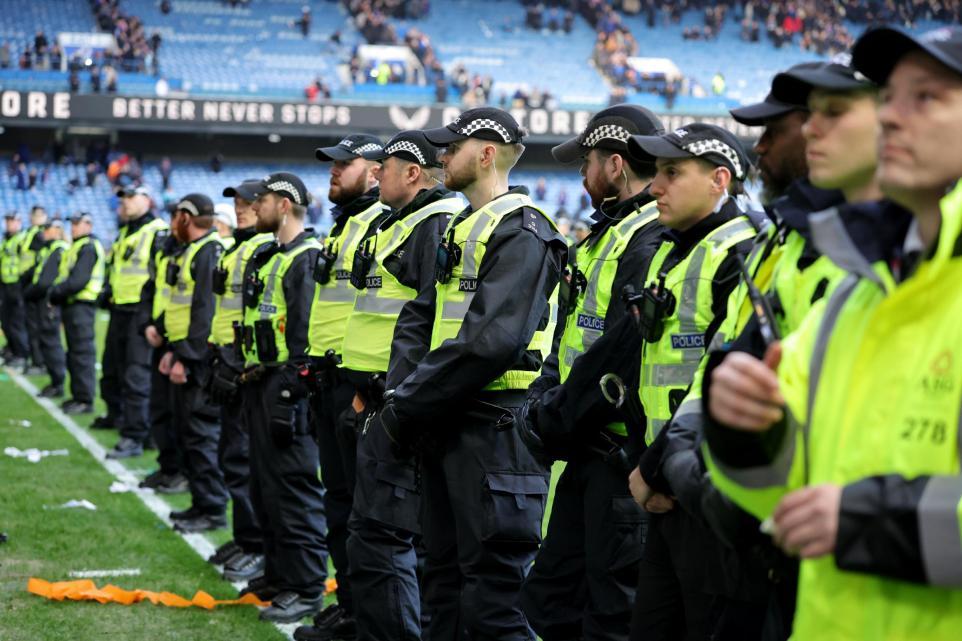
That celebration triggered an angry response from sections of the home support, with hundreds of Rangers fans, many originating from the area of the ground housing the club’s Union Bears ultras group, charging across the pitch towards the away end. Flares and other missiles were thrown as the rival groups closed in on one another, and police and stadium stewards were forced to form a human barrier to keep the two sets of fans apart before order was eventually restored.
The aftermath was chaotic and, in places, frightening. A ten-year-old child was struck by a coin thrown from the stands. A Celtic backroom staff member was involved in an incident that saw a 47-year-old man apprehended by police at the scene. Footage that circulated afterwards appeared to show a female police officer knocked to the ground from behind as a Rangers supporter sprinted towards the away end, while other clips showed fans aiming kicks and shoves at Celtic defender Julian Araujo as players and staff attempted to leave the pitch.
Police Scotland’s Chief Superintendent Kate Stephen described the scenes in the immediate aftermath as shameful, saying officers and members of the public had been left injured by what she called a despicable display, and confirming that a number of arrests had already been made that evening as the force pledged a robust investigation into the disorder in partnership with both clubs and the Scottish Football Association.
What has followed in the months since has been less a single dramatic swoop and more a steady drip-feed of arrests, as detectives have worked through CCTV footage, mobile phone recordings and public tip-offs to identify those involved. The numbers have crept upward incrementally: nine arrests were confirmed within the first 24 hours, rising to 11 within a few weeks as further individuals were traced and charged, then 17 as police continued appealing for information via the Major Incident Public Portal, Crimestoppers and the force’s own inquiry line.
By early June, the tally had climbed to 37 after six more men, ranging in age from 18 to 59, were charged with offences including assault and breach of the peace. A fortnight or so later that figure rose again to 40, with three further men in their late twenties and thirties charged with similar offences. This latest update, taking the total to 43, continues that pattern of periodic additions to what detectives have made clear is a long-term, methodical piece of work rather than a case they expect to close quickly.
Detective Chief Inspector David Lamont, who has led on the investigation, said in the spring that extensive enquiries remained ongoing to identify and trace those involved, and stressed that anyone responsible for acts of violence and disorder that day would face the consequences of their actions. That message has been repeated in broadly similar terms at each stage of the investigation since, with police continuing to release appeals and, at various points, images of individuals they still wish to identify.
The disorder reignited a long-running and uncomfortable debate in Scottish football about how Old Firm fixtures are policed and ticketed, particularly around the size of away allocations at Ibrox and Celtic Park. The 7,500-strong Celtic contingent inside Ibrox that day was itself a point of contention, being the largest away allocation permitted between the two clubs since 2018, and the scenes that followed prompted renewed calls from some in policing circles for those allocations to be reconsidered for future fixtures between the sides.
Both clubs faced scrutiny from the Scottish Football Association in the aftermath, with the governing body confirming it was looking into potential disciplinary consequences arising from the pitch invasion and the broader conduct of sections of both support bases. Rangers, for their part, said their fans had been left unprotected by the way the celebrations and subsequent disorder unfolded, while Celtic said several of their own supporters and stewards had been struck by debris, including seats that had been torn from the stadium’s fittings.
Political reaction was swift and pointed, too. First Minister John Swinney branded the scenes completely and utterly unacceptable in the hours after the match, and voiced his full support for police in pursuing everyone found to have been involved, echoing language used by his predecessors after previous outbreaks of Old Firm-related disorder down the years — a grim tradition that has periodically resurfaced around George Square celebrations, Scottish Cup finals and Old Firm derbies stretching back decades.
For the 43 men arrested and charged so far, the coming months are likely to bring court appearances at Glasgow Sheriff Court, where the specifics of each case — ranging from breach of the peace and possession of an offensive weapon to more serious assault charges — will be tested individually. Given the scale of the investigation and the volume of video evidence still being worked through, however, there is little indication from Police Scotland that Wednesday’s update will be the la