Ex-FIFA official reacts to painful incident in Rangers win vs Motherwell, fans were furious with Gers ace

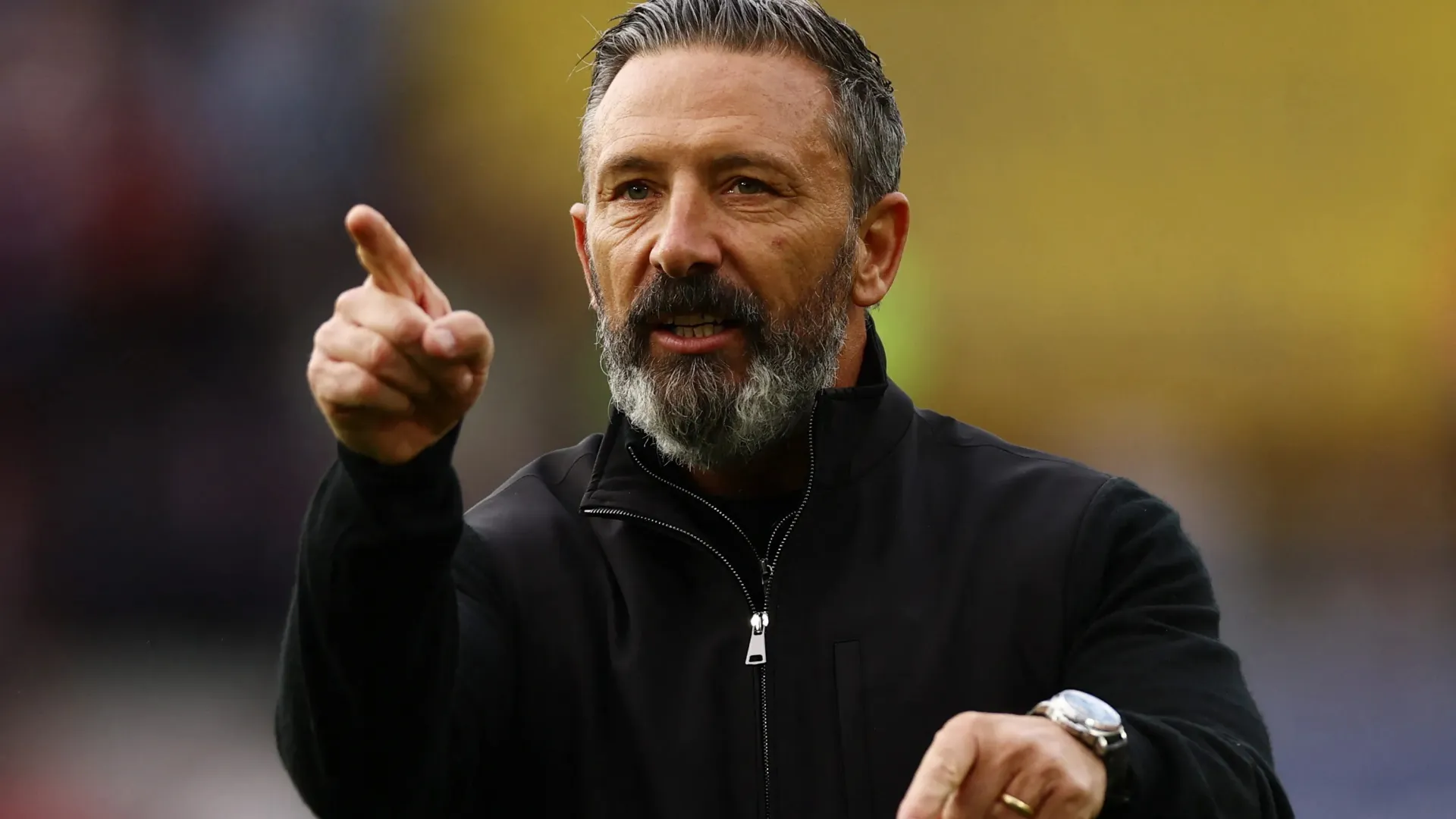
The most interesting thing McInnes said before the win at Fir Park was not about tactics. It was about an airport. Two of his players were missing from the starting eleven, one with a knock and one because of the journey home from international duty, and the way he explained it said more about the hidden costs of the modern football calendar than any formation discussion could. I should also correct my own earlier piece. In the match analysis I wrote that Kevin Kelsy and Ryan Naderi were the forwards and that the team matched the pre-match prediction. That was wrong. The predicted lineups had Kelsy starting, and he did not. What follows is the fuller and more accurate picture.
Start with the lineup, because it changes how the match should be read. Gassama started on the left, Minsu Kim played centrally, Bouanani kept his place on the right behind Naderi as the lone striker, and it was the same front four that began at Dens Park, a fact that would have alarmed some supporters. That last observation matters. Rangers fans had a recent memory of that front four, and it was not a happy one, so seeing it named again would have prompted a sinking feeling before a ball was kicked. The reasons for the change were not a matter of choice, as McInnes was careful to explain. The Read Rangers account of the team news made the point that at first glance there might be surprise that James Penrice and Kevin Kelsy had been omitted, and that the manager revealed it was not a matter of choice, with both players having separate issues that week.
Take Penrice first, since his was the injury scare. McInnes described a gradual and slightly confusing situation. He said Penrice had struggled a little over two days, pulling up in training on Thursday, and that the club did not think it was anything too significant. The complication came the next day. Penrice trained on Friday but had to pull up again, and the club got him a scan on Saturday morning. That sequence is the standard pattern for a muscular problem that is not quite serious enough to rule a player out but not minor enough to ignore. A player pulls up once and the staff assume it is a niggle. He pulls up again, and the question changes from whether it is a niggle to whether it is something that could get worse. A scan is the sensible response, because it replaces guesswork with information, and in a squad that is already thin in places, information is worth a lot.
The result, thankfully, was reassuring. McInnes said the scan on Saturday showed it was nothing really to be too concerned about, and Tuur Rommens started at left-back in his place. That is as good an outcome as the club could have hoped for. A defender who has been part of the settled back line that has underpinned the unbeaten run is back in contention, and the club has avoided the disruption of an extended absence in a position where cover is not abundant. The Rangers Review piece used the phrase sigh of relief for the situation, which is accurate. A scan with a clean result also removes the burden of speculation, because the staff can manage his workload in the coming days with confidence instead of caution.
Penrice’s season so far gives the scare some context. One of the match-day pieces from Read Rangers noted that he had come in this season and performed admirably, which suggests a player who has established himself in the team after a period of competition for the position. That is worth remembering, because a left-back who has earned his place is more valuable than one who has merely been handed it. His international situation is also revealing. The Scottish trio of Findlay Curtis, Liam Kelly and James Penrice were all unused on international duty during the break. That is a small but telling detail. Three Rangers players went away with Scotland and none of them played a minute, which means they did not benefit from the usual boost of international football and also did not carry the fatigue of heavy minutes. In Penrice’s case, then, the injury appears to have arisen in training with the club and not from national service, and the timing is simply unlucky.
There is an amusing statistical footnote that sits alongside the story. Read Rangers published a piece under a headline saying that Motherwell and Rangers broke a 21-year Scottish Opta record at Fir Park, with the subheading noting that no Scots started for the first time in 21 years. I have only seen the opening lines of that piece, so I will not claim to understand the full detail, but its logic is clear enough. With Penrice out, Rangers lacked a Scottish player in the eleven, and the same piece observed that there are not enough candidates at present to hold down a regular place. It is a sign of how the squad has been rebuilt, with a strong international mix and relatively few homegrown regulars, and it is a reminder that a single injury can alter even the demographic profile of a team. The record is a curiosity, not a crisis, but it reflects a wider conversation about the Scottish presence in the country’s biggest club.
Now turn to Kelsy, whose case is stranger and more instructive. The word that gave the headline its flavour was McInnes’s own. The manager said Kelsy was just gubbed, to be honest. The explanation was an ordeal that any traveller will recognise and any footballer should not have to endure. Kelsy spent ten and a half hours at the airport on Thursday, with the travel situation far from ideal after coming back from Russia, where he had been on international duty with Venezuela, and McInnes said the club was far from happy about it. That is a striking sentence from a manager who generally keeps his public comments measured. To say the club was far from happy, about an arrangement outside its control, is a mild form of protest, and it points to a real frustration among clubs about how international fixtures are organised.
The logistics are worth spelling out, because they explain why a fit player could not start a match. Venezuela played Russia on the seventeenth, and Kelsy then had to make his way back to Glasgow in time for a Saturday evening fixture. The journey was complicated by transport problems. The pre-match reports described it as a delay in getting him back, and McInnes gave the detail himself on Thursday: they never got him back on Wednesday night due to a few transport issues, but managed to return him at lunchtime on Thursday, via a long way around, and he was the only player the club had not seen that morning. The words via a long way around suggest an itinerary with connections and detours, and a man who arrived exhausted. From the point of view of a coach, a player who has not trained, has barely slept and has spent most of a day in an airport is not an obvious candidate for ninety minutes of high-intensity football.
What makes the situation reasonable, and what protects the manager from criticism, is that Kelsy was not injured. The distinction matters. Rangers News reported that it was understood not to be the manager’s decision to drop him but one he felt he needed to make, and that Kelsy is still fit and had picked up no injury while with his country, since otherwise he would have been left out of the matchday squad altogether. That fits with McInnes’s own statement that Kelsy was available if needed. By his own admission, the striker was feeling leggy and tired, but was there if the team needed him. The honesty of that self-assessment is a point in the player’s favour. A forward who tells his manager he is not at his best is helping the team, because the alternative, pretending to be fine and then struggling, is how injuries and poor performances happen.
It is worth appreciating how rare this kind of situation is in a modern squad. Eleven Rangers players went on international duty during the break, which is a substantial number, and the return was almost entirely smooth. All eleven came back unscathed, although Kelsy’s arrival was delayed, and Olwethu Makhanya reported back fine. The overwhelming majority of the travel went well, which makes the one failure stand out. It also shows how much logistics matter. Clubs invest heavily in sports science, nutrition and recovery, and then a single flight cancellation can undo it. A striker whose body has been prepared meticulously for months is thrown into a ten-hour wait in an airport terminal, and the preparation is undermined by something no one planned.
The deeper point is about the calendar. Footballers are asked to travel between continents, play in different climates and return to their clubs in time for domestic fixtures, often with only a day or two to recover. The sport’s authorities have been warned repeatedly about the physical cost of this, and the Kelsy episode is an illustration in miniature. The match he missed was a significant one, with the title race tight and a win important, and the club’s frustration is understandable. Whether anything will change is another matter, because the international calendar is set by bodies that are not accountable to individual clubs. What can be said is that the managers and medical staff are the ones left to deal with the consequences.
Having dropped Kelsy, McInnes had to decide how to shape the attack, and the answer was to adapt his formation. He altered the shape so that Gassama played from the left and Kim operated centrally, with Bouanani on the right behind Naderi. That arrangement placed Naderi alone as the central striker, supported by three attacking midfielders. It is a different approach from the two-striker partnership that had been working, and it put a premium on movement and link-up play. The danger, as the match showed, is that a lone striker can become isolated against a compact defence, particularly one like Motherwell’s, and the supply of chances depends on the quality of the players behind him.
The performance of that front four was uneven. The Rangers Review analysis hinted at the problem when it described the changes McInnes made in the second half as adding a goal threat and an option more capable of finding the net after another one of those nights for Gassama. That is a pointed observation. It suggests that the winger had been ineffective, and it reinforces the point that the front four’s earlier record at Dens Park, which had worried some supporters, had not been fully put right. I do not want to be too harsh on a player on the basis of a single report, and one night is a small sample. But the reaction shows that supporters and commentators were watching closely, and that the manager was aware of the same issue.
The substitution was decisive, at least in a tactical sense. McInnes kept the shape until the 68th minute, and when he changed it, it was no surprise to see Kelsy introduced to partner Naderi. Bringing on a fresh striker, even a tired one, was a calculated gamble. Kelsy had said he was leggy, but twenty-two minutes of football is a very different demand from ninety, and a player who is running on adrenaline for a short spell can be more effective than one who has been grinding all night. The change also restored the two-striker pairing that had been so effective earlier in the season. Whatever else can be said, the goal that decided the match came after that switch, and it would be natural to link the two, though a deflection that falls at the right moment is difficult to credit to any single decision.
It is worth being fair about the limits of that conclusion. The winning goal came in the 88th minute from a shot that took a deflection, and it was credited to Naderi in most accounts. The idea that bringing on a second striker caused it is plausible, since it increased the number of attackers in the box and the chances of a loose ball falling to someone. But football is full of late goals that arrive from different tactical situations, and one can only say that the change fitted the logic of the match. The manager gave himself the best chance of finding a winner, and the winner came. That is good management, whether or not it was the cause.
The incident also raises a question about squad depth that is familiar to every manager in the league. A team that relies on a small number of key players is vulnerable to the unexpected, whether that is a travel delay, a muscle strain or a suspension. McInnes has managed this well so far, as the thirteen-game unbeaten run demonstrates. But the Motherwell match illustrated how quickly the picture can change. Two of the players he would have selected were unavailable at the start, and the formation had to be rebuilt around the remainder. The ability to adapt without losing the team’s identity is a mark of a well-organised squad, and the fact that Rangers still won says something positive about their resilience.
There is more good news in the wider team report. Ross McCrorie and Daisuke Yokota have returned to the first-team picture, with McCrorie and Yokota both back in training ahead of a busy upcoming run of fixtures. That updates the injury list I referred to in earlier pieces, in which both were among the absentees. Lawrence Shankland and Cammy Devlin remain on track for a return in early December and have been running with the physio. A fuller squad is on the way, which eases the pressure on the players who have been carrying the load, and which gives McInnes more options for the festive programme. The timing is helpful. A manager facing a run of fixtures in quick succession wants as many fit players as possible, and the gradual return of several of them is the best news of the week.
The mention of the busy fixture list is important, because it gives the Penrice and Kelsy episodes a sharper meaning. Read Rangers described the Motherwell win as massive given the week ahead, a phrase that points to a congested schedule in which every point counts and every injury matters. A team chasing Celtic cannot afford to rotate recklessly, but nor can it risk burning out its key players. The balance between rest and rhythm is one of the hardest things for a manager to manage, and the events of this weekend illustrate it in a small way. Penrice was protected until a scan could clear him. Kelsy was held back until he could contribute off the bench. Both decisions were sensible, and both were forced by circumstances more than by preference.
There is a human dimension that is easy to overlook in a story about airports and scans. Kelsy is twenty-two and had just travelled halfway round the world to play for his country, an honour that carries its own pressure. To come back and find that his club manager is publicly describing him as exhausted is a mild embarrassment, but McInnes’s tone suggests sympathy and not criticism. The manager made clear that the problem was the travel situation and not the player, and that he was far from happy with the circumstances. That is a good example of a manager shielding a player from blame, which is a quiet but valuable part of the job. A player who feels supported is more likely to give his best, and a manager who defends his squad in public builds loyalty that pays off later.
Penrice, for his part, will be relieved. A player who has pulled up twice in two days knows what that can mean, and the wait for a scan result is one of the more anxious moments in a footballer’s week. The all-clear removes that uncertainty and allows him to focus on getting back to full training. For a defender who has fought for his place, the thought of losing it to injury would have been a real worry, and the news that the scan showed nothing serious is a relief. It is a reminder that behind every team sheet there are individuals dealing with their own concerns, and the headlines rarely capture them
There is also a lesson here about communication. McInnes chose to explain the changes openly, and that candour is a feature of his approach. By telling the media why Penrice and Kelsy were not in the eleven, he pre-empted speculation and protected both players. If he had said nothing, supporters might have drawn their own conclusions, and some might have assumed that the omissions were tactical or disciplinary. By being clear, he allowed the focus to remain on the football. That is a small but telling sign of a manager who understands how information flows around a big club, and who knows that a straight answer is usually better than a mystery.
Finally, consider what the episode tells us about the club’s strengths. Rangers won a difficult match with two regular starters missing, a reshaped attack and a scan result pending. They did so away from home, against a determined opponent, and they did so in the closing minutes. That is the profile of a team that is deeper and more adaptable than it was earlier in the season, when a few injuries might have derailed it. The unbeaten run has been built on this kind of resilience, and the Motherwell match is a good example of it in practice. Whether it continues depends on the injuries, the fixtures and a degree of luck, but the foundations look sound.
Te week ahead will test them. With a full set of fixtures to come, the question is whether the squad can stay fit and fresh, and whether the manager can keep rotating without losing momentum. The return of McCrorie and Yokota will help, and the expected comeback of Shankland and Devlin in early December will help more. If Penrice is available, as the scan suggests he will be, the defence will be close to full strength. And if Kelsy has recovered from his journey, the attack will have its preferred partnership back. None of those things is guaranteed, but all of them are plausible, and together they give Rangers a reasonable chance of extending the run.
In the end, the story of Penrice and Kelsy is a story about the unglamorous side of football, the scans, the travel, the fatigue and the small decisions that shape a result. It is a reminder that a team’s success depends on far more than tactics and talent, and that the work done by medical staff, travel coordinators and managers behind the scenes makes a difference. McInnes handled it calmly, explained it honestly and got the result he needed. The headline captured the colour of the moment, with its talk of a scan and a player who was gubbed, but the substance is simpler and more reassuring. One player is fine, another is tired, and the team is still winning. For a club with title ambitions, that is about as good a position as it could ask for.