‘Poor’ – Sky Sports pundit slams Rangers attacker after messy first-half action vs Motherwell

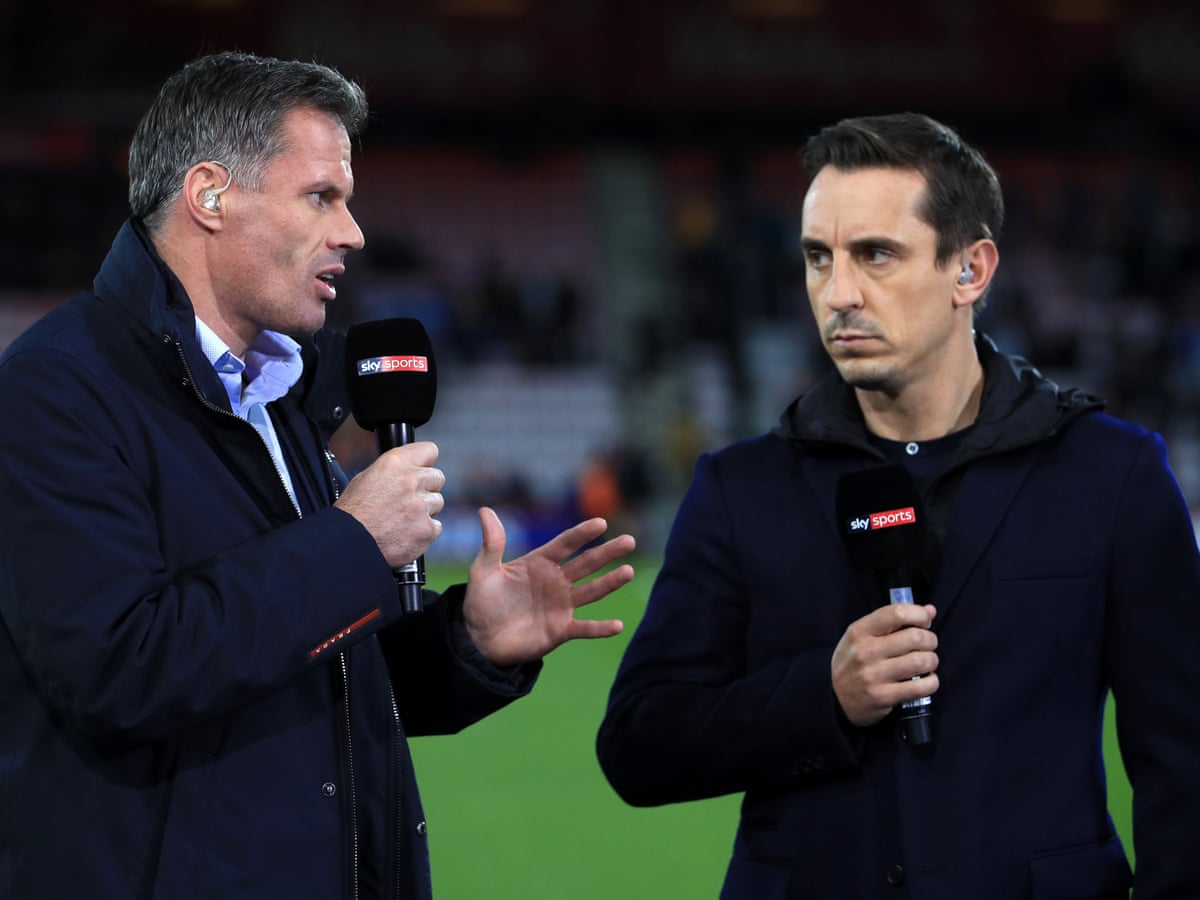
Pundits are paid to say what viewers are thinking a few seconds before the viewer has finished thinking it. James McFadden did that on Sky Sports on Saturday night, in the 18th minute at Fir Park, when Djeidi Gassama had the ball in a promising position and lost the chance to use it. It was a small moment in a first half that Rangers dominated and still contrived to make untidy, and the reaction to it, from a headline that called the winger’s work poor to a wider conversation about his season, says a good deal about where Rangers’ attack is and what it still needs.
Start with the moment itself, because it is easy to inflate. According to the match coverage on Yahoo Sports, in the 18th minute Rangers worked their possession well to carve out an opportunity for Gassama to get a cross into the area, but with the ball in the Motherwell box a poor first touch allowed Tom Sparrow to clear easily. McFadden’s verdict was that the touch was the reason Gassama could not deliver a clean cross, and he added, in a line that is quietly more interesting than the criticism, that Rangers were simply knocking the ball about at the back while waiting for the moment to spring. That second observation is the real analysis. He was describing a team that was patient, controlled and content to wait for a gap, and then pointing to the exact instant at which the patience should have turned into a chance. A first touch that takes the ball a yard too far or leaves it under the player’s feet is a tiny error with an outsized cost, because the whole point of patient build-up is to make the final action count.
The word poor in the headline is accurate to what McFadden said but needs context. He was not describing the player’s whole night, nor even his whole half. He was describing a touch. Pundits dissect single actions in a way that managers and coaches rarely do, because a single action is something that can be replayed, paused and annotated on screen. A winger can have a dozen good moments in a half and be remembered for the one that went wrong because it is the one that was shown again. That is not an argument against the criticism, which was fair, but a reminder of how television frames a performance.
It helps to know who Gassama is, since the criticism lands differently depending on what he is expected to be. He is 23, a Mauritania international, and one of the summer arrivals who were meant to refresh Rangers’ attack. His game is built on pace, directness and the ability to draw fouls. That last quality has come up repeatedly this season in matches against Motherwell. In September at Ibrox, his clash with Tom Sparrow produced the penalty that former referees Keith Hackett and Mark Clattenburg disagreed about, with Hackett saying the decision was correct and Clattenburg calling it very soft. In a separate match, a defeat at Ibrox, Clattenburg argued that a foul on Gassama by Lukas Fadinger began inside the box and should have been reviewed. A player who keeps winning contact in dangerous areas is a player who is making defenders uncomfortable, and that is a valuable attribute, but it is a different thing from being a polished creator, and on Saturday the polish was what was missing.
The team context is essential. Gassama was in the side because Kevin Kelsy was not. As discussed earlier in this conversation, Kelsy had spent ten and a half hours in an airport on the way back from international duty with Venezuela and was left on the bench, with McInnes explaining that the striker was exhausted. One report put the consequence plainly: Gassama replaced Kelsy but occupied the left-wing spot, which meant Minsu Kim played in a more central position. So the shape of the front line was a product of circumstance. The manager did not choose to give Gassama a bigger role because he thought the left wing needed him more than the number nine position needed a striker. He did it because of a travel problem. That matters because it affects how we judge the performance. A player asked to fill a role in a reshuffled attack, on an evening when the usual partnerships were not available, is working with less rehearsal than usual.
That reshuffle had a beneficial side effect, and the same pundit who criticised Gassama gave it a good review. The setup put Kim in the number ten position, and it was Kim who took the corner that led to the opening goal. McFadden described the delivery as excellent and the header from Emmanuel Fernandez as very good. For Kim the moment carried extra weight. The coverage noted that he had no goals or assists to his name before the game, and had suffered the embarrassment of missing a penalty in a previous match. A player who has started regularly without tangible output builds up pressure with every game, and a pinpoint corner that leads to a goal in the eighth minute lifts a good deal of it. The Rangers News write-up of the match said that in recent games he had been criticised for overthinking, and that supporters might now see a sharper version. I would be cautious about reading a season-long turning point into a single assist, but the early delivery was a better answer to criticism than any words.
It is worth setting the two verdicts next to each other, because together they show what the first half was like. On one side there was a corner delivered perfectly, a goal in the eighth minute and sustained pressure. On the other there was a patient build-up spoiled by a heavy touch. Both can be true of the same team in the same forty-five minutes. Rangers did dominate. The match data from the evening gave them 29 shots at goal in total, a figure that is remarkable for a game they only won by a single goal, and the pressure was constant from the opening minutes. But the first half also saw a Motherwell goal out of nothing. As the Yahoo match coverage put it, the home side made the most of their first corner kick, their second touch in the Rangers penalty area and their first effort at goal. That sentence is the most damning summary of the half I have seen, and it is damning of Motherwell’s goal as much as of Rangers’ failure to put the game out of reach. A team that has all the possession and all the territory and still concedes from the opposition’s first genuine chance has been wasteful, and wastefulness is exactly what a poor touch represents at the level of a single move.
The mess in the first half was therefore partly about execution. Rangers were making good decisions and then undermining them at the last moment, whether through a bad touch, a stray pass or a hesitant finish. The scale of the pressure meant there were plenty of such moments. When a team has 29 shots and scores twice, the efficiency is poor in a way that is easy to mistake for bad luck. Paulsen’s nine saves were the visible reason, but the quality of the chances is a separate question. Many of the shots were presumably from less than ideal positions or under pressure, and the number of attempts overstates the number of clear opportunities. A manager who looks at that data sees a team that is generating a lot and finishing little, which is a different problem from one that is generating little.
McInnes was asked about this directly. According to the Sunday summary of Rangers news, he rejected claims that Rangers have a scoring problem after the 2-1 win, pointing to goals, chances and a 13-game unbeaten run. That is the right answer for a manager to give, and it is also partly correct. A team that wins thirteen matches without defeat does not have a fundamental attacking problem. But the Motherwell match did illustrate a particular kind of inefficiency, one that has surfaced in other games this season, and the debate is about whether it will matter in a tight title race. In a league where Celtic can win 4-1 on the same day, as they did against St Mirren, a team that wins 2-1 through a deflection in the 88th minute is leaving little margin. The wasteful moments are affordable when the opposition cannot punish them. They are costly when the margin for error shrinks.
There is a reasonable argument that the criticism of Gassama is a proxy for a larger question about the left wing. Rangers have options in wide areas, and the competition for places is real, but nobody has fully established a hold on the position. Gassama’s strengths, speed and directness, suit a team that wants to stretch opponents and create space for others. His weaknesses, which McFadden identified, are in the final action: the touch, the cross and the decision. Those can improve with coaching and experience, and at 23 he has time. But the match against Motherwell showed that at present those weaknesses appear at moments that matter, and a team chasing the leaders cannot always afford to wait for development.
I should be careful here, because earlier in this conversation I cited a Rangers Review analysis that described the second-half change as bringing on Kelsy after another poor night for Gassama. That is one outlet’s assessment, and McFadden’s comment is another, and together they give a consistent picture of a player who struggled on the night. But two reports of one game are not a verdict on a season. Gassama’s earlier performances in the matches against Motherwell involved him being fouled, winning penalties and creating difficulties for defenders, and a fair assessment has to include those. The honest summary is that he is a player with real threat and inconsistent finishing touches, and that Saturday was a night when the inconsistency was more visible than the threat.
The other pundits on Sky that evening had a different focus, and their comments help balance the picture. Andy Halliday, a former Rangers and Motherwell midfielder, called it a massive win and pointed out that of Rangers’ next six games, five are at Ibrox, so keeping the pressure on Celtic was important. He also said that the introduction of Findlay Curtis changed the game, a comment that matters in the context of the left wing and the attack. A substitute coming on and altering the match suggests that the first hour had left room for improvement, and that the manager’s changes were the key to unlocking a stubborn defence. Halliday also had warm words for the opposition, saying he felt for Martin Moormann because the defender and Paulsen were the reason it stayed 1-1 for so long, and describing Moormann as direct and positive with many crosses into the box. That is a generous assessment of a player who ended up on the wrong side of the winner, and it shows how much respect there was among the pundits for Motherwell’s resistance.
Kris Boyd, for his part, focused on Naderi, calling him pivotal again and praising his work rate. In the Sunday summary, Boyd and McFadden were both described as praising Naderi’s touch, after Paulsen had denied him before his late winner. That is a telling contrast. The same pundit who had criticised one winger’s touch in the first half praised another forward’s touch in the second, and the contrast shows how fine the margin between a good and a poor finish can be. Naderi’s first touch and finishing at the end of the match were rewarded, even if the ball took a deflection on its way in, and Gassama’s first touch in the first half was not. Football is full of small asymmetries of that kind, and they often decide matches.
The winning goal deserves a clear account since the coverage is so mixed. The Sky Sports match report said that Naderi’s shot from eight yards went in off Martin Moorman after the Austrian had blocked a shot from Badredine Bouanani. So the sequence was a Bouanani shot, a block, a loose ball and a Naderi finish that took a deflection on the way in. That is a goal made by volume, by the persistence that produced 29 shots. It also followed one of the best saves of the season, as Sky’s report described it, with Paulsen somehow getting a hand to a Dujon Sterling effort and pushing it onto the crossbar with five minutes left. A team that is denied by a save like that and still scores within minutes has shown the resilience that title challengers need, and the goal’s lucky bounce does not diminish the work that preceded it.
Which brings us back to the central question: does a first-half touch matter in the grand scheme? In isolation, no. The match was won, the unbeaten run extended to 13 games and the gap to Celtic held at four points. But it matters as an example of a pattern. Rangers have been dominant in many matches this season and have not always converted the dominance into comfortable wins. The margins have been thin, and they have relied on late goals and individual moments. A team that is chasing a leader that wins 4-1 on the same day cannot expect that to continue forever. At some point a match will arrive in which the late goal does not come, and the wasteful moments will cost points.
Chris Sutton made a related point in a different context. The Sunday summary reported that he said Rangers must capitalise on Celtic’s unrest, warning that McInnes’s side would face serious questions if they miss the chance. That is a stark framing. If Celtic really are in some kind of turmoil, the opportunity for Rangers is real, and it requires clinical football, not just dominant football. The distinction matters. Dominance wins you praise from pundits. Efficiency wins you titles, and a winger who can turn a promising position into a clean cross is part of that efficiency.
What would improvement look like for Gassama? It is largely a matter of repetition and decision-making. The first touch, the quality of the cross and the choice between crossing, cutting inside and recycling the ball are all things that can be coached. The best wingers combine raw speed with an ability to slow the game down at the right moment, to make the choice that suits the situation. A 23-year-old with obvious physical gifts has every chance to develop that, and the best environment for it is regular football under a manager who gives clear instructions. The risk is that criticism from outside erodes confidence, which is why managers often shield their players from it.
McInnes seems to understand this. His approach to Kim, who had been criticised for overthinking, was to keep faith and keep selecting him, and the corner that led to the opening goal was a reward for that. A similar approach with Gassama would be reasonable, given his strengths and the evidence of his threat. But the manager also made a change at the right moment, bringing on Kelsy to partner Naderi and altering the shape, which suggests that he will not hesitate to adjust when a player is not delivering. That balance, faith plus pragmatism, is a mark of good management.
There is also a point about how supporters respond. Fans reading a headline that says a pundit slammed a player will form an impression of a bad night. The reality is a single action criticised in a match that Rangers won, with the same pundit praising another player’s delivery minutes later. The temptation to turn that into a narrative is strong, and clickbait headlines feed it, but the evidence does not support a harsh verdict. It supports a measured one: that the touch was poor, that the cross was lost, that the team recovered and that the player has more to offer.
Looking ahead, the fixture list is kind. Halliday noted that five of the next six games are at Ibrox, and a home run gives Rangers the chance to build momentum and apply pressure. Home matches usually mean more possession against deeper defences, which is the situation in which a winger’s final ball matters most. If Gassama is to establish himself, the coming weeks are the time. Against compact opponents who sit back, the ability to receive the ball cleanly in tight spaces and deliver a decent cross is exactly what separates a good winger from an average one. He will have chances, and the scrutiny will be greater because of Saturday.
The return of other players will affect the picture. Lawrence Shankland is nearing a return, according to the same Sunday summary, with an interesting selection call between him and the in-form pairing of Naderi and Kelsy. As the squad gets healthier, the competition for places intensifies, and a winger who is inconsistent will find himself under pressure. That is not a bad thing. Competition is how squads improve, and it ensures that nobody can coast. Gassama’s response to criticism, and to the arrival of more options, will say a lot about his character and potential.
In the end, the McFadden moment is a small footnote to a good win, but footnotes sometimes reveal the shape of a season. The team is dominant but not always clinical, the manager is adaptable but constrained by injuries and fatigue, and the individual players are talented but still developing. A poor first touch in the 18th minute of a match in November is not a crisis. It is a reminder that the difference between a title challenge and an almost is made of moments like it, and that the work of turning chances into goals happens in training long before it is seen on a Saturday night
Whatever else is true, Rangers left Fir Park with three points, a thirteen-game unbeaten run and a gap to Celtic they can close. The pundits will keep analysing, as they should, and the players will keep trying to give them less to criticise. If Gassama’s next first touch is cleaner, nobody will remember the one in the 18th minute. If it is not, the headlines will return, and he will have to answer them the only way a footballer can, with the ball at his feet and the goal in front of him.