Absolute disgrace. that referee shouldn’t be anywhere near a World Cup match again. Every big decision seemed to go against Scotland, and it felt like we were fighting the officials as much as the opposition.

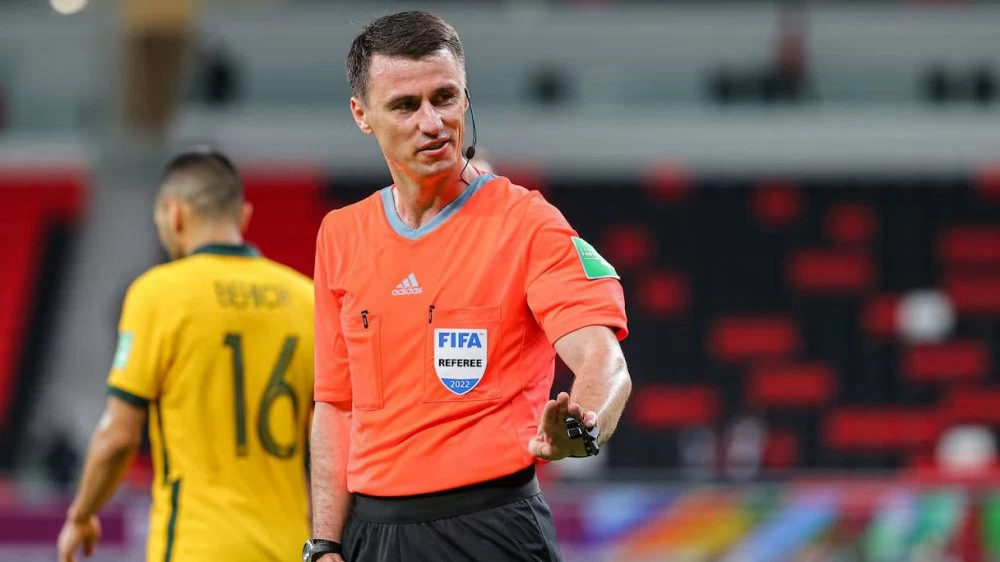
The final whistle blows, not as a mere marker of time, but as a brutal, echoing declaration of injustice. It is a sound that reverberates through the stadium, through the pubs and living rooms back home, and deep into the marrow of every Scottish supporter who has ever dared to dream. In the immediate aftermath of a match that can only be described as an absolute disgrace, the overriding emotion is not mere disappointment, nor is it the gentle melancholy of a hard-fought loss. It is a visceral, white-hot fury. It is the sickening realization that a World Cup campaign, something that consumes four years of blood, sweat, and unyielding dedication, has not been decided by the skill of the players or the tactical acumen of the coaches, but by the catastrophic ineptitude of a single official.
That referee—a man entrusted with the stewardship of the game’s most prestigious tournament—should not be anywhere near a World Cup match again. His presence on the highest stage of international sport is an insult to the integrity of the competition, a mockery of the principles of fairness, and a stain on the beautiful game. To say that he had a bad day at the office would be a gross understatement; this was not a matter of marginal calls or human error. This was a systemic, unrelenting pattern of decisions that systematically dismantled Scotland’s efforts, rendering the players’ superhuman exertions utterly futile. Every big decision seemed to go against Scotland, and as the match wore on, the grim reality set in: we were not just playing against the opposition; we were fighting the officials as much as the men in the opposing jerseys.
To understand the magnitude of this travesty, one must first understand what the World Cup means to a nation like Scotland. For a country of its size, qualifying for a major tournament is a monumental achievement. It is the culmination of years of grinding through qualifying campaigns, navigating injury crises, overcoming tactical frustrations, and carrying the weight of a passionate, eternally hopeful fanbase. The players do not simply walk onto the pitch; they carry the hopes and dreams of a nation that has often seen its sporting aspirations dashed on the rocks of misfortune. When the Scottish national anthem echoes through the stadium, it is not just a song; it is a battle cry, a declaration of identity, a moment of profound unity. To have that moment, that sacred sporting pilgrimage, corrupted by the sheer incompetence of a referee is a tragedy of sporting proportions.
From the opening exchanges, the tone was set. It was as if the referee had arrived at the stadium with a preconceived narrative, a script in which Scotland was cast as the villain, destined to be penalized for every flicker of ambition. The first major flashpoint came early in the first half, a moment that would dictate the chaotic trajectory of the rest of the match. A Scottish forward, bursting with intent, broke through the defensive line, only to be unceremoniously hauled back by a desperate, cynical challenge. It was a clear denial of a goalscoring opportunity—a professional foul that demanded, at the very least, a yellow card and a dangerous free kick. Yet, the referee, positioned with an unobstructed view, waved play on. The silence from his whistle was deafening. It was not just a missed call; it was a green light to the opposition. It signaled that the rules of engagement had been altered, that the dark arts of the game would be tolerated, and that Scotland would be left to navigate a minefield without the protection of the governing laws.
As the half progressed, the pattern of marginal calls morphed into a pattern of egregious errors. The definition of a “big decision” encompasses those pivotal moments that swing the pendulum of a football match: penalty kicks, red cards, decisive fouls in the build-up to goals. In each of these categories, the referee’s judgment was found spectacularly wanting, and always, inexplicably, to Scotland’s detriment.
Consider the penalty incident. A cross swung into the box, dipping dangerously into the heart of the penalty area. A Scottish striker rose majestically, timing his run to perfection, only to be shoved in the back with the subtlety of a sledgehammer. The contact was so forceful that it sent him sprawling to the turf, the ball trickling harmlessly out of play. The stadium held its collective breath. The Scottish players furiously pointed to the spot. The fans behind the goal roared in unison. It was as stonewall a penalty as one is ever likely to witness. Yet, the referee, perhaps influenced by the histrionics of the defending player or simply blinded by a moment of inexplicable cognitive failure, signaled for a goal kick. It was a decision that defied the laws of physics and the laws of the game. To add insult to injury, the referee then compounded his error by booking the Scottish striker for “simulation,” a charge so laughable it bordered on satire. In one swift, arrogant motion, the referee had not only denied Scotland a legitimate opportunity to take the lead but had also painted one of their most dangerous players as a cheat, inviting the ire of the crowd and laying the psychological groundwork for a deeply toxic officiating environment.
Then came the defining moment of the match, the decision that ultimately sealed Scotland’s fate and crystallized the feeling of a campaign stolen. The opposition launched a counter-attack, a sweeping move that looked dangerous but was clearly hindered by an offside player in the build-up. The linesman’s flag stayed down, an error in itself, but the true crime was yet to come. As the ball was played into the box, an opposition striker collected it, took a touch, and smashed it into the net. However, in the build-up to that touch, there was a glaring foul. A Scottish defender was clipped from behind, his ankle buckling under the illegal contact, forcing him to lose his footing and allowing the striker the fraction of a second needed to unleash his shot. It was a foul that happens a hundred times a game, a foul that is routinely given in local parks football, let alone on the grandest stage of the World Cup.
The Scottish players surrounded the referee, their faces a mixture of incredulity and rage. The replays on the stadium’s giant screens—though not officially meant to influence the referee—showed the foul in agonizing, high-definition clarity. The contact was undeniable. The infringement was blatant. The goal should have been chalked off, the free kick given to Scotland, the danger averted. But the referee, exhibiting a stubbornness that is the hallmark of the most dangerous kind of official, pointed to the centre circle. Goal.
In that moment, the psychological landscape of the match was irrevocably altered. Scotland was no longer just competing against a well-drilled opponent; they were competing against an invisible, insurmountable force. They were competing against the narrative that the referee had written. It is often said that refereeing decisions even themselves out over the course of a season, but in the crucible of a World Cup match, there is no “rest of the season.” There is only ninety minutes. There is no margin for error, no opportunity to bounce back next week. When a referee makes a catastrophic error that leads to a goal, he does not just award a point; he steals time, he steals momentum, and he steals dreams.
To truly dissect the impact of this officiating, one must examine the concept of momentum. Football is a game of flow, of psychological supremacy. When a team feels that the officials are against them, a creeping sense of fatalism begins to infect the squad. Players begin to second-guess their tackles, fearful that a legitimate challenge will be misconstrued as a foul. They begin to hesitate in the box, wary of being penalized for breathing on an opponent. The referee’s whistle, or lack thereof, becomes a psychological weapon wielded against them. The opposition, sensing this hesitation, grows bolder. They realize they can push the boundaries, that they can niggle, foul, and time-waste without fear of retribution. They become the beneficiaries of a tacit, unspoken bias, emboldened by the realization that the man in the middle is effectively a twelfth man for their cause.
For Scotland, this manifested in a second half that was as frustrating as it was heroic. The players, to their immense credit, did not surrender. They threw everything at the opposition, launching wave after wave of attacks, driven by a sense of injustice that fueled their legs and sharpened their minds. But every time they threatened to breach the opposition’s defense, the referee was there to halt their progress. A foul given against a Scottish player for winning the ball cleanly. A free kick to the opposition for a phantom handball. A Scotland corner kick mysteriously awarded as a goal kick to the defending team. These were not game-changing decisions in isolation, but collectively, they formed a thousand cuts. They disrupted the rhythm of the game, prevented Scotland from building sustained pressure, and allowed the opposition to regroup and frustrate the Tartan Army.
The low point of this second-half barrage of ineptitude came when a Scottish midfielder, having danced past two challenges, was scythed down from behind. It was a tackle that endangered the player’s safety, a clear and obvious yellow card, arguably a red. The referee, inexplicably, gave a drop ball. A drop ball. In the modern game, where player safety is purportedly paramount, to downgrade a reckless, potentially career-threatening tackle into a neutral restart was not just a mistake; it was an abdication of duty. It told the opposition that they could kick Scotland off the park with impunity. It told the Scottish players that their safety was secondary to the referee’s bizarre interpretation of the rules. It was a moment that encapsulated the entire afternoon: a complete and utter disconnect between the reality on the pitch and the decisions being made by the man entrusted with governing it.
The fallout from such a match is long-lasting and deeply damaging. For the players, it is a heartbreak that is difficult to comprehend. They are trained to control the controllables: their fitness, their tactics, their mindset. But they cannot control the referee. When they walk off the pitch having given everything, having executed their game plan to perfection, only to be defeated by a man with a whistle, it leaves a scar. It breeds cynicism. It makes them question the point of it all. Why sacrifice time with your families, why endure the physical agony of professional sport, why put yourself through the emotional wringer of international football, if the ultimate arbiter of your fate is so hopelessly inadequate?
For the fans, the pain is equally profound, albeit different in nature. The supporters are the lifeblood of the game. They invest emotionally, financially, and spiritually. They travel across the globe, painting the host nations in Saltires, singing their anthems, transforming sterile stadiums into cauldrons of noise. They do not ask for much in return—only that their team is given a fair chance. When that fair chance is denied by the sheer incompetence of an official, it feels like a betrayal. It feels as though the doors to the theatre have been locked just as the play reaches its climax. The post-match conversations in the pubs and on the forums are not debates about tactics or player ratings; they are ventriloquist acts for the referee’s incompetence. They are a collective, communal grieving for what might have been.
Which brings us back to the fundamental demand: that referee shouldn’t be anywhere near a World Cup match again. This is not a call born out of sour grapes or a localized vendetta. It is a demand for basic standards of professional competence. The World Cup is supposed to be the pinnacle. The best players, the best coaches, the best pitches, the best stadiums. Why, then, do we tolerate anything less than the best officials? If a player consistently makes game-losing errors, they are dropped from the squad. If a coach’s tactics are persistently exposed, they are fired. There must be accountability in refereeing. There must be consequences for performances that fall so staggeringly below the acceptable threshold of competence.
The argument that “refereeing is a difficult job” is a platitude that has been exhausted to the point of irrelevance. Yes, the game is fast. Yes, angles can be deceptive. Yes, the pressure is immense. But these are challenges that are supposed to be mitigated by the official’s training, experience, and positioning. When a referee is consistently in the wrong position, consistently misinterprets the laws of the game, and consistently makes decisions that go against one team, the “difficult job” defense is rendered void. It is an excuse for mediocrity.
Furthermore, in an era where VAR (Video Assistant Referee) exists precisely to correct clear and obvious errors, the failure to overturn some of the decisions in this match is perhaps the most damning indictment of all. If the on-field referee made a mistake in real-time, it is understandable, if frustrating. But when the VAR official, sitting in a booth with multiple camera angles and slow-motion replays, looks at these incidents and decides to uphold the referee’s original decision, it points to a systemic failure. It suggests an “old boys’ club” mentality, where officials are reluctant to overrule their peers, protecting each other at the expense of the game’s integrity. This invisible shield of refereeing solidarity is the ultimate insult to the teams on the pitch. It means that not even the cold, objective reality of video evidence can pierce the bubble of officiating incompetence.
The governing bodies of world football must take a long, hard look at how they appoint, evaluate, and retain referees for major tournaments. The current system, which often seems to prioritize tokenism, regional quotas, or seniority over actual merit, is failing the sport. The criteria for selecting a World Cup referee should be ruthless: an unblemished record of accuracy, a deep understanding of the game’s nuances, and the psychological fortitude to handle the pressure without succumbing to bias or stage fright. If a referee fails to meet these criteria during the tournament, they should be sent home. They should not be handed a whistle for another match simply because they have already been appointed. The integrity of the World Cup is far more important than sparing the feelings of an underperforming official.
The impact of this match on Scotland’s World Cup campaign cannot be overstated. It is not just about the three points lost, or the failure to progress to the knockout stages. It is about the narrative of Scottish football. For decades, Scotland has battled against the perception of being plucky losers, a team that can qualify but can never quite cut it at the highest level. This match was a chance to rewrite that narrative. It was a chance to show the world that Scotland belonged on the global stage, that they could go toe-to-toe with the best and emerge victorious. To have that chance snatched away not by a superior opponent, but by a referee, reinforces the darkest, most cynical stereotypes about Scottish football. It breeds a fatalism that can infect a generation of players and supporters. It is the kind of loss that lingers in the memory, not as a lesson to be learned, but as an open wound.
As the dust settles and the analytical dissection of the match gives way to the cold, hard reality of the group table, the anger remains. It is an anger that is entirely justified. The Scottish players, the coaching staff, and the fans were promised a fair contest, a battle of skill and will. What they got was a farce. They got a refereeing performance that was so staggeringly one-sided, so riddled with errors, that it demands an official inquiry.
In the end, sport is supposed to be a meritocracy. The team that plays the best, scores the most goals, and defends the most resolutely should win. But when a referee inserts himself into the narrative as the protagonist, when his whistle becomes the dominant sound of the afternoon, the very essence of the sport is undermined. The 90 minutes played out not as a football match, but as a Kafkaesque trial, where Scotland was presumed guilty and no evidence could sway the judge.
That referee, through a combination of staggering incompetence, stubbornness, and a breathtaking lack of feel for the game, altered the course of a World Cup. He denied Scotland the fair fight they deserved. He rewarded cynicism and punished ambition. He turned a celebration of international football into a wake. Therefore, the demand is simple, absolute, and non-negotiable: he should never be allowed to officiate a match of this magnitude again. The World Cup is a privilege, a sacred trust awarded to those who have proven they can handle its immense weight. He proved, beyond any shadow of a doubt, that he cannot. To allow him to step onto a World Cup pitch again would be to compound the disgrace, to validate the injustice, and to tell every small nation that dares to dream that their efforts can be rendered meaningless by the whim of a single, unaccountable man. We were fighting the officials as much as the opposition, and in a sport that prides itself on fairness, that is the greatest disgrace of all.