The Dawn of a New Era at Ibrox: Ally McCoist Backs Derek McInnes to Lead Rangers’ Monumental Rebuild

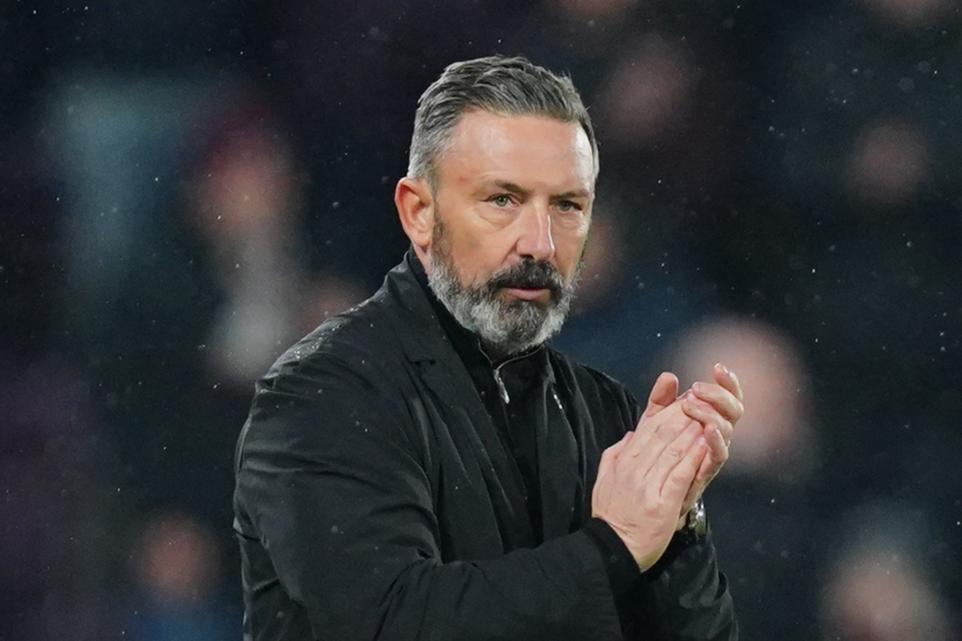
The landscape of Scottish football is one defined by relentless pressure, microscopic scrutiny, and an unyielding demand for immediate success. Nowhere is this cauldron of expectation more intense than at Ibrox, the home of Rangers Football Club. Following a deeply disappointing campaign that saw the Glasgow giants finish a distant third in the Scottish Premiership, the club has found itself at a crucial crossroads. The need for significant, systemic change has never been more apparent. In the midst of this pivotal offseason, Rangers legend Ally McCoist has thrown his considerable weight behind the appointment of Derek McInnes, identifying the experienced manager as the vital figure required to address the club’s deeply rooted issues both on and off the pitch.
McCoist, a man whose blood runs blue and whose status in the pantheon of Rangers greats is undisputed, has never been one to shy away from speaking his mind. In a comprehensive assessment of Rangers’ current predicament, the former striker and manager outlined exactly why he believes McInnes is the perfect man to navigate the treacherous waters of a major rebuild. For McCoist, the appointment of McInnes is not merely a managerial change; it is an opportunity for a profound cultural reset at a club that has, in recent years, lost its way.
**The Weight of History and the Distant Third**
To understand the magnitude of the task facing McInnes, one must first contextualize the severity of Rangers’ decline. Finishing a distant third in a league where the club’s primary objective is, unequivocally, to finish first, is nothing short of a catastrophe. For a club of Rangers’ stature, a season without silverware is considered a failure; a season ending in third place is an existential crisis. The campaign was marred by inconsistency, a lack of tactical coherence, and, perhaps most damningly, a perceived lack of fight and determination when the chips were down.
The echoes of fan frustration have reverberated around the stands of Ibrox for months. Supporters have watched on in dismay as rivals, particularly Celtic, have consolidated their dominance both domestically and on the European stage. The gap between Rangers and the summit of Scottish football has widened, not just in terms of points, but in terms of structure, recruitment, and mental fortitude. It is against this backdrop of despondency that the board moved to secure McInnes, a decision McCoist believes is the first step on the long road back to redemption.
**Eradicating the ‘Softness’: A Cultural Reset**
Central to McCoist’s endorsement of McInnes is the belief that the current Rangers squad lacks the fundamental hardness required to wear the famous blue jersey. In a damning assessment of the club’s recent culture, McCoist did not mince his words.
“In my opinion, there’s been a softness surrounding the club for many years. We’ve been an easy touch. We need to nip that in the bud and Derek will do that,” McCoist stated.
This accusation of “softness” cuts to the very core of Rangers’ recent failings. In the high-stakes environment of the Scottish Premiership, matches are often won not through tactical genius alone, but through sheer physical and mental dominance. Teams travel to Ibrox knowing they are in for a battle; historically, Rangers teams have relished that fight, imposing their will upon the opposition through a combination of skill, aggression, and an unyielding will to win. Recently, however, that aura of invincibility has evaporated. Opponents no longer fear the visit to the south side of Glasgow, sensing a vulnerability in a Rangers side that has too often crumbled under pressure.
McInnes, a hardened competitor who cut his teeth in the gritty environs of Scottish football, is viewed by McCoist as the antidote to this malaise. Known for his pragmatic approach and his ability to organize teams to be resilient, McInnes is expected to demand a level of commitment and physicality that has been conspicuously absent. He is a manager who will not tolerate passengers, a trait that aligns perfectly with the demands of the Ibrox support. The “comfort zone” that McCoist references is one where underperformance has been tolerated for too long. Under McInnes, that era of leniency is expected to come to an abrupt and decisive end.
**The Backroom Blueprint: Alan Archibald and Paul Sheerin**
A manager is only as good as the staff he surrounds himself with, a fact not lost on McCoist. The Rangers legend was keen to highlight the importance of McInnes’s backroom appointments, specifically the inclusion of Alan Archibald and Paul Sheerin.
“Derek needs good people around him and that’s why he’s taken Alan Archibald and Paul Sheerin with him. It’s a comfort zone straight away for Derek. There’s been so many false dawns,” McCoist noted.
The concept of a “comfort zone” in this context does not refer to complacency, but rather to the establishment of a trusted, cohesive unit behind the scenes. Managing Rangers is an isolating and intensely stressful occupation. Having a support network of individuals who understand your methods, share your footballing philosophy, and, crucially, understand the unique pressures of the Scottish game, is invaluable.
Alan Archibald brings a wealth of Scottish footballing experience, a no-nonsense defender in his playing days who knows the intricacies of the domestic game inside out. Paul Sheerin, likewise, is a highly respected coach who has forged a strong reputation for developing talent and organizing cohesive midfield units. By bringing in these trusted lieutenants, McInnes ensures that from day one, the messaging is unified and the training ground is a place of intense, focused preparation. This immediately eradicates the disconnect that can often occur when a manager inherits a backroom staff he does not know. For McCoist, this immediate stability is a vital foundation upon which to build the rebuild.
**The Crucial Timing: Why Now is the Perfect Storm**
The timing of a managerial appointment can often dictate its success or failure. McCoist was quick to point out that previous opportunities to bring McInnes to Ibrox occurred during periods of internal chaos, making a successful tenure almost impossible. However, the landscape has shifted.
“To be fair to Derek, I don’t think the timing before was absolutely spot on. It is now. The last time, it’s safe to say the club was still in a bit of turmoil and it didn’t feel right. Clearly now the timing is miles better, and it’s a win-win for all parties involved,” McCoist explained.
The previous iterations of Rangers, particularly in the years immediately following the club’s financial liquidation and subsequent journey back through the lower leagues, were characterized by boardroom instability, financial uncertainty, and a fractured relationship between the supporters and the hierarchy. Placing a manager into that volatile environment would have been setting them up for failure.
Furthermore, the recent departure of Danny Rohl to Red Bull Salzburg—a move that sent shockwaves through the footballing world—served as a stark reminder of the transient nature of modern football management. Rohl’s departure highlighted the need for Rangers to appoint someone who views the Ibrox hotseat not as a stepping stone, but as a destination job. McInnes, a man who has been linked with the Rangers job for over a decade, fits that criterion perfectly. The stars have finally aligned; the boardroom is ostensibly more stable, the need for a rebuild is universally acknowledged, and McInnes is available and hungry for the challenge. It is, as McCoist states, a “win-win.”
**A Ringside Seat for a Decade of Decline**
One of the most compelling attributes McInnes brings to the role is his intimate, long-standing knowledge of Rangers’ failings over the past decade. Having managed in the Scottish Premiership for years, most notably during his highly successful tenure at Aberdeen, McInnes has been a close observer of the ebbs and flows of power in Glasgow.
“He’s had a ringside seat for the last ten years. He’s been able to see for himself where Rangers’ problems have arisen from,” McCoist astutely pointed out.
This “ringside seat” has provided McInnes with a unique analytical perspective. He has faced Rangers teams at their lowest ebb and, conversely, witnessed the structural and tactical deficiencies that have plagued them from the opposing dugout. He knows the areas of the pitch where Rangers have been vulnerable, the types of players who have struggled to handle the Ibrox pressure, and the tactical setups that have successfully stymied them. This insider knowledge negates the need for a lengthy acclimatization period. McInnes does not need to learn the Scottish game; he needs to apply his decade of observations to systematically dismantle and rebuild the Rangers squad.
“For me, it’s a no-brainer. Derek knows the Scottish league better than anyone. He knows the club hands down as well, and he knows exactly what is required to deliver success,” McCoist added. This deep-seated understanding of the environment is a distinct advantage over managers brought in from overseas who often require a full season simply to grasp the physical and psychological nuances of Scottish football.
**The Recruitment Dossier: Fixing the Transfer Failures**
If there is one area that has contributed more than any other to Rangers’ recent demise, it is the abysmal track record in player recruitment. The transfer strategy in recent years has been characterized by scattergun approaches, expensive flops, and an alarming turnover of players who have failed to meet the requisite standard. McCoist was unequivocal in highlighting this as the primary area requiring McInnes’s immediate attention.
“I’m not going to sit here and tell Derek how to do the job because he knows that far better than me. But recruitment is vital, it’s absolutely vital. Derek will know that because, generally speaking, the players that have arrived haven’t been of the standard required to win cups and win leagues,” McCoist emphasized.
The statistics and performances back up McCoist’s assertion. Millions of pounds have been squandered on players who have looked ill-suited to the rigors of the Scottish game, lacking either the technical proficiency, the physical robustness, or the mental resilience required to succeed at a club of Rangers’ magnitude. The inability to adequately replace key departures has left the squad unbalanced and lacking in genuine quality in crucial areas.
McInnes’s approach to recruitment is expected to be markedly different. Throughout his career, he has demonstrated a shrewdness in the transfer market, identifying undervalued talent, revitalizing careers, and building cohesive units rather than collections of individuals. At Aberdeen, he consistently assembled teams capable of challenging the Old Firm on a fraction of the budget. At Rangers, he will have greater financial resources, but the philosophy must remain the same: sign players who are not only technically gifted but possess the character and mentality to thrive under the intense scrutiny of Ibrox. Every signing must be a deliberate piece of a larger tactical puzzle, not a speculative gamble. The era of panic buying and poor due diligence must end if Rangers are to close the gap at the top of the table.
**Restoring the Scottish Identity: The Lewis Ferguson Blueprint**
Perhaps McCoist’s most poignant observation regarding the current state of Rangers was the assertion that the club has lost its “Scottish identity.” In the pursuit of continental sophistication and foreign talent, Rangers have arguably forsaken the very core of what has historically made them successful.
“For me, Rangers have lost their Scottish identity, and I think that’s something Derek will want to address quickly. We’ve got to get back to signing the best available Scottish talent. Lewis Ferguson is another obvious one,” McCoist stated.
The reference to Lewis Ferguson is telling. Ferguson, who honed his skills in the academy at Rangers before moving to Aberdeen and subsequently establishing himself as a star in Serie A with Bologna, is the epitome of the type of player Rangers have allowed to slip through their fingers. He embodies the grit, determination, and technical ability that defines the best Scottish players, and his departure from the Scottish game without ever pulling on a Rangers jersey in a sustained first-team run remains a source of regret for many connected to the club.
Historically, the backbone of great Rangers teams has been built upon a core of Scottish internationalists. From the days of John Greig and Sandy Jardine, through the nine-in-a-row era spearheaded by Richard Gough and McCoist himself, to the Walter Smith sides that reached the UEFA Cup final, an understanding of the club’s culture, driven by Scottish players, has been paramount. These players understand the rivalry with Celtic, the expectation of the support, and the physical demands of the league. They are the cultural architects of the dressing room.
In recent years, the influx of foreign players, while occasionally bringing individual brilliance, has often resulted in a disjointed squad lacking a collective soul. When the going gets tough in the biting cold of a Scottish winter, it is often the players who understand the historical context of the fixture who are willing to put their bodies on the line. McInnes, a proud Scot who has built his managerial career on maximizing the potential of domestic talent, is perfectly positioned to spearhead this cultural reclamation. He will be tasked with scouring the Scottish lower leagues, the Premiership, and the English lower divisions for players of Scottish heritage or those who possess the attributes traditionally associated with the Scottish game. Restoring this identity is not about xenophobia or rejecting foreign players; it is about re-establishing a foundational core of players who intrinsically understand what it means to play for Rangers.
**The Anger and the Motivation: Learning from Past Heartbreak**
The original discourse surrounding McInnes’s appointment also touched upon his past experiences, notably his “anger” over events at Celtic Park during his time at Hearts, and his broader history in the Scottish game. This emotional connection to the rivalry is a crucial asset. Managing Rangers requires more than just tactical acumen; it requires a visceral understanding of the club’s enemies and a burning desire to conquer them.
McInnes has experienced the highs and lows of Scottish football. He has felt the sting of defeat in high-stakes matches and the elation of upsetting the odds. This emotional intelligence, this ability to channel frustration into a focused, tactical game plan, is exactly what Rangers need. He knows that matches against Celtic are not just games; they are season-defining events that shape the narrative of the entire campaign. A manager who has felt the “anger” of defeat in these fixtures is a manager who will instill a similar level of desperation and determination in his players. He will not allow his squad to treat these games as just another fixture; he will ensure they understand the historical weight and the emotional significance of emerging victorious.
**The Road Ahead: Expectation and Excitement**
As the new season looms large on the horizon, the sense of anticipation around Ibrox is palpable. The apathy that characterized the end of the previous campaign is slowly being replaced by a renewed sense of optimism. The appointment of McInnes, endorsed by legendary figures like McCoist, has provided the fanbase with a reason to believe that the dark days are behind them.
“As a Rangers supporter, I’m excited now for the new season. I’m excited to see the team Derek puts on the park,” McCoist concluded with genuine enthusiasm.
This excitement is not born of an expectation that Rangers will instantly steamroll the league. The rebuild is a process, and there will undoubtedly be teething problems. The excitement stems from the belief that, finally, there is a clear, coherent plan in place. There is a manager who understands the club, understands the league, and understands the specific deficiencies that have held the team back. There is a commitment to better recruitment, a focus on restoring the club’s Scottish identity, and a determination to eradicate the softness that has plagued the squad.
The supporters are looking forward to seeing a team that fights for every ball, that defends with resilience, and that attacks with purpose. They want a team that respects the badge and honors the traditions of the club. Derek McInnes has been handed the keys to Ibrox not just to manage a football team, but to restore a sense of pride to a battered institution.
**Conclusion: The Ultimate Test**
The task facing Derek McInnes is monumental. He is stepping into one of the most demanding managerial roles in world football, tasked with dismantling a failing squad and constructing a title-challenging machine from the ground up. The expectations are sky-high, the margin for error is non-existent, and the scrutiny will be relentless from the very first whistle.
However, as Ally McCoist has astutely highlighted, the conditions for success have finally aligned. The timing is right, the backroom staff is in place, the areas requiring urgent attention have been clearly identified, and the manager possesses the requisite knowledge and experience to execute the rebuild. McInnes knows the Scottish game, he understands the weight of the Rangers jersey, and he is acutely aware of the pitfalls that have ensnared his predecessors.
The upcoming season represents a fresh start for Rangers Football Club. It is an opportunity to cast off the shadows of false dawns and unfulfilled potential. Under the guidance of Derek McInnes, the club aims to rediscover its identity, stiffen its resolve, and once again mount a serious challenge for domestic supremacy. For Rangers, the rebuild is not just a necessity; it is an imperative. And in the eyes of Ally McCoist and the legions of Rangers supporters, Derek McInnes is the man to lead them back into the light. The journey back to the top begins now, and the eyes of the footballing world will be watching to see if this new era can finally deliver the success that the Ibrox faithful so desperately crave.