Rangers Football Club have developed something of a reputation in recent years for unearthing genuine bargains among young, relatively unproven defensive talent, and the club now appears to be attempting to strike gold once again with reported interest in Troyes centre-back Sankhoun Diawara. Given the remarkable transformation that fellow low-profile defensive recruit Emmanuel Fernandez underwent following his own move to Ibrox, there is genuine reason for optimism that Diawara could follow a strikingly similar path should he complete a switch to Scottish football this summer.
The parallels between the two players’ situations, backgrounds, and playing styles are striking enough to warrant serious attention, and with Rangers reportedly already in advanced discussions over a potential deal, Ibrox supporters will be hoping history can repeat itself in spectacular fashion
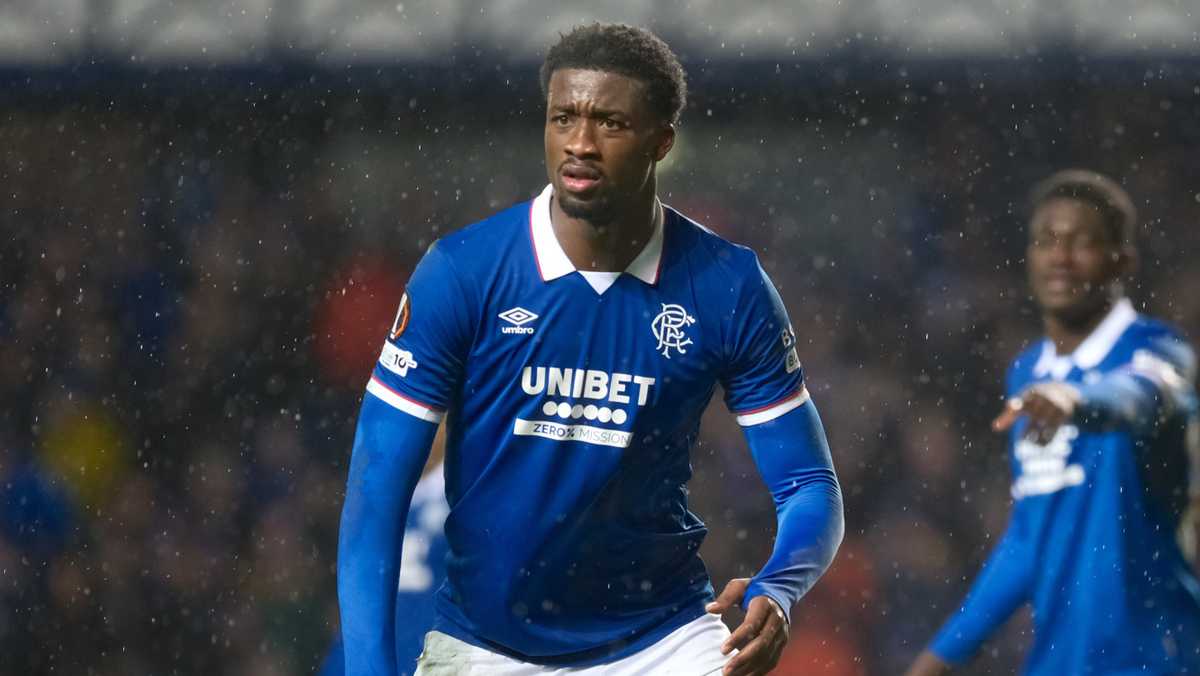
To fully appreciate why the comparison between Diawara and Fernandez carries such genuine weight, it’s worth revisiting the remarkable story of how the Nigerian defender’s own Ibrox journey unfolded. Rangers moved to sign Fernandez back in the summer of 2025, completing a deal worth in the region of £3.5 million to prise the central defender away from English League One outfit Peterborough United. The signing was sanctioned by the previous management duo of Russell Martin and Kevin Thelwell, both of whom have since departed the club, and at the time represented something of a calculated gamble on a player with no prior experience whatsoever at the top level of professional football.
That gamble didn’t pay off immediately, however, with Fernandez managing just a single league start during Russell Martin’s time in charge at Ibrox, struggling significantly for regular game time under the Scottish manager. It wasn’t until Danny Rohl eventually took over the reins at Rangers that the young defender was finally afforded a genuine opportunity to demonstrate his qualities on a consistent basis, and once given that platform, he wasted little time in seizing his chance.
Fernandez went on to enjoy a thoroughly impressive 2025/26 campaign, contributing six goals across 33 appearances in all competitions for Rangers, including five goals from 27 outings in the Scottish Premiership specifically. That kind of goal return from a central defender represents an exceptional and rather unusual statistical achievement, and his performances throughout the season were significant enough to earn him a place in the SFA Team of the Year for the Premiership campaign, a genuine recognition of the esteem in which his fellow professionals and observers held his displays.
For a player who arrived at Ibrox with zero previous experience of top-flight or European football, having spent his formative professional years at League One level with Peterborough, that level of individual recognition represents a remarkable transformation and underlines just how effective Rangers’ recruitment team were in identifying a player with genuine hidden quality, ready to be unlocked once given the right platform and opportunity to shine
With that remarkable success story serving as a template, it now appears Rangers are attempting to replicate that same recruitment magic by targeting Troyes centre-back Sankhoun Diawara as their next potential defensive bargain. According to respected French football journalist Santi Aouna, Rangers are among a number of clubs who have registered genuine interest in signing the 20-year-old this summer, with reports suggesting the Ibrox club have already gone as far as presenting the player with what has been described as an “ambitious” project in an effort to convince him that a move to Scottish football represents the right next step in his career.
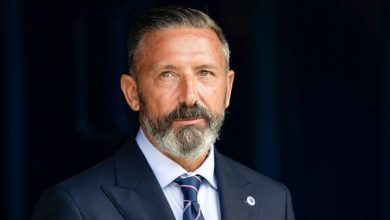
Aouna’s reporting suggests that Rangers are now actively pushing to secure a deal for the young Frenchman, with the club’s need for defensive reinforcement having become increasingly apparent following the departures of loan defenders Derek Cornelius and Nasser Djiga, both of whom have since returned to their respective parent clubs at the conclusion of their temporary spells at Ibrox. That defensive void, combined with the broader ongoing squad rebuild taking place under Derek McInnes, appears to have accelerated Rangers’ interest in bringing in a fresh, dynamic young centre-back capable of adding both immediate competition and genuine long-term value to the defensive unit.
However, Rangers won’t have matters entirely their own way in this particular pursuit, with Swiss giants Basel also reported to be in the race for Diawara’s signature. Given the competition now emerging from continental Europe, it remains to be seen exactly what financial outlay will ultimately be required to convince Troyes to sanction a sale of their highly rated young defender, with the French club understandably likely to hold out for value given the clear interest their player has generated from multiple suitors.
What makes the comparison between Diawara and Fernandez particularly compelling is not simply a superficial similarity in career trajectory, but rather a genuinely striking statistical resemblance in terms of playing style and defensive output. Just as Fernandez arrived at Ibrox having never previously featured in top-flight or European competition, Diawara similarly finds himself in a comparable position, having not yet experienced football at the very highest level, with his career to date confined to Ligue 2, the second tier of French professional football.
Diawara made his first-team breakthrough for Troyes during the 2025/26 campaign, and his performances throughout that season were sufficiently eye-catching to attract the kind of multi-club interest now surrounding his situation. When directly comparing his defensive statistics from that campaign against those produced by Fernandez during his own breakthrough season at Rangers, the parallels become even more apparent.
Across the 2025/26 campaign, Fernandez made 27 appearances in the Scottish Premiership, averaging 1.6 tackles per game, while being dribbled past on 0.6 occasions per match. He won an impressive 6.3 duels per game on average, with a ground duel success rate of 62 percent and an even more impressive aerial duel success rate of 71 percent. Those figures paint the picture of a defender who was both proactive in winning the ball back and consistently dominant in physical confrontations with opposition attackers.
Diawara’s own numbers from his 14 appearances in Ligue 2 last season compare remarkably favourably, particularly when factoring in the considerably smaller sample size involved. The young Frenchman averaged 1.5 tackles per game, almost identical to Fernandez’s own figure, while being dribbled past on just 0.1 occasions per match, an even more impressive rate of defensive solidity than his Rangers counterpart managed. His duel figures also stack up well, with 5.1 duels won per game on average, alongside a ground duel success rate of 60 percent and an aerial duel success rate of 74 percent, marginally superior to Fernandez’s own aerial numbers from the previous season.
Taken together, these statistics suggest a genuinely similar defensive profile between the two players, with Diawara appearing every bit as dominant, if not marginally more so in certain specific metrics, in physical duels and defensive actions during his time in French football as Fernandez was during his own breakthrough campaign in Scotland.
Perhaps the most intriguing parallel between the two defenders relates to their respective goalscoring potential, an attribute that proved to be one of the most eye-catching aspects of Fernandez’s breakthrough campaign at Ibrox. While Diawara has yet to register a senior goal during his time in Ligue 2, there is compelling evidence to suggest he possesses similar aerial goal-threat capabilities to those Fernandez so effectively demonstrated last season.
During his time progressing through Troyes’ youth ranks, Diawara managed to score five goals across 58 combined appearances for the club’s Under-19 and B teams, a return that, while modest in absolute terms, does suggest a player capable of contributing in the final third when the opportunity presents itself, particularly given his evident aerial dominance already demonstrated at senior level. Given that Fernandez similarly required time and a genuine platform to translate his own attacking instincts into senior goals, there remains a reasonable expectation that Diawara could develop into a similar attacking outlet for Rangers, particularly from set-piece situations, should he successfully make the step up to first-team football at a higher level.
Beyond the clear defensive and attacking statistical parallels between the two players, there is also a compelling tactical argument for why Diawara specifically would represent a valuable addition to the current Rangers squad. As a naturally left-footed central defender, Diawara would provide Derek McInnes with a genuine option that the club currently lacks entirely within its first-team defensive ranks, with no naturally left-footed centre-backs presently part of the Ibrox squad.
That specific attribute carries genuine tactical significance, particularly when it comes to playing out from the back, an increasingly important component of modern football at virtually every level of the professional game. A left-footed centre-back operating on the left side of a defensive unit can receive the ball, open out his body shape, and progress possession down the left flank in one smooth, fluid movement. By contrast, a right-footed centre-back deployed in that same position typically needs to first control the ball on his weaker foot before attempting what can often be an awkward, less natural pass out towards the left side of the pitch.
Having a genuinely natural left-footed option available within the centre-back positions would therefore offer Rangers considerably greater fluidity, balance, and technical comfort when building attacks from deep positions, potentially unlocking a more effective and progressive style of play from the back that current personnel may struggle to consistently replicate given the current right-footed bias within the existing defensive unit.
When assessing Diawara’s overall profile as a potential Rangers target, it becomes clear that he represents an intriguing blend of physical defensive dominance and genuine ball-playing quality in possession, precisely the combination of attributes that made Fernandez such a successful and popular addition to the Ibrox squad following his own breakthrough campaign. His clear ability to win physical duels both on the ground and in the air, allied to his natural left-footedness and evident comfort in possession, suggests a defender capable of contributing effectively to both the defensive solidity and progressive attacking play that modern managers increasingly demand from their centre-backs.
Given that combination of attributes, allied to the clear statistical parallels with Fernandez’s own breakthrough campaign, it’s easy to understand why Rangers appear so determined to win the race for Diawara’s signature, even in the face of genuine competition from a club of Basel’s stature and reputation. Should the Ibrox club be successful in their pursuit, there is a compelling statistical and tactical case to suggest Diawara could go on to enjoy a similarly transformative impact at Rangers to that which Fernandez demonstrated so effectively during his own remarkable rise to prominence last season.
This latest pursuit of a relatively unproven but statistically impressive young defender fits neatly within a broader recruitment pattern that Rangers appear to have successfully established in recent transfer windows. Rather than exclusively pursuing established, proven performers at significant expense, the Ibrox recruitment team have demonstrated a clear willingness to identify and take calculated risks on younger players from lower-profile leagues, provided the underlying statistical and tactical profile suggests genuine untapped potential.
The Fernandez case study offers perhaps the clearest possible evidence of that strategy paying significant dividends, with the Nigerian defender transforming from a squad player struggling for regular game time under one manager into an SFA Team of the Year performer under his successor, all for a relatively modest initial outlay of £3.5 million. Should Rangers be able to replicate that same recruitment success with Diawara, securing his services for what would likely represent a considerably smaller fee than many established alternatives elsewhere in the market, it would represent further vindication of this particular recruitment philosophy and approach.
Of course, none of this potential upside can be realised unless Rangers are actually able to successfully conclude a deal for Diawara’s signature, and the reported interest from Swiss giants Basel represents a genuine obstacle that will need to be overcome. Basel’s own reputation as a well-run and historically successful club within Swiss football, allied to the prospect of regular European competition that a move to Switzerland might offer, means Rangers cannot simply assume their interest alone will be sufficient to convince the player that Ibrox represents his best available option.
Given that Rangers have reportedly already gone as far as presenting Diawara with details of an ambitious project at the club, it’s clear the Ibrox hierarchy are taking this particular pursuit extremely seriously and are prepared to actively sell their vision for the player’s development and integration into the first-team squad. Whether that kind of proactive, relationship-focused approach proves sufficient to win out over interest from a club with genuine European pedigree in Basel remains to be seen, but it does suggest Rangers are approaching this transfer target with the same level of care and consideration that ultimately proved so successful in the Fernandez recruitment process.
While specific figures surrounding Troyes’ valuation of Diawara have yet to be confirmed publicly, it stands to reason that interest from multiple clubs, including a side of Basel’s stature, will likely ensure the French club holds out for a fee that reflects the genuine multi-party competition now surrounding their player’s situation. Given that Fernandez himself arrived at Ibrox for a relatively modest £3.5 million fee, there would be a certain pleasing symmetry were Rangers able to secure Diawara’s signature for a broadly comparable amount, continuing their pattern of identifying value additions at the lower-profile end of the transfer market.
However, with competition from Basel potentially driving up the eventual price, it remains to be seen whether Rangers will need to significantly exceed that kind of figure in order to successfully conclude a deal. Given the club’s various other transfer priorities already being pursued this summer, including reported interest in more experienced and higher-profile midfield targets, the overall financial picture surrounding this particular pursuit could yet prove to be a determining factor in whether Rangers are ultimately successful in their efforts.
As this transfer situation continues to develop, all eyes will now turn to whether Rangers can successfully see off competition from Basel and secure Diawara’s signature before the summer transfer window eventually draws to a close. Given the clear statistical parallels with Fernandez’s own breakthrough campaign, allied to the specific tactical benefits his left-footed profile would bring to the current Rangers defensive setup, there is a genuinely compelling case to suggest this represents exactly the kind of shrewd, value-driven signing that has served the Ibrox club so effectively in recent seasons.
Should the move ultimately be completed, Rangers would be adding a defender with a strikingly similar statistical profile to one of their most improved and effective performers from last season, offering genuine hope that Diawara could similarly develop into a key first-team contributor once given the appropriate platform and opportunity to demonstrate his qualities at a higher level of competition.
Rangers’ reported interest in Sankhoun Diawara represents a fascinating attempt to replicate one of the club’s most successful recent recruitment stories, with the statistical and tactical parallels between the young Frenchman and Emmanuel Fernandez proving genuinely striking upon closer inspection. From near-identical defensive metrics to shared aerial goal-threat potential and the added tactical benefit of natural left-footedness, Diawara certainly appears to tick many of the same boxes that made Fernandez such a success story following his own move to Ibrox.
With Basel providing genuine competition for his signature, however, Rangers will need to move decisively and convincingly if they are to win this particular transfer battle. Should they manage to get a deal over the line, Ibrox supporters will have every reason to feel optimistic that history could be about to repeat itself in spectacular fashion