Celtic board cop blame for key summer failing that’s galvanised Rangers title bid


A difficult fortnight for Celtic has escalated into something considerably bigger than a couple of bad results. What started as a disappointing cup exit to Rangers has snowballed into a genuine boardroom crisis, with a former Premiership chief executive now adding external, credentialed weight to what Celtic’s own fanbase has been saying for days: that the club’s summer transfer inactivity, not simply a bad week of football, is the root cause of a wobble that has handed Derek McInnes and Rangers a genuine opening in the title race.
To understand the scale of the concern now surrounding Celtic Park, it’s worth laying out exactly what’s gone wrong. Celtic’s troubles began in Champions League qualifying, where the club calamitously surrendered a four-goal lead against Austrian side LASK, a collapse that cost them a place in the Champions League proper and dropped them into the considerably less lucrative Europa League instead. That alone would have represented a damaging blow to both prestige and finances. It was then compounded by a 3-0 defeat to Rangers in last week’s Premier Sports Cup quarter-final at Ibrox — a game in which Celtic, by most independent accounts, barely competed — followed almost immediately by a 3-1 home defeat to Hungarian side Ferencvaros in their opening Europa League league-phase match at Celtic Park.
Three genuinely damaging results in the space of little more than a week is a lot for any club to absorb, but the concern extends well beyond the scorelines themselves. It’s the pattern behind them — a thin squad being stretched across multiple competitions, a manager under mounting pressure, and a boardroom facing organised, increasingly formal criticism from its own shareholder base — that has turned a rough patch of form into something resembling a structural crisis
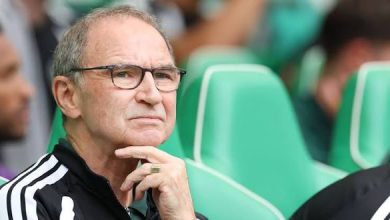
The most significant voice to weigh in externally has been Keith Wyness, the former chief executive of Aberdeen who has also held senior roles at Aston Villa and Everton — giving him a genuinely broad frame of reference across both Scottish and English football administration. Speaking on the Inside Track podcast, Wyness didn’t hedge in identifying where he believes the primary responsibility lies for Celtic’s current predicament: not with Martin O’Neill’s tactics or his players’ application, but with a lack of proactivity from the club’s decision-makers during the summer transfer window.
Wyness was careful to acknowledge the financial upside Celtic still retain even having dropped into the Europa League rather than the Champions League — group-stage revenue in that competition, he estimated, will likely land somewhere around £20million, still a substantial sum by the standards of Scottish football. But he was equally clear that the accompanying fixture schedule represents a serious structural problem, describing the Thursday-to-Sunday cycle of European and domestic football as “a big problem” for a squad he characterised as “fairly thin.” That word — thin — is doing a lot of work in Wyness’s analysis. It’s not simply a claim that Celtic’s squad lacks star quality; it’s a claim about strength in depth, about whether the club invested sufficiently over the summer to cope with the physical and rotational demands of playing high-intensity football twice a week across multiple competitions.
Pressed further on where responsibility for that thinness lies, Wyness didn’t retreat into diplomatic vagueness. He said supporters are right to point toward the board and argue that adequate investment hasn’t been made, adding that he agreed with that sentiment “to a great degree.” In his assessment, Celtic’s boardroom could have shown considerably more foresight over the summer and left the club in a more secure position heading into a season that always promised to be demanding, given continued participation in continental competition alongside domestic commitments.
Crucially, Wyness’s analysis doesn’t stop at simply assigning blame — it extends into a prediction that will make uncomfortable reading for Celtic supporters regardless of Sunday’s outcome. He argued explicitly that the repeating Thursday-Sunday cycle is likely to prove difficult for Celtic to sustain across a full season, and that this is precisely the opening Rangers and McInnes need. If Celtic begin dropping domestic points as a direct consequence of fixture congestion — a pattern, Wyness noted, that has repeated itself at numerous clubs across various leagues over the years — he expects Rangers to capitalise and mount a sustained title challenge as a result.
What makes Wyness’s intervention particularly significant is that it doesn’t exist in isolation — it arrives directly on top of an already highly organised campaign of criticism from within Celtic’s own support. Celtic Supporters Ltd, a fan-shareholder group with genuine standing inside the club’s ownership structure, has been vocal in the aftermath of the Ibrox defeat specifically, explicitly linking the result to what they characterise as a pattern of poor boardroom decision-making rather than viewing it as an isolated football result.
Their public statements have not minced words. In one widely circulated post, the group argued that results are downstream of decisions, and decisions are downstream of the people who make them — a pointed framing intended to shift scrutiny away from the players and management team and directly onto those responsible for resourcing them. The group went on to criticise what they described as the same individuals occupying the same positions and repeating the same mistakes, highlighting that Celtic has operated with an interim chair in place since January without clarity over who holds ultimate decision-making authority at the club.
That criticism escalated further following the Ibrox defeat specifically. In a follow-up statement, Celtic Supporters Ltd acknowledged that the players and manager bear some responsibility for a chastening scoreline, but insisted that a squad still short of quality in key areas — despite considerable transfer investment in absolute terms — reflects a boardroom failure rather than a football one. Their argument, in essence, mirrors Wyness’s from a supporter’s rather than an industry insider’s perspective: that spending money and spending money effectively are two different things, and that Celtic’s recruitment strategy has fallen short of the second even where it may have satisfied the first.
The organisational weight behind this criticism shouldn’t be understated either. Celtic Supporters Ltd has reportedly secured sufficient direct registered shareholder support to meet the threshold required to force a resolution at the club’s next AGM, specifically targeting greater transparency around the more than 27,000 ordinary shareholders many of whom, the group notes, bought their shares before the year 2000 and have since become effectively unreachable due to changes of address, name changes, or death — leaving a substantial portion of the club’s ownership base unable to vote or engage with governance decisions. Their proposed resolution asks Celtic to formally appoint a share registry specialist to help trace and re-engage those shareholders ahead of the next AGM. It’s a structural governance push that goes well beyond simple frustration over a cup exit, suggesting a longer-term campaign to reshape accountability at boardroom level regardless of how Sunday’s derby unfolds.
One particularly sharp line from the group’s commentary captured the tone of their broader argument: a heavy defeat is a single Sunday’s problem, they argued, but a boardroom that nobody inside the club can properly reach or hold accountable is a problem every single day — and fixing the latter, in their view, is what would make the former considerably rarer.
The criticism hasn’t been confined to fan groups and outside analysts, either. Former Celtic striker Chris Sutton, now a prominent media pundit, has added his own significant voice to the chorus, explicitly separating blame for the club’s difficult run from Martin O’Neill personally. Sutton’s assessment is that O’Neill has effectively been let down by decisions made above him, attributing what he’s termed Celtic’s “current crisis” to recruitment failures at boardroom level rather than tactical or man-management shortcomings from the dugout.
Sutton’s commentary traced the recent slide in detail: papering over cracks in a run of domestic Premiership matches before a cup exit at Ibrox in which Celtic, in his words, never laid a glove on Rangers during a comfortable 3-0 defeat, before things deteriorated further just days later with what he described as a “horror show” at Celtic Park against Ferencvaros — a Hungarian side he suggested could barely believe how easily they were being allowed to win. That kind of blunt, embarrassed framing from a well-known former player carries weight with supporters in a way that outside analysis alone sometimes doesn’t, and it’s added further momentum to the idea that this is a genuinely serious moment for the club’s hierarchy rather than a standard bad week that will simply pass.
Amid the mounting external and internal criticism, Celtic’s players have understandably tried to keep the focus on football rather than boardroom politics ahead of Sunday’s derby rematch. Midfielder Mika Baur spoke candidly about both the atmosphere Celtic will face and the mentality required to respond. Reflecting on the away atmosphere at Ibrox during last week’s cup defeat, Baur described the sensation of playing in front of a stadium that felt entirely stacked against Celtic, roughly fifty thousand supporters solidly behind the home side. He drew a clear contrast with what he expects on Sunday, pointing out that Celtic Park will offer the reverse dynamic, with an expected sixty thousand supporters solidly behind the home side this time, and stressed that his teammates need to actively use that advantage rather than simply benefit passively from it.
Baur was notably blunt about what he believes is actually required to turn the tide, cautioning against an over-reliance on technical quality or intricate football. His central point was that Sunday’s result will be determined by mentality and energy levels far more than aesthetic quality, and that supporters, in the long run, remember results rather than the manner in which they were achieved. He extended that logic into a pointed reflection on last week’s cup defeat specifically, arguing that the loss wasn’t fundamentally a tactical failure but a more basic shortfall in defensive work rate — closing down, tracking runners, putting in the unglamorous defensive labour that underpins any credible derby performance regardless of a team’s attacking ambitions.
At the same time, Baur was careful not to frame this purely as an appeal for route-one physicality at the expense of Celtic’s attacking identity, acknowledging that the team still wants to retain its footballing principles on both sides of the ball. His comments read as those of a player fully aware of the scale of criticism currently surrounding the club, attempting to channel that pressure into a specific, actionable response focused on effort and application rather than searching for tactical explanations that might not fully capture what went wrong at Ibrox.
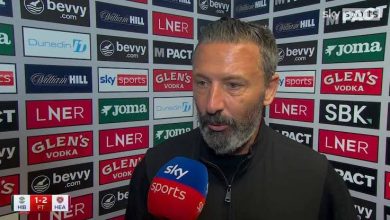
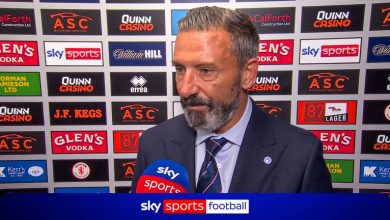
Stepping back from the individual voices contributing to this story, the broader significance is fairly straightforward: Celtic’s early-season struggles have opened a door that looked firmly shut only a matter of weeks ago. Derek McInnes’s start to life as Rangers manager was, by most measures, a difficult one — failing to win either of his opening two league matches in charge, and suffering unexpectedly early European exits against Jagiellonia Białystok and, on penalties, Jablonec. Since then, however, Rangers have won four straight league matches and delivered a statement 3-0 win over Celtic in the cup, closing what could have been a much larger gap in the Premiership table down to a handful of points.
If Wyness’s analysis proves accurate, and Celtic’s European commitments genuinely do begin sapping domestic form as the season progresses, Rangers find themselves unusually well-positioned to exploit exactly that vulnerability — a rare position of relative comfort given how shaky McInnes’s own start to the campaign initially looked. Sunday’s derby at Parkhead, then, carries stakes well beyond a simple three points and bragging rights. A Celtic win would go some way toward silencing the mounting criticism, at least in the short term, and reassert the eight-point gap that a victory would deliver. A repeat of last week’s Ibrox scoreline, or anything close to it, would only intensify pressure on a boardroom already facing an organised campaign for greater transparency and accountability from its own shareholder base
There’s a broader lesson in Scottish football history that lends extra weight to Wyness’s warning, even if it comes from the other side of the Old Firm divide. Rangers themselves experienced a strikingly similar dynamic in the summer of 2023, when — after finishing the previous season with an outstanding squad and a European final appearance — the club dismantled far more of that squad than it replaced, allowing key contributors to leave on free transfers or for below-market fees without adequate succession planning. That single summer is widely credited with turning what had been a narrow gap to Celtic into a multi-year competitive disadvantage, a cautionary tale about how quickly a well-functioning squad can be undone by boardroom decisions made away from the pitch.
Celtic’s current predicament, on the surface, looks different in scale and detail — this is a squad still competing for a treble on multiple fronts rather than one hollowed out by mass departures. But the underlying warning from Wyness is strikingly similar in spirit: that a lack of foresight and adequate investment at boardroom level, even amid a period of continued success, can create vulnerabilities that a fitter, more incentivised rival is perfectly placed to exploit. Whether Celtic’s board heeds that warning in January, when the winter transfer window offers a first real opportunity to address the squad depth concerns Wyness has identified, may end up being just as significant to the destination of this season’s title as anything that happens on the pitch at Parkhead this Sunday.
For now, all eyes turn to lunchtime kick-off at Celtic Park, where a result either way will do plenty to either validate or temper the growing sense of crisis currently surrounding Celtic’s boardroom — and will tell us a great deal about whether Derek McInnes’s Rangers are genuinely positioned to end their trophy drought, or whether this is simply a difficult but temporary blip for a Celtic side that remains, for now, still top of the table.