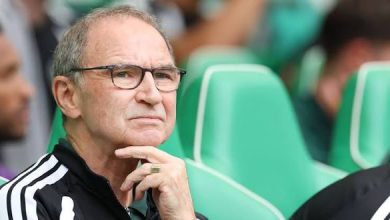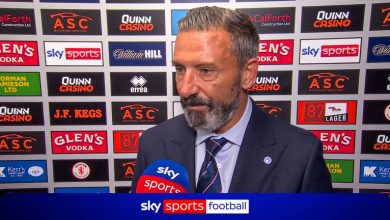
Martin O’Neill has firmly rejected the idea that Sunday’s Scottish Premiership meeting with Rangers is a must-win fixture for Celtic, choosing instead to strike a measured, long-view tone just days after his side suffered a second successive defeat in cup and European competition. It’s a deliberately calm response to a week that has, by most external accounts, spiralled into one of the more turbulent stretches of his time in charge — and it sets up a fascinating contrast with a Rangers side and manager who sense a genuine opportunity to complete a rare piece of Old Firm history.
To understand why “must-win” talk has attached itself so readily to this fixture, it’s worth revisiting exactly how Celtic arrived at this point. Just seven days ago, O’Neill’s side were beaten 3-0 by Rangers in the Premier Sports Cup quarter-final at Ibrox — a defeat in which Celtic barely laid a glove on their rivals, according to widely shared post-match analysis. That result was followed almost immediately by a 3-1 home defeat to Hungarian side Ferencvaros in Celtic’s opening Europa League league-phase match, a game played at Celtic Park in front of their own supporters and described afterwards, in some quarters, as a genuine “horror show.”
Two damaging defeats in the space of a few days would be a difficult stretch for any club to absorb, but the context makes it more pointed still: this arrives on the back of a summer transfer window that has already drawn considerable criticism from within Celtic’s own fanbase, with fan-shareholder group Celtic Supporters Ltd explicitly linking the club’s on-field stumbles to what they characterise as boardroom underinvestment, and former Aberdeen chief executive Keith Wyness separately warning that Celtic’s Thursday-Sunday fixture schedule could prove “a really big red flag” for a squad he considers “fairly thin.” Layered on top of all that, Celtic go into Sunday’s derby knowing that Rangers striker Ryan Naderi suffered a significant ankle injury during last weekend’s cup tie following a heavy challenge from Celtic’s own Mika Baur — an incident Rangers have since taken all the way to the SFA, adding an extra edge of controversy to an already fraught week between the two clubs.
Despite all of that, Celtic’s domestic form remains, on paper, spotless. O’Neill’s side have won all six of their Premiership matches so far this season, a record that stands in stark contrast to the two defeats suffered in cup and European competition and underlines the strange, lopsided nature of Celtic’s campaign to date: dominant in the league, vulnerable everywhere else.
It’s against that backdrop that O’Neill chose to push back, calmly but firmly, against the growing suggestion that Sunday’s derby represents some kind of tipping point for his season. Speaking to the media in the build-up to the game, he was asked directly whether the match had taken on must-win significance given Celtic’s recent stumbles. His answer was simple and direct: no, it’s too early in the season to frame it that way.
That doesn’t mean O’Neill was dismissive of the occasion itself — quite the opposite. He was clear that a win would carry real tangible benefit, pointing out that victory would move Celtic eight points clear of second-placed Rangers and extend an already perfect run of six straight league wins. But he was equally insistent that the size of the occasion isn’t something that changes depending on the calendar. In his words, the game is a big one whether it’s played in September or March, and Celtic need to be properly up for it regardless of when in the season it falls.
Pressed further on the specific stakes of the fixture, O’Neill offered a carefully balanced answer rather than the kind of siege-mentality rhetoric some managers might reach for after back-to-back defeats. He acknowledged that it would be nice to win, and that losing wouldn’t be great — a fairly understated way of describing what would be a third consecutive defeat, and one he conceded would represent a genuine psychological blow to the squad. But at no point did he elevate the fixture to must-win status, choosing instead to frame it as simply one significant game among many still to come across a long campaign.
There’s a clear strategic logic behind that framing, whether or not it was consciously intended. Labelling a single September fixture as make-or-break, particularly for a manager already facing mounting scrutiny, risks turning a difficult but recoverable week into something far more consequential in the minds of players, supporters, and media alike. By insisting it’s too early for that kind of language, O’Neill is attempting to protect his squad from unnecessary additional pressure heading into a fixture that’s already high-stakes by its very nature as an Old Firm derby.
That measured tone arrives at a moment when O’Neill himself is facing genuinely intensifying scrutiny — not just over results, but over his conduct in front of the media and his tactical approach more broadly. Supporters and pundits have grown increasingly critical in recent weeks, particularly regarding what’s been perceived by some as an overly defensive posture in big matches, and O’Neill has, by his own admission, occasionally reacted with visible frustration during post-match interviews.
Asked directly about that criticism, O’Neill didn’t attempt to deflect it. He accepted that scrutiny is simply part of the job, conceding that he can become “a bit tetchy now and again” when challenged, and admitting that he sometimes has to apologise afterwards for how he’s responded in the moment. That’s a notably candid admission from a manager under pressure — an acknowledgement that his own reactions have, at times, added fuel to the criticism rather than defused it.
He did, however, push back gently on one specific framing of that criticism: the idea that questions only ever arrive after defeats. O’Neill pointed out that Celtic don’t tend to face the same volume of scrutiny when results go well, an observation that reads as a mild grievance about the selective nature of football criticism more broadly, where winning tends to paper over exactly the same tactical or selection questions that get amplified after a loss. But he was careful not to let that observation curdle into genuine complaint, immediately conceding that everybody has a right to ask those questions regardless of the context in which they’re raised.
Most tellingly, O’Neill was unambiguous in accepting where ultimate accountability lies. He stated plainly that he is responsible for team selection, responsible for tactics, and that scrutiny of both is entirely fair given that responsibility. It’s the kind of statement that, on the surface, sounds like standard managerial boilerplate — but delivered in the context of a week as difficult as Celtic’s has been, it carries the weight of a manager consciously choosing to shoulder blame publicly rather than deflect it onto players, officials, or fixture scheduling, even as others closer to the boardroom conversation, like Wyness and Celtic Supporters Ltd, have been directing their criticism elsewhere within the club’s structure.
While O’Neill focuses on managing expectations and containing pressure, the mood in the Rangers camp heading into Sunday is considerably more expansive. Victory at Celtic Park would hand Derek McInnes’s side back-to-back wins over their fiercest rivals within the space of a single week — an achievement that has occurred on only two previous occasions in the entire history of the fixture, in 1960 and 1998. Given how rarely that particular double has been managed across more than a century of Old Firm meetings, its potential achievement this weekend would represent a genuinely historic marker for this Rangers squad, regardless of where the season ultimately ends up.
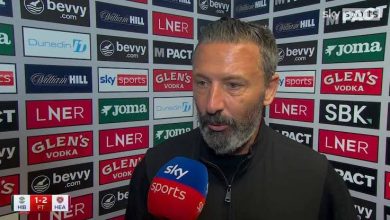
There’s a personal dimension to the occasion for McInnes as well. Should Rangers win on Sunday, the new manager would match a record previously set by Graeme Souness, one of the most iconic figures in the club’s modern history, by winning his first two Old Firm derbies in charge. For a manager whose start to the season had, by most measures, been a difficult one — including failing to win either of his opening two league matches and suffering early European exits against Jagiellonia Białystok and, on penalties, Jablonec — that kind of record-matching achievement would represent an extraordinary turnaround in fortunes within the space of a matter of weeks.
Despite the scale of what’s potentially on offer, McInnes struck a notably understated tone himself when discussing his approach to the game, deliberately playing down the importance of tactical planning in a fixture of this magnitude. He suggested that tactics can sometimes be “overplayed” in the broader football conversation, arguing that games at this level are generally decided by individual moments and by players performing at a consistently high level rather than by any particular tactical wrinkle. It’s a philosophy that lines up closely with how Rangers approached last weekend’s 3-0 win at Ibrox, a performance built more on collective intensity, discipline, and clinical finishing than on any elaborate tactical surprise.
McInnes was direct about what he believes is required to repeat that success away from home, at a stadium that will be considerably more hostile than Ibrox was last weekend given the home support and the pressure Celtic will be under to respond. He said plainly that no team wins at Celtic Park unless everyone across the side performs to a high level, and that Rangers need to replicate something close to that same collective standard again, continuing to build on the improvement his side has shown since his own difficult start to the
Strip away the individual quotes and public posturing from both dugouts, and Sunday’s fixture carries an unusually layered set of stakes even by Old Firm standards. For Celtic, a win would go a considerable way toward silencing external and internal criticism alike — restoring an eight-point cushion at the top of the table and offering a concrete, results-based rebuttal to the mounting questions about boardroom investment and squad depth that have followed the club through an otherwise unbeaten domestic campaign. A defeat, by contrast, would represent a third consecutive loss, intensify scrutiny on O’Neill specifically, and lend further weight to warnings — like those already voiced by Wyness — that Celtic’s squad may simply not be equipped to sustain success across multiple competitions this season.
For Rangers, the calculus is more straightforwardly upside-focused. A repeat of last weekend’s result would represent a rare piece of Old Firm history, a personal managerial milestone for McInnes matching one of the club’s most storied names, and — most concretely — a genuine reduction of the gap to Celtic in the Premiership table at a moment when questions about the champions’ squad depth are already circulating widely. Rangers arrive with almost nothing to lose in reputational terms and a great deal to potentially gain, a dynamic that tends to produce free, confident performances rather than cautious ones.
Whatever unfolds at Celtic Park on Sunday lunchtime, both managers have set out their positions clearly heading into the fixture. O’Neill is choosing patience and long-view perspective over crisis talk, accepting scrutiny as fair while refusing to let a difficult week be reframed as a season-defining moment. McInnes, by contrast, is embracing the scale of the opportunity in front of his side while deliberately downplaying tactical complexity in favour of a simpler message centred on effort, consistency, and collective performance.
Kick-off at Celtic Park is scheduled for 12:00 BST on Sunday, 20 September, with a result either way likely to shape the tone of the title conversation heading into the season’s first international break — whether that means Celtic restoring calm and distance at the top of the table, or Rangers completing a genuinely rare piece of derby history and turning a shaky start to McInnes’s Ibrox tenure into one of the more remarkable turnarounds Scottish football has seen in recent years.