City fans are reportedly being mistaken for United supporters amid an ongoing investigation 👀🔴🔵 The situation is causing debate online as questions are now being raised about what is really going on

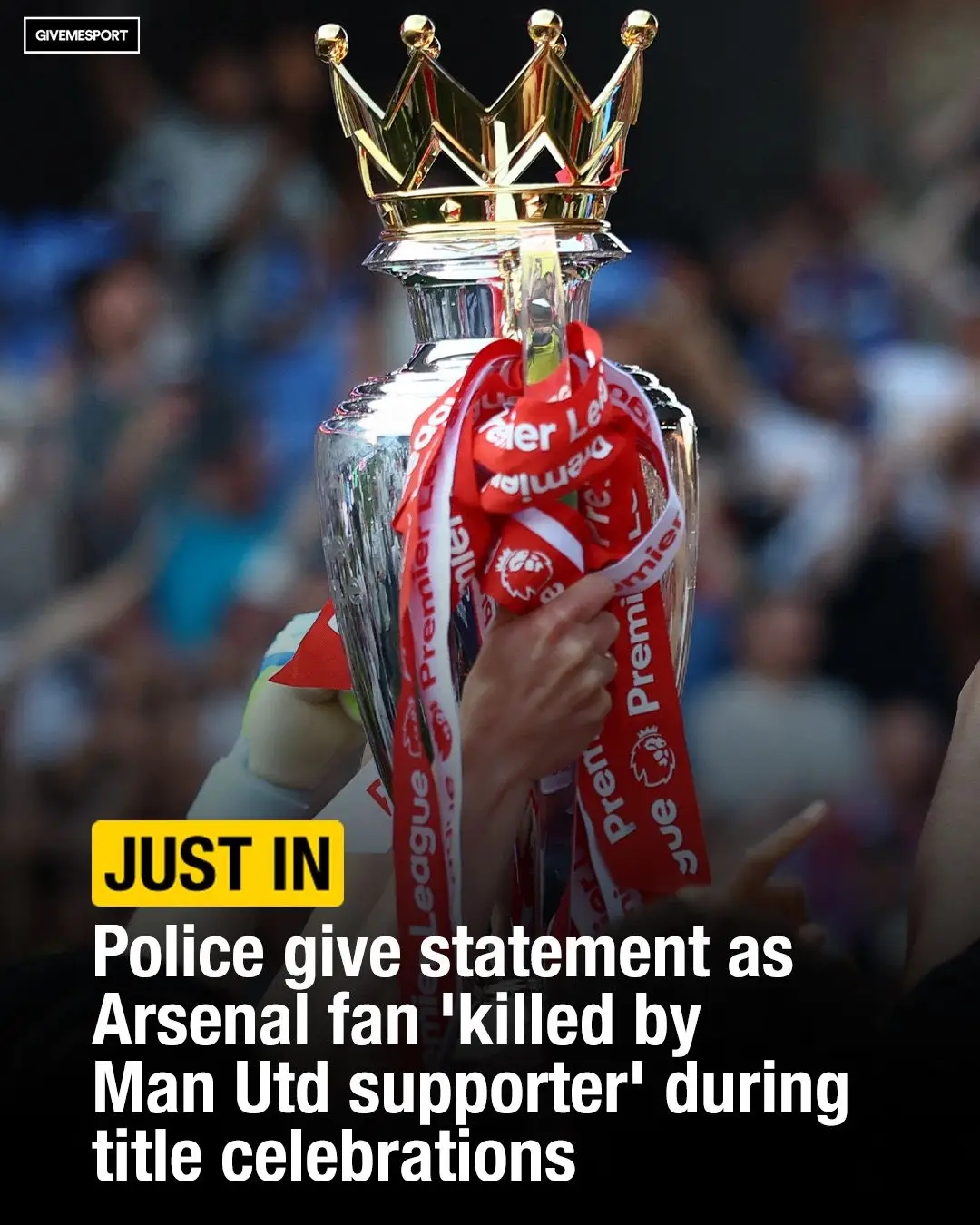
Arsenal’s long-awaited Premier League triumph was supposed to be a moment of pure celebration, a return to glory that fans had waited more than two decades to witness, but what unfolded on the same day in a faraway country has now added a tragic and painful shadow to that joy. After years of near misses, heartbreaks, and finishing behind Manchester City, the 2025–2026 season finally belonged to Arsenal. Mikel Arteta’s team delivered consistency, belief, and resilience throughout the campaign, and on the final day, they sealed the title with a strong finish away at Crystal Palace, officially lifting the trophy and ending a 22-year wait since their last Premier League crown in 2004. Across London, across England, and across the global Arsenal fanbase, emotions exploded with joy, relief, and pride. Streets filled with red and white, social media turned into a flood of celebration, and supporters from Europe to Africa to Asia joined in the historic moment. But thousands of miles away in Uganda, in the capital city of Kampala, football passion reportedly turned into something far darker.
According to local reports, an incident occurred on the same day as Arsenal’s title celebration that led to the death of a man believed to be a supporter of Arsenal. The man, identified locally only as Denis, was a 34-year-old motorcycle taxi rider who had spent the afternoon watching the decisive match at a football viewing centre in the Bakuli area of Kampala. These viewing centres are extremely popular across Uganda, where thousands of fans gather to watch English Premier League matches on big screens, sharing food, drinks, and emotions as if they were inside the stadium itself. Football in Uganda is not just entertainment; it is a shared cultural experience, and rivalries between English clubs are taken very seriously, sometimes far more emotionally than expected in the United Kingdom itself.
On this particular day, excitement was already at its peak as Arsenal fans at the viewing centre celebrated each passing minute of their team’s final match. The victory over Crystal Palace confirmed Arsenal as champions, and as the final whistle blew, celebrations erupted both locally and internationally. Denis, described by witnesses as an enthusiastic Arsenal supporter, was reportedly among those celebrating. However, what began as joyful celebration is believed to have escalated into a disagreement with another man present at the viewing centre. That man, according to early police information, was a supporter of Manchester United, one of Arsenal’s biggest and most historic rivals in English football.
Rivalry between Arsenal and Manchester United is one of the fiercest in football history. It stretches back decades, through legendary Premier League battles involving Sir Alex Ferguson and Arsène Wenger, title races that were decided by fine margins, and unforgettable clashes that defined English football in the 1990s and 2000s. Even though those intense battles are now part of history, the emotional rivalry still lives strongly among fans worldwide, especially in countries where Premier League football is followed with deep passion but sometimes without the calming influence of distance or context.
Police in Kampala have now launched a manhunt after confirming that Denis died following a physical altercation. According to the official statement released by police spokeswoman Rachel Kawala, the incident happened around 6:30pm local time. Preliminary reports suggest that Denis, an Arsenal supporter, got into a disagreement with another man identified as Musiramu, who is believed to be a Manchester United fan. What began as a verbal exchange is said to have escalated quickly into physical violence. During the confrontation, Musiramu allegedly struck Denis on the head, causing him to fall to the ground. He was reported to have died instantly at the scene.
The police statement confirmed that efforts are ongoing to trace and arrest the suspect, who fled after the incident. Authorities have described the situation as a tragic case of football rivalry turning deadly, and investigations are continuing to establish the full circumstances surrounding the altercation. Local security teams have also increased attention in the area as they search for the suspect and try to prevent any possible retaliation or further violence linked to football rivalries.
The news has shocked many in Uganda and beyond, especially because it came on a day that was meant to celebrate football success and unity among fans of the sport. Instead, it has highlighted once again the darker side of football passion when rivalries turn personal and emotions become uncontrollable. The Nile Post, a local Ugandan publication, commented that the incident raises fresh concerns about violent confrontations arising from football rivalries in urban communities, particularly in areas where supporters gather in large numbers to watch live matches.
In Uganda, Premier League football holds a powerful place in popular culture. Clubs like Arsenal, Manchester United, Chelsea, and Liverpool have massive followings, and supporters often identify strongly with their chosen teams. Many fans grow up supporting English clubs they have never visited or seen live, yet they feel deeply connected to them through years of watching matches in crowded viewing centres, listening to radio commentary, and sharing emotional moments with fellow supporters. This strong emotional attachment can sometimes blur the line between sporting rivalry and personal conflict.
The tragic death of Denis has now raised important questions about how football rivalries are expressed in public spaces. In many viewing centres, supporters sit side by side regardless of club allegiance, and while most matches pass peacefully, tensions can rise during heated moments, especially during title deciders, derby matches, or controversial refereeing decisions. In this case, what should have been a joyful celebration of Arsenal’s long-awaited league triumph reportedly ended in violence and loss of life.
While authorities continue their investigation, the football community in Kampala has been left shaken. Some local fans have expressed sadness and disbelief that something as simple as club rivalry could lead to such a devastating outcome. Others have called for better security and stricter control in viewing centres during high-profile matches, especially when emotional stakes are high.
Back in England, Arsenal’s title victory remains a historic achievement. Under Mikel Arteta, the team showed maturity and tactical discipline across the season, overcoming challenges from Manchester City and other top clubs. Their final-day win at Selhurst Park was symbolic of their journey—focused, determined, and ultimately successful. For supporters, it represented the end of years of frustration and the beginning of a new era of belief.
However, the joy of that achievement is now partly overshadowed by the news from Uganda. Football is often described as a global language that unites people across borders, cultures, and backgrounds. It brings joy, identity, and community. But moments like this reveal another side of the game, where passion without control can lead to irreversible consequences.
Authorities in Uganda are now urging football fans to remain calm and avoid violence, reminding the public that football should be a source of entertainment and unity, not conflict. Police have also encouraged anyone with information about the suspect to come forward as they continue their search.
The incident has also sparked wider reflection on social media, where fans from different clubs have expressed condolences to Denis’s family and called for restraint among supporters. Many have emphasized that while rivalry is part of football’s beauty, it should never cross into real-world violence. Others have pointed out that similar incidents in different parts of the world show the need for more awareness and education about managing emotions during sports events.
As investigations continue, the story remains a painful reminder of how quickly celebration can turn into tragedy. A historic day for Arsenal, marked by the lifting of a long-awaited Premier League trophy, has now been linked with a deeply unfortunate incident thousands of miles away. The hope among many fans is that justice will be served, lessons will be learned, and that football will return to being what it is meant to be—a game that unites people, not one that divides them through violence.
For Arsenal supporters, the memory of the title-winning season will remain special, filled with goals, victories, and emotional moments that ended a 22-year wait. But for the family and friends of Denis in Kampala, that same day will forever be remembered differently, marked by loss, confusion, and unanswered questions. The contrast between celebration and tragedy is stark, and it reflects the unpredictable way football passion can affect lives far beyond the pitch.
In the end, the beautiful game once again shows both its greatest strength and its most painful weakness. It can bring millions together in joy, but without control, it can also lead to moments that no one ever wishes to see.