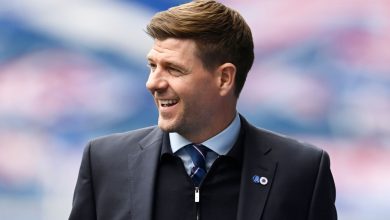
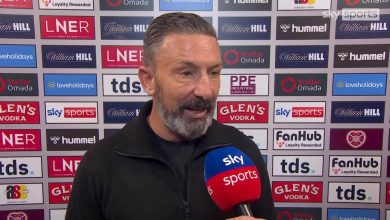
A SHOCK cross-city move is reportedly DONE and the football world can’t believe it 😳🔥 The player has made his decision — and BOTH sets of fans are in total chaos right now 👀💥 Rangers or Celtic? The reveal is about to break the internet

West Ham United have been thrown into fresh turbulence off the pitch as internal pressure continues to build on manager Nuno Espírito Santo, while chairman David Sullivan is reportedly considering a surprise Italian managerial shortlist as part of long-term planning at the London club. At the same time, the club’s official website is said to have experienced temporary crashes following intense online backlash from supporters reacting to recent decisions, adding yet another layer of instability to an already tense situation in East London.
The unrest comes at a time when expectations around West Ham United are rising again, with fans demanding clarity, ambition, and consistency after a mixed run of performances and uncertain form. While the club hierarchy continues to publicly back current manager Nuno Espírito Santo, behind the scenes there are growing conversations about future options, possible replacements, and a broader review of the club’s direction. According to multiple reports circulating in football media circles, Sullivan has already begun to quietly explore names from Italy, believing that a tactical shift influenced by Serie A coaching styles could offer a more stable long-term identity for the team.
However, what has intensified the situation further is the reaction from supporters online. Following a wave of frustration aimed at club decisions, ticketing concerns, squad performance, and transfer uncertainty, West Ham’s official website reportedly struggled under heavy traffic and repeated complaints, leading to temporary outages. While such crashes are not uncommon for major football clubs during periods of heightened fan engagement, the timing of this particular disruption has amplified the sense of chaos surrounding the club. For many supporters, it has become symbolic of deeper structural issues that they believe need urgent attention.
At the heart of the sporting tension remains Nuno Espírito Santo, who arrived with expectations of stabilising the squad and implementing a more disciplined tactical structure. His reputation for organisation, defensive compactness, and counter-attacking football was seen as a strong fit for a team looking to rebuild consistency in the Premier League. Yet, results have fluctuated, performances have lacked rhythm at key moments, and questions are now being asked about whether his style fully aligns with the long-term ambitions of the club hierarchy.
Despite public statements of support, insiders suggest that David Sullivan is not closing the door on alternative options. Instead, he is believed to be assessing a shortlist that includes several Italian managers known for tactical discipline, defensive organisation, and structured build-up play. The idea, according to sources close to the club, is to explore whether a more methodical European approach could bring long-term stability and help West Ham compete more consistently at higher levels of English football.
But while that speculation develops in London, a separate but equally explosive football story has been circulating in Scotland, where rumours of a sensational transfer involving two of the country’s biggest clubs have sent shockwaves through fans and media alike.
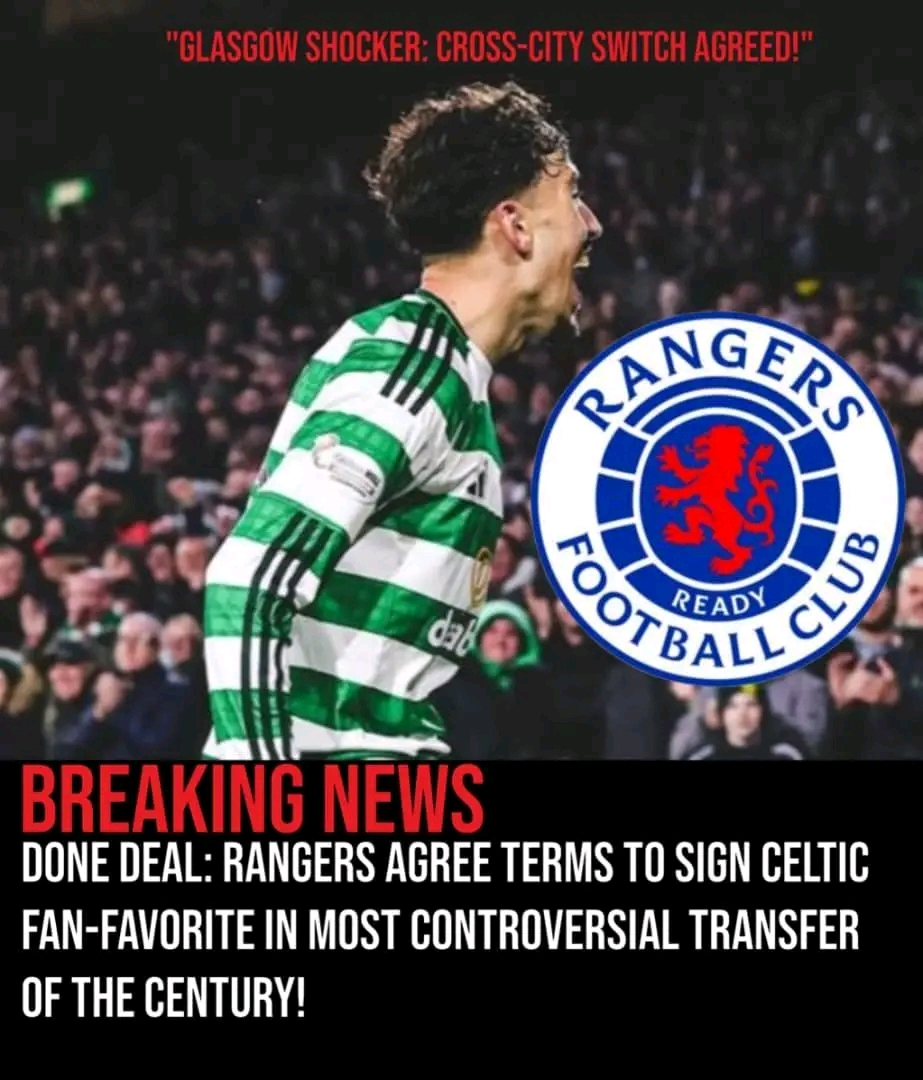
Reports emerging from various football outlets suggest that Rangers have reached an agreement in principle to sign a key first-team player from Celtic, in what is being described as one of the most controversial potential transfers in modern Scottish football history. The move, if completed, would represent a dramatic crossing of the Old Firm divide, a rivalry that is widely regarded as one of the most intense and emotionally charged in world football.
The two clubs involved, Rangers and Celtic, share a history defined not just by football competition but by deep cultural, social, and emotional divisions that have shaped Scottish football for more than a century. Any direct transfer between the clubs is rare, highly controversial, and often met with strong reactions from both fanbases. That is why the latest reports have caused such a dramatic reaction across Glasgow and beyond.
According to the emerging narrative, the deal was not a simple negotiation but a fast-moving process triggered by a breakdown in contract discussions between the player’s representatives and Celtic’s hierarchy. While there had been quiet speculation about the player’s future for some time, most observers believed he would remain part of Celtic’s long-term project. Instead, the sudden involvement of Rangers changed the entire direction of the situation in a matter of days.
Sources suggest that Rangers manager Danny Röhl played a central role in pushing the deal forward. Röhl, known for his tactical energy and desire to build a high-intensity attacking side, is said to have identified the player as a perfect fit for his system. The profile described by insiders is one of pace, relentless pressing, and versatility in attacking transitions, qualities Röhl reportedly believes are essential for closing the gap on their Glasgow rivals.
The reported negotiations were described as discreet, highly confidential, and conducted with urgency once Rangers realised the opportunity existed. Club insiders are said to believe that not only would the signing strengthen their squad technically, but it would also deliver a psychological blow to Celtic, shifting the balance of power in the city.
One insider reportedly described the thinking inside the club as ruthless but calculated, suggesting that the timing of the deal was as important as the player’s ability. In a rivalry where momentum and mentality play enormous roles, taking a key figure from the opposition is seen as both a sporting and psychological victory.
For supporters of Celtic, the news has been met with disbelief and anger. The player at the centre of the speculation has been regarded as an important and trusted figure within the squad, someone who contributed significantly in high-pressure matches and delivered key performances during title challenges and cup campaigns. The idea that such a player could move directly to Rangers has been described by fans online as a betrayal, with emotional reactions flooding social media platforms and fan forums.
Many supporters have expressed frustration not just at the possibility of losing the player, but also at the broader sense of vulnerability it creates. In a rivalry built on identity and dominance, losing a key figure to the direct opponent is viewed as one of the most painful outcomes imaginable.
On the other side of the city, Rangers fans have reacted with a mixture of shock, excitement, and cautious optimism. While some acknowledge the controversial nature of the move, others see it as a statement of intent from the club’s leadership. The idea of signing a player who has already proven himself in Scottish football, and specifically within Celtic’s system, is being viewed by some as a strategic masterstroke that could immediately strengthen Rangers’ attacking options.
Reports indicate that personal terms may already have been discussed and that a contract structure over several years has been considered. There are also suggestions that preliminary medical assessments have taken place in a private setting, although none of this has been officially confirmed by either club.
If the move is completed, it would almost certainly become one of the most talked-about transfers in Scottish football history, drawing comparisons to previous controversial moves across the Old Firm divide. It would also place enormous pressure on the player involved, who would instantly become one of the most scrutinised figures in the league due to the emotional weight of the transfer.
Meanwhile, the situation at West Ham continues to develop in parallel, adding another layer of instability to the broader football landscape. The reported website crash following fan backlash has been interpreted by some observers as a sign of growing dissatisfaction among supporters. Issues such as inconsistent performances, transfer policy concerns, and long-term strategic direction have all contributed to a tense atmosphere around the club.
David Sullivan’s reported consideration of Italian managerial candidates reflects a possible shift in thinking. Italian football is often associated with tactical discipline, defensive structure, and strategic game management, qualities that some believe West Ham have lacked in certain phases of recent seasons. Whether this leads to any immediate managerial change remains uncertain, but the fact that such discussions are taking place suggests that the club is actively evaluating its future direction.
Nuno Espírito Santo, for his part, remains focused on stabilising performances and maintaining control over a challenging environment. Managers in his position often face pressure not just from results but also from expectations that evolve rapidly in modern football. A few poor results or inconsistent performances can quickly shift public perception, especially at clubs with passionate fanbases like West Ham.
The combination of internal pressure, external speculation, and supporter frustration has created a situation where every development is magnified. Whether it is a website outage, a transfer rumour, or a tactical decision, everything is now interpreted as part of a bigger narrative about the club’s direction.
In Glasgow, the potential Rangers–Celtic transfer saga continues to dominate discussion, while in London, West Ham’s managerial uncertainty and administrative challenges remain unresolved. Together, these stories highlight the unpredictable and often volatile nature of modern football, where events on and off the pitch can quickly escalate into major talking points across the sport.
As things stand, nothing is officially confirmed in either situation, but the level of speculation alone is enough to keep fans, analysts, and journalists watching closely. Whether it is a shock cross-city transfer in Scotland or managerial uncertainty in England, both stories reflect a football world where pressure, expectation, and emotion are constantly rising.
What happens next will depend on decisions made behind closed doors, but one thing is already clear: both West Ham’s situation in London and the reported Rangers–Celtic transfer saga have captured attention in a way that shows just how quickly football narratives can shift, intensify, and dominate the sporting conversation.