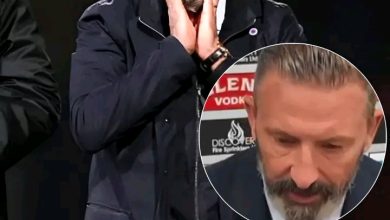
Derek McInnes Issues Warning To Rangers Players Despite Narrow Win Over Jablonec


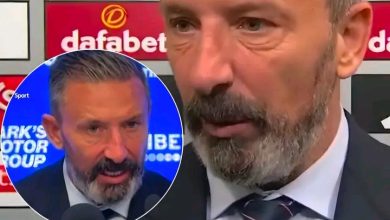
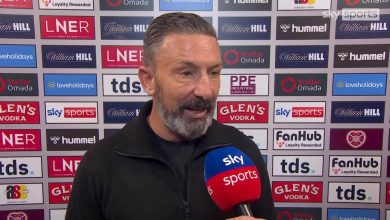
Derek McInnes told his Rangers players he cannot hold their hands after a mixed performance in the 1-0 win over Jablonec in the first leg of their Conference League play-off tie at Ibrox. It was a result that, on paper, moved Rangers a step closer to securing a place in the group phase of European football’s third-tier competition. But the manner of the victory — laboured, jeered at half-time, and ultimately completed with ten men — left McInnes unwilling to offer his squad anything approaching unqualified praise. Instead, in the moments after the final whistle, the Rangers manager used the platform to deliver a pointed message: results alone will not be enough to satisfy him, and his players need to take far greater ownership of their own performances than they have shown so far.
It was a revealing moment from a manager still finding his feet at Ibrox, one prepared to temper a positive result with blunt honesty rather than bask in the simple fact of victory. For a Rangers support growing increasingly anxious about form and performance levels under their new head coach, McInnes’s comments will have struck a chord — an acknowledgement, in effect, that Thursday night’s job was only half-done, and that far more will be required of this group of players if the club’s season is to be salvaged.
To understand the weight of McInnes’s post-match comments, it helps to look at the run of results that preceded them. McInnes got his first win as Gers manager at the fifth time of asking with a 5-1 thumping of St Mirren on Sunday — a result that arrived only after a difficult opening spell in the job that had brought no victories at all across his first four competitive matches in interim charge. That St Mirren rout offered a much-needed release valve, both for a manager under mounting scrutiny and for supporters growing restless at the lack of positive results since his appointment.
Yet whatever confidence that win generated appeared to evaporate almost immediately once Jablonec visited Ibrox in midweek. His side were booed off at half-time against the Czech outfit after an uninspiring first half, a reaction from the home crowd that underlined just how quickly patience can wear thin around Ibrox, even in the direct aftermath of a five-goal win just days earlier. For a team that had shown signs of life against St Mirren, to revert to a flat, uninspired opening 45 minutes against a side from the Czech First League represented exactly the kind of inconsistency McInnes has been working to eliminate since taking the job.
The second half brought some relief. Striker Ryan Naderi scored from close range in the 50th minute, giving Rangers the breakthrough their improved second-half showing merited and settling some of the nerves inside Ibrox. But the goal proved to be only a partial turning point in a night that continued to test McInnes’s patience. In the 78th minute substitute Cammy Devlin was sent off minutes after coming off the Gers bench for a high tackle on Jiri Slama, leaving Rangers to see out the game with 10 men and with the tie in the balance ahead of the second leg next week. A player introduced specifically to add impact from the bench instead handed Jablonec a numerical advantage for the closing stages and left the second leg finely poised rather than comfortably in Rangers’s control.
Taken together — a jeered first half, a goal that arrived only after the interval, and a red card that turned a routine finish into a nervy rearguard action — it is easy to see why McInnes felt compelled to speak candidly rather than simply celebrate three points banked and a slender advantage carried into the second leg.
The heart of McInnes’s comments centred on a demand for greater responsibility from within his own dressing room. Rather than framing Thursday’s result as a platform to build from, the Rangers manager made clear that he expects far more consistency and accountability from his players without him needing to constantly intervene or manage every individual through difficult moments in matches.
That message arrived alongside a broader outline of the identity McInnes is trying to instil at Ibrox. McInnes, who has signed 11 new players with the promise of more to come, said: “I want us to be a team nobody really likes to play against, but there’s two sides to that.” The comment speaks to a manager attempting to build a level of resilience and combative edge into his Rangers side — a team capable of grinding out results even when performances are below their best — while simultaneously acknowledging that such an identity carries risk. A team that plays with that kind of physical edge and intensity will, inevitably, occasionally cross the line, as Devlin’s dismissal against Jablonec demonstrated all too clearly. McInnes’s phrase “there’s two sides to that” hints at the tightrope he is trying to walk: fostering doggedness and durability in his players without it spilling over into the kind of costly indiscipline that so nearly derailed Thursday’s result.
The scale of squad turnover McInnes referenced is itself notable. Eleven new faces arriving at the club in a single transfer window represents a significant rebuild, and it is one that comes with an inherent challenge: blending that volume of new personnel into a cohesive, understanding unit takes time, communication, and repetition on the training ground. McInnes’s insistence that he “cannot hold their hands” reads, in that context, as much a message about individual responsibility as it does a comment on the here and now — a reminder that with so many new players still bedding into the club and the system, senior figures within the squad need to take ownership of standards rather than relying solely on the manager’s guidance from the touchline.
Perhaps the most striking portion of McInnes’s post-match remarks came in his extended breakdown of Cammy Devlin’s sending-off, a moment that could yet have significant consequences for the second leg in the Czech Republic. Far from disputing the officials’ decision, McInnes was unusually direct in accepting that the correct call had been made, while also offering considerable context and, in his own way, something close to a defence of his player’s underlying intentions.
On Devlin’s dismissal, McInnes said: “Having seen it again, it is a red card and there’s no debate. I think it looks a hell of a lot worse than it actually was.” It is a notable combination of statements from a manager: an unambiguous acceptance that the referee’s decision was correct, paired immediately with an attempt to reframe how supporters and observers should interpret what they saw. Rather than criticising the officiating, as many managers might reach for reflexively in the immediate aftermath of a red card that damaged his team’s position, McInnes instead chose to explain the pattern of behaviour he believed led to the incident.
He continued: “I’ve seen him doing this before when he’s trying to buy fouls. He’s trying to just get his leg up and put his body in to be fouled because he’s in the penalty box. He’s obviously trying to feel the contact to get down, but because where his leg goes up to try put his body in, it hits the boy in the shin and it looks terrible and when you see the stills of it, it looks like a red card all day long.” It is a detailed and specific explanation, one that suggests McInnes has closely studied footage of Devlin in matches before this one, and that he recognises a recurring tendency in the midfielder’s game — an eagerness to draw contact and win fouls, particularly in dangerous areas of the pitch, that on this occasion produced a genuinely dangerous-looking outcome rather than the intended free-kick or penalty.
McInnes added: “But I think it looks worse than it actually was if you know what I mean.” The repetition of that sentiment — that the incident appeared more severe than the underlying intent behind it — suggests a manager attempting to manage the narrative around his player following a costly moment, protecting Devlin’s standing within the squad and among supporters even while fully accepting the referee’s decision was the correct one under the laws of the game. It is a nuanced position: no complaint about the sending-off itself, but a clear defence of the character and motivation of the player involved, distinguishing between reckless intent and an unfortunate accident arising from a habitual, if risky, way of seeking contact in the box.
Beyond the immediate post-match analysis, Devlin’s dismissal carries real practical consequences for Rangers as they turn their attention to the second leg of this tie in the Czech Republic. A straight red card typically triggers an automatic suspension, meaning Devlin is likely to be unavailable for the return fixture — a blow for a Rangers squad that, even after an active transfer window, will want every fit and available player at their disposal for what promises to be a difficult night away from home.
The knock-on effect extends beyond simply losing one player from the squad. With the tie finely balanced at 1-0, Rangers travel to Jablonec knowing that a place in the Conference League’s group phase is not yet secured, and that their opponents — who pushed Rangers into an uninspiring, jeered first-half performance at Ibrox — will have taken real encouragement from how competitive they were able to make the first leg. Losing a bench option of Devlin’s profile, someone introduced specifically to add energy and physicality in the closing stages of matches, removes a tool from McInnes’s arsenal at precisely the stage of the tie when game-management and squad depth matter most.
For a Rangers side already contending with a squad still bedding in numerous summer arrivals, the suspension adds one further complication to an already challenging assignment. McInnes’s demand that his players take greater individual responsibility — the “I cannot hold their hands” message — takes on extra resonance in that light: with one fewer body available for selection and a hostile away atmosphere awaiting his side, those who do take the field in the second leg will need to manage their discipline and decision-making with precisely the maturity McInnes says he wants to see, without needing constant intervention from the touchline to keep them in check
McInnes’s willingness to be this candid after a winning result says something about the approach he is trying to establish in his early weeks in the Ibrox hot-seat. Many managers, particularly those under pressure following a difficult start, might have chosen to focus purely on the positives following a win that moves their side closer to securing group-stage European football. Instead, McInnes used the opportunity to set a marker for what he expects going forward — a signal, deliberately delivered in the glow of a positive result rather than the sting of a defeat, that standards and accountability matter to him regardless of the scoreline.
That approach fits a broader pattern that has begun to emerge since his appointment. Even in his comments explaining the Devlin red card, McInnes balanced acceptance of the officiating decision with a clear-eyed diagnosis of a habit in his player’s game that needs to be corrected — again avoiding excuses while still offering context. It points to a manager who values honesty and directness in his dealings with players and press alike, an approach that may take time to fully bed in given the scale of squad turnover at the club this summer, but one that suggests McInnes is prioritising the building of a robust, resilient culture at Ibrox over short-term point-scoring or excuse-making.
Whether that approach translates into the kind of consistent on-field performances Rangers supporters are craving remains to be seen. The club’s Conference League tie against Jablonec is not yet won, an away red card looms over their preparations for the second leg, and question marks remain over a side that has shown, within the space of a single week, both the capacity to be ruthless in front of goal — as in the 5-1 win over St Mirren — and the tendency to labour unconvincingly against organised, well-drilled opposition, as they did for large parts of Thursday’s contest with Jablonec.
For now, McInnes’s message to his players is unambiguous: a positive result is not, on its own, sufficient cause for satisfaction. Standards, discipline, and individual accountability all need to improve, and the manager has made clear he expects his players — particularly the raft of new arrivals still finding their feet at the club — to take ownership of that improvement themselves, rather than relying on him to manage every problem from the touchline. With a testing second leg to come in the Czech Republic, and a place in Europe’s group stages still to be secured, Rangers will discover soon enough whether that message has been heard.