Derek McInnes’ Starting XI vs Dundee United Could Now Include Three New Rangers Signings

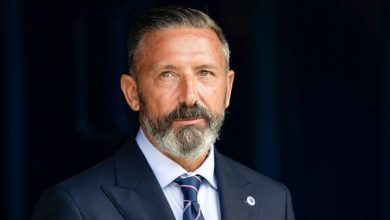
Derek McInnes will not be given the luxury of a gentle introduction to life as Rangers manager. His first competitive match in charge arrives on Friday, July 31, away to Dundee United at Tannadice Park, live on Sky Sports, and it marks the first time in 39 years that the two sides have opened a Scottish top-flight season against one another. There is no soft landing, no reserve fixture to ease him in, and no room to experiment quietly before the pressure of Ibrox expectation begins to bite. From the moment he takes his seat in the away dugout, McInnes will be judged.
That is the nature of the job he signed up for on June 17, when he left Hearts to take charge of Rangers less than a year after guiding the Gorgie club to their highest league finish in two decades. McInnes arrives with a three-year contract, a backroom team that includes Alan Archibald, Paul Sheerin and Craig Clark, and a mandate that has already been made public in the boldest possible terms: he wants to win the title in his first season, and he wants his squad built quickly enough to do it.
Chairman Andrew Cavenagh has moved with unusual speed to back that ambition. Five permanent or loan signings have already been completed inside the opening weeks of the transfer window, an unusually rapid rate of business for a Scottish club still finalising a change of manager. Lawrence Shankland, Ross McCrorie, Ben Godfrey, Ivor Pandur and Dan Neil have all arrived at Ibrox, and with just under four weeks remaining before the visit to Tannadice, at least three of them look certain to be involved in Rangers’ Premiership curtain-raiser.
The scale of the rebuild McInnes is attempting cannot be understated. Rangers finished third last season under Danny Röhl, who was dismissed to make way for McInnes’ arrival, and the club has been without a league title since Philippe Clement’s early tenure delivered silverware via cup competitions rather than Premiership success. Getting the structure and personnel right in the opening exchanges of this campaign, before Rangers are plunged into a demanding Europa League qualifying schedule from August 6 onwards, is not simply about early bragging rights. It is about establishing authority, tempo and identity before the fixture list turns unforgiving.
A managerial appointment built on familiarity and momentum
McInnes’ route back to Rangers has been unusual even by the standards of a famously volatile Scottish managerial merry-go-round. He is a former Ibrox player himself, part of the Rangers squad that won a domestic treble in 1999, and his coaching career has taken him through St Johnstone, Bristol City, Aberdeen and, most recently, Hearts, where his final campaign produced arguably the finest work of his managerial career. Hearts sat top of the Scottish Premiership for large stretches of the 2025-26 season, and McInnes claimed three consecutive SPFL Manager of the Month awards across August, September and October before a final-day defeat to Celtic at Parkhead saw the Jambos pipped to a first title in over sixty years, finishing second instead.
That near-miss, painful as it was for Hearts supporters, effectively built McInnes’ CV for the very job he has now taken. Rangers’ hierarchy saw a manager capable of building a competitive, well-drilled unit from a squad with a fraction of Ibrox’s resources, and they moved for him within days of Röhl’s departure. The financial mechanics of the switch were notable in their own right: reports suggested a combined fee for luring both McInnes and top scorer Lawrence Shankland away from Tynecastle in the region of just £500,000, a remarkably modest outlay that speaks either to contractual leverage or to Hearts simply lacking the negotiating position to resist interest from a direct rival.
For Hearts, losing both manager and captain to the same competitor within the same close season represents a significant blow, and the Gorgie club now faces a summer of rebuilding of its own. For Rangers, though, the appointment brings an immediate tactical dividend: several of McInnes’ new signings already understand exactly how he wants his team to play, which should, in theory, shave weeks off the usual pre-season bedding-in period.
Ivor Pandur solves the goalkeeping question before it was even asked
Perhaps the most straightforward selection decision facing McInnes concerns his goalkeeper. Rangers moved for Ivor Pandur in a deal worth around £6million from newly-promoted Hull City, with the 26-year-old Croatia international signing a four-year contract at Ibrox. The transfer was structured as something of a swap in reverse: Jack Butland, Rangers’ current number one, departed in the opposite direction to Hull in a £3million deal, drawing the curtain on a three-year Ibrox career that included more than 150 appearances.
Pandur’s credentials for the step up are considerable. He made all but one of Hull’s Championship appearances last season and was central to their promotion push, keeping clean sheets in both play-off semi-final legs and in the final itself as the Tigers secured a return to the Premier League. That run of form earned him a place in Croatia’s World Cup squad this summer, where he has served as understudy to Dominik Livaković, watching Croatia’s group games against England, Panama and Ghana from the bench before the last-32 tie against Portugal.
McInnes made no secret of his excitement at landing Pandur, describing him as a goalkeeper with “excellent presence and a strong character” who could become “a commanding figure for the club.” Given the size of the fee, Pandur’s age profile, and the fact he is being installed as a clear long-term successor between the posts rather than mere squad depth, it is difficult to see any scenario in which Liam Kelly starts ahead of him at Tannadice once World Cup commitments allow him to link up with his new teammates. The timeline is tight — Pandur will need to report for pre-season training almost immediately after Croatia’s involvement in the tournament ends — but McInnes has already stated he is “looking forward to welcoming Ivor into the team when he returns from the World Cup,” a strong hint that the Croatian is being fast-tracked into contention regardless of a shortened preparation period.
Lawrence Shankland: a reunion four years in the making
If Pandur represents the calculated, data-driven side of Rangers’ recruitment, Lawrence Shankland’s arrival carries the emotional weight of a boyhood dream fulfilled. The Scotland international completed his move from Hearts on a two-year deal with the option of a third, taking advantage of a break clause inserted into the three-year contract he signed at Tynecastle only twelve months earlier. That clause, agreed by Hearts in order to convince their captain to commit for the 2025-26 season, has come back to haunt them: Shankland fired 20 league goals and 88 in total across four years in Gorgie, nearly propelling Hearts to a first title in generations, only to walk straight into the arms of a direct rival for a fee reported to be nominal or entirely absent.
Shankland’s exit was confirmed just before he departed for World Cup duty with Scotland, and Hearts’ short statement thanking him for his efforts barely masked the sting of losing both a talismanic captain and a title-winning manager to the same club inside a matter of weeks. For Rangers, though, the acquisition of a 30-year-old striker with a proven scoring record in Scottish football, who has previously turned down interest from elsewhere to stay loyal to unfashionable clubs, and who has openly described the move as a lifelong dream, represents exactly the kind of “ready-made” signing McInnes has publicly prioritised.
Shankland’s arrival is not without ripple effects further up the pitch. Reports out of Ibrox suggest Bojan Miovski, only twelve months into his own Rangers career, has grown unsettled by the competition Shankland now provides and could push for an exit. Youssef Chermiti, the former Everton forward who has struggled to nail down a regular starting berth, and young forward Ryan Naderi will also find their pathway to minutes considerably narrower. McInnes’ preference is understood to favour a partnership approach in attack rather than a lone striker, and reports out of the Rangers camp suggest Shankland is most likely to be deployed alongside Chermiti at Tannadice, giving Rangers a mix of poacher’s instinct and physical presence in behind Dundee United’s back line.
The reunion factor should not be understated either. Shankland played under McInnes at Hearts and understands precisely the runs, movement patterns and pressing triggers his manager demands. That familiarity, as McInnes himself has alluded to in press conferences since taking the job, can shave real time off the settling-in period new signings typically require — a valuable asset given how little preparation time exists before the Dundee United trip.
Ross McCrorie completes an emotional homecoming at right-back
The defensive reshuffle facing McInnes is arguably the most complex tactical puzzle of his early tenure, and it begins with the identity of Rangers’ new starting right-back. James Tavernier, the club’s long-serving captain and record appearance-holder in that position, has departed following the expiry of his contract, leaving a considerable void both in terms of quality and leadership. Rangers moved decisively to fill it, becoming the first major defensive signing of the McInnes era in Ross McCrorie, a 28-year-old Scotland international returning to the club where he came through the youth system.
McCrorie’s Rangers story is one of a player developing away from home before returning at what he has himself described as the perfect moment. Having progressed through the Ibrox academy alongside his twin brother, goalkeeper Robby McCrorie, Ross made over 50 first-team appearances for Rangers before being sold to Aberdeen in 2020 — a transfer overseen, perhaps fittingly, by Derek McInnes himself, who was manager at Pittodrie at the time and later described McCrorie as “an absolute dream of a boy” and “a Rolls-Royce” of a player. After three productive years in the north east and a further three at Bristol City in the English Championship, where he made 89 appearances and helped the Robins reach the play-offs for the first time in 17 years, McCrorie has now signed a three-year contract back at the club he supported as a boy, in a deal worth around £900,000 with the potential to rise into seven figures with add-ons.
The versatility McCrorie offers is significant. Primarily a right-back in recent seasons, he is equally capable of playing across the back four or dropping into a defensive midfield role, giving McInnes tactical flexibility that should prove valuable across a long campaign. Dujon Sterling, Rangers’ other option at right-back, has struggled with recurring fitness issues that have limited his availability, making McCrorie’s arrival less a simple competition for places and more a clear installation as first-choice. Given his prior working relationship with McInnes and his established understanding of the demands of Scottish Premiership football, McCrorie appears close to a guaranteed starter against Dundee United.
The centre-back conundrum: Godfrey, Souttar and Fernandez
Where McInnes faces a genuinely difficult decision is at centre-back, a position Rangers were forced to strengthen after losing both Nasser Djiga and Derek Cornelius at the end of last season, leaving Emmanuel Fernandez and John Souttar as the only established senior options. The signing of Ben Godfrey, a 28-year-old English defender who arrives on a season-long loan from Atalanta with an option to make the deal permanent for under £4million next summer, adds both Premier League pedigree and much-needed depth.
Godfrey’s career arc has been an unusual one. A £25million move from Norwich City to Everton once made him one of the more coveted young centre-backs in English football, and he earned two senior caps for England in 2021 at the peak of that reputation. Since a 2024 switch to Serie A side Atalanta, however, his game time has been sparse, with loan spells at Ipswich Town, Sheffield United and, most recently, Danish outfit Brøndby, where a strong run of appearances in the second half of last season appears to have persuaded Rangers he still has plenty to offer. Speaking after his move to Ibrox, Godfrey described himself as a front-footed, aggressive defender determined to use the lessons of a turbulent few years to relaunch his career at a club of Rangers’ stature, and pointed to a clear thread running through the club’s summer recruitment: senior players and proven characters, brought in as much for leadership qualities as for raw ability.
That leaves McInnes with a straightforward calculation to make before Tannadice. Fernandez and Souttar started together consistently across the closing stages of last season and appear the most settled central pairing available to him, meaning Godfrey may have to bide his time on the bench in the very early weeks while he builds match sharpness following a stop-start 12 months in Italy and Denmark. Given the compressed pre-season and the demands of Europa League qualifying arriving barely a week after the Dundee United fixture, however, it would be no surprise if Godfrey is thrust into contention sooner rather than later, particularly if either Fernandez or Souttar picks up so much as a minor knock.
At left-back, the picture is far less complicated. Tuur Rommens has established himself as first choice in that position and looks a straightforward inclusion in McInnes’ first competitive line-up, giving Rangers a settled unit either side of an evolving central defensive partnership.
Dan Neil, the McInnes blueprint, and the Nicolas Raskin question
Rangers’ most recent permanent addition, midfielder Dan Neil, tells its own story about the profile McInnes is targeting. The former Sunderland captain arrived on a free transfer after his contract at the Stadium of Light expired, reportedly turning down interest from Southampton to move to Ibrox instead — another marker of the pulling power a club of Rangers’ history retains even during a period of relative underachievement domestically.
Neil’s arrival, alongside Godfrey and McCrorie, fits a pattern McInnes has been explicit about in his early media duties: bringing in “good types” and experienced characters capable of providing senior leadership in a dressing room that, by his own admission, has lacked exactly that in recent seasons. “There are a few players familiar to Scottish football, something we want in the squad, and room for players who are coming to Scotland and Rangers for the first time,” McInnes explained, outlining a recruitment philosophy built as much around temperament as raw technical output.
The presence of Neil, however, sharpens rather than resolves the biggest lingering midfield question hanging over Ibrox this summer: the future of Nicolas Raskin. The Belgian international has been a standout performer for his country during their World Cup campaign, and that form has only intensified interest in a player Rangers may struggle to keep amid growing transfer speculation. McInnes has been directly asked about Raskin’s situation in press duties and has stopped short of guaranteeing his continued presence at the club, a reflection of how genuinely live the situation remains. Were Raskin to depart before deadline day on September 3, it would represent a considerable reshaping of Rangers’ central midfield beyond the changes already occurring through Neil’s arrival.
For the visit to Tannadice itself, with Raskin unavailable until his World Cup commitments conclude and swirling transfer uncertainty still unresolved, the more straightforward pairing appears to be Connor Barron and Tochi Chukwuani. Barron’s robust, combative style of play fits neatly with McInnes’ preference for a Scottish core running through the spine of his team, while Chukwuani offers control and passing range through the centre of the pitch. Should McInnes revert to something closer to a 4-4-2 shape, a system he favoured for long spells at Hearts, further reshuffling down the middle may follow — but for the opening weekend at least, Barron and Chukwuani look the pragmatic, low-risk selection.
The wide areas: Findlay Curtis and Djeidi Gassama given their chance
McInnes’ wide options complete a picture of a manager assembling a team with a clear domestic identity at its core, even as he blends in fresh faces from England, Croatia and Italy. Findlay Curtis, a young Scottish winger whose direct, energetic style is exactly the sort of profile McInnes has previously relished working with during his time at Kilmarnock and Hearts, looks set to be given the nod on the right side of midfield for the trip to Tannadice.
On the opposite flank, Djeidi Gassama represents an intriguing selection story of his own. Having shown flashes of genuine quality under both Russell Martin and Danny Röhl without ever quite nailing down a consistent run in the team, Gassama now arrives at a natural inflection point in his Ibrox career. With a new manager assessing the whole squad afresh and no long track record of favouritism clouding the decision, the left side of midfield looks like fertile ground for Gassama to finally establish himself as a regular starter, assuming his early training performances under the new coaching staff continue to catch the eye.
A rebuild against the clock
What makes this particular pre-season period so unusual is the sheer compression of the timeline. McInnes was appointed on June 17, with pre-season training beginning on June 25 — later than originally planned under Röhl’s since-abandoned schedule, but still leaving barely five weeks between his arrival and a competitive fixture that will be watched live across the United Kingdom. Layered on top of that is a Europa League qualifying draw on July 20, with Rangers entering at the third qualifying round as a seeded side and their first leg following just six days after the Dundee United trip, on August 6.
That schedule leaves McInnes almost no margin for the extended, low-stakes experimentation that a new manager might ordinarily crave. Every training session between now and July 31 effectively doubles as an audition, not just for the five new arrivals attempting to force their way into his thinking, but for the incumbent Rangers players hoping to convince their new boss they deserve to remain part of his plans. McInnes has been candid about the brutal nature of those early calls, acknowledging in interviews that questions of who can defend crosses under pressure, who can retain composure in possession when a crowd grows restless, and who has the temperament to handle Ibrox’s specific pressures will shape his selections as much as underlying quality will.
There is also a broader tactical decision looming beneath the individual selection calls: does McInnes build his first Rangers side around control and possession, or around a more direct, territorial approach that plays to Shankland’s penalty-box instincts and the pace Rangers possess in wide areas? Half-committing to either approach risks exposure in a Europa League qualifying tie against unfamiliar continental opposition, where mixed tactical messaging tends to be ruthlessly punished. How McInnes resolves that question in the coming weeks may end up mattering more to Rangers’ season than any individual name on the team sheet at Tannadice.
What the XI vs Dundee United could look like
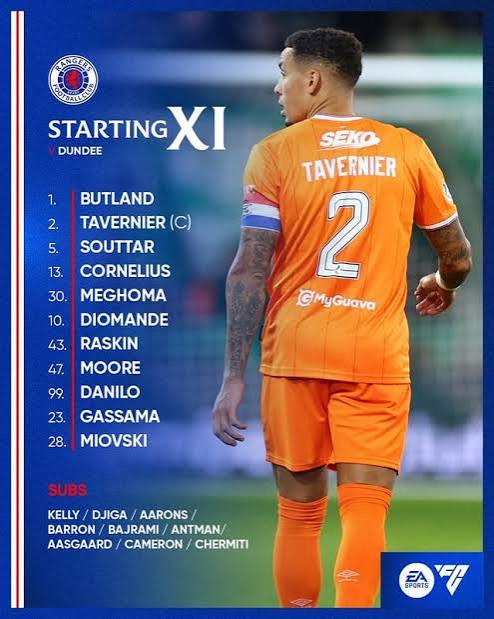
Taking the emerging picture together, McInnes’ likely starting line-up for the opening weekend of the season reads: Ivor Pandur in goal, ahead of a back four of Ross McCrorie, John Souttar, Emmanuel Fernandez and Tuur Rommens. In midfield, Connor Barron and Tochi Chukwuani look the probable central pairing, flanked by Findlay Curtis on the right and Djeidi Gassama on the left. Up front, Lawrence Shankland appears set to lead the line alongside Youssef Chermiti.
Three of Rangers’ five summer signings so far — Pandur, McCrorie and Shankland — therefore look poised to walk straight into McInnes’ first competitive team sheet, a striking rate of immediate integration for a squad rebuilt at such speed. Ben Godfrey and Dan Neil, while perhaps not guaranteed starters at Tannadice itself, are unlikely to be far from involvement given the physical demands of a fixture list that offers Rangers no time to rest key players once European football begins.
Much can still change between now and July 31. Further incoming transfers remain possible, with speculation already surrounding Bologna’s Lewis Ferguson and uncertainty still hanging over Raskin’s future dominating the noise around Ibrox. What is already clear, though, is that Derek McInnes has been backed decisively in the transfer market, and that his first competitive selection as Rangers manager will be watched not just for what it says about a single match against Dundee United, but for what it reveals about the identity of the team he intends to build across a campaign that will define whether his return to Ibrox becomes a genuine success story or another false dawn in Rangers’ long wait to reclaim the Scottish Premiership title.