Derek McInnes told ‘that’s your job’ as Rangers post-match comments picked apart

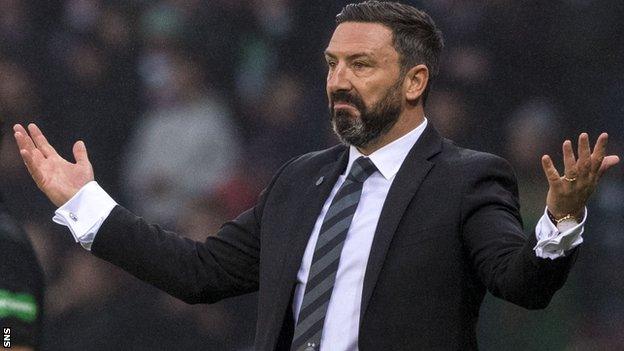
Derek McInnes’s attempt to explain away Rangers’ European exit has been met with fierce pushback from pundits, with his own post-match assessment of the Jablonec defeat now being picked apart almost as thoroughly as the performance itself.
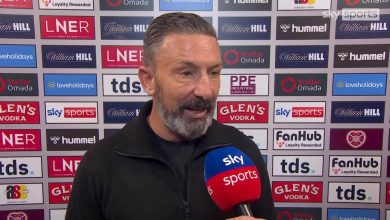
While McInnes was scathing in his own review of his team’s display against Jablonec — and did take a share of responsibility — he also suggested his players simply weren’t giving enough on the pitch. That framing didn’t sit well with those analyzing the game afterward, and it produced one of the more pointed rebukes of his short Rangers tenure so far.
One line of criticism cut straight to the heart of accountability in management: that is Derek McInnes’s job. The point being made was blunt but simple — ensuring the team performs, ensuring it looks like something coherent and organized, is not a secondary consideration or a hoped-for bonus. It’s the fundamental requirement of the role he was hired to do. Suggesting the players weren’t giving enough, in this reading, risked shifting blame away from the manager’s own tactical and preparatory responsibilities and onto the group he’s meant to be shaping.
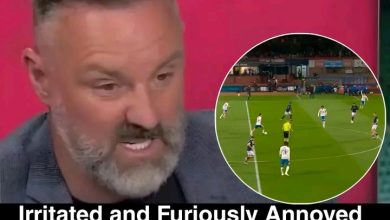
The critique of the performance itself was comprehensive. Rangers were said to have never offered anything in an attacking sense throughout the match. There was no control of the game, no meaningful patterns of play, no rotations or movement to speak of. The team was accused of lacking aggression, of never playing on the front foot, and defensively, of being badly disjointed in their shape. The overall assessment was that Rangers were poor across the board — poor enough that trying to find anything positive to say about the performance was described as near impossible.
Perhaps the most cutting element of the critique wasn’t really about the performance in isolation, but about how unsurprising it was. The suggestion was that Rangers going out in this manner wasn’t some inexplicable one-off, but rather consistent with what had already been seen from this Rangers side — and that the lack of shock at the outcome was, if anything, the most damning indictment available. There was even a pointed reflection on the first leg at Ibrox: the view offered was that Jablonec had been “horrendous” in Glasgow, and that Rangers were expected to progress, but only narrowly — a sign that even in victory, the warning signs about this Rangers team were already there for anyone paying close attention.
That’s a particularly uncomfortable framing for McInnes and his coaching staff. It suggests the problems exposed in the Czech Republic weren’t a freak occurrence brought on by the pressure of an away leg or a slice of misfortune, but the visible surfacing of issues that had already been present, if partially disguised, during the earlier stages of the tie.
**The Wider Pattern of Scrutiny**
This latest round of criticism doesn’t exist in isolation — it’s the continuation of a wave of scrutiny that has built rapidly since Thursday’s exit. Former players including Kris Boyd and Andy Halliday have already been vocal in their own assessments, with Halliday going as far as placing the Jablonec defeat alongside some of Rangers’ most infamous European humiliations, and warning explicitly that McInnes’s job would come under threat as a result.
What makes the “that’s your job” line of criticism distinct is its focus — not on the scoreline, not on individual missed penalties from Findlay Curtis or James Penrice, not even on the specific goal conceded to Vakhtang Tchanturishvili in the 73rd minute, but on the manager’s own explanation of events. It’s a critique of accountability and framing as much as football. McInnes had, in his own comments, taken responsibility while also pointing to a lack of application from his players — and it’s precisely that dual framing that has drawn fire, with critics arguing you can’t simultaneously claim full responsibility and also imply the players didn’t do enough, at least not without inviting the obvious question of why a squad assembled and organized by that same manager wasn’t giving what was required.
The scrutiny extends beyond just this single set of comments. McInnes has also admitted, in the same wave of post-match media duties, that it’s difficult right now to get a clear read on where his team actually stands — a admission that, however honest, adds to the sense of a manager still searching for answers rather than offering them. Combined with a record of just two wins from his opening seven matches in charge, and a European exit that leaves the club without continental football for the first time since 2017, the pressure attached to every subsequent public comment McInnes makes is only going to intensify.
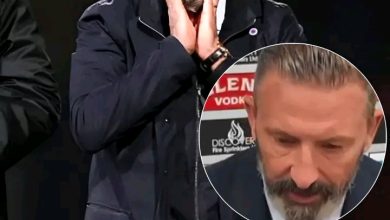
There’s a familiar dynamic at play here, one Scottish football followers will recognize: a manager whose honesty in defeat is, in one sense, commendable — mortified, embarrassed, refusing to hide behind excuses — but whose specific choice of words, under close analysis, still leaves room for accusations of blame-shifting. Saying the buck stops with him while also suggesting his players fell short isn’t necessarily contradictory in a vacuum. But in the current climate around Ibrox, with results poor and confidence fragile, it’s being read less charitably than it might have been under calmer circumstances
For McInnes, the challenge now isn’t just about winning football matches — though that remains, obviously, the fundamental requirement. It’s also about how he communicates about those matches, particularly in defeat. Post-match interviews have become a secondary battleground in his opening months at Rangers, with every word being weighed for signs of accountability, evasion, or excuse-making.
The trip to Aberdeen — his old club, the place where he built the managerial reputation that eventually brought him to Ibrox — offers a chance to change the conversation, if not fully then at least partially. A strong result and performance would go some way toward quieting both the tactical criticism of his team and the media scrutiny of his own explanations for its shortcomings. Another underwhelming display, however, particularly following a week in which his own words have been picked apart as thoroughly as his team’s play, would likely accelerate the pressure that’s already building rapidly around his position — pressure that, as things stand, is coming entirely from outside the club rather than from any hint of self-doubt in McInnes’s own public stance.