Derek McInnes’ Ultimate Endorsement: Why Rangers Manager Will Continue Playing Raskin Despite Looming Transfer Speculation

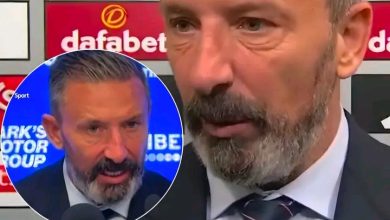
Derek McInnes arrived at Rangers this summer with a clear vision for reconstructing a club in transition and establishing a foundation capable of challenging for major honors. Among the various challenges confronting the new manager—squad integration, tactical implementation, and early-season performance expectations—none has proven more poignant than his opportunity to finally work with Nicolas Raskin.
For years, while managing Kilmarnock and Hearts, McInnes watched Raskin develop from afar and harbored genuine ambitions regarding the prospect of eventually coaching the Belgian midfielder. The appointment as Rangers manager seemed to provide the perfect opportunity to transform this long-held aspiration into reality. Yet the cruel timing of football meant that just as McInnes arrived at Ibrox, Raskin’s market value had never been higher, and the likelihood of the midfielder remaining at Rangers had seemingly diminished considerably.
The irony is profound: McInnes finally secured the opportunity to manage a player he had consistently admired, yet circumstances—the World Cup showcase, the transfer speculation, the competing bids from English Premier League and Continental clubs—threatened to immediately separate them. Nevertheless, McInnes has responded with a bold decision that provides genuine insight into his managerial philosophy and his assessment of Raskin’s value to the club’s competitive objectives.
Derek McInnes’ appreciation for Nicolas Raskin extends well beyond superficial assessment or casual admiration. Throughout his managerial career—first at Kilmarnock and subsequently at Hearts—McInnes demonstrated consistent interest in the Belgian midfielder’s development and performance trajectory. This wasn’t fleeting interest or passing comment, but rather sustained observation of a player whom McInnes had clearly identified as meeting specific professional standards.
Managers operating at the highest levels of football possess sophisticated analytical frameworks for evaluating talent. They understand the subtle differences that separate adequate performers from genuinely standout players, and they recognize the specific qualities required for success within their preferred tactical systems. McInnes’ evident appreciation for Raskin suggests that the midfielder possessed precisely those qualities that the manager had historically sought within his midfield structures.
The prospect of finally coaching Raskin would have represented a genuine attraction of the Rangers position for McInnes. While the primary motivation for any manager accepting a club position involves competitive ambitions and the opportunity to improve organizational performance, the chance to work with specific players whom one has previously admired carries particular satisfaction. McInnes’ comments regarding Raskin reveal a manager who viewed the appointment as providing opportunity to fulfill a long-held professional aspiration.
However, McInnes also possessed sufficient football intelligence to understand that this opportunity might prove temporary. A player of Raskin’s evident quality, particularly one who had just delivered impressive World Cup performances on a global stage, inevitably attracts attention from elite clubs. The circumstances surrounding Raskin—including two years remaining on his contract and his status as Rangers’ most marketable asset—meant that the midfielder’s departure remained a genuine possibility regardless of McInnes’ personal preferences.
Nicolas Raskin’s performances for Belgium at the World Cup in America represented a pivotal moment in his career trajectory and market positioning. International tournaments function as crucial showcases where players demonstrate abilities against elite opposition under intense scrutiny from global audiences. Raskin seized this opportunity with admirable conviction, delivering performances that impressed neutrals and significantly elevated his profile within international football.
The World Cup impact proved particularly significant for Raskin’s transfer market value. Clubs across Europe’s elite leagues actively monitor international tournament performances, identifying emerging talent or confirming existing assessments regarding established players. Raskin’s World Cup performances provided concrete validation of his quality—evidence that he could perform consistently against top-level opposition rather than merely dominating within Scottish football’s competitive structure.
This validation, while positive for Raskin personally, simultaneously complicated Rangers’ ability to retain the midfielder. Club executives and recruitment specialists at major European institutions reviewing World Cup footage would have taken particular note of Raskin’s performances and likely initiated preliminary interest regarding his availability and transfer requirements. The World Cup effectively transformed Raskin from a quality Scottish-based midfielder into a genuinely marketable international asset capable of attracting attention from prestigious European clubs.
McInnes’ arrival at Ibrox coincided precisely with this surge in Raskin’s market profile. The timing represented both opportunity and disappointment—an opportunity to finally manage the player he admired, coupled with the genuine risk that the midfielder might depart before McInnes had realistic opportunity to establish working relationship and implement tactical framework.
Perhaps the most revealing aspect of McInnes’ early managerial decisions at Rangers involved his choice to deploy Raskin in the Europa League first-leg fixture against Jagiellonia Białystok in Poland. On the surface, this decision appeared questionable from multiple perspectives.
Raskin was not long recovered from his post-World Cup break and had limited training exposure within McInnes’ new organizational structures. Additionally, the midfielder carried genuine transfer risk—if injured in an away European fixture, his marketability and transfer value could potentially be damaged, thereby diminishing the financial return Rangers might expect to receive through his sale.
From a purely financial perspective, the cautious approach would have involved protecting Raskin from injury risk until his future had been definitively determined. Should the club receive an acceptable bid meeting their valuation, Raskin could then be sold with his market value intact. Alternatively, if he was to remain at Rangers, the club would have maximum roster of healthy players available for building their competitive campaign.
Yet McInnes rejected this cautious approach and instead made the bold decision to introduce Raskin at half-time despite the midfielder’s limited training exposure and the transfer risk involved. This decision provides genuine insight into McInnes’ managerial philosophy and his assessment of what Rangers required at that specific moment.
McInnes has explained his rationale, indicating that with Rangers trailing 2-1 in Poland, he felt the team required Raskin’s “know-how and nous about the pitch.” The manager was essentially indicating that Rangers’ midfield control and decision-making quality had deteriorated sufficiently that introducing an established, experienced performer became tactically necessary despite the obvious caveats and complications.
McInnes’ public comments regarding Raskin reveal a manager who has developed sophisticated assessment of the midfielder’s character, professionalism, and specific contributions to the squad. These aren’t generic platitudes but rather specific observations regarding particular qualities that McInnes values.
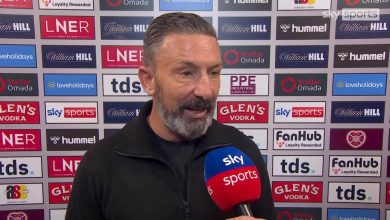
McInnes stated: “I’ve always admired Nico. I’ve always wanted to be his manager. There are certain boys you’re just drawn to. And for me, he hits the standard more often than not, a standard that fits this club.”
This comment—that Raskin “hits the standard more often than not”—represents meaningful assessment. McInnes is indicating that Raskin consistently delivers performances meeting the professional standards required for a club of Rangers’ competitive ambitions. The manager is not suggesting that Raskin is flawless or that he delivers elite performances every match, but rather that he provides dependable contributions and consistently meets established performance thresholds.
The phrase “a standard that fits this club” carries particular weight. McInnes is essentially stating that Raskin’s qualities—his professionalism, his football intelligence, his commitment—align precisely with what Rangers should represent. This is genuine endorsement from a manager who understands what success at Ibrox demands.
Furthermore, McInnes offered specific praise regarding Raskin’s training performances and professional approach. The manager indicated that the midfielder “cares for the club” and has “impressed me through his training.” These observations suggest that Raskin’s quality extends beyond matchday performances into the professional commitment and intellectual engagement demonstrated during training sessions.
McInnes’ assessment is notable precisely because it avoids hyperbole while delivering genuine endorsement. The manager is not claiming Raskin is the greatest midfielder in Europe or some transformational talent. Instead, McInnes is identifying Raskin as a reliable professional who consistently meets established standards and whose character aligns with Rangers’ organizational values.
Despite his clear admiration for Raskin, McInnes has demonstrated commendable pragmatism regarding the midfielder’s future at Ibrox. The manager acknowledges openly that transfer risk surrounds Raskin and that the midfielder’s departure remains a realistic possibility before the transfer window closes.McInnes stated: “I came into this with my eyes wide open. We knew there was a flight risk with Nico. We knew that it might be time for him to look for something else.”
This candid acknowledgment demonstrates that McInnes harbors no illusions regarding Raskin’s situation. The manager understands that players of genuine quality, particularly those who have recently delivered impressive international performances, naturally attract interest from elite clubs. Rather than pretending this reality doesn’t exist, McInnes has chosen to acknowledge it directly while simultaneously indicating his commitment to utilizing Raskin effectively during whatever timeframe remains.
McInnes’ additional comment—”If somebody meets the club’s valuation and it’s something that Nico fancies, then it might be his time to move on”—reveals the manager’s sophisticated understanding of modern football’s transfer dynamics. McInnes recognizes that retaining players against their genuine preferences creates organizational dysfunction. If Raskin genuinely desires to pursue opportunities elsewhere and a club meets Rangers’ financial requirements, the manager accepts that the midfielder’s departure represents an appropriate resolution despite his personal preferences.
This pragmatic approach actually strengthens McInnes’ credibility with supporters. Managers who claim they will retain established players against market forces or who appear delusional regarding transfer realities damage their standing. McInnes’ willingness to acknowledge that Raskin might depart while simultaneously maximizing the midfielder’s contributions during his remaining time at Ibrox demonstrates sophisticated leadership.
McInnes’ decision-making regarding Raskin must be contextualized within Rangers’ challenging early-season performance trajectory. The opening Scottish Premiership fixture against Dundee United produced merely a draw—an underwhelming result for a club of Rangers’ stature against opposition generally considered less prestigious.
The subsequent Europa League first-leg defeat to Jagiellonia Białystok proved more troubling, suggesting potential systemic issues beyond merely suboptimal performance. The manner of the defeat—particularly the defensive lapses that allowed the Polish side to overturn Rangers’ early lead—frustrated McInnes considerably and prompted his critical assessment of the team’s decision-making throughout the match.
McInnes identified poor decision-making as the primary culprit: “We’ve got to be honest and say we played into their barrel too many times on Thursday by making poor decisions and not being fully concentrated. But for me, that should be an easy fix for us.”
The manager’s analysis suggests that Rangers’ early-season struggles stem from execution difficulties rather than fundamental tactical deficiencies. McInnes appears convinced that improved concentration, better decision-making, and enhanced coordination will resolve these issues as familiarity with his tactical framework develops.
Within this context, introducing Raskin at half-time was not merely about individual player quality but rather an attempt to inject midfield stability and intelligent play-reading into a struggling performance. The manager believed that Raskin’s experience and football intelligence could provide the necessary catalyst for improved team organization during the second period.
McInnes’ Rangers reign has been characterized by substantial squad renovation. With nine new players already integrated into the squad and potentially more to follow, the manager is overseeing a comprehensive rebuilding project that inevitably creates transitional challenges and coordination difficulties.
New signings require time to adapt to each other, understand established organizational routines, and develop familiarity with tactical systems and teammates’ movement patterns. McInnes has acknowledged this reality, indicating that teething problems are inevitable during this transition period. However, the manager has also been emphatic that regardless of these circumstances, Rangers must win matches.
This creates genuine tension within McInnes’ early managerial approach. He requires time to properly implement his tactical vision and allow new personnel to develop cohesion. Simultaneously, Rangers supporters and the club’s organizational culture demand immediate competitive success. McInnes must balance these conflicting demands—managing expectations while delivering results, developing long-term tactical framework while securing short-term victories.
The decision to deploy Raskin, despite the midfielder’s limited exposure to McInnes’ tactical systems, reflects this balancing act. McInnes recognized that immediate stability in midfield—through introducing an established, intelligent performer—might provide necessary compensation for the coordination difficulties created by nine new players attempting to establish cohesion.
McInnes’ frustration with Rangers’ decision-making in Poland suggests that the manager has identified what he believes represents the fundamental issue undermining early-season performance. The manager’s comments indicate that tactical understanding, fitness levels, and technical quality exist within the squad, but that players are making poor choices during matches regarding when to press, when to retain possession, and how to manage specific game situations.
This assessment carries interesting implications. If McInnes is correct, the solutions involve coaching refinement, improved communication, and greater tactical clarity rather than wholesale squad restructuring. The manager has suggested that improved decision-making should represent “an easy fix”—indicating his confidence that this represents a remediable issue rather than a systemic problem requiring major intervention.
Immediately following the Jagiellonia disappointment, Rangers face Hibernian at Ibrox on Sunday—a fixture that McInnes has correctly identified as absolutely crucial to Rangers’ early campaign trajectory. Regardless of the squad transition, the European disappointment, or any other extenuating circumstances, Rangers cannot afford another suboptimal performance against David Gray’s Edinburgh side.
The fixture provides opportunity for Rangers to establish domestic momentum while simultaneously sending message that McInnes’ team has responded effectively to the Białystok defeat. Victory would provide psychological lift and demonstrate that Rangers can quickly overcome setback through improved organization and execution.
McInnes’ comments make clear that he harbors no illusions regarding the importance of the Hibernian match. The manager has indicated that Rangers must deliver and that the available timeframe for establishing winning patterns is limited. Supporters will expect tangible improvement and demonstrable progress compared to the opening match and European performance.
McInnes’ public comments regarding Rangers’ early season trajectory, Raskin’s situation, and the broader rebuilding project reveal a manager operating from a process-oriented philosophical framework. Rather than making excuses for poor results or attempting to mask systemic issues, McInnes has been frank regarding identified problems while expressing confidence regarding his capacity to resolve them.
The manager has acknowledged that the team will “get sharper” and “get fitter” while making “better decisions” as familiarity with his tactical framework develops. This represents appropriate managerial communication—accepting current reality while articulating clear conviction regarding trajectory toward improvement.
McInnes’ willingness to play Raskin despite transfer risk and limited preparation demonstrates philosophical consistency. The manager is not avoiding decisions or attempting to protect specific players. Instead, he is making bold choices aimed at maximizing Rangers’ competitive prospects while acknowledging the broader context of transfer speculation and squad transition.
McInnes’ background as a player during Rangers’ nine-in-a-row era under Walter Smith provides important context for understanding his managerial approach. The manager has lived experience of what success at Ibrox demands—the mentality required, the standards expected, and the organizational culture that champions operate within.
This historical perspective informs McInnes’ management style and his assessment of what needs to change at Rangers. The manager understands that traditions of winning excellence must be reestablished and that contemporary squad members must understand what representing Rangers at the highest level demands. McInnes’ pragmatic assessment of Raskin, his willingness to challenge decision-making, and his emphasis on winning despite transitional circumstances all reflect lessons learned from his playing career.
McInnes has struck an appropriate balance between acknowledging that time is required for the team to develop into his preferred form while maintaining that urgency and immediate performance demands cannot be abandoned. This represents sophisticated managerial communication—tempering expectations appropriately without using transition periods as excuse for continued underperformance.
The manager has indicated that with ongoing recruitment of additional players and with familiarity regarding his tactical framework increasing, supporters will gradually see the Rangers team he envisions. However, this gradual process cannot justify extended periods of poor results or performances falling significantly below established standards.
Derek McInnes’ handling of the Nicolas Raskin situation encapsulates his early managerial approach at Rangers—pragmatic, realistic regarding constraints, yet simultaneously ambitious regarding performance standards and unwilling to accept excuses.
McInnes finally achieved his long-held ambition of managing Raskin, but circumstances may limit this opportunity to a brief window before the midfielder departs for opportunities elsewhere. Rather than viewing this potential reality with resignation, McInnes has responded by determining to extract maximum value from Raskin’s presence while simultaneously preparing Rangers to operate effectively should his departure occur.
The decision to deploy Raskin in Poland, despite all associated complications, demonstrates a manager willing to make bold tactical decisions aimed at solving immediate competitive problems. McInnes’ public endorsement of Raskin as a player who “hits the standard” for Rangers represents genuine respect from someone with sophisticated understanding of what success at Ibrox demands.
Whether Raskin remains at Rangers or departs before the transfer window closes, McInnes has demonstrated clear vision for his rebuilding project and confidence regarding his capacity to implement it successfully. The early season struggles represent genuine concern, yet the manager’s analysis suggests that identified problems are remediable through improved decision-making and greater familiarity with tactical framework.
For Raskin specifically, McInnes’ handling of his situation—combining respect for the midfielder’s quality with realistic acknowledgment of transfer prospects—represents appropriate managerial approach. The Belgian midfielder can extract satisfaction from finally working with a manager who has consistently admired his abilities, while simultaneously understanding that his Rangers future may ultimately prove temporary.
The coming weeks will clarify whether Raskin remains at Ibrox or departs for alternative opportunities. Either outcome will significantly impact Rangers’ competitive prospects and McInnes’ rebuilding blueprint. What seems clear is that McInnes will continue demanding Raskin’s contributions while the midfielder remains, understanding that maximizing value from established performers represents essential component of successful squad management during transitional periods.