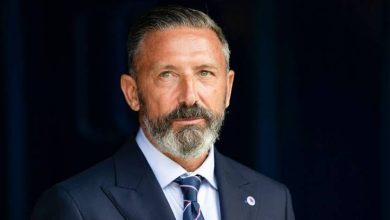
End Of An Era: Steve Clarke’s Resignation Closes The Most Successful And Most Bittersweet Chapter In Scotland’s Football History

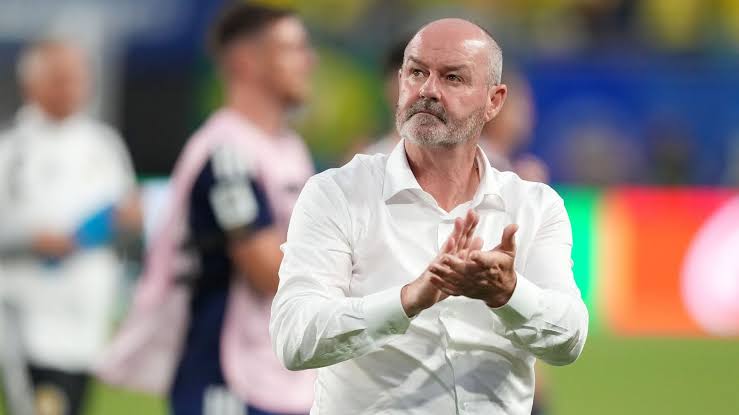
It ended the way it was always going to end — not with a knockout stage appearance, not with the historic first that this generation of Scottish players had worked so hard to achieve, but with a group stage exit and the quiet, dignified departure of the man who had given seven years of his life to putting Scotland back on the world football map.
Steve Clarke has stepped down as Scotland manager after their group stage elimination from the 2026 World Cup was confirmed on Saturday night. Scotland’s fate was sealed following Ghana’s defeat to Croatia, and confirmation of Clarke’s resignation came within an hour of that result. The timing was as swift as it was shocking — a manager who had signed a new four-year deal just weeks before the tournament, who was supposed to be leading Scotland into Euro 2028 on home soil and the 2030 World Cup, choosing to walk away in the immediate aftermath of an elimination that he clearly felt he could not recover from.
The 62-year-old — who had been at the helm for seven years — was the first men’s head coach to lead Scotland to three major finals. That achievement, remarkable in the context of Scotland’s long and painful absence from international football’s biggest stages, deserves to be properly honoured even in this moment of collective disappointment. But sport, ultimately, judges on results. And the results at tournaments — three group stage exits from three appearances — have left a complicated legacy that Scottish football will be debating for years to come.
The cruelest detail in the story of Steve Clarke’s departure is the contract that preceded it. Clarke signed a new contract with the Scottish Football Association right before the tournament — a deal that was set to take him through to 2030. But just 30 days after the announcement of the long-term contract, Clarke has resigned.
Think about that timeline for a moment. The Scottish FA — with full knowledge of the tournament that lay ahead, with a clear understanding of the risks involved in backing a manager going into a World Cup with a squad that had underperformed at two consecutive European Championships — chose to hand Clarke a four-year extension. That decision reflected institutional confidence in the manager, a belief that whatever happened in the United States, Clarke was the right man to take Scotland forward into the next cycle of major tournaments.
That plan is now in the shredder. Clarke looked at the group stage exit, looked at the new contract, looked at the road ahead — the Nations League campaign beginning in three months, the Euro 2028 qualifying campaign, the weight of hosting a major tournament on home soil — and decided that the right thing to do was to step aside. Whether that decision reflects a genuine belief that fresh energy is needed or simply an emotional response to the pain of elimination in the immediate aftermath, it is a decision that changes everything for Scottish football going forward.
To understand the weight of this moment, you need to understand what Scotland looked like when Steve Clarke took the job in May 2019. The national team was a byword for underachievement. Not just underachievement at tournaments — they had not been to a tournament for over two decades — but underachievement in the qualifying campaigns that determined whether they got there. Scotland had become accustomed to bottling it when it mattered most, to finding new and inventive ways to fall short in the games that defined their qualification fate.
He took over in May 2019, and fast-forward around 18 months, Scotland had qualified for a first major finals since 1998. The breakthrough came in a manner that no scriptwriter would dare invent. A Nations League play-off in Belgrade. Extra time. A penalty shootout. And then David Marshall flying to his right to save a Aleksandar Mitrović penalty that would have broken Scottish hearts. Instead, it broke Serbian ones, and Scotland were going to Euro 2020 — or Euro 2021, as it eventually became — for the first time since the 1998 World Cup in France.
The scenes that followed were extraordinary. Grown men weeping in the stands. Players collapsing on the pitch in disbelief and joy. A nation that had been starved of this moment for so long finally getting to experience what it felt like to qualify for a major tournament and count down the days until the first game.
Euro 2024 followed, proving the first qualification wasn’t a fluke. Then came the crown jewel — qualifying for the 2026 World Cup ended a drought stretching back to France 1998. In his farewell message, Clarke expressed gratitude to the players and supporters who had been part of the journey.
Who will ever forget Scott McTominay’s overhead kick or Kenny McLean from the halfway line? Those moments of qualifying magic — individual pieces of brilliance in high-pressure matches — became part of the fabric of modern Scottish football, shared endlessly on social media, celebrated by a fanbase that had spent decades searching for reasons to believe.
Clarke gave them those reasons. That is his greatest legacy, and no amount of group stage disappointment can take it away from him.
And yet. And yet the tournaments themselves — those three appearances that represent the summit of Clarke’s achievement in qualifying terms — have produced results that honest assessment cannot dress up as success.
Despite being the first head coach to take Scotland to three major finals, the Tartan Army have at times been divided on how Clarke performed during his seven years in charge.
The numbers at tournaments are stark. Only one win from those nine games. They’ve underwhelmed. The Tartan Army have certainly been delighted by being able to go to major tournaments, but it’s not worked out in the end.
Like Euro 2020 and Euro 2024, failure to negotiate the group stage has elicited stinging criticism from frustrated supporters who have watched just four goals in nine games in those finals, with the concession of 16.
Four goals scored. Sixteen conceded. One win. Three group stage exits. Those statistics represent the other side of Steve Clarke’s legacy — the side that his critics have pointed to repeatedly and that ultimately, it seems, weighed heavily enough on Clarke himself to make him decide that seven years was the right amount of time.
The 2026 World Cup followed a now-familiar pattern. Scotland defeated Haiti 1-0 in their opening fixture — that solitary win, breaking a 36-year drought — before losing 1-0 to Morocco and 3-0 to Brazil. Their final goal difference of minus-3 was enough to see them miss out on a spot in the final 32 as one of the best third-placed teams. The expanded tournament format, which allows eight third-placed teams to advance, gave Scotland hope that they clung to for several days after the Brazil defeat. But result after result in other groups went against them, and Opta already rated Scotland’s chances at just 0.07% before the Croatia vs Ghana game following surprise wins for South Africa and Ecuador.
The question that Scottish football will wrestle with in the coming months is whether Clarke’s tournament record reflects his limitations as a manager at the highest level, or whether it reflects the fundamental gap between what Scotland’s player pool can produce and what is required to compete and progress at a World Cup or European Championship. It is a genuinely difficult question, and the answer is probably some combination of both.
In his farewell open letter toorters — a document that combined genuine emotion with characteristic dignity — Clarke gave the clearest possible account of how he felt about his time in the job and what it had meant to him.
Clarke said: “When I was first approached by the Scottish FA about the position of head coach I was advised by many people to leave well alone as the job had become a poisoned chalice. In my head I was just the wee boy from Saltcoats who had done well in his chosen profession and my country wanted me to be their leader, at least in a football sense. I couldn’t find a reason to turn the approach down. My job remit was simple: qualify for a major tournament.”
He continued: “As I reflect on my seven years in the job my overriding emotion is pride, closely followed by satisfaction. In time I will be able to reflect on a tumultuous seven years, but one element that has given me the greatest satisfaction is witnessing the reconnection of our national team and our fans.”
That phrase — the reconnection of the national team and the fans — is perhaps the most honest and the most accurate description of Clarke’s true achievement. Before he took the job, the relationship between the Scotland national team and its supporters had become strained to the point of fracture. Years of underachievement, painful qualifying exits, and the sense that the national team had become an afterthought in the lives of Scottish football supporters had created a disconnection that went deeper than simply poor results.
Clarke healed that. Not through radical tactical innovation or through discovering a generation of world-class talent that had been hiding in the Scottish game. He healed it through sheer consistency, through hard work, through demanding more of his players than previous managers had dared to demand, and through delivering the one thing that Scottish football supporters had been missing for over two decades — the chance to follow their national team at a major tournament.
Clarke stated in his open letter: “The most emotional part of this goodbye is for my players, without whom we wouldn’t have had any of the memories that we’ve accumulated from 2019 until now. They deserve all the praise and adulation that they receive and it was truly an honour to be called their Gaffer. Thanks for having me and good luck to my successor.”
Scottish FA Chief Executive Ian Maxwell added: “While we are all disappointed to have exited the World Cup at the group stage, we must not lose sight of the undeniable progress made during Steve’s seven years in charge. From starting as a pot four team in 2019 to topping our World Cup qualifying group, he has more than delivered on the remit to take Scotland back to a major tournament.”
Maxwell added: “We thank Steve for his record-breaking contribution and know that when the disappointment of World Cup elimination subsides, the Scotland supporters will be thankful for the memories of marching with pride at major tournaments once again. Finally, on behalf of the board of the Scottish FA I would like to make special mention to our incredible supporters. The many thousands who have travelled to the United States to celebrate the return to a World Cup — making a significant financial commitment to do so — have once again shown themselves to be exceptional ambassadors for our country and our national game.”
Those words about the supporters deserve to stand alone for a moment, because the Tartan Army’s contribution to this World Cup — and to Clarke’s entire tenure — has been extraordinary. They filled stadiums across the United States with colour, noise, and the kind of warmth that made headlines around the world. They marched through Boston with bagpipes. They embraced American host cities with a generosity of spirit that reminded everyone who encountered them why the Tartan Army is consistently regarded as the best travelling support in world football.
They deserved better results. They always do. But they never stopped believing, never stopped following, never stopped turning up in their thousands to support a team that was asking them to be patient and faithful through a process that has ultimately delivered less than it promised at tournament level.
Whoever replaces Clarke will find themselves in action in around three months, when attention turns to their Nations League campaign. That timeline is brutally tight for a Scottish FA that now needs to identify, approach, negotiate with, and appoint a new head coach while simultaneously ensuring that the existing squad is properly prepared for competitive football in the autumn. The four-year contract that Clarke signed and immediately vacated will presumably be offered, in some form, to his successor — but the identity of that successor is genuinely unclear at this stage.
—
**What Clarke’s Legacy Actually Means**
Scottish football will spend months, perhaps years, debating Steve Clarke’s legacy. The debate will be real and it will be passionate, because it touches on questions that go to the heart of what Scottish football supporters want and expect from their national team.
He will be remembered as the Scotland manager who got Scotland back to major tournaments in Euro 2020, Euro 2024 and the World Cup in 2026. A lot of great moments in terms of qualifying, but ultimately not here at the tournament.
That summary is honest, fair, and incomplete all at once. It captures the factual record but misses the emotional reality of what Clarke gave to Scottish football supporters — the feeling, absent for so long before his arrival, that the national team was worth following, worth caring about, worth getting excited about. That feeling has value that does not appear in any statistics sheet.
Four of the players who started with Steve Clarke in May 2019 started against Brazil — Scott McKenna, Andy Robertson, Kenny McLean and John McGinn. It’s been a long journey. A journey that has produced memories, moments, and a reconnection between a nation and its football team that should not be undervalued simply because the tournament results did not match the qualifying heroics.
Clarke came in as the wee boy from Saltcoats who had done well in his chosen profession. He leaves as the most successful manager in Scotland’s football history — more major tournaments than anyone before him, more caps managed than any predecessor, and a legacy that is genuinely complicated in the best possible way.
The door he opened — to major tournaments, to the belief that Scotland belong on the world stage — must now be kept open by whoever follows him. That, more than any individual result or tournament record, is the true measure of what Steve Clarke achieved.
Scotland go again. The journey continues. And somewhere in the United States, as the Tartan Army begins the long journey home, there will be moments of sadness, of pride, and of genuine gratitude for a manager who gave his country back something it had lost for twenty-two years.