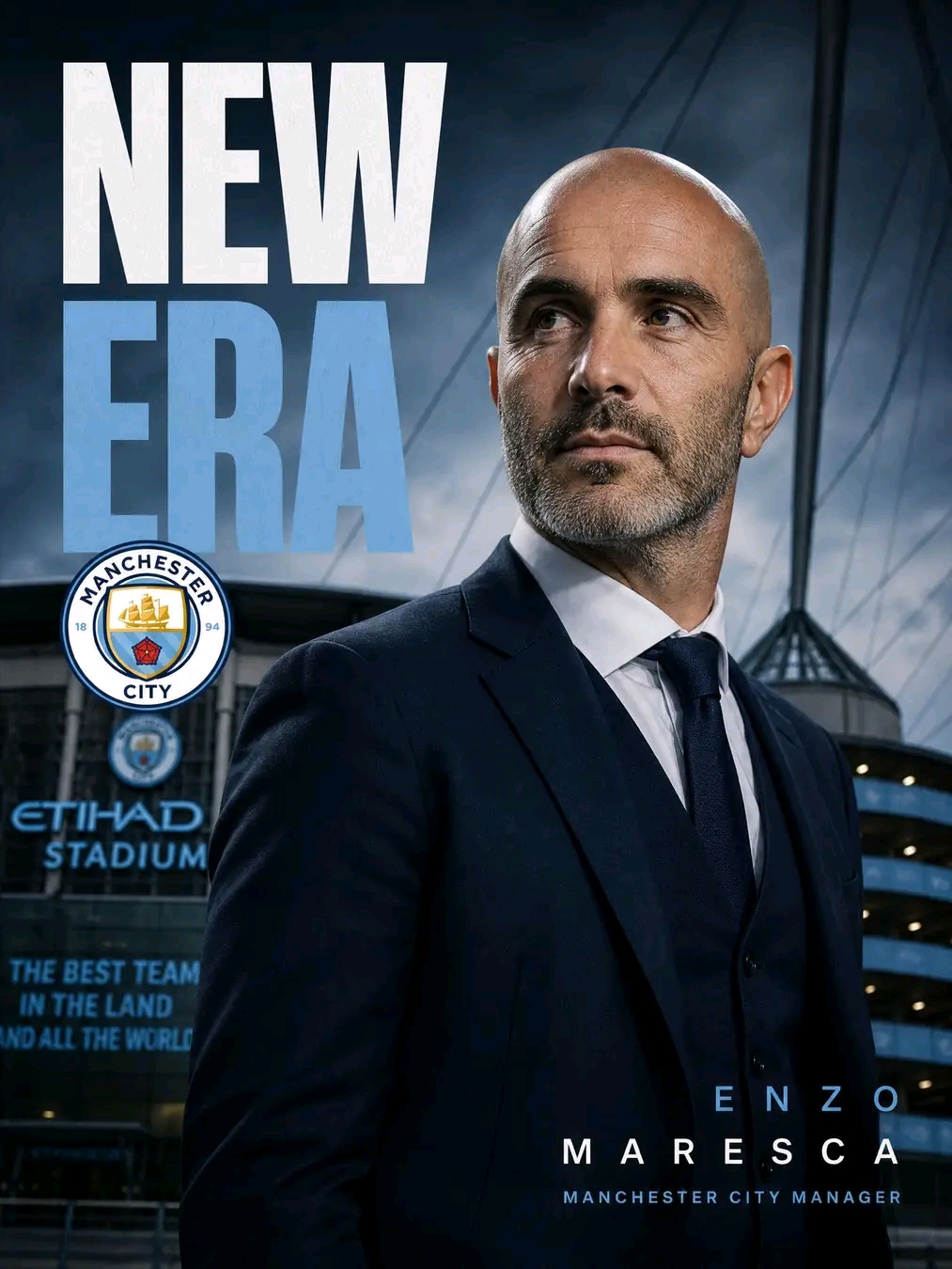
Enzo Maresca is reportedly set to take over as Manchester City manager following Pep Guardiola’s shock decision to step down

The atmosphere at the Etihad Stadium could be felt long before kick-off. This was not just another FA Cup quarter-final. This was a clash of two modern giants, two tactical rivals, and two clubs with history, pride, and silverware on their minds. Manchester City against Liverpool always brings tension, but this one had an extra layer of pressure, drama, and expectation.
For Arne Slot and his Liverpool side, the mission was clear. They arrived in Manchester chasing yet another step toward what could be a historic season. Confidence was high. The squad had been playing with rhythm, energy, and belief. Mohamed Salah was in dangerous form, leading the attack with his usual sharp movement and hunger for goals. Around him, Liverpool looked organised, aggressive, and ready to challenge one of the toughest stadiums in world football.
Manchester City, however, had their own plans.
Pep Guardiola’s team came into the match fully aware of what was at stake. The FA Cup had become one of their key targets for the season, and playing at home gave them an advantage they were determined to use. With Erling Haaland leading the line, City always had the threat of instant punishment waiting for any defensive mistake.
From the first whistle, Liverpool looked fearless.
They pressed high, moved the ball quickly, and tried to take control of possession. For the opening minutes, it even looked like Slot’s side were the more comfortable team. The midfield worked hard to close spaces, while the full-backs pushed forward to stretch City’s defensive shape.
Salah was everywhere.
Every time Liverpool moved forward, he was involved. A quick touch here, a clever run there, a sudden burst of speed that forced City’s defenders to stay alert. The travelling Liverpool fans could feel something building. There was confidence in the stands, belief that this could be another big European-style away performance.
But football has a way of changing in an instant.
And that moment arrived just before the 40-minute mark.
City launched a fast attack into Liverpool’s defensive third. The ball was played into space, tension rose, and suddenly Virgil van Dijk moved across to make a sliding challenge inside the box. It was fast, it was tight, and it was the kind of moment that splits opinion instantly.
For some, it was a clean attempt to stop danger.
For others, it was just enough contact to justify a penalty.
Referee Michael Oliver did not hesitate.
His whistle blew, his arm pointed to the spot, and the entire stadium erupted in noise. City players celebrated immediately. Liverpool players surrounded the referee in frustration. Van Dijk stood up slowly, looking confused and frustrated at the decision.
The replay would later show exactly why the debate would explode.
It was not a clear, obvious foul. It was not violent. It was not reckless. But it was enough for Oliver, and that was all that mattered in that moment.
VAR checked the incident quickly, but the decision stood.
And then came the man everyone expected.
Erling Haaland stepped forward.
The pressure was enormous, but the Norwegian striker showed no emotion. No hesitation. No nerves. Just focus. He placed the ball carefully, took a short run-up, and struck it with power and precision.
The ball flew past the goalkeeper.
1-0 Manchester City.
The Etihad exploded.
City fans celebrated wildly as Haaland ran toward the corner flag with his usual calm celebration. Liverpool players stood still for a moment, absorbing the blow. One decision, one moment, had completely changed the direction of the match.
For Arne Slot on the touchline, the frustration was visible.
He crouched down, hands on his knees, staring at the pitch with a mix of disbelief and anger. The Dutch manager had seen his team start well, control periods of the match, and show real structure. But now they were behind, and the emotional swing was huge.
He quickly turned to his bench, shouting instructions, trying to keep his players focused.
“We stay calm. The game is not finished,” he reportedly told his staff, trying to steady the mood.
But inside, Liverpool were clearly shaken.
This was not the first time they had felt unhappy with decisions at the Etihad. The sense of déjà vu was growing. Fans online immediately began reacting, calling the penalty soft, questionable, and another example of fine margins going against them in big games.
Social media exploded instantly.
Some fans said it was never a penalty. Others blamed VAR. Some questioned the consistency of refereeing in matches involving these two sides.
But opinions aside, the scoreboard did not change.
Manchester City led 1-0.
Liverpool needed a response.
The first half continued with intensity. City began to grow into the game, controlling possession more confidently after the goal. Rodri dictated tempo in midfield, slowing Liverpool’s pressing rhythm and forcing them to chase the ball more than they wanted.
Liverpool, however, did not disappear.
Salah continued to look dangerous every time he touched the ball. One sharp run behind the City defence nearly created an equaliser, but the final pass just lacked precision. There were moments when Liverpool looked ready to strike back immediately, but City’s defensive organisation held firm.
Every tackle, every interception, every clearance felt important.
The game had turned into a tactical battle.
City wanted control and patience.
Liverpool wanted chaos and speed.
And in the middle of it all stood a single goal that separated them.
On the bench, Liverpool’s options were becoming more and more important. Alexander Isak, returning from injury, was ready if needed. His presence gave Liverpool hope of a different attacking threat. More physicality. More movement in the box. Something unpredictable.
Even Alisson, still recovering fitness, was reportedly pushing to return sooner than expected in general squad discussions, showing how much urgency surrounded the club’s season.
But for now, Slot had to rely on what was on the pitch.
And that meant Salah.
The Egyptian forward remained Liverpool’s biggest threat. Every time he got the ball, something dangerous felt possible. City defenders doubled up on him, aware that one mistake could change everything. His movement between the lines kept Liverpool alive in the game.
Despite being behind, Liverpool’s belief was not gone.
Fans inside the stadium continued singing. The away section never stopped. They had seen comebacks before. They had seen chaos before. And they believed this was another night where something special could happen.
At half-time, the match remained finely balanced.
Manchester City had the lead, but not full control. Liverpool had moments, but not the final touch. The penalty was still the main talking point, dominating every discussion around the game.
The second half promised more intensity.
Much more.
Inside the Liverpool dressing room, the message was simple. Stay aggressive. Stay focused. Don’t let frustration take over. One goal changes everything.
For City, the message was control. Keep possession. Slow the game down. Force Liverpool to chase. Wait for the next chance.
As players prepared to return to the pitch, tension filled the stadium again.
Because everyone knew one thing.
This match was far from over.
One goal for Liverpool would change the entire atmosphere. One mistake from City could bring the game level. One moment of brilliance from Salah, Isak, or Haaland could define the season.
The FA Cup quarter-final was no longer just a match.
It had become a battle of belief, pressure, emotion, and controversy.
And as the second half approached, the question remained hanging in the air:
Would Manchester City protect their lead, or would Liverpool turn anger into another famous comeback?
Either way, more drama was coming.
And everyone knew it.