Europa League 26/27 playoff draw: TV and streaming details plus Rangers potential opponents

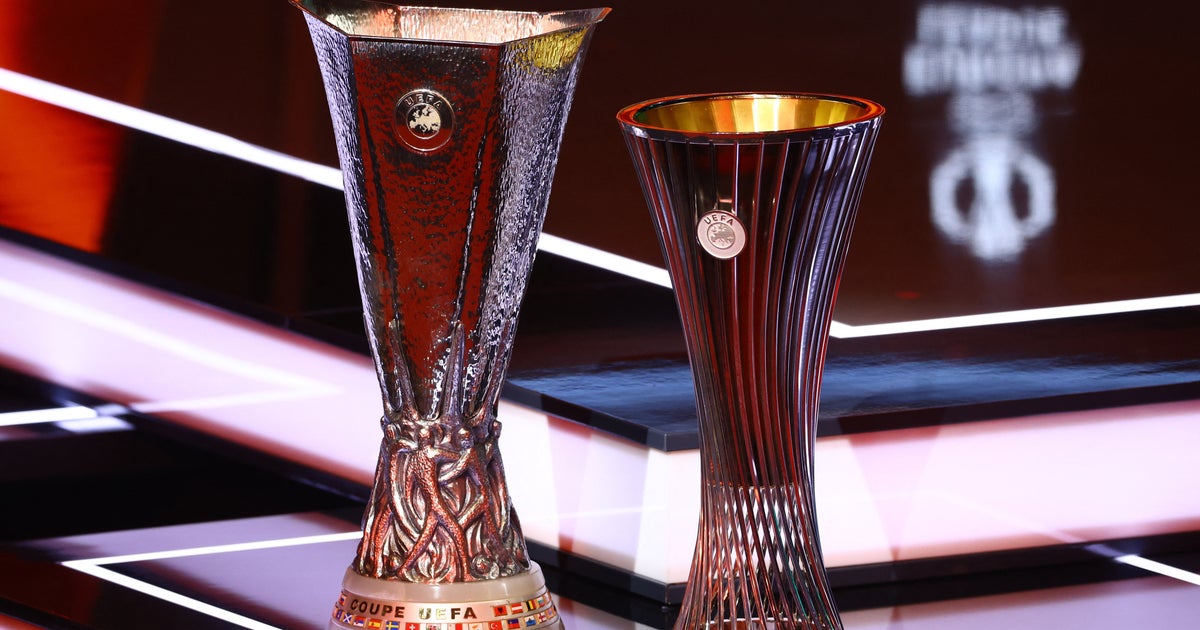
Rangers supporters are about to get their first proper glimpse of what the road back to the Europa League League Phase could look like, with the draw for the competition’s playoff round set to take place early next week and offering up a genuinely fascinating spread of potential opponents from right across the continent. Before any of that can matter, however, Derek McInnes’s side must first navigate a demanding third qualifying round tie against Jagiellonia Bialystok, a fixture that stands as the immediate obstacle between Rangers and a place in the playoff draw that will determine the identity of their next possible European assignment.
The scale of the prize on offer should not be understated. Rangers reached the final of the Europa League as recently as four years ago, a run that remains one of the most cherished modern chapters in the club’s storied European history, and there remains a genuine appetite among the support to see the club return to regular continental football at that level rather than being consigned to the Conference League, UEFA’s third-tier competition. Progress in the coming weeks would represent a significant step towards restoring that sense of European relevance, and with the playoff draw edging closer, attention is understandably turning towards exactly who Rangers might be paired with should they successfully navigate their way past the Polish champions.
Before getting to the specifics of potential opponents, it is worth setting out clearly the path Rangers must first complete. Having been drawn against Jagiellonia Bialystok in the third qualifying round, Rangers will travel to Poland for the first leg of that tie on August 6, taking on their opponents at the Bialystok City Stadium in what promises to be a difficult and unfamiliar away assignment against a side who won their domestic title last season. A week later, Rangers will host the return leg at Ibrox, with the aggregate score across the two matches determining who progresses. Should Rangers come through that tie successfully, they will move into the playoff round, sitting just one further two-legged contest away from securing a place in the Europa League’s revamped League Phase, the format that has replaced the traditional group stage in UEFA’s second-tier continental competition.
Crucially, for a support understandably nervous about the prospect of missing out on European football altogether, defeat against Jagiellonia would not spell the end of Rangers’ continental ambitions this season. Should the Polish side prevail over the two legs, Rangers would not simply exit Europe entirely but would instead drop down into the Conference League playoff round, giving the club a second route back into continental competition, albeit at a lower level than the Europa League itself. That safety-net structure, built into UEFA’s qualifying pathways in recent years, ensures that a single difficult tie does not necessarily end a club’s European campaign outright, offering some reassurance to supporters even as they hope fervently that such a scenario does not become necessary.
Turning to the playoff draw itself, the process is scheduled to take place on Monday, August 3, at UEFA’s headquarters in Nyon, Switzerland, the picturesque lakeside Swiss town that regularly plays host to European football’s major draws and administrative gatherings. UEFA has confirmed that full details of the seedings, any groupings, and the specific procedure that will govern the draw will be published on their official website from 7:30am UK time on the morning of the draw itself, giving supporters and journalists alike the chance to study the full picture before the draw gets underway. The draw proper is set to begin at midday UK time.
For those hoping to follow proceedings live, it is worth noting that the draw will not be broadcast on traditional television, a detail that may catch some supporters off guard given the significance of the outcome for Rangers’ European prospects. Instead, coverage will be available exclusively via streaming, with UEFA making the draw accessible both through their official website and via their YouTube channel, ensuring that anyone with an internet connection will still be able to watch the process unfold in real time regardless of the lack of a conventional broadcast option.
As for exactly who Rangers might face, the situation remains genuinely open at this stage, reflecting the nature of the playoff round draw, which will pool together the various unseeded teams and pairings who have progressed through, or are still contesting, their own third qualifying round ties. Because several of the potential opponents listed are themselves still involved in two-legged qualifying contests of their own, UEFA will need to wait until those outcomes are confirmed before finalising the full pool of playoff round participants, at which point the field will be narrowed down into smaller sub-groups ahead of Monday’s draw. As things stand, Rangers could realistically be paired with any of the following sides, either directly or as the winner of a still-to-be-decided qualifying tie: Sint-Truiden, Trabzonspor, Lillestrom, OFI Crete, the winner of Hapoel Be’er Sheva versus Crvena zvezda, the winner of Knattspyrnufélagið Vikingur versus FC Thun, the winner of Larne versus Iberia 1999, the winner of Levski Sofia versus Kairat Almaty, the winner of Ararat Armenia versus Celje, the winner of Sabah versus AGF Aarhus, the winner of Kauno Zalgiris versus Dinamo Zagreb, and the winner of Mjallby versus Slovan Bratislava.
It is a genuinely varied list, spanning clubs from Belgium, Turkey, Norway, Greece, Israel, Serbia, Iceland, Switzerland, Northern Ireland, Georgia, Bulgaria, Kazakhstan, Armenia, Slovenia, Azerbaijan, Denmark, Lithuania, Croatia, Sweden and Slovakia, underlining just how broad UEFA’s qualifying pathways have become in the modern era of European football. For Rangers supporters trying to assess the relative difficulty of each potential draw, there is plenty to consider across that spread of possible opponents, with clubs offering vastly different profiles in terms of European pedigree, domestic strength, and the kind of tactical and physical challenges they might pose.
Trabzonspor stand out immediately as one of the more eye-catching names on that list, representing Turkish football’s storied Black Sea giants and a club with a rich history of domestic success, even if recent seasons have seen them fall behind Istanbul’s traditional powerhouses in the race for the Turkish Super Lig title. A tie against Trabzonspor would guarantee Rangers a passionate atmosphere and a physically demanding contest, with Turkish football long renowned for producing some of the most intense European away days available in the continental qualifying rounds.
Dinamo Zagreb, potentially awaiting Rangers via their tie against Kauno Zalgiris, would offer a familiar and topical link given the club’s connection to the ongoing Scott McKenna transfer speculation that has dominated headlines around Ibrox in recent days. Zagreb remain one of the more consistently strong sides to emerge from the Croatian league in the modern era, regularly competing in European group and league phase football and possessing the kind of squad depth and continental experience that would represent a stern test for any side navigating the qualifying rounds. A tie against the Croatian champions would carry an obvious subplot given McKenna’s presence in their ranks, adding an extra layer of intrigue to what would already be a testing European assignment on its own footballing merits.
Crvena zvezda, more commonly known to British audiences as Red Star Belgrade, represents perhaps the most instantly recognisable name among the various potential pairings, given the Serbian club’s status as one of the most storied and successful sides in the history of Eastern European football, including their triumph in the European Cup back in 1991. Even accounting for the fact that Red Star would first need to overcome Hapoel Be’er Sheva to reach the playoff round, the prospect of facing such a historically significant club, with its fervent supporter base and reputation for producing hostile European away atmospheres, would represent one of the more daunting potential draws on the list from an occasion and intensity standpoint, regardless of the Serbian side’s current league standing.
Levski Sofia, one half of another still-to-be-decided pairing alongside Kairat Almaty, brings its own significant European pedigree to the table as one of Bulgarian football’s most successful and widely supported clubs, with a European history stretching back decades and including notable runs in continental competition during eras when Bulgarian football commanded considerably greater respect on the wider European stage than it perhaps does today. Kairat Almaty, meanwhile, represent Kazakhstan’s growing football ambitions, a country whose leading clubs have increasingly sought to make their mark in UEFA’s qualifying competitions in recent years as the domestic game continues to develop and attract greater investment.
Slovan Bratislava, potentially awaiting Rangers via their tie against Swedish side Mjallby, offer another name with genuine European pedigree, having represented Slovakia regularly in continental competition and having built a reputation as one of the more difficult away trips available among the Central European qualifying pool, aided by passionate home support and a squad generally well-versed in the demands of European qualifying football.
Elsewhere on the list, sides such as Sint-Truiden of Belgium, Lillestrom of Norway, OFI Crete of Greece, and AGF Aarhus of Denmark represent more modest but nonetheless competitive domestic outfits, the kind of opponents who would likely enter any tie against Rangers as clear underdogs on paper but who could still pose awkward, unfamiliar tactical challenges given the general unpredictability that so often characterises European qualifying football, where unfancied sides regularly spring surprises against supposedly stronger opposition unfamiliar with their specific style of play. Larne, representing Northern Ireland, would offer a rare all-British qualifying tie should that particular pairing prevail and be drawn against Rangers, a scenario that would likely generate significant additional interest and travelling support given the relative proximity and shared footballing culture between Scottish and Northern Irish football.
For Derek McInnes, the precise identity of Rangers’ eventual playoff opponent, whoever that may turn out to be, remains a secondary concern for now compared to the far more pressing task of ensuring his side navigate their way past Jagiellonia Bialystok in the first place. The Polish champions represent a side who will arrive at both legs with genuine confidence, having won their domestic title last season and having already demonstrated the quality required to compete at a reasonably high European level. McInnes will be acutely conscious of the dangers of looking beyond that tie, however tempting it might be for supporters to begin speculating about potential playoff opponents, given the qualifying rounds’ well-established reputation for punishing sides who fail to give their immediate opponent the full respect and preparation such ties demand.
There is also a broader strategic dimension for Rangers to consider as they balance their European qualifying commitments against an already congested domestic and cup calendar. With the Scottish Premiership season already underway following the opening-day draw against Dundee United, and further league fixtures continuing to arrive on a weekly basis alongside the two-legged Jagiellonia tie, McInnes and his coaching staff will need to carefully manage player fitness, rotation and recovery across what promises to be an unusually demanding opening stretch of the campaign. Losing key players to injury, as Rangers already experienced with Ben Godfrey’s fitness scare during the Dundee United match, only adds further complexity to that balancing act, underlining just how important strength in depth across the squad will prove to be as the club attempts to juggle its various competitive commitments in the weeks ahead.
Should Rangers successfully navigate the Jagiellonia tie and progress into the playoff round proper, the two-legged format that awaits will once again demand the kind of composure, tactical discipline and squad management that has characterised the most successful periods of Rangers’ recent European history. The club’s run to the Europa League final in 2022 remains the standard against which more recent European campaigns continue to be measured, and while replicating that achievement so soon into a new manager’s tenure would represent an extraordinarily tall order, simply securing passage into the League Phase itself would go a long way towards restoring a sense of stability and momentum to the club’s continental ambitions after a period of more mixed European fortunes in the seasons since that famous run to Seville.
It is also worth stepping back to consider how UEFA’s qualifying pathway system actually works for a club in Rangers’ position, given how often the various rounds and terminology can cause confusion among supporters less familiar with the intricacies of the competition’s structure. Clubs entering the Europa League at the third qualifying round stage, as Rangers have done this season based on their coefficient ranking and domestic finishing position, are essentially two full rounds away from directly entering the League Phase without needing to pass through the playoff round at all. Progress past Jagiellonia in the third qualifying round earns Rangers passage into the playoff round itself, and it is only by winning that subsequent two-legged tie that a club secures its place among the 36 sides competing in the newly formatted League Phase, the system that replaced the old group stage format a couple of seasons ago and which sees every participating club play a set number of fixtures against different opponents drawn from a single unified table, rather than being split into smaller groups of four as was previously the case.
That League Phase format has generally been well received since its introduction, offering fans a greater variety of opponents across the course of a single campaign and reducing the sense of repetition that sometimes characterised the old group stage structure, where the same four clubs would meet home and away across six fixtures. For a club like Rangers, successfully reaching that stage would mean a minimum guarantee of continental football stretching well into the winter months, offering both the prestige and the financial benefits that come with regular European competition, benefits that extend well beyond the football club itself and into the broader matchday economy surrounding Ibrox on European nights.
The financial dimension of qualifying for the League Phase should not be understated either. UEFA’s revised distribution model for the Europa League continues to reward clubs handsomely simply for participation, with additional prize money available for match wins, draws, and progression through the various knockout stages that follow the League Phase itself. For a club competing in a domestic league with considerably smaller broadcast revenues than the major European powerhouses, that additional European income can make a meaningful difference to a club’s overall budget, potentially feeding directly into the kind of transfer market activity and squad investment that supporters have already seen plenty of evidence of during Rangers’ busy summer rebuild under Derek McInnes. Missing out on the League Phase and instead dropping into the Conference League, while still valuable in its own right, would represent a considerably smaller financial windfall by comparison, adding further context to just how significant these coming weeks are for Rangers both on and off the pitch.
There is also a reputational dimension worth considering, particularly given how closely UEFA’s coefficient system ties a club’s future seeding and qualifying pathway to its performance in continental competition over a rolling multi-year period. Strong results in this season’s Europa League campaign, should Rangers make it that far, would help bolster the club’s coefficient standing heading into future European campaigns, potentially easing the path through qualifying rounds in years to come and improving Rangers’ seeding position in subsequent draws. Conversely, a disappointing European campaign, or worse, an early exit at the qualifying stage entirely, would have the opposite effect, making future qualification pathways correspondingly more difficult. That longer-term strategic consideration adds an additional layer of importance to the Jagiellonia tie and whatever playoff assignment might follow it, beyond simply the immediate prestige and financial rewards on offer this season alone.
Rangers supporters planning their own travel arrangements will also want to keep a close eye on developments around the playoff draw, given the relatively tight turnaround between the conclusion of the Jagiellonia tie and the scheduling of any subsequent playoff fixtures. European qualifying rounds typically operate on compressed timelines to ensure the League Phase itself can begin on schedule in the early autumn, meaning that any club progressing through the playoff round would likely find itself organising away travel again within a matter of weeks of the Jagiellonia second leg at Ibrox. That logistical reality is worth bearing in mind for supporters weighing up whether to commit to travel plans for a potential playoff away leg before the identity of that opponent, let alone the outcome of the Jagiellonia tie itself, has even been confirmed.
For neutral observers and rival Scottish clubs, Rangers’ progress in Europe also carries broader implications for Scotland’s overall coefficient standing within UEFA’s rankings, a metric that determines how many clubs from the Scottish Premiership qualify for European competition in future seasons and at what stage of the qualifying process they enter. Strong runs from Rangers, alongside continued involvement from Celtic and any other Scottish representatives across UEFA’s various competitions, all contribute towards protecting and potentially improving Scotland’s collective standing, something that benefits the wider Scottish football pyramid even beyond the immediate fortunes of the clubs directly involved in European competition themselves.
For now, though, all eyes remain fixed on the immediate task at hand. Rangers’ European fate for the coming weeks rests first and foremost on their ability to overcome Jagiellonia Bialystok across the two legs of their third qualifying round tie, with the first leg in Poland arriving on August 6 followed by the decisive second leg at Ibrox a week later. Only once that tie has been settled will the true picture of Rangers’ path back to the Europa League League Phase begin to take shape, with Monday’s playoff draw offering an early indication of the range of possible opponents waiting in the wings, but ultimately meaning little until Rangers have done the hard work required to earn their place in that draw’s pool of contestants in the first place.
Supporters eager to follow Monday’s draw as it happens will need to head to UEFA’s official website or their YouTube channel from midday UK time, with full seeding and procedural information available online from earlier that morning. Whatever combination of names emerges from Nyon, one thing remains clear: Rangers’ immediate focus must stay locked on Jagiellonia Bialystok, with the wider European picture only truly coming into view once that all-important qualifying tie has been successfully negotiated.