Inside Rangers’ Winger Hunt: Markelo Talks, Cerny Interest And The Squeeze On Ibrox’s Wide Options

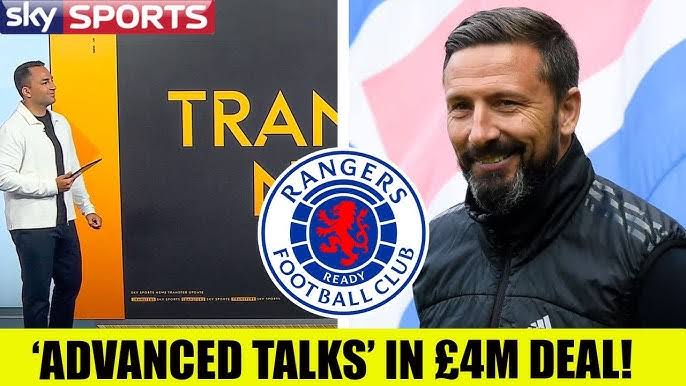
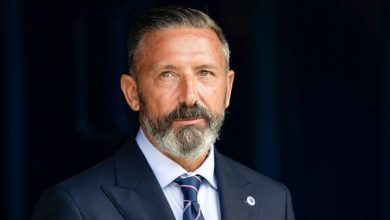
Rangers’ pursuit of fresh attacking width has moved into a genuinely active phase, with reports from Football Insider confirming that talks between Ibrox chiefs and Coventry City over a potential deal for winger Jahnoah Markelo are ongoing, while further reporting has shed light on the broader picture of just how stretched Derek McInnes’s options out wide have become as the summer transfer window edges towards its conclusion. What emerges is a picture of a recruitment department working on multiple fronts simultaneously, weighing up realistic, achievable targets against more ambitious pursuits, all against the backdrop of a squad that currently has precious few recognised wide players available to call upon.
According to sources who spoke to Football Insider’s Transfer Correspondent Pete O’Rourke, discussions between Rangers and Coventry over Markelo have been progressing, with the two clubs continuing talks in an effort to thrash out terms for a deal that both sides appear motivated to complete. O’Rourke, speaking on the outlet’s Transfer Insider podcast, described a genuine sense of optimism from within Ibrox that an agreement could be reached, characterising the negotiations as ongoing rather than stalled, with Rangers understood to believe there is a workable deal to be found between the two clubs before the window shuts. That assessment reflects the broader context of a summer that has already proven busy and productive for Rangers, with the club having completed a string of additions across multiple positions as McInnes continues to reshape the squad in his own image following his appointment as Ibrox boss.
Markelo’s situation at Coventry has been a well-documented one in recent weeks. The 23-year-old Suriname international arrived at the CBS Arena back in January, joining from Swiss side FC Zurich in a deal reported to be worth around £4.3 million, a move that represented a significant step up in level for a player who had impressed considerably during his time in Switzerland. Unfortunately for Markelo, that step up has not yet translated into meaningful first-team opportunities under Frank Lampard, with the winger managing only a handful of appearances since his arrival, largely restricted to substitute cameos rather than sustained involvement in Coventry’s starting eleven. Part of that difficulty stemmed from the timing of his move, arriving midway through a Championship campaign in which Coventry were performing strongly and Lampard, understandably reluctant to disrupt a settled and successful side, opted to stick with the players who had already earned his trust through the first half of the season.
That reluctance to disrupt a winning formula may have been entirely justified from Coventry’s perspective at the time, but it has left Markelo very much on the periphery of first-team plans, and with the Sky Blues having since secured promotion to the Premier League, the prospect of regular football at English football’s top table now appears even more distant for the young winger. Coventry’s summer recruitment has only compounded that difficulty, with the club investing heavily in strengthening their squad for the rigours of Premier League survival, including a club-record move for forward Loum Tchaouna from Burnley and further significant outlays on other new arrivals across the pitch. Facing an increasingly crowded and competitive squad, and with Lampard’s priorities firmly fixed on assembling a group capable of avoiding an immediate return to the Championship, Markelo’s path to regular minutes at Coventry looks set to remain narrow at best.
It is precisely that combination of circumstances, a talented young player squeezed out of first-team contention through no particular fault of his own, that has made him such an attractive target for Rangers this summer. O’Rourke’s reporting indicated that Football Insider had first flagged McInnes’s determination to prioritise a new winger as far back as June, well before the current round of talks with Coventry began in earnest, underlining that this has been a long-standing item on the Rangers manager’s shopping list rather than a hastily arranged, late-window addition to his priorities. Markelo has since emerged as the leading contender to fill that particular gap, with Rangers understood to have been monitoring his situation closely for some time before formal talks with Coventry got underway.
The urgency behind that pursuit becomes considerably easier to understand once the current state of Rangers’ wide options is properly examined. As things stand, Derek McInnes has only two recognised wide players readily available to him in Djeidi Gassama and Findlay Curtis, a strikingly thin collection of options for a club with genuine ambitions of competing on multiple fronts this season. Compounding that scarcity further is the expectation that Ross McCausland, previously considered part of Rangers’ wide attacking options, is likely to depart Ibrox before the transfer window closes, a development that would leave McInnes with an even more threadbare group of specialist wide players to call upon across a demanding campaign that will include Scottish Premiership commitments, domestic cup competition, and continued involvement in European qualifying football against Jagiellonia Bialystok.
Given that context, it is little surprise that Rangers have been exploring more than one avenue to address the shortfall. Alongside the pursuit of Markelo, Football Insider had previously revealed on 17 July that Rangers had expressed genuine interest in re-signing Vaclav Cerny, the winger who spent the 2024-25 season on loan at Ibrox and left a strong enough impression during that spell to be fondly remembered by supporters and coaching staff alike. Cerny’s loan stint at Rangers saw him establish himself as a popular and effective performer in the final third, and it is that combination of proven quality and existing familiarity with the club that has kept his name firmly on Ibrox’s radar even after his move to Turkish side Besiktas following the conclusion of his loan spell.
However, the reality of pursuing a permanent return for Cerny has proven considerably more complicated than simply rekindling interest from a player who enjoyed his time at the club. Besiktas, having only signed Cerny on a permanent basis a year ago, are understood to be demanding a significant fee to sanction his departure, a stance that reflects the Turkish club’s own recent investment in the player rather than any willingness to help facilitate a discounted return to Scotland. That financial reality has left Rangers in a difficult position. While there remains a clear appetite at Ibrox to get a deal for Cerny done, with the winger still highly regarded by those inside the club, sources have indicated that Rangers are only prepared to move for him at the right price, and Besiktas’s current valuation appears to have placed that price well beyond what the Ibrox club consider reasonable or achievable within their current transfer budget. As things stand, that gap between Besiktas’s demands and Rangers’ willingness to pay looks to have taken any realistic prospect of a Cerny reunion off the table, at least for the time being.
That setback on the Cerny front only adds further weight to the importance of Rangers successfully completing a deal for Markelo, given the increasingly narrow list of viable alternatives available to McInnes as the summer window edges towards its conclusion. With Gassama and Curtis representing the only currently available specialist wide options, and with McCausland’s departure expected to shrink that pool even further, the pressure on Rangers’ recruitment team to land at least one further addition in a wide position has rarely felt more pronounced. Missing out on both Cerny and Markelo would leave Rangers dangerously short of recognised width heading into a season that demands squad depth across every position, particularly given the physical toll that competing on multiple fronts, including European qualifying football, is likely to take across the coming months.
It is worth reflecting too on the broader profile Markelo would bring to the Rangers squad were a deal to be completed. Having progressed through the Ajax academy system before later development spells at Twente, Go Ahead Eagles, Kustošija in Croatia, and Celje in Slovenia, Markelo arrives with a genuinely varied footballing education spanning several different countries and playing styles. His subsequent breakthrough at FC Zurich, which ultimately earned him his move to English football, demonstrated a player capable of adapting successfully to new environments and different tactical demands, an attribute that would likely serve him well in adjusting to the physical and competitive demands of Scottish Premiership football should he complete a move to Ibrox. Known for his willingness to isolate full-backs in one-on-one situations and his explosive pace in behind defensive lines, Markelo represents exactly the kind of direct, unpredictable attacking threat that McInnes has been searching for as he looks to add greater variety and cutting edge to a Rangers side that struggled for fluency in the final third during the club’s opening-day draw against Dundee United.
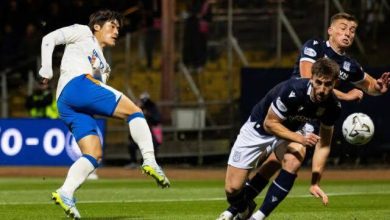
That opening weekend result has only added further context to the urgency surrounding Rangers’ search for attacking reinforcements. A 1-1 draw away at newly promoted Dundee United was hardly the emphatic start McInnes would have wanted in his first competitive fixture in charge, and while the contentious penalty shout involving Mohamed Diomande dominated much of the post-match discussion, there was also a broader recognition among analysts and supporters that Rangers had struggled to create clear-cut chances against a well-organised home defence. A specialist winger capable of stretching play and creating genuine one-on-one opportunities, exactly the kind of profile Markelo is understood to offer, would represent a meaningful upgrade to Rangers’ attacking toolkit heading into what remains a long and demanding season.
The timing pressures facing Rangers’ recruitment team extend beyond simply the domestic transfer deadline too. With the crucial Europa League qualifying tie against Jagiellonia Bialystok fast approaching, any new signing would ideally need time to integrate into the squad and build understanding with teammates before being thrown into such a high-stakes continental assignment. That practical consideration adds further urgency to completing the Markelo deal, or securing an alternative solution, sooner rather than later, allowing whichever player eventually arrives the best possible chance of making a meaningful early impact rather than needing to be gradually eased into contention over a period of weeks that Rangers, given their congested fixture schedule, can scarcely afford to spare.
It is worth taking a moment to properly examine the situation surrounding Ross McCausland, given how significantly his expected exit factors into the broader picture of Rangers’ thinning wide options this summer. McCausland has been a regular fixture around the first-team squad in recent seasons, having progressed through the club’s youth ranks and earned senior opportunities under previous management regimes. His development pathway has been closely watched by supporters keen to see homegrown talent break through into the Ibrox first team, and his impending departure, while perhaps not entirely unexpected given the club’s broader summer transfer activity, nonetheless represents a further reduction in the pool of players McInnes can call upon in wide areas. Whether that exit ultimately takes the form of a permanent transfer or a loan arrangement designed to give the youngster regular first-team football elsewhere remains to be seen, but the practical effect on Rangers’ immediate squad depth is the same regardless of the precise mechanics of the departure: one fewer recognised wide option available to a manager already working with a notably threadbare group in that particular area of the pitch.
The situation involving Djeidi Gassama and Findlay Curtis also deserves closer examination, given that these two players currently represent the entirety of Rangers’ specialist wide options heading into a demanding stretch of fixtures. Gassama arrived at Ibrox with a reputation for pace and direct running, qualities that align closely with the broader profile McInnes has been seeking to add to his squad this summer, while Curtis has continued to develop his game in Rangers colours, offering a different but equally valuable set of attributes out wide. Both players will likely be required to shoulder a significant burden across the coming weeks and months, particularly given the congested nature of Rangers’ fixture list once Europa League qualifying football is added to their existing domestic commitments. Relying so heavily on just two players to cover an entire area of the pitch across a season that will demand rotation, manage fatigue, and provide cover for injury or suspension is rarely considered sustainable practice at a club with genuine ambitions of competing on multiple fronts, which only reinforces why McInnes has been so consistently vocal about prioritising further reinforcement in this specific area throughout the summer window.
There is also a tactical dimension worth exploring in terms of exactly why McInnes appears so determined to add proven wide quality rather than simply relying on squad players being asked to fill in from other positions. Modern football places an enormous premium on wide players capable of stretching opposition defences, creating overloads, and offering the kind of one-on-one unpredictability that can unlock even the most well-organised defensive structures. Rangers, much like many of the more dominant sides in Scottish football, frequently find themselves facing opponents who set up with a deep, compact defensive block specifically designed to frustrate and nullify their attacking threat. Breaking down that kind of resolute defensive approach requires precisely the sort of direct, explosive wide threat that both Markelo and Cerny are understood to offer, explaining why McInnes has been so specific and consistent in identifying that particular profile as his priority, rather than simply looking to add attacking reinforcements in a more general sense.
The financial mechanics behind the stalled Cerny pursuit are also worth unpacking further, given how instructive they are in illustrating the broader challenges facing Rangers’ recruitment department this summer. Besiktas’s decision to sign Cerny on a permanent deal following his successful loan spell at Ibrox represented a clear vote of confidence in the player’s ability from the Turkish club, and having only completed that permanent transfer a year ago, there is little financial incentive for Besiktas to now sanction a cut-price departure, regardless of how fondly Cerny may be remembered by Rangers supporters or how eager the Ibrox hierarchy may be to bring him back. Clubs in Besiktas’s position, having recently invested significant resources in acquiring a player’s services, are understandably reluctant to record a financial loss on that investment so soon after completing the deal, particularly when there is no obvious pressure forcing their hand. That dynamic leaves Rangers with limited leverage in any negotiation, and unless Besiktas’s own circumstances change, whether through financial pressures of their own or a shift in how they view Cerny’s role within their squad going forward, the prospect of a reunion appears likely to remain firmly parked for the foreseeable future.
Against that backdrop, the Markelo pursuit takes on even greater significance as arguably Rangers’ most realistic and achievable route to solving their wide-area shortage before the transfer deadline arrives. Unlike the Cerny situation, where a club with little incentive to sell is holding out for a fee Rangers appear unwilling to match, Coventry’s circumstances with Markelo look considerably more conducive to a deal actually being completed. A player struggling for regular game time, a manager unlikely to significantly increase his role given the squad depth already assembled around him, and a selling club with every incentive to move a player on in order to free up space and potentially recoup some value from a player not currently featuring in first-team plans, all combine to create the kind of situation where a compromise between two clubs becomes considerably more achievable than negotiations with a reluctant seller holding firm on an inflated valuation.
For Rangers supporters monitoring the situation closely, the coming days are likely to prove decisive in determining exactly how the club’s wide-area recruitment plans ultimately play out. Should talks with Coventry continue to progress in the manner Football Insider have described, a deal for Markelo could realistically be concluded within a relatively short timeframe, offering McInnes a genuine and timely boost to his attacking options ahead of both the resumption of domestic action and the looming Europa League qualifying assignment against Jagiellonia Bialystok. Should those talks stall or ultimately collapse, however, Rangers would find themselves in an increasingly precarious position regarding their wide options, with limited time remaining before the window closes and few obvious alternative targets currently being linked with a move to Ibrox.
For now, the situation remains one of ongoing negotiation rather than a concluded deal, with Rangers and Coventry continuing to work through the details required to reach an agreement that satisfies both parties. Football Insider’s reporting suggests genuine optimism from within Ibrox that those talks can be brought to a successful conclusion, even as the club continues to weigh up its other options, including the increasingly unlikely prospect of a Cerny reunion given Besiktas’s valuation, and the ongoing search for alternative targets should the Markelo pursuit ultimately fall short. What is beyond dispute is the scale of the need Rangers are working to address. With only two recognised wide players currently available to Derek McInnes, and Ross McCausland’s expected departure set to thin those ranks further still, the coming days and weeks promise to be a critical period for Rangers’ recruitment department as they look to ensure their manager is not left short in a position he has identified as a genuine priority throughout the summer window.
Supporters, meanwhile, will continue to watch developments closely, mindful that transfer negotiations of this nature can move quickly once terms are agreed, but equally aware that deals can just as easily stall or collapse entirely if a gap between the two negotiating clubs proves too difficult to close. Whether Markelo ultimately completes a move to Ibrox, whether Rangers find a way to revisit the Cerny situation should Besiktas’s stance soften, or whether an entirely different name emerges as the solution to Rangers’ wide-area shortage, one thing remains abundantly clear: this is a problem position that Derek McInnes and his recruitment staff cannot afford to leave unresolved as the transfer window moves into its final and most decisive stretch.