The Truth About Lewis Ferguson: Why Rangers Have Already Walked Away From Their Dream Move


For a good chunk of the summer, no name has generated quite as much romantic transfer speculation among Rangers supporters as that of Lewis Ferguson. On paper, it had all the ingredients of the perfect transfer story: a boyhood Rangers fan with genuine family ties to the club, a manager who knows him intimately from their time together at Aberdeen, and a captain’s armband at a Champions League side who appeared, at various points over the summer, to be edging closer to a Serie A exit. Yet for all the emotional pull of the story, the reality of the situation has, in recent weeks, become considerably clearer, and it is not the fairytale outcome many Ibrox supporters had allowed themselves to dream about.
Ferguson’s connection to Rangers runs far deeper than simple boyhood support. His father, Derek Ferguson, played for the club during a previous generation, while his uncle, Barry Ferguson, remains one of the most revered captains in Rangers’ recent history, a towering figure in the club’s modern folklore whose leadership during some of the most successful periods of the 2000s is still fondly remembered by supporters. That family lineage has meant Lewis Ferguson’s name has never been far from Ibrox transfer conversations whenever his situation at Bologna has looked even remotely uncertain, and this summer, following an outstanding World Cup campaign for Scotland that further enhanced his growing reputation, those conversations reached a genuinely serious level for the first time.
The scale of Ferguson’s rise since leaving Scottish football has been considerable. Having progressed through Hamilton Academical before establishing himself at Aberdeen, Ferguson made the move to Bologna back in 2022 for a fee in the region of £3 million, a transfer that at the time represented a promising but relatively low-key step into continental football for the young Scot. What followed exceeded almost every expectation. Ferguson quickly established himself as a first-team regular at the Renato Dall’Ara Stadium, was appointed club captain in October 2023, and played a central role as Bologna qualified for the Champions League for the first time in the club’s history, a genuinely remarkable achievement for a side that had spent long stretches of the preceding decade fighting against relegation rather than chasing continental qualification. Ferguson’s individual performances during that period earned him considerable recognition too, including the Bulgarelli Number 8 Award as Serie A’s outstanding midfielder, a prize that underlined just how highly regarded he had become within Italian football circles.
That upward trajectory was interrupted by a serious knee injury sustained in April 2024, an ACL problem that kept him sidelined for an extended period and cost him the chance to represent Scotland at that summer’s European Championship. Bologna’s management showed considerable faith in their captain throughout that difficult period, extending his contract to run until 2028 even as he continued his recovery, a clear statement of intent regarding how highly the Serie A club valued his contribution both on and off the pitch. Since returning to full fitness, Ferguson has understandably been managed carefully by Bologna’s coaching staff, mindful of not risking a recurrence of his injury, though question marks have persisted over exactly how central a role he would play going forward, particularly following the World Cup campaign this summer that saw his stock rise even further among prospective suitors.
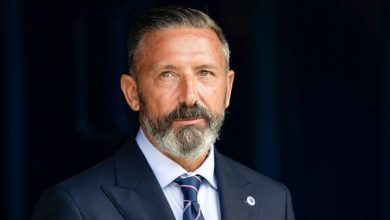
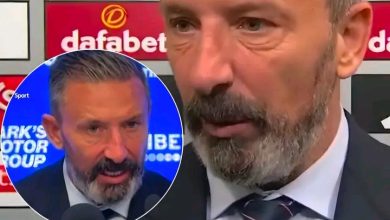
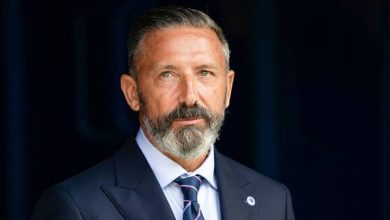
It was against that backdrop that Rangers’ interest first began to take shape in a more concrete form. Reports from respected Rangers Review journalist Chris Jack indicated that the Ibrox club had opened initial discussions with Bologna around the time Derek McInnes was first appointed manager, with the enquiries described at that stage as exploratory rather than the beginnings of formal negotiations. Rangers, according to that reporting, wanted to establish a clear picture of Ferguson’s availability and the financial parameters involved, both in terms of any transfer fee and the wage demands that would come with bringing a player of his calibre to Scottish football. That early positioning made sense given the obvious appeal of the move from a footballing perspective. McInnes managed Ferguson during his time at Aberdeen and knows him extremely well as both a player and a person, while Ferguson himself was reported to be genuinely open to the idea of a return to Scottish football, with sources close to the player indicating that reuniting with his old manager, following in his family’s footsteps at the club he grew up supporting, and playing alongside close friend Ross McCrorie held obvious appeal for the 26-year-old.
As the summer progressed, though, the financial realities of the deal began to emerge as a significant obstacle. Bologna, while reportedly open to a sale, set their valuation of Ferguson at around €17 million, a figure equivalent to roughly £14.7 million, a sum that immediately looked likely to stretch Rangers’ resources given their other summer priorities and the broader financial constraints that continue to shape recruitment at Ibrox even under a manager keen to build a squad capable of competing on multiple fronts. That valuation, significant enough on its own, only grew larger as the transfer window progressed. Ferguson’s performances for Scotland during this summer’s World Cup campaign, despite Scotland’s own disappointing tournament exit, further enhanced his individual reputation, with reports suggesting his valuation crept up from an initial £20 to £25 million range towards a figure closer to £30 million, mirroring a similar rise in valuation experienced by Rangers’ own departing midfielder Nicolas Raskin following his own standout World Cup showing.
That escalating price tag prompted Rangers to explore creative alternatives to a straightforward cash transfer. One idea that gained some traction in reporting throughout July involved a potential swap arrangement, with Rangers midfielder Connor Barron mooted as a possible makeweight in any deal that could help bridge the financial gap between the two clubs. However, that particular solution proved difficult to make workable in practice. Barron’s own market value, estimated at around £5 million, still left a substantial gap that Rangers would have needed to cover through direct cash payment, and even accounting for potential structuring around add-ons, performance-related clauses and future sell-on percentages, the overall shape of the deal simply did not add up to something Rangers’ recruitment department considered financially manageable. A base fee in the region of £15 million, topped up by a further £10 million in clauses and bonuses, while also parting with a valuable homegrown midfielder as part of the same package, represented a level of financial commitment that proved beyond what the club were prepared to countenance, however much the football side of the equation continued to appeal.
Further complicating matters throughout the summer was the uncertainty created by a change in the Bologna dugout. The Serie A club’s appointment of Domenico Tedesco as their new head coach added an additional layer of unpredictability to Ferguson’s situation, with question marks persisting over exactly how the incoming manager viewed the Scottish international’s role within his plans for the upcoming campaign. Bologna’s assistant manager Andrea Tarozzi offered some insight into the club’s thinking when discussing Ferguson’s situation with Italian outlet Tuttomercatoweb, describing the midfielder as a fundamental figure for the club and stressing that the coaching staff would find the right role to allow him to continue showcasing his qualities. That framing, while not explicitly ruling out a departure, certainly did not suggest a club actively looking to move their captain on, and it reinforced a broader pattern throughout the saga of Bologna presenting themselves as calm and unhurried sellers rather than a club desperate to cash in on their prize asset.
Indeed, earlier reporting from Get Italian Football News in early July had already painted a picture of a Bologna hierarchy in no rush whatsoever to sanction Ferguson’s departure. According to that reporting, Bologna were not actively discussing a contract renewal with the midfielder at that stage, leaving his long-term future something of an open question, but crucially, the report also indicated that Rangers had not yet made any concrete approach at that point, and that no other club had made contact regarding his availability either. With his contract at the Rossoblu running until 2028, Bologna were understood to be entirely relaxed about the situation, content to continue working with their captain rather than feeling any pressure to negotiate a sale on anything other than their own terms.
That pattern of Bologna dictating the terms of the conversation continued through the middle of the summer. A notable moment arrived in mid-July when Ferguson was photographed and reported on during Bologna’s pre-season training camp in the Alpine village of Valles, with his conduct and evident professionalism during that period interpreted by several outlets, including Rangers Review’s Chris Jack, as a clear signal that any move away from the Renato Dall’Ara Stadium was, in the words used at the time, dead in the water. Ferguson’s approach to his pre-season duties, fully committed and giving no outward indication of a player agitating for a move, appeared to reinforce the sense that whatever conversations may have taken place between the clubs, the player himself remained fully focused on his existing obligations to Bologna rather than pushing publicly for an exit.
By the closing weeks of July, the picture had crystallised further still, with reporting from IbroxNoise offering perhaps the clearest and most definitive account yet of exactly where the Ferguson saga stood. According to that reporting, Rangers had, in reality, walked away from serious pursuit of the deal weeks earlier, despite the ongoing public speculation continuing to link the two parties. The report clarified that Rangers had indeed made an approach to Bologna roughly a month prior, seeking clarity on Ferguson’s availability and the associated costs involved, and crucially, that wage demands were never considered the primary obstacle, with Ferguson’s relatively modest salary at Bologna, reported to be in the region of £20,000 per week, well within what Rangers could realistically offer. The insurmountable obstacle, instead, was always going to be the transfer fee itself, inflated further by Ferguson’s excellent World Cup performances, and Bologna’s clear awareness that they held a highly valuable, prime-age asset in their captain, one they were under no financial pressure whatsoever to sell below their own valuation.
For Rangers supporters who had allowed themselves to dream about a genuine homecoming story, laden with family history and the kind of emotional narrative that football occasionally delivers, the practical reality of modern transfer economics has proven considerably less romantic. Ferguson represented exactly the kind of experienced, tactically intelligent central midfielder that McInnes has been trying to build his squad around this summer, and the personal connections between player, manager and club made the pursuit an obvious and understandable one to explore. But the gulf between Bologna’s valuation and what Rangers were realistically able and willing to commit, even accounting for creative structuring involving player exchanges and staggered payment clauses, ultimately proved too wide to bridge.
That does not necessarily mean the story is entirely closed for good. Football has a habit of producing late twists, and situations that appear settled in the middle of a transfer window can shift again as deadlines approach and clubs reassess their positions under pressure. Should Bologna’s own priorities change, whether through a need to balance their books before the Italian transfer deadline or a shift in Tedesco’s assessment of his captain’s role within the squad, it is not impossible that fresh talks could yet emerge. Equally, Ferguson’s own contract situation, running through to 2028, means Rangers could always revisit their interest in a future window, whether next summer or further down the line, particularly if his valuation were to soften following a difficult run of form or fresh injury concerns.
It is worth pausing to properly appreciate just how significant Ferguson’s rise at Bologna has actually been, given how easily a player’s achievements abroad can go somewhat under-appreciated back home when they are not directly involved in Scottish football on a weekly basis. Bologna’s qualification for the Champions League during Ferguson’s time as captain represented a genuinely historic achievement for a club that had spent long periods of the modern era fighting relegation battles rather than chasing continental qualification, and Ferguson’s contribution to that success, both as a leader in the dressing room and as a consistently impressive performer in central midfield, cannot be overstated. Add to that the club’s Coppa Italia success during his tenure, and it becomes clear that Ferguson has not simply been a passenger during an unusually successful period for Bologna, but rather one of the central figures driving that success from within the engine room of the team.
That context matters enormously when trying to understand why Bologna have been so consistently unwilling to entertain anything resembling a discounted sale throughout this saga. Clubs do not typically hand out captaincies and long-term contract extensions to players they view as dispensable, and Bologna’s decision to tie Ferguson down until 2028, even in the aftermath of a serious knee injury, speaks to a level of institutional faith in the player that goes well beyond simple squad-filling considerations. From Bologna’s perspective, selling their captain and one of the standout performers in their most successful modern era, purely to accommodate a buying club’s budgetary constraints, was always going to require an fee substantial enough to reflect precisely what they stood to lose both on the pitch and in terms of leadership and stability within the dressing room.
There is also a broader pattern here worth considering regarding how Rangers have approached their recruitment strategy more generally this summer under Derek McInnes. Rather than pursuing marquee, big-money targets purely for the sake of headline-grabbing signings, the club’s transfer business has, for the most part, been characterised by a more considered and value-conscious approach, targeting players who represent either clear value in the market or who fit specific tactical profiles the manager has identified as priorities. The Ferguson pursuit, in many ways, represented something of an outlier in that broader pattern, driven as much by sentiment, personal connection and the romantic appeal of the story as by pure footballing pragmatism. That Rangers ultimately chose to walk away once the financial realities became clear, rather than stretching themselves into a deal that would have represented a significant departure from their otherwise disciplined summer recruitment approach, arguably reflects well on the club’s broader financial management, even if it will inevitably disappoint supporters who had hoped sentiment might win out over spreadsheets.
It is also worth reflecting on what this saga reveals about the wider financial gulf that continues to separate Scottish Premiership clubs, even one as historically significant and comparatively well-resourced as Rangers, from clubs competing regularly in Europe’s more lucrative competitions. Bologna’s participation in the Champions League has brought with it a substantial injection of broadcast revenue and prize money that has strengthened their negotiating position considerably, allowing them to hold firm on valuations that clubs in less financially privileged leagues might otherwise have been forced to accept. That dynamic is becoming an increasingly familiar one across Scottish football’s transfer dealings, with clubs north of the border regularly finding themselves priced out of moves for players who, on ability and reputation alone, would represent entirely appropriate targets, purely because the financial gap created by disparate broadcast deals and continental qualification bonuses has grown too wide to bridge through conventional negotiation.
For Ferguson himself, remaining at Bologna for at least the immediate future offers the continued opportunity to further enhance his reputation on a stage considerably larger than Scottish football can currently offer, even accounting for Rangers’ own European qualifying exploits. Continued involvement in Serie A, potentially further European competition depending on Bologna’s league form, and ongoing recognition on the international stage with Scotland all represent a compelling case for staying put, quite apart from any loyalty considerations towards the club and supporters who have stood by him through a difficult injury lay-off. Whether that calculation changes in future windows, particularly as Ferguson approaches his late twenties and potentially begins weighing up different priorities around game time, family considerations, or a desire to experience playing for his boyhood club before his career eventually winds down, remains one of the more intriguing subplots that could yet resurface in seasons to come.
For now, though, the practical reality is that Rangers’ recruitment department have moved on from what would undoubtedly have been one of the most sentimentally significant signings in the club’s recent history. Derek McInnes’s attention, and that of his recruitment staff, has instead turned towards a host of alternative targets across multiple positions as the summer window enters its final and most decisive stretch, from the ongoing pursuit of Coventry winger Jahnoah Markelo to continued efforts to strengthen the defensive unit following Ben Godfrey’s injury setback at Tannadice. The Ferguson pursuit, for all its emotional resonance and obvious footballing logic, ultimately serves as a reminder of just how unforgiving the financial realities of modern transfer negotiations can be, even when every other element of a deal, from managerial relationship to family history to the player’s own stated willingness, appears to align so perfectly.
Whether Ferguson’s name resurfaces in Ibrox transfer conversations again in future windows remains to be seen, but for this particular summer, the message from those closest to the situation is unambiguous: Rangers have already walked away, the financial gap proved too significant to close, and Derek McInnes’s rebuild will continue to take shape without the player many supporters had quietly hoped might complete a fairytale homecoming this August.