Rangers supporters are still dissecting the moment that overshadowed Derek McInnes’s first Scottish Premiership match in charge, with the closing stages of the opening-weekend draw against Dundee United continuing to dominate conversation days after the final whistle. The Light Blues had looked the more likely side to find a late winner before one controversial moment changed the entire mood inside Tannadice, and while the basic sequence of events is now well understood, the finer details of exactly why VAR chose not to intervene have taken longer to filter through to a frustrated fanbase still searching for answers.
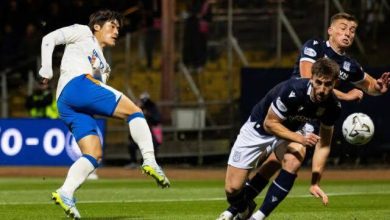
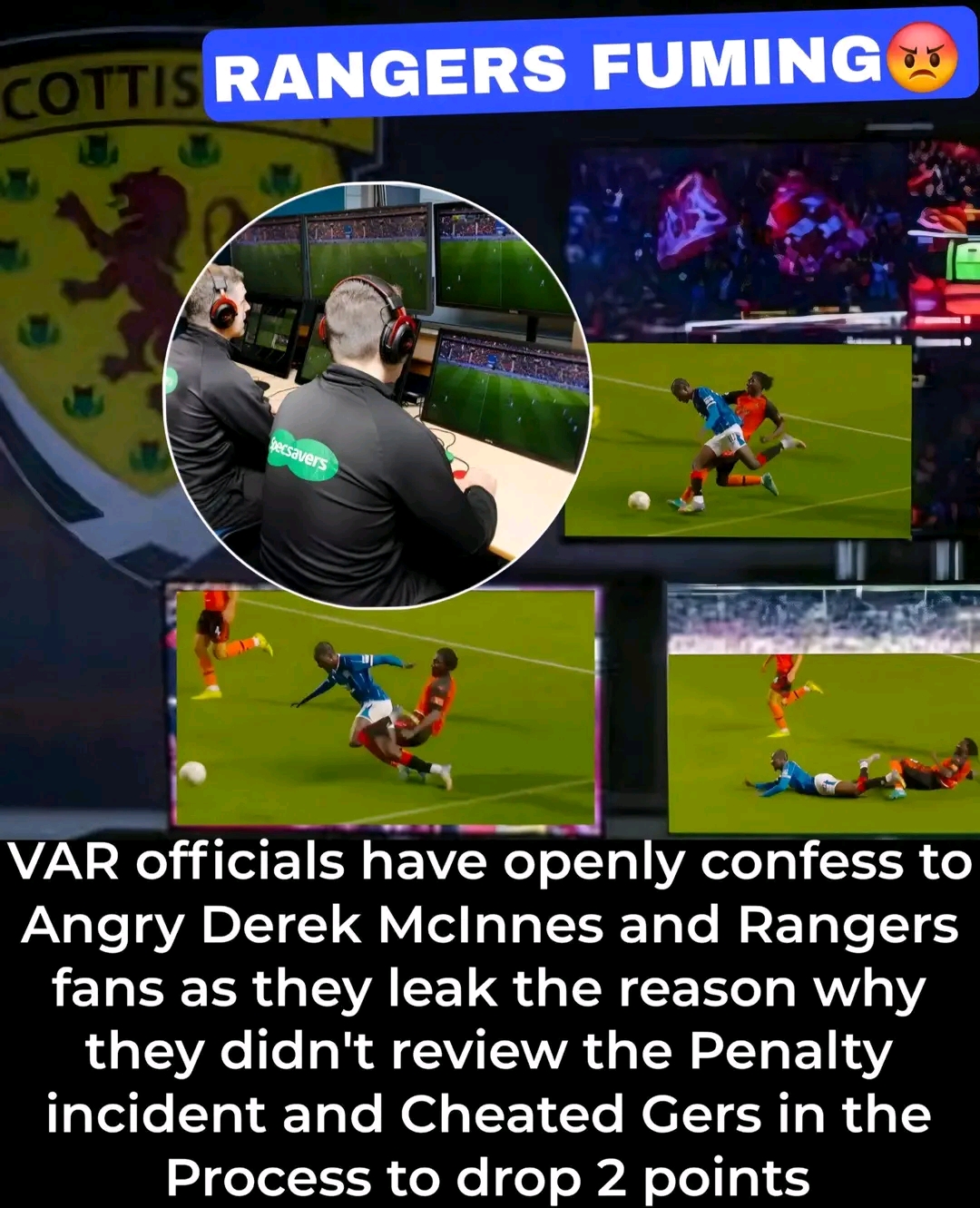
With only minutes remaining and Rangers pushing hard for a winning goal, Mohamed Diomande burst into the Dundee United penalty area before going to ground under a challenge from home defender Emmanuel Agyei. Almost every Rangers player on the pitch immediately appealed, wheeling away in unison towards referee Nick Walsh in the belief that a clear foul had been committed inside the box. Derek McInnes threw his arms into the air in frustration on the touchline, while the away support inside Tannadice were similarly convinced that a decisive and match-defining foul had been missed. Instead of pointing to the spot, Walsh signalled instantly for a goal kick, making his judgment on the incident unmistakably clear in real time.
What surprised many supporters even more than the initial call itself was what happened in the immediate aftermath. There was no lengthy stoppage while officials reviewed replay footage. There was no invitation for Walsh to jog over to the pitch-side monitor to take a second look at the incident. Play simply continued, leaving Rangers supporters both inside the stadium and watching from home wondering why one of the most significant and potentially match-changing incidents of the entire game appeared to pass without any visible review process taking place at all.
The explanation for that lies in understanding precisely how the VAR protocol actually operates behind the scenes, a process that, while entirely standard across the Scottish Premiership and indeed across the vast majority of leagues using video assistant referee technology worldwide, remains poorly understood by many supporters who only ever see the visible, on-field consequences of decisions made away from the cameras. For Friday night’s fixture at Tannadice, Video Assistant Referee Steven McLean was stationed at Clydesdale House, working alongside assistant VAR Gary Hilland, with the pair responsible for monitoring every significant decision throughout the match from a dedicated video operations room rather than from a position inside the stadium itself.
Crucially, every potential penalty incident during a Scottish Premiership match is automatically checked by the VAR team as a matter of standard procedure, regardless of how clear-cut or contentious the initial on-field decision might appear. That much is true of every fixture across the division, not merely high-profile matches involving Rangers or Celtic. However, the threshold for the VAR team to actually intervene and send the on-field referee across to review the incident personally on the pitch-side monitor is deliberately set high. Under current protocol, video officials are instructed to recommend a review only where they believe the original on-field decision represents a clear and obvious error, a specifically high bar designed to preserve the authority and primacy of the referee’s initial, real-time judgment rather than allowing VAR to become a tool for re-refereeing every marginal or debatable incident from scratch.
In the case of the Diomande incident, that threshold was simply not met. Having reviewed the challenge from Agyei on Diomande using the various camera angles available to them at Clydesdale House, McLean and Hilland evidently concluded that Walsh’s original call, that no foul sufficient to warrant a penalty had taken place, did not represent the kind of clear and obvious error that would justify overturning it. By allowing play to restart without recommending an on-field review, the VAR team effectively endorsed Walsh’s initial judgment, even if that endorsement came through inaction and silence rather than through any kind of visible, on-screen confirmation that supporters watching either inside the ground or on television could see for themselves in the moment.
It is worth stressing clearly, given some of the confusion and frustration that has understandably followed the incident, that neither the Scottish FA nor the VAR officials involved have publicly released any audio recording or detailed written explanation of the specific reasoning behind that decision. There has been no official statement from Steven McLean personally explaining his assessment of the challenge beyond the simple, observable fact that the original on-field call was allowed to stand without any recommended review. That absence of any published reasoning, whether through released VAR audio, a formal refereeing review, or a statement from the Scottish FA’s officiating department, has left supporters with only the bare mechanics of the process to work from, rather than any genuine insight into the specific footage, angles, or interpretive judgment that led McLean and Hilland to conclude the challenge did not meet the required threshold.
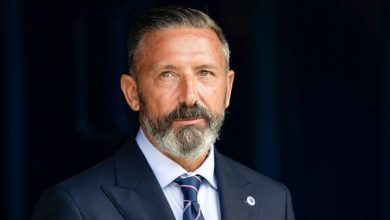
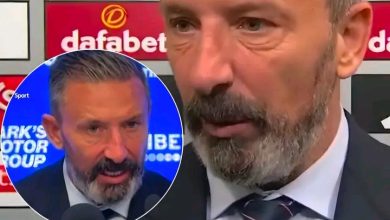
That lack of detailed public explanation did little to calm Rangers’ frustrations in the aftermath of the match. Sky Sports cameras, broadcasting live from Tannadice, captured Derek McInnes looking genuinely stunned in the moments immediately following the decision, his body language leaving little doubt about how strongly he felt Rangers had been wronged. That frustration did not dissipate at the final whistle either. McInnes was seen marching onto the pitch to speak directly with Nick Walsh once the match had concluded, seeking clarification and expressing his dissatisfaction with the officiating team in person, before later holding further discussions with the wider group of match officials away from the cameras. While McInnes did not disclose the specific details of what was said during either of those conversations, he made his broader position unmistakably clear afterwards, leaving no doubt that he and his players believed Rangers had been denied a golden opportunity to claim all three points on the opening weekend of the new season.
The controversial incident has, unsurprisingly, gone on to become one of the single biggest talking points to emerge from the opening weekend of Scottish Premiership football, generating extensive debate across phone-in shows, podcasts, and social media platforms in the days since the match concluded. That level of scrutiny is, in many ways, an entirely predictable consequence of a decision that arrived at such a pivotal moment in a match involving one of Scottish football’s two dominant clubs, particularly given the added context of Derek McInnes taking charge of his first competitive fixture since being appointed Rangers manager. Incidents of this nature, arriving in the closing stages of a tightly contested match with genuine bearing on the final result, will always attract outsized attention compared to similar VAR non-interventions that might occur in fixtures further down the media agenda.
Unless the Scottish FA takes the relatively unusual step of releasing the VAR audio from the incident, or commissions and publishes a more detailed refereeing review specifically addressing the Diomande challenge, supporters are unlikely to receive any fuller explanation than the one that can already be pieced together from the officials’ actions on the night itself. For now, the underlying reason Rangers were not awarded a penalty is, at its core, relatively straightforward to state even if it remains deeply unsatisfying to a support convinced they witnessed a clear foul: VAR reviewed the challenge as a matter of standard procedure, concluded that Nick Walsh’s original on-field decision did not constitute a clear and obvious error, and therefore found no grounds under the current protocol to send the referee across to the pitch-side monitor for a fuller personal review.
It is worth placing this specific incident within the broader context of Nick Walsh’s officiating history involving Rangers, given how frequently his appointments to Ibrox-related fixtures have generated discussion and debate over recent seasons. Walsh took charge of six matches involving Rangers last season alone, including two Old Firm derbies, and has not been entirely immune to controversy during that period. His most recent notable flashpoint prior to the Dundee United fixture came during an Old Firm derby back in May, when he opted against sending off Celtic’s Alistair Johnston for a robust challenge on Rangers’ Mikey Moore, a decision that left a section of the Ibrox support fuming at the time and which had already been extensively discussed by Rangers-focused media in the build-up to this season’s opener. That history meant there was already a degree of heightened scrutiny surrounding Walsh’s appointment to the Dundee United fixture before a ball had even been kicked, with some commentary suggesting McInnes would need to carefully manage his own touchline conduct given the referee’s previous record of contentious calls involving the Ibrox club.
There is also a wider officiating context worth acknowledging, drawn from the Scottish FA’s own key match incidents review process, which periodically assesses contentious decisions from matches across the Premiership using an independent panel. That process has, on occasion, found in previous weeks that VAR officials, including Steven McLean himself in a separate incident from earlier in the year, got decisions wrong in matches involving Rangers, underlining that the video assistant referee system, for all its intended benefits in reducing clear officiating errors, remains an imperfect process reliant on the judgment calls of individual officials reviewing incidents at speed. Whether the Diomande incident would similarly be judged an error by such a review panel remains unknown, precisely because no such review has yet been published, but the broader pattern of occasional acknowledged VAR mistakes involving Rangers fixtures in recent months will do little to reassure supporters inclined to view the Tannadice decision with suspicion.
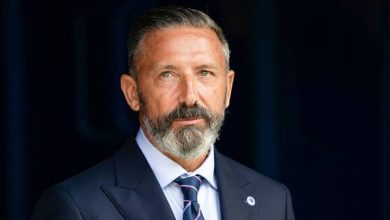
For Derek McInnes personally, the incident arrives at a sensitive early juncture in his Rangers tenure, with his conduct on the touchline throughout the match, and his subsequent confrontation with match officials afterwards, likely to be monitored closely by the Scottish FA given the governing body’s general sensitivity around managerial behaviour towards referees. Managers who are perceived to have crossed the line in criticising officiating decisions, whether through public comments or more direct confrontations of the kind McInnes engaged in after the final whistle, can find themselves facing disciplinary charges, and it will be a point of interest in the coming days whether the Scottish FA deems any further action necessary regarding the Rangers manager’s conduct on the night, quite separate from the underlying question of whether the penalty should have been awarded in the first place.
It is also worth taking a moment to explain the broader mechanics of how VAR operates within Scottish football more generally, given how much confusion still surrounds the system among supporters despite its having been in operation for several seasons now. The video assistant referee sits in a dedicated operations centre away from the stadium itself, at Clydesdale House in this instance, monitoring the match via a bank of broadcast camera feeds that offer considerably more angles and detail than the on-field officials have access to in real time. That setup allows the VAR team to review incidents using slow-motion replay, multiple camera angles, and where necessary, offside lines calculated using specialist software, all without disrupting the natural flow of the match unless a genuine intervention is deemed necessary.
The four categories of decision that fall under VAR’s remit remain consistent across almost every competition using the technology worldwide: goals, penalty decisions, direct red card incidents, and cases of mistaken identity. Every incident falling into one of those four categories is checked by the video assistant referee as a matter of routine, silent background process, regardless of how clear-cut the on-field decision might have appeared to those inside the stadium. The vast majority of these routine checks conclude within a matter of seconds and produce no visible change to the match whatsoever, precisely because the on-field decision is deemed correct or, at minimum, not clearly and obviously wrong. It is only in that smaller subset of cases, where video review genuinely uncovers what officials consider a clear and obvious error, that supporters see the more visible signs of VAR intervention: the referee jogging to the pitch-side monitor, the delay in play, and the subsequent reversal or confirmation of the original call following that review.
That distinction between the invisible, routine background check and the visible, occasional intervention is central to understanding why so many significant incidents, including Friday’s penalty shout involving Diomande, can pass without any outward sign that a review process even took place. From a broadcasting perspective, and certainly from the perspective of supporters inside the stadium with no access to the video feeds being studied at Clydesdale House, there is often little to distinguish between an incident that received no VAR attention whatsoever and one that was carefully checked and ultimately deemed not to meet the threshold for intervention. Both scenarios look identical from the stands: play simply continues. That similarity in outward appearance, despite a potentially significant difference in the underlying process, goes a long way towards explaining why moments like the Diomande incident generate such confusion and frustration among supporters left uncertain whether their side’s penalty shout was ever properly considered at all.
There is a legitimate argument, one that has been made with increasing frequency by supporters, pundits and journalists across British football in recent seasons, that greater transparency around these processes would go a long way towards defusing exactly this kind of frustration. Rugby union’s model of broadcasting the television match official’s communication with the on-field referee in real time is frequently cited as a template that football might benefit from adopting, allowing supporters to hear, in the moment, precisely what officials are seeing and discussing as they assess a contentious incident. Scottish football, much like the majority of major European leagues, has yet to move towards that level of in-match transparency, though there has been periodic discussion of releasing selected VAR audio after matches in particularly high-profile or contentious cases, a step that some other competitions around the world have begun experimenting with to varying degrees of success.
For now, though, Scottish Premiership supporters remain reliant on the same limited information available in the aftermath of the Diomande incident: the bare outcome of the process, without any accompanying insight into the specific frames, angles or interpretive judgments that led to it. That gap between process and explanation is unlikely to close anytime soon absent a significant shift in policy from either the Scottish FA or the broadcasters covering the league, leaving fans to continue relying on their own analysis of available broadcast replays, cross-referenced against the informed but ultimately speculative commentary of pundits and former officials, whenever similarly contentious incidents arise in matches to come.
The broader implications for Rangers extend beyond simply this one incident too, feeding into an ongoing and much larger conversation about the consistency and reliability of VAR decision-making across the Scottish Premiership as a whole. Supporters of every club in the division have, at various points over recent seasons, felt aggrieved by decisions that either were or were not referred for video review, and Rangers are far from alone in having experienced moments where the outcome of that invisible background process has directly influenced a result. That broader pattern of recurring officiating controversy across the league continues to fuel calls from various quarters, including supporters’ groups, football pundits, and occasionally club officials themselves, for the Scottish FA to reconsider its current approach to transparency around VAR decision-making, even as the governing body has so far shown limited appetite for wholesale change to a system that, mechanically at least, operates in line with standard practice used across the majority of major football competitions worldwide.
For Derek McInnes and his players, the more immediate and practical priority now lies in moving past the frustration of the Dundee United result and turning their full attention towards the demanding fixtures that lie immediately ahead, including the crucial Europa League qualifying tie against Jagiellonia Bialystok that arrives in the coming days. Dwelling too long on a decision that cannot now be reversed, however aggrieved Rangers may legitimately feel about the outcome, offers little practical benefit compared to channelling that frustration into performances capable of ensuring similar moments of officiating fortune, good or bad, have less bearing on results going forward.
For now, though, the Diomande incident stands as an illustrative case study in the ongoing tension between football’s increasing reliance on video technology and the enduring appetite among supporters for greater transparency around exactly how and why officials reach the decisions they do. The mechanics of the process, automatic review of every penalty shout, intervention reserved only for clear and obvious errors, are well established and consistently applied across the league. What remains conspicuously absent, in this case as in so many others across Scottish football, is any meaningful public insight into the specific reasoning that led two experienced video officials to conclude that Rangers’ penalty appeal fell short of that threshold, leaving supporters to draw their own conclusions from limited broadcast replays rather than from any official account of what the video assistant referee team actually saw and concluded on the night