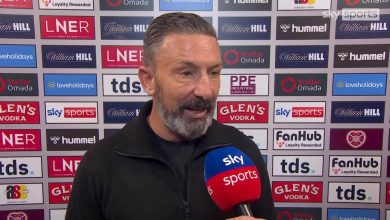
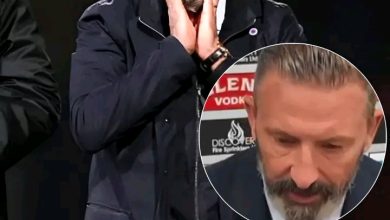
Graham Spiers blasts ‘foolish comment’ Jim Gillespie made in Rangers shareholders’ meeting, after they revealed next rangers coach they really want to sack derek McInnes

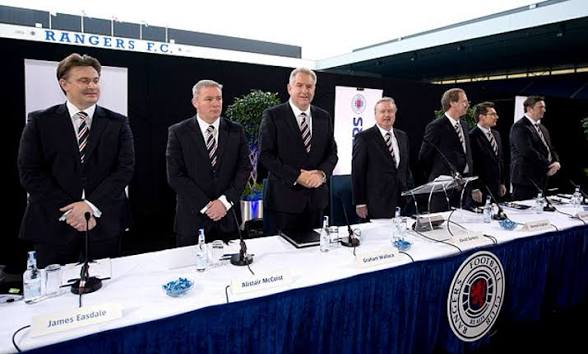
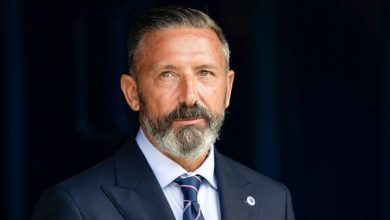
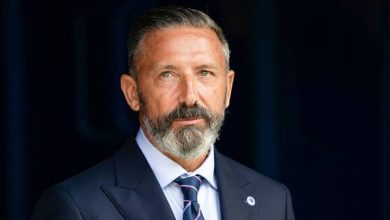
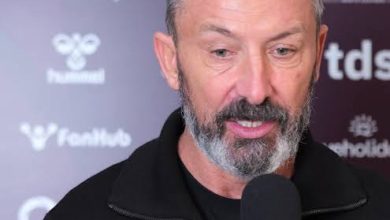
Rangers chief executive Jim Gillespie has come under fire from journalist Graham Spiers after remarks he made about new manager Derek McInnes during a shareholders’ meeting at Ibrox on Monday. The comments, which drew a comparison between McInnes’s managerial style and that of former Liverpool boss Jürgen Klopp, have proven controversial at a time when the club is already under scrutiny for its underwhelming start to the season.
The meeting, addressed by both Gillespie and chairman Andrew Cavenagh, was called in part to give supporters the opportunity to raise concerns directly with the club’s leadership about where things currently stand. Those concerns have been mounting in recent weeks, following a difficult opening to the Scottish Premiership campaign. Rangers have taken just one point from their first three league matches — a draw followed by back-to-back defeats — leaving them five points adrift of Celtic already, despite a summer transfer window in which the club has brought in nine new signings.
The hiring of McInnes in the close season had been widely framed as a statement of intent, a move designed to signal a fresh start and a return to the kind of consistent success Rangers fans have felt entitled to but haven’t always seen in recent years. So far, however, results on the pitch have not lived up to that framing, which has left the club’s hierarchy facing pointed questions from an increasingly anxious fanbase.
It was in trying to explain the thinking behind McInnes’s appointment that Gillespie, formerly vice chairman at St Mirren, made the remark that has since drawn criticism. Speaking to shareholders, he outlined what he described as a simple distinction in modern football management: managers who fit a “Klopp-type” mould, characterised by front-foot, aggressive, chance-creating football, and those who fit a “Guardiola-type” mould, generally associated with a more patient, possession-based approach.
According to Gillespie, Rangers’ recruitment strategy — and the expectations of the club’s supporters more broadly — pointed clearly toward wanting a manager in the former category: someone who would set his team up to press forward, play with intensity, and prioritise attacking, entertaining football that creates and converts chances. He went on to state plainly that, in his view, Derek McInnes fits that “Klopp-style” description, and that beneath that broad label lies a specific footballing structure and philosophy McInnes is trying to implement at Ibrox, along with a track record of success that informed the club’s decision to appoint him.
It was this direct linking of McInnes’s name with Klopp’s that proved contentious. Football journalist Graham Spiers responded on social media platform X, dismissing the remark as a “foolish comment” and suggesting it amounted to placing an unfair burden — a “millstone” — around the neck of the newly appointed Rangers boss.
The concern underlying Spiers’s reaction is not difficult to understand. Klopp is regarded as one of the outstanding managers of his generation, a figure who transformed Liverpool from a club searching for consistency into Premier League and European champions, built around a globally admired brand of high-intensity, attacking football. Any suggestion — even an unintentional or loosely framed one — that a newly appointed manager at a club currently sitting with one point from three games might be compared to a manager of that stature invites an obvious and uncomfortable contrast. Given Rangers’ start to the season, invoking Klopp’s name in connection with McInnes risks setting an unrealistic bar in the eyes of supporters and pundits, one that could make an already difficult managerial situation even harder to navigate if results don’t quickly improve.That’s the essence of Spiers’s objection: rather than helping McInnes, the comparison risks working against him, creating expectations he may struggle to meet regardless of the calibre of work he actually does at the club, particularly so early in his tenure.
There is, however, a case to be made that Spiers’s criticism takes the comment more literally than it was necessarily intended. Read closely, Gillespie’s remarks don’t appear to claim that McInnes is comparable to Klopp in terms of overall managerial pedigree, trophy record, or standing in the game. Rather, the comparison seems to be about categorising a type or style of manager — one built around motivating players, extracting maximum effort and quality from a squad, and setting teams up to play assertive, forward-thinking football — as opposed to making any claim about McInnes operating at Klopp’s level of achievement.
Under that more generous interpretation, Gillespie was essentially saying that Rangers deliberately avoided going down the route of appointing a possession-dominant, patient-build-up manager in the “Guardiola” mould, and instead prioritised a coach whose teams tend to press aggressively, play on the front foot, and look to create and convert chances at pace — the way Klopp’s Liverpool sides were famous for doing at their best. It’s a comment about managerial category and approach, not a claim of equivalent status or achievement.
Supporting that reading, McInnes’s teams have, at times in his career, been recognised for playing an attractive, front-footed brand of football, not dissimilar in spirit — if clearly not in scale or level — to the football associated with Klopp during his peak years at Anfield. Viewed that way, Gillespie’s comment looks less like an outlandish claim of parity between two managers operating in entirely different tiers of the game, and more like an attempt — however clumsily delivered in the moment — to explain to shareholders the specific stylistic reasoning that shaped the club’s recruitment decision.
Whatever the intended meaning behind the remark, there’s little disagreement that Rangers’ immediate priority lies not in the semantics of managerial comparisons but in improving results on the pitch — and that will likely require further reinforcement of the squad. The club has already moved to address one area of need, with a medical reportedly scheduled for PSV Eindhoven winger Couhaib Driouech, a signing intended to add creativity and craft in the final third, an attribute this Rangers side has visibly lacked during its stuttering start to the campaign.
But attacking reinforcements alone are unlikely to solve all of Rangers’ early-season problems. The club’s defence has also looked notably vulnerable through the opening weeks, conceding goals and appearing short of the composure and organisation needed to compete at the level supporters expect. In response, reports suggest Rangers have their eye on further additions at the back, with defenders Kosta Nedeljković and James Penrice both said to be on the club’s radar as potential targets to shore up that side of the pitch.
Taken together, the expected pursuit of defensive reinforcements alongside the Driouech deal suggests a club aware that isolated fixes won’t be enough — that turning around what has been a difficult start requires strengthening across multiple areas of the pitch, not just the position that has generated the most obvious excitement among supporters
All of this plays out against the backdrop of a broader effort by Rangers’ current ownership to reset the club’s trajectory after what leadership figures have themselves acknowledged was a period in which finishing second, or worse, had become too normalised within the organisation. That reset was always going to be judged, at least in part, by how the club performs in matches, and the early results this season have not yet provided the evidence supporters are looking for that meaningful change is under way.
It’s in that context that comments like Gillespie’s Klopp remark take on added significance. In a period where Rangers’ results are already generating anxiety and scrutiny among the fanbase, any statement from the club’s leadership that can be read — rightly or wrongly — as overpromising or setting unrealistic comparisons is likely to be picked apart and criticised, precisely because it risks compounding pressure on a manager who is only a handful of games into his tenure.
For Gillespie and the rest of Rangers’ hierarchy, the more effective response to criticism over comments like this will likely come not through further public clarification, but through results. If McInnes’s side can begin picking up points, and if the club can complete the kind of squad strengthening being reported — both at the attacking end with Driouech and defensively with potential moves for Nedeljković and Penrice — then debates over how his managerial style should be characterised, or which more established manager he should or shouldn’t be compared to, will likely fade into the background