HANDING LAWRENCE SHANKLAND THE RANGERS CAPTAIN’S ARMBAND A MISTAKE FROM DEREK MCINNES? SATURDAY JURY

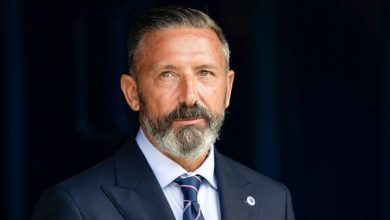
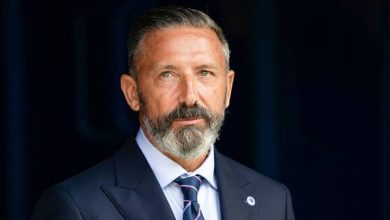
Derek McInnes made one of the biggest calls of his young Ibrox reign before a ball had even been kicked in earnest this season, confirming Lawrence Shankland as his new Rangers captain just two days before the Premiership curtain-raiser against Dundee United at Tannadice. It was a decision that immediately divided opinion among supporters, pundits and former players alike, and with the benefit of a few weeks of hindsight, including a Scottish League Cup afternoon at Ibrox where the armband ended up on somebody else’s sleeve entirely, the debate around whether McInnes got the call right shows no sign of dying down. So this weekend’s Saturday Jury poses the question directly: was handing Lawrence Shankland the captaincy the right call, or has Derek McInnes made an early misstep that could come back to bite him?
To understand the scale of the decision, you first have to understand what Shankland was actually inheriting. James Tavernier wore the armband at Ibrox for eight years, a run that began under Steven Gerrard and continued through multiple regimes, cup finals, title triumphs and everything in between. He made 565 appearances for the club, racked up 144 goals from right-back, and captained Rangers to a 55th league title before his emotional and at times fraught departure from Ibrox this summer brought that chapter to a close. Replacing a figure with that level of history, that level of trophies attached to his name, and that level of emotional connection to the fanbase was never going to be straightforward for any manager, let alone one only a matter of weeks into the job. McInnes didn’t rush the decision either. Rather than naming a successor immediately, he rotated the armband through pre-season, handing it at various points to Ross McCrorie, Dan Neil, Ben Godfrey and Dujon Sterling as he assessed the character and leadership qualities within his new dressing room. Shankland himself even wore it during the pre-season friendly against Johor Darul Ta’zim, offering an early hint of where McInnes’s thinking might eventually land. When the final call was made, McInnes explained that he had wanted to look right through the whole squad and take his time evaluating everybody before settling on his skipper, which at the very least suggests this wasn’t some knee-jerk appointment made purely because Shankland happened to be a fresh arrival with a recognisable name.
The case in favour of the decision starts with the relationship between manager and player. McInnes and Shankland worked together for four years at Hearts, a period during which the striker skippered the Tynecastle club to their highest points tally of the Scottish Premiership era and came agonisingly close to ending the club’s long wait for a top-flight title, ultimately falling short on the final day of the season against Celtic. McInnes has been explicit that he had already seen first-hand exactly how well Shankland runs a dressing room, describing that pre-existing evidence as a significant advantage over the alternatives available to him at Ibrox. There’s a strong argument that in a results business, appointing a captain you have genuine, first-hand experience of rather than one you are still getting to know on the job is simply smart management. McInnes also pointed to the composition of his new-look Rangers squad as a factor, noting that the dressing room remains relatively young and that Shankland’s experience carried real weight in that context. On top of the professional relationship, there’s the emotional angle too, with McInnes highlighting that Shankland’s background as a boyhood Rangers supporter from Glasgow gave him an instinctive understanding of what the club expects both from him personally and from the team collectively. For a support that has at times felt disconnected from a dressing room full of overseas signings and short-term mercenaries, having a lifelong fan leading the team out is not nothing. Shankland’s own reaction backed that up, with the striker admitting it was a boyhood dream come true and that being handed the armband represented an enormous honour given his personal history following the club as a supporter.
There’s also a results argument buried within the numbers that got Shankland to Ibrox in the first place. During his time at Hearts he was directly involved in 113 goals across 171 appearances in all competitions, an eye-watering return of 88 goals and 25 assists that made him one of the most consistent and clinical forwards outside the Old Firm in recent Scottish football history. In the 2025-26 season alone he was only outscored in the Premiership by Motherwell’s prolific frontman, netting 16 goals and adding three assists as Hearts pushed Celtic all the way in the title race. A striker who leads from the front on the pitch and puts the ball in the net with that kind of regularity arguably earns the right to lead off it as well, and McInnes clearly sees Shankland’s goal output as an extension of the leadership he wants to instil throughout the group.
And yet, for all of that, there is a genuinely compelling case on the other side of the argument too, and it starts with a fairly obvious observation: is it ever wise to hand your captaincy to a brand new signing who has barely kicked a ball for the club? Shankland arrived at Ibrox in May, meaning by the time he was officially confirmed as captain at the end of July, he had spent a matter of weeks as a Rangers player. There is a long-held footballing convention, one that plenty of pundits and former players have voiced in the weeks since, that the armband should generally go to somebody who has earned it through service and understanding of a club’s demands, not somebody parachuted in from outside and immediately elevated above players who have been grinding away in the building for years. It’s a call that, by McInnes’s own admission, was always going to be controversial, and he wasn’t wrong. The suggestion that it represents something of a snub to the existing core of the squad, players who have been fighting Rangers’ corner through five trophyless league campaigns and understand exactly what pressure at Ibrox looks like from the inside, is not an unreasonable position to hold.
Then there’s the matter of form, which is where this debate has really sharpened in recent weeks. Shankland has not been the guaranteed, ever-present starter that his captaincy status would typically suggest under McInnes so far this season, and his form in front of goal has been slow to spark into life in the manner Rangers fans would have hoped given his goalscoring pedigree at Tynecastle. That in itself creates an awkward dynamic. A captain who isn’t nailed on to start every week inevitably raises questions about squad hierarchy and what exactly the armband represents if the man wearing it can find himself among the substitutes. That exact scenario played out in vivid fashion during Rangers’ Scottish League Cup tie against St Mirren, when McInnes opted to leave Shankland out of his starting eleven entirely, handing the captaincy instead to Nicolas Raskin, the Belgian midfielder whose long-term Ibrox future has been the subject of persistent transfer speculation throughout the summer. Raskin responded by putting in a commanding, high-energy shift to help drive Rangers to a comfortable 5-1 win, and the sight of somebody other than the official club captain wearing the armband while Shankland warmed the bench inevitably prompted debate about where the pecking order genuinely stands. It later emerged that McInnes operates under a specific in-house rule whereby whoever starts a match wearing the armband retains it for the full ninety minutes even if the actual club captain is introduced from the bench, only handing it over if the starting captain themselves is substituted. It’s a sensible enough piece of matchday logistics on the surface, but symbolically it does little to settle nerves about whether Shankland is genuinely first choice both as a player and as the voice supporters expect their captain to be.
There’s also a fair question about whether Raskin’s situation complicates matters further. Here is a midfielder whose long-term commitment to the club has been openly questioned all summer amid transfer interest, and yet he was still deemed a more appropriate on-pitch leader than the man officially entrusted with the armband when the team sheet was actually written out. Former Rangers captain Barry Ferguson and his fellow pundits reportedly discussed this exact scenario and were unanimous in their view that it would have been more appropriate, and more respectful to Shankland’s status, had the armband been handed over regardless of McInnes’s substitution rule. That’s a notable position for a Rangers icon of Ferguson’s standing to take publicly, and it underlines that this isn’t merely noise from social media; it’s a genuine talking point within the wider football community that follows the club closely.
To his credit, McInnes has been upfront throughout this process about his broader vision for leadership at Ibrox, and it’s worth weighing that context carefully before rushing to judgement on the captaincy call itself. He has spoken candidly about feeling it was unfair that Tavernier was so often the one rolled out to face the media after difficult results during his time as captain, essentially becoming the lone lightning rod for criticism regardless of collective responsibility. McInnes has stated plainly that he wants that burden shared far more evenly this season, insisting the club needs as many captains beneath Shankland as possible so that leadership doesn’t rest on one individual’s shoulders alone. He has already signed experienced characters like Dan Neil and Ben Godfrey, both of whom have captained clubs elsewhere in their careers, specifically with an eye towards building out a genuine leadership group rather than relying on a single figurehead. Viewed through that lens, the Shankland appointment looks less like a standalone, all-or-nothing gamble and more like one component within a wider structural plan designed to distribute responsibility across the dressing room. If that’s the true intention, then perhaps the obsession with whether Shankland alone is the “right” captain slightly misses the point of what McInnes is actually trying to build.
Still, symbolism matters enormously at a club like Rangers, and captaincy carries weight that goes beyond dressing-room logistics. Supporters want a totemic figure to rally around, somebody whose name on the team sheet signals leadership, consistency and an unbreakable bond with the shirt. Tavernier, whatever the messy circumstances of his eventual exit, embodied exactly that for the better part of a decade. Whether Shankland can grow into that same symbolic role remains to be seen, and early swings between prominence and substitute appearances haven’t necessarily helped bed that image in with supporters just yet. There is time for that to change, of course. Shankland is only a matter of weeks into life as Rangers captain, operating within a squad that itself has been almost entirely reshaped over the summer under a new head coach who is still finding his best team and his best system. Judging the appointment definitively on the evidence available right now would arguably be premature, particularly given how well Shankland is regarded by those inside the game for his ability to manage a changing room, and given the sheer weight of evidence McInnes has from their time together at Tynecastle.
So where does that leave the jury on this one? The case for the defence rests on a proven working relationship, genuine boyhood connection to the club, a track record of captaining a title-challenging side, and a manager who took his time rather than rushing the call. The case for the prosecution centres on the optics of a brand-new arrival leapfrogging established squad members, inconsistent early-season form and playing time undermining the authority the armband is supposed to carry, and a captaincy rule that has already created an awkward, headline-grabbing situation at Ibrox before the season is even a handful of games old. Perhaps the truest answer, at least for now, is that it’s simply too early to render a definitive verdict either way. What is certain is that every stumble in form, every enforced substitution, and every moment the armband ends up on somebody else’s arm will keep this exact debate bubbling away among the Ibrox faithful until Shankland silences the doubters the way McInnes clearly believes he can, with goals, leadership and genuine influence over a Rangers side desperate to end its long wait for silverware