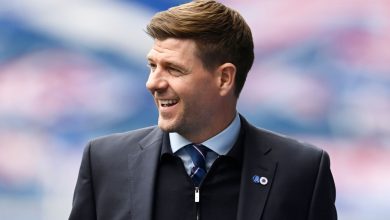
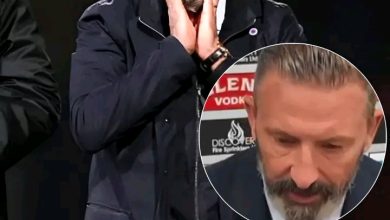
He sits there on his couch collecting his pundit paycheck, talking as if he knows anything.” 🗣️”His Managing career Ended when he was stripped off his license for incompetence

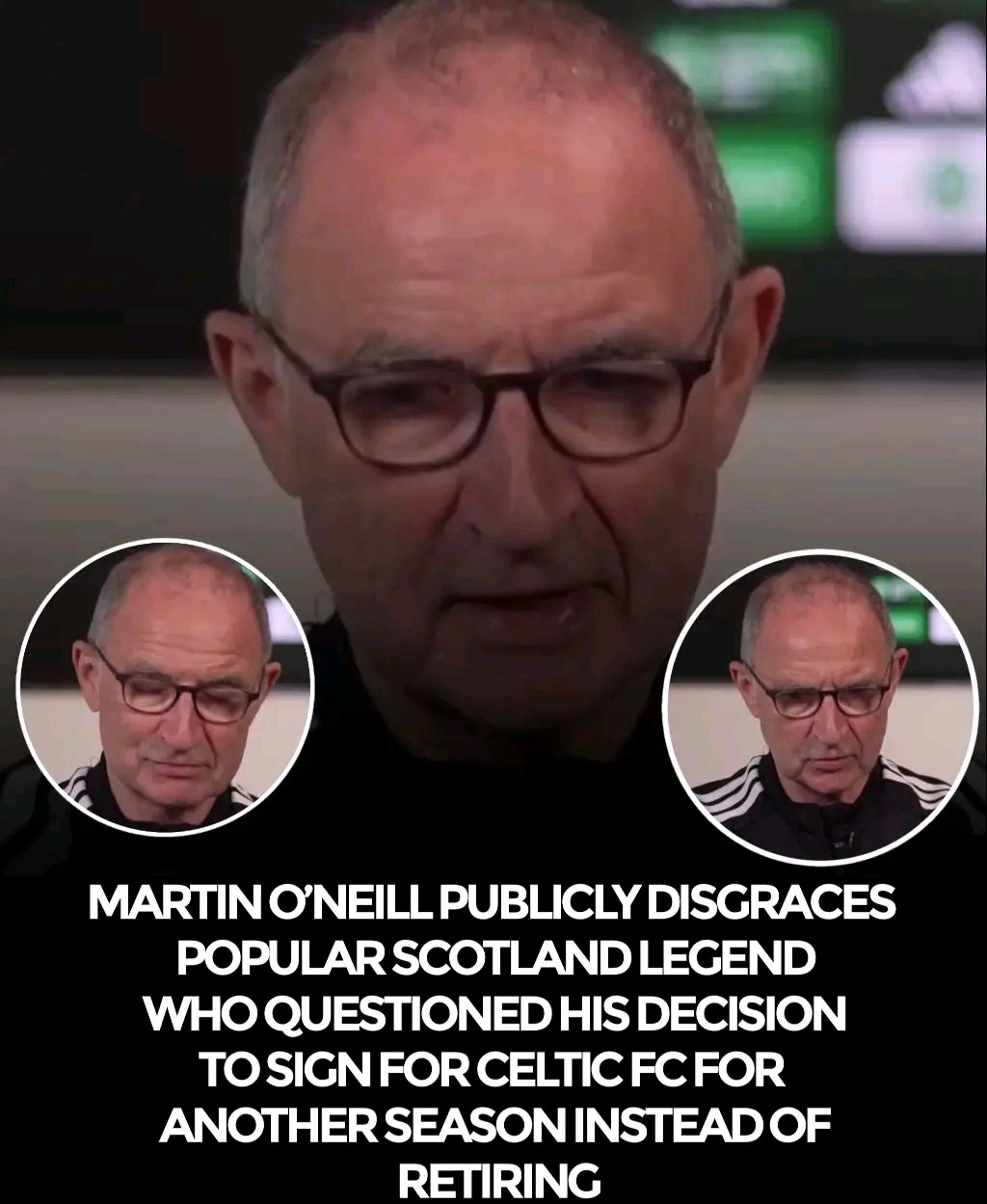
The public exchange between Celtic manager Martin O’Neill and former Rangers boss Graeme Souness represents one of the most deeply entrenched personal and ideological rivalries in modern Scottish sports media. What began as a standard radio debate over managerial tenure quickly escalated into an exhaustive re-examination of career accomplishments, structural advantages, and the enduring psychological warfare that defines football in Glasgow. When Souness publicly suggested that the seventy-four-year-old O’Neill should consider retiring to preserve his legacy rather than extending his second stint at Parkhead, he ignited a fierce counter-offensive. O’Neill did not merely reject the advice; he dismantled Souness’s entire managerial record, challenging his credibility, highlighting his early exit from the dugout at age fifty-two, and framing his former adversary as a figure whose opinions are disconnected from modern football realities.
To fully understand the severity of O’Neill’s rebuttal, one must trace the roots of their animosity back over four decades to their days as active players in English football. In December 1983, during a match between Liverpool and Notts County, Souness delivered a trademark, brutally physical challenge on O’Neill that left the Northern Irishman with a severe leg wound requiring extensive medical stitching. Souness was the preeminent hard-man midfielder of his generation, leading an all-conquering Liverpool side with a blend of elite technical passing and uncompromising physical intimidation. O’Neill, a cunning and perceptive winger who had won back-to-back European Cups under Brian Clough at Nottingham Forest, viewed the tackle not as fair physical competition, but as an unnecessary and malicious challenge. That singular moment planted a seed of personal resentment that never truly dissipated, laying the groundwork for a cross-pitch antagonism that seamlessly migrated into the technical area when both men transitioned into management.
The rivalry reached a boiling point twenty years later during the 2002–03 UEFA Cup campaign, setting a precedent for how both managers would use the media as a psychological weapon. Souness was then in charge of English Premier League side Blackburn Rovers, while O’Neill was amidst his decorated first era at Celtic Park. Following a tense, hard-fought first-leg tie in Glasgow, Souness delivered his infamous “men against boys” assessment, suggesting that his Premier League side had comfortably outclassed their Scottish opposition despite the narrow margin on the scoreboard. O’Neill, an absolute master of motivational psychology and squad unity, seized upon Souness’s dismissive remarks, pasting them on the dressing room wall at Ewood Park ahead of the return leg. Driven by the perceived disrespect toward Scottish football, Celtic produced a ruthless, tactically superior two-nil victory in Lancashire, eliminating Blackburn and embarking on a memorable run all the way to the UEFA Cup final in Seville. For O’Neill, that night at Ewood Park was not merely a tactical victory; it was a personal vindication that exposed what he viewed as Souness’s tactical arrogance.
When analyzing the modern narrative, O’Neill’s recent tirade on talkSPORT was a calculated demolition of Souness’s managerial pedigree. O’Neill focused heavily on Souness’s exit from management in 2006, when he departed Newcastle United at the age of fifty-two after admitting that he could no longer tolerate the pressure, board expectations, and modern player management dynamics. O’Neill contrasted this early retirement with his own career longevity, emphasizing that while Souness walked away from the touchline two decades ago, O’Neill continues to handle the relentless pressure of Glasgow football in his mid-seventies, actively adding major trophies to his collection. By pointing out that Souness spent his early fifties retreating into punditry while O’Neill continued to battle at the highest level across the Premier League and international football, the Celtic manager effectively questioned Souness’s moral authority to lecture anyone on when to step away from the game.
Another critical pillar of O’Neill’s critique centers on the contextual validity of Souness’s trophy record. Souness famously revolutionized Scottish football in the late 1980s as player-manager of Rangers, sparking the “Souness Revolution” by leveraging substantial financial backing to sign elite English international stars like Terry Butcher, Chris Woods, and Trevor Steven at a time when English clubs were banned from European competition. O’Neill argued that winning domestic honours with unprecedented financial dominance in Govan was an achievement that almost any competent coach could have delivered given the vast structural disparity between Rangers and the rest of Scottish football at the time. O’Neill contrasted this with his own managerial exploits, reminding critics that before he ever won a trophy with Celtic, he achieved extraordinary success in England by leading a modest Leicester City side to two League Cup victories and multiple top-half Premier League finishes against far wealthier opposition.
Furthermore, Souness’s post-Rangers managerial career provides ample ammunition for a harsh retrospective analysis. After departing Ibrox for Liverpool in 1991, Souness oversaw one of the most turbulent periods in modern Anfield history, attempting an abrupt cultural and tactical overhaul that fractured the dressing room and set back the club’s domestic competitiveness for years. His subsequent appointments at Southampton, Torino, Benfica, Blackburn Rovers, and Newcastle United were defined by volatile player relationships, tactical rigidity, and frequent dismissals. In contrast, O’Neill’s managerial tenure across Wycombe Wanderers, Leicester City, Celtic, Aston Villa, and the Republic of Ireland national team was consistently defined by high player loyalty, organizational stability, and an ability to extract maximum performance from his squads regardless of budgetary constraints.
The debate between the two men also reflects an ongoing clash over the current state and competitive hierarchy of Scottish football. In his media appearances, Souness has repeatedly asserted that the perceived gap between Celtic and Rangers is exaggerated, claiming that the two Glasgow clubs remain relatively close in quality and that minor tactical adjustments could easily tip the balance back toward Ibrox. O’Neill has repeatedly dismissed this perspective as pure delusion, pointing to Celtic’s sustained domestic dominance, superior European revenues, and proven track record of player development and trading as evidence of a structural divide. For O’Neill, Souness’s refusal to acknowledge the reality on the pitch is emblematic of an out-of-touch former figurehead attempting to maintain narrative relevance through provocative broadcasting claims rather than objective analysis.
Beyond the personal insults and historical score-settling, the clash highlights two fundamentally different managerial philosophies that defined their respective eras. Souness represented the traditional, confrontational school of management—an extension of his playing style—where authority was enforced through dominance, direct confrontation, and high demands for physical compliance. While this approach yielded initial success in the late 1980s, it struggled to adapt as player empowerment, sport science, and modern squad management evolved throughout the 1990s and 2000s. O’Neill, by contrast, mastered the art of interpersonal psychology, motivational rhetoric, and tactical adaptability, building environment-focused team cultures where players felt intensely protected by their manager in exchange for complete commitment on the pitch.
The timing of this media storm adds another layer of intensity to Celtic’s domestic and European campaign. Rather than allowing questions surrounding his age or contract length to linger as a potential distraction, O’Neill deliberately converted Souness’s critique into a unifying rallying cry for his squad and supporter base. By publicly fighting back with characteristic eloquence and blunt aggression, O’Neill sent a clear signal to his players, the Celtic board, and rival clubs that his appetite for competition remains undiminished. Far from being a manager coasting on past achievements or contemplating an quiet exit into retirement, O’Neill demonstrated that he thrives on external conflict, using the noise of the Glasgow football fishbowl to sharpen his team’s focus as they pursue further domestic silverware and navigate European qualification.