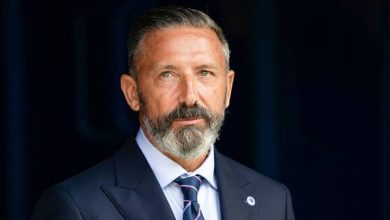
Rangers could be about to take their busy summer of recruitment to an entirely new level, with suggestions emerging that the Ibrox club could push through a significant double deal in the wide areas before the transfer window slams shut. Having already been among the most active clubs in Scottish football throughout the summer market, Derek McInnes and his recruitment team now appear to be eyeing a forward line refresh that would take the club’s total spend for the window well beyond the £30million mark, a scale of investment rarely seen at Ibrox in recent history.
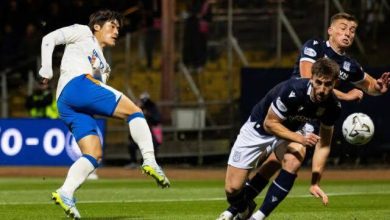
The Gers have already completed nine signings at this stage of the window, a figure that in itself illustrates just how comprehensive McInnes’s rebuilding project has been since he took charge. Daisuke Yokota is the latest name to have come through the door, with the Japanese attacker adding a fresh wide option to the manager’s squad following his move from Hannover 96. Operating predominantly from the right-hand side, Yokota gives Rangers a player capable of providing exactly the kind of forward threat that has, at times, been notably lacking from the side over the past year. That deficiency was laid bare on the opening night of the new Scottish Premiership campaign against Dundee United, where a below-par attacking display contributed to a draw that has, by most accounts, served as something of a wake-up call for the Light Blues.
Rather than treating Yokota’s arrival as the final word on their attacking business for the summer, however, sources suggest Rangers are far from finished when it comes to strengthening out wide. There has been a growing hope among the Ibrox faithful for some time now that further reinforcements would arrive in the attacking third before the window shuts, and even with Yokota now officially part of the squad, that appetite for additional new faces shows no sign of diminishing. If anything, the frustration evident in the opening-day performance against Dundee United appears to have only intensified the sense of urgency both among supporters and, reportedly, within the club’s own recruitment department.
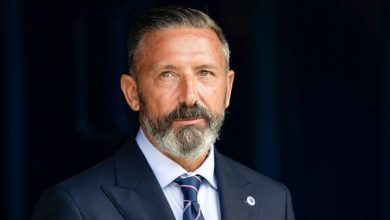
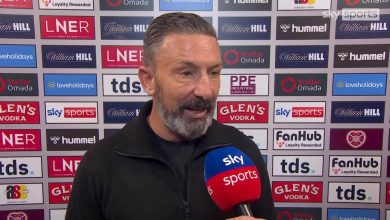
Speaking on Wednesday, McInnes himself offered a candid assessment of where things stand regarding potential further additions, suggesting he would be delighted if he were able to bring in any of the players currently on his radar at Ibrox. That kind of public acknowledgement from a manager, even in fairly guarded terms, is often taken by supporters and journalists alike as confirmation that concrete targets have already been identified and that talks, at various stages, are ongoing behind the scenes. In this instance, it appears wide forwards specifically are the priority, with two names in particular continuing to dominate the speculation surrounding Rangers’ remaining transfer business: PSV Eindhoven’s Couhaib Driouech and Frosinone’s Fares Ghedjemis.
For much of the summer, conventional wisdom among supporters and pundits alike has been that Rangers would likely move for one or the other of these two wide targets, rather than pursuing both simultaneously. That assumption, however, has now been called into question by reporting suggesting the Ibrox club could actually be plotting a double swoop, bringing in both wingers rather than settling for just one. Daily Record journalist Andy Newport was the source of this intriguing suggestion, taking to social media on Wednesday to outline his reasoning for believing Rangers might be targeting both players simultaneously rather than viewing them as alternative options for the same problem.
Newport’s logic centred on a simple but compelling observation: Driouech and Ghedjemis operate on opposite flanks. Driouech, as has been extensively reported, is most comfortable on the left side of attack, cutting inside onto his stronger right foot or driving to the byline to deliver crosses, while Ghedjemis has built his reputation as a wide threat on the opposite side of the pitch. Newport suggested that the fact the two players occupy different wings hints strongly at Rangers wanting to sign both rather than simply choosing between them as competing options for the same role, though he was careful to caveat his own theory, acknowledging he could ultimately be proven wrong once developments become clearer.
Should Newport’s instinct prove correct, it would represent a genuinely bold statement of intent from the Ibrox hierarchy, and a substantial financial outlay even by the standards of what has already been an extremely active summer transfer window. Reports suggest that signing both wingers could end up costing Rangers well over £10million combined, underlining the scale of ambition being discussed behind the scenes at Ibrox as the club looks to fully address the concerns raised by that underwhelming attacking display against Dundee United on the opening weekend of the season.
There is little doubt that the prospect of landing this particular attacking duo would generate genuine excitement among the Rangers support, and it is not difficult to understand why. The performance against Dundee United exposed a clear and fairly obvious lack of quality and penetration in the final third, a problem that has proven stubbornly difficult to solve throughout much of the previous campaign despite considerable investment in other areas of the squad. Rather than allowing that issue to fester, McInnes and the Ibrox board appear determined to address it head-on and without delay, with the pursuit of both Driouech and Ghedjemis representing exactly the kind of decisive action supporters have been calling for.
Turning to the specifics of what such a deal might actually cost the Ibrox club, Driouech would represent the cheaper of the two targets, though even his transfer would still require a substantial outlay in the region of £6million. That figure aligns closely with PSV’s own valuation of the player, a valuation that Rangers appear increasingly likely to meet given the momentum building behind this particular pursuit in recent days. The Dutch champions signed Driouech for a fraction of that fee back in 2024, meaning a sale at anywhere close to £6million would represent excellent business for PSV, doubling or even tripling their original outlay inside the space of two years, while simultaneously freeing up space in a congested squad that has left the winger short of regular starting opportunities.
Ghedjemis, by contrast, would represent a notably more expensive proposition. Italian club Frosinone are understood to be holding out for a fee in excess of £8million for the wide player, a valuation that reflects both his individual quality and Frosinone’s own negotiating position as a selling club under no particular pressure to accept a lower offer. Combined, should Rangers move to sign both Driouech and Ghedjemis, the total outlay for the pair could climb as high as £14million or beyond once any add-ons, bonuses or sell-on clauses are factored into the respective deals. That would represent an extraordinary level of investment in wide attacking areas alone, even set against the backdrop of what has already been a summer characterised by significant spending across virtually every department of the Ibrox squad.
Considered in isolation, a £14million outlay on two wingers would already represent a considerable statement of financial commitment from the Rangers board. Considered in the context of the club’s overall summer spending, however, the scale of the ambition becomes even more striking. Should both deals be completed, Rangers’ total summer expenditure would climb beyond the £30million mark, and crucially, that figure would be reached with time still remaining before the transfer window officially closes, leaving open the possibility of further additions elsewhere in the squad should the club identify any remaining gaps once the Driouech and Ghedjemis situations are resolved one way or the other.
That level of spending would mark a significant departure from the more cautious, incremental approach to transfer business that Rangers have often been associated with in recent years, particularly during periods when Scottish football’s financial realities, shaped heavily by broadcasting revenue disparities with the English Premier League and the wider financial gulf between Scottish clubs and their counterparts across major European leagues, have generally encouraged prudence over ambition in the transfer market. The willingness to potentially spend upwards of £30million in a single window, spread across nine or more individual signings, suggests either a significant shift in the club’s financial position, a clear strategic decision from ownership to back McInnes fully in his first full summer in charge, or quite possibly a combination of both factors working in tandem.
It is also worth considering exactly what Rangers stand to gain, from a footballing perspective, should both deals actually be completed. Driouech, as has been extensively documented in reporting throughout the summer, offers genuine pace, directness and an eye for goal, with his Champions League exploits for PSV last season, including goals against continental heavyweights, providing tangible evidence of his ability to perform on the biggest occasions against elite opposition. Ghedjemis, operating from the opposite flank, would offer Rangers a different kind of attacking threat, and his consistent linkage with Rangers throughout the summer, alongside reported interest from cross-city rivals Celtic, underlines the regard in which he is held across Scottish football’s recruitment circles.
Bringing both players in simultaneously would hand McInnes a level of attacking symmetry and balance that Rangers have arguably lacked for some time. Rather than being over-reliant on a single wide outlet, or forced into using players out of position simply to fill gaps on both flanks, the Ibrox boss would have genuine, high-quality specialist options on both sides of the pitch, each capable of stretching defences, creating chances and contributing directly to the goal tally. Combined with Yokota’s own recent arrival and the broader reshaping of the squad that has taken place throughout the summer, the addition of both Driouech and Ghedjemis would complete what has been an extraordinarily thorough overhaul of the Rangers attacking unit heading into what the club will hope is a considerably more successful campaign than the trophyless season that preceded it.
Of course, speculation of this nature always carries an important caveat: transfer rumours linking a club with several targets simultaneously do not always translate into completed deals for all parties involved, and it remains entirely possible that Rangers ultimately move for just one of the two wingers currently on their radar, rather than completing a genuine double swoop. Newport himself was careful to hedge his own prediction, acknowledging the possibility that his reading of the situation, however logical it may appear given the two players’ contrasting wing preferences, could yet prove wide of the mark once the dust settles on this particular saga. Transfer negotiations, particularly ones involving multiple clubs across different countries and differing valuations, can change direction quickly, and Rangers’ focus could just as easily narrow to a single primary target should negotiations for one player progress considerably faster than the other.
Nevertheless, the mere suggestion that Rangers could be plotting a double swoop of this magnitude speaks volumes about the ambition driving this summer’s rebuilding project at Ibrox. Even if only one of the two deals ultimately comes to fruition, the scale of investment being discussed, and the clear identification of specific individual targets by name rather than vague positional needs, underlines just how methodically and purposefully the Rangers recruitment operation has approached this transfer window. For a club that endured a difficult, trophyless campaign last season, the willingness to back the new manager with this level of financial commitment represents a clear signal of intent, both to the Ibrox support and to rivals across the Scottish Premiership, that Rangers intend to compete on every front once the season moves into full swing.
There is also a broader financial dimension to consider here, one that speaks to how Rangers have approached transfer business more generally under the current regime. Scottish football clubs, Rangers included, have long operated under tighter financial constraints than their counterparts in England’s Premier League or the major continental leagues, largely as a consequence of the significant gulf in broadcasting revenue and commercial income between Scottish football and the wealthiest divisions elsewhere in Europe. That reality has traditionally forced Scottish clubs, even ones as historically significant as Rangers, to be considerably more selective and calculated in their transfer dealings, prioritising value and potential resale profit over simply outspending domestic rivals or matching the kind of fees regularly seen further south.
Against that backdrop, a summer outlay approaching or exceeding £30million represents a genuinely significant commitment from the Ibrox hierarchy, and one that suggests real confidence in McInnes’s ability to translate that investment into on-field success. It is worth remembering that this spending has not been concentrated in a single marquee deal, but rather spread across nine or more individual signings addressing multiple different positions and identified weaknesses within the squad. That approach, building depth and quality across various departments rather than gambling everything on one or two headline arrivals, tends to be viewed by football finance analysts as a more sustainable and lower-risk strategy, even if it inevitably means the overall spending figure climbs considerably higher by the time the transfer window finally closes.
It is also worth reflecting on the individual circumstances driving both Driouech and Ghedjemis towards a potential move to Ibrox this summer. For Driouech, the situation at PSV has become increasingly difficult to ignore, with younger competition emerging in the squad and regular starting opportunities becoming harder to come by despite his clear quality and productivity whenever called upon. A move to Rangers would offer him precisely the kind of regular first-team football that has proven elusive in Eindhoven over the past year, along with a genuine platform to continue building on the eye-catching form he showed in last season’s Champions League campaign. For Ghedjemis, meanwhile, a move away from Frosinone would represent a fresh challenge in a different footballing culture entirely, with Scottish football’s greater physicality and intensity offering a very different test to the technical, possession-based approach more commonly associated with Serie B and the lower reaches of Italian football.
Should both deals be completed, the financial commitment involved would also carry with it a certain level of expectation and pressure, both on the players themselves and on McInnes as the manager tasked with integrating them successfully into his system. Big-money signings, particularly multiple arrivals in the same specific area of the pitch within the same transfer window, tend to attract heightened scrutiny from supporters and media alike, with every early performance dissected far more closely than might otherwise be the case for a more modestly priced addition. Both Driouech and Ghedjemis, should their respective moves go through, would arrive at Ibrox with a genuine weight of expectation attached, but based on their underlying output and performances at their current clubs, there is a reasonable case to be made that both possess the requisite quality to handle that pressure and deliver a positive return on what would represent a substantial financial outlay for the Ibrox club.
Returning briefly to the catalyst for all of this renewed urgency in the transfer market, the draw against Dundee United on the opening weekend of the season has clearly had a galvanising effect behind the scenes at Ibrox, even if the immediate on-field consequence was merely a share of the spoils rather than anything more damaging in terms of points dropped. Opening-day results are rarely definitive indicators of how an entire campaign will unfold, but they do have a habit of crystallising concerns that may have been simmering beneath the surface throughout pre-season, and it appears that is precisely what has happened here. The lack of cutting edge and attacking penetration on display against Dundee United appears to have accelerated decision-making processes that may otherwise have played out more gradually over the remaining weeks of the transfer window, with the club evidently unwilling to enter a run of fixtures without first addressing the issue head-on.
That sense of urgency should, in theory, work in Rangers’ favour as they look to conclude business for both Driouech and Ghedjemis before the window shuts. Selling clubs are often well aware when a buyer is operating under genuine time pressure, and PSV and Frosinone will both be conscious that Rangers cannot afford to let negotiations drag on indefinitely without risking missing out on their preferred targets altogether, given the finite nature of the transfer window and the possibility of alternative suitors emerging for either player at short notice. Whether that pressure translates into faster, more favourable negotiations for the Ibrox club, or simply into inflated asking prices from selling clubs aware of Rangers’ evident desperation to conclude business quickly, remains to be seen, but it is certainly a dynamic worth monitoring as both sagas continue to develop in the coming days.
For now, all eyes will remain fixed on developments in both the Driouech and Ghedjemis sagas as the transfer window edges closer to its conclusion. With PSV’s valuation of Driouech reportedly close to being met and Frosinone holding firm on their own demands for Ghedjemis, the coming days and weeks promise to bring plenty of further twists in what has already been one of the most eventful transfer windows in recent Ibrox history. Whether Rangers ultimately land both targets, just one of them, or neither, the sheer scale of the reported spending involved confirms that McInnes’s rebuilding project shows no signs of slowing down, with the manager clearly determined to leave no stone unturned in his efforts to correct the attacking shortcomings so visible during that opening-day stalemate against Dundee United