I Played for Rangers and I’m Baffled by Strange Situation With Current Star”: Inside the Alex Rae-Nico Raskin Storyline


Football clubs make hundreds of small operational decisions across a single season that never attract public scrutiny — team selections, squad-numbering, travel arrangements — but every so often, one of those decisions becomes a genuine talking point, dissected by pundits and former players precisely because of what it reveals about a club’s underlying priorities at a critical moment. Rangers’ decision to leave Nicolas Raskin behind in Glasgow rather than travel with the squad for last week’s Conference League play-off second leg against Jablonec has become exactly that kind of story, and former Ibrox midfielder Alex Rae’s public bewilderment at the situation has only added fuel to a debate that was already burning fiercely across Scottish football media.
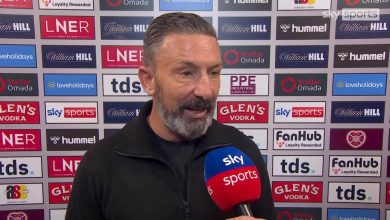
The facts of what actually happened are, on their own, relatively straightforward. Rangers travelled to Czechia for a European tie they led 1-0 from the first leg at Ibrox, needing only a respectable defensive performance to progress into the group stages of the Conference League. Nicolas Raskin, the Belgian midfielder who has spent three and a half years at the club and remains, by most assessments, one of the more talented individual players in Derek McInnes’s squad, did not make the trip. Manager McInnes addressed the decision directly and without evasion in his pre-match media duties, explaining that Raskin’s absence had nothing to do with injury, fitness, or any disciplinary issue, but was instead a direct consequence of ongoing transfer speculation surrounding the player. “Nico hasn’t travelled, nothing to do with injury or anything like that, just the potential of a transfer,” McInnes told reporters. “I just think we’re so late in the window, maybe it’s something the club’s looking at. So, he’s trained this morning but he’s been left back in Glasgow.” He went further still, revealing that the possibility of Raskin moving on had been apparent to him even before he’d properly settled into the Rangers job: “When I came into the job, it was quite clear that there was maybe going to be an opportunity for Nico elsewhere.”
That’s a remarkably candid admission from a manager, and it’s precisely the kind of honesty that has fuelled much of the subsequent debate. McInnes wasn’t hiding behind vague talk of squad rotation or tactical planning; he was openly confirming that a genuinely important player, contracted to the club and available for selection, had been withheld from a pivotal European fixture specifically because of the possibility — not the certainty, but the possibility — of a transfer that hadn’t yet been finalised, and, as of days later, still hadn’t produced a single confirmed offer.
It’s within that context that Alex Rae’s comments need to be understood. Rae, who played for Rangers during a spell that saw him make well over a hundred appearances for the club, brings a former player’s perspective to a decision that, from the outside, looks like it prioritised protecting a hypothetical future asset over fielding the strongest possible eleven in a match that genuinely mattered. Rangers went on to lose that tie in agonising fashion — a 4-3 defeat on penalties after the sides finished level following Jablonec’s second-half equaliser cancelled out Rangers’ first-leg advantage — and the club’s subsequent elimination from Europe, its first absence from continental competition beyond August since 2017, has only sharpened scrutiny of every decision that preceded it, Raskin’s exclusion very much included.
Rae’s specific framing — describing the situation as “strange” — captures something that resonates with a broader unease among Rangers supporters and observers about how the club has handled Raskin’s situation more generally throughout this transfer window. It isn’t simply that Raskin was left out of one match; it’s the underlying logic of prioritising the integrity of a potential sale over the footballing needs of a specific, high-stakes fixture, at a club that had already, by that point in the season, shown signs of genuine defensive and structural fragility that a player of Raskin’s ability might plausibly have helped address.
To fully appreciate why this situation has generated the reaction it has, it’s worth tracing how Raskin’s transfer saga has actually unfolded across the summer, because the “strangeness” Rae identifies isn’t really about a single decision in isolation — it’s about a pattern of behaviour that’s been building for weeks. Reporting from Football Insider, citing former Manchester United chief scout Mick Brown, indicates that Rangers have effectively been resigned to losing Raskin since the conclusion of the World Cup earlier in the year, where his performances for the Belgian national team attracted significant attention from clubs across the continent. Brown’s assessment was unambiguous: Raskin’s departure is “inevitable” and will come as no surprise whatsoever to McInnes or the wider Ibrox decision-making structure. In fact, Brown suggested the genuine surprise was that Raskin remained a Rangers player at all by this point in the window, given initial expectations within the game that he would have completed a move considerably earlier in the summer.
That context reframes the Jablonec omission somewhat. Rather than reading as a sudden, reactive decision made in response to a specific, imminent bid, it looks more like the natural culmination of a slow-building situation that Rangers’ hierarchy had been managing, and to some extent bracing for, since as early as June or July. Brown told Football Insider explicitly, in comments dated from around a week before the Jablonec tie, that Raskin’s exit was likely to arrive closer to the transfer deadline itself, with plans reportedly already in place behind the scenes to accept a significant offer whenever it eventually materialised. “Rangers have been expecting Nicolas Raskin to leave this summer,” Brown said. “It’s not going to be a surprise to them, so they’re prepared to lose him, and they will have plans in place behind the scenes for if and when it happens. At any top club, you always have to have succession plans.”
That framing — a club with genuine succession planning already in motion — offers one lens through which to view Raskin’s Jablonec absence: not as an impulsive, poorly considered call, but as a deliberate, calculated piece of asset protection by a club that had, by that stage, essentially accepted his departure was coming and simply wanted to avoid any scenario in which an injury sustained in a low-stakes-for-him, high-stakes-for-the-club European away tie might jeopardise a transfer fee that, by various reports throughout the summer, has been estimated anywhere from roughly £10 million to considerably higher figures depending on the specific interested party and point in the window. Given that Raskin was reportedly attracting interest from clubs across England, Italy and Spain throughout the summer, with Fenerbahce and Besiktas among the more recent and specific names linked, and given his contract still had two years to run — removing any pressing need for Rangers to sell at a discount — the logic of protecting that asset value, even at some cost to a single match’s squad depth, isn’t entirely without footballing and financial rationale.
But that’s precisely where the “strangeness” Rae has identified comes into sharper focus, because rationality on a spreadsheet doesn’t always translate into rationality on the pitch, particularly in a match with the stakes Rangers were facing against Jablonec. This wasn’t a routine midweek league fixture where resting a valuable, potentially departing player carries minimal downside risk. This was a European play-off second leg, with Rangers holding only a slender one-goal aggregate advantage, against unfamiliar opposition on unfamiliar territory, in a tie that would determine whether the club retained any European football at all for the remainder of the season. Choosing to withhold one of the squad’s more technically gifted midfielders from precisely that kind of high-pressure, high-stakes occasion — rather than, say, a more comfortably winnable domestic fixture where the consequences of his absence would have been considerably lower — is where the decision starts to look less like straightforward, defensible asset protection and more like a genuine misjudgement of priorities, however understandable the underlying commercial logic might be in isolation.
There’s also a broader question raised by Rae’s comments about what this episode says about Rangers’ overall approach to squad management during a genuinely chaotic transfer window. This is, after all, a club that has made twelve new signings across the summer, reshaping its entire squad structure under a new manager who only arrived from Hearts a matter of weeks before the Jablonec tie took place. Managing that scale of turnover — bringing in new faces while simultaneously navigating the departures of established, valuable players like Raskin — was always going to require careful, considered decision-making about exactly when and how to prioritise squad cohesion against individual player circumstances. The Jablonec decision suggests, at least in Rae’s reading and in the broader media reaction it’s generated, that Rangers may not have gotten that balance entirely right in this specific instance, even if the underlying commercial reasoning behind protecting Raskin from unnecessary risk carries its own internal logic.
It’s also worth situating this specific controversy within the wider context of Rangers’ turbulent opening weeks of the season more broadly, because the Raskin situation hasn’t existed in isolation — it’s landed amid a period of genuinely intense scrutiny on virtually every decision McInnes and his coaching staff have made. The club had already endured a difficult start to the domestic league campaign, drawing with Dundee United and losing to Hibernian in their opening two fixtures, before the Jablonec defeat compounded matters by eliminating Rangers from Europe entirely. McInnes himself described the Jablonec result as leaving him “mortified,” taking personal responsibility for a performance widely criticised by former players including Andy Halliday, who placed the defeat alongside some of the club’s most notorious European humiliations. In that context, any decision that could plausibly be connected to the eventual defeat — and the absence of a key midfielder from the squad entirely certainly qualifies — was always going to attract heightened scrutiny, with hindsight sharpening criticism that might otherwise have passed with considerably less comment had Rangers gone on to win the tie comfortably regardless.
That’s an important nuance worth acknowledging honestly: had Rangers progressed past Jablonec without Raskin and gone on to secure Conference League group-stage football, it’s entirely possible his absence from the squad would have generated barely a passing mention, treated as a sensible, low-risk piece of asset management by a club managing a delicate late-window transfer situation responsibly. It’s precisely because Rangers lost, and lost in such agonising, penalty-shootout fashion, that the decision has taken on the retrospective significance it now carries — the kind of “what if” scenario that inevitably follows any marginal defeat where a specific absent player might plausibly have made a difference. Rae’s framing of the situation as “strange” captures exactly that dynamic: not necessarily a claim that the decision was indefensible in a vacuum, but a genuine sense of bewilderment that a club would prioritise transfer-market considerations over its strongest available lineup in a match carrying such significant sporting consequences.
There’s also a question of communication and transparency worth considering, and here McInnes deserves some credit even amid the broader criticism, because his handling of the situation publicly was notably direct rather than evasive. Plenty of managers, faced with a similarly awkward situation — a key player withheld from a crucial match for reasons connected to a potential future transfer — might have reached for vaguer, more deflective language: minor knock, squad rotation, tactical decision. McInnes instead simply told the truth, plainly and without obfuscation, acknowledging exactly why Raskin hadn’t travelled and even conceding that the possibility of his departure had been apparent from the very earliest days of his own Rangers tenure. That kind of honesty, whatever criticism it invites over the underlying decision itself, at least spares Rangers the additional, compounding controversy that so often follows attempts to obscure or spin a genuinely awkward situation — supporters and media, whatever their views on the decision’s merits, at minimum know exactly what happened and why, rather than being left to speculate or piece together contradictory explanations after the fact.
What happens next in the Raskin saga remains genuinely uncertain, and that uncertainty is itself part of what makes Rae’s “strange situation” framing feel so apt. As of Rangers’ subsequent Premiership win over Aberdeen — a much-needed result that arrived just three days after the Jablonec exit and eased considerable pressure on McInnes personally — the manager confirmed there had still been no formal offer submitted for Raskin, despite the weeks of reported interest from clubs across multiple countries. That’s a notable detail in its own right: Rangers made the decision to withhold Raskin from a crucial European tie based on the “potential” of a transfer that, days later, still hadn’t produced a single concrete bid. If that pattern continues, and Raskin remains unsold as the Scottish transfer deadline approaches — a deadline that, notably, falls later than the corresponding cut-off points in England and much of continental Europe, giving Rangers some additional breathing room relative to other leagues — the club could find itself in the uncomfortable position of having sacrificed squad strength for a specific, high-stakes fixture in service of a transfer that, in the end, never materialised at all.
That scenario would only deepen the sense of “strangeness” Rae has identified, transforming what Rangers’ hierarchy likely intended as prudent, forward-thinking asset management into something closer to a genuine tactical own-goal: weakening the side for arguably the most consequential match of the season so far, in pursuit of protecting a sale that, absent a concrete offer even now, remains entirely theoretical. Conversely, should a substantial bid arrive in the coming days and Raskin depart for a fee that genuinely reflects his value — with reported interest from Fenerbahce, Besiktas, and clubs across England, Italy and Spain all still, in theory, live possibilities — Rangers’ decision-makers would likely feel retrospectively vindicated, able to point to a smoothly executed, financially sound piece of business that simply happened to coincide, unfortunately, with a disappointing European result that had other, more significant underlying causes entirely unconnected to one absent midfielder.
For now, though, the situation sits in an uncomfortable middle ground: a player withheld from a crucial match based on transfer speculation that, days later, remains unresolved and unconfirmed, a manager who’s been admirably candid about the reasoning behind a genuinely contentious call, and a former player in Alex Rae voicing exactly the kind of bewilderment that many supporters have quietly shared since the decision was first revealed. Whether this becomes, in retrospect, a minor, quickly forgotten footnote in Rangers’ turbulent opening months of the season, or a more enduring symbol of a club whose decision-making during a genuinely chaotic summer transfer window didn’t always align neatly with its footballing needs on the pitch, will likely depend entirely on how the remaining days of the transfer window play out — and, more specifically, on whether Nicolas Raskin’s Rangers career actually does come to the swift, decisive conclusion that so much of the surrounding speculation has, for weeks now, been confidently predicting.