Rangers are entering the final, frantic stretch of the transfer window facing one of the more complicated squad-management puzzles of Derek McInnes’s short tenure so far — not a simple question of who to bring in, but an increasingly urgent set of decisions about who might be heading out the door, even as those same players continue to deliver on the pitch. At the centre of it all sits Djeidi Gassama, a winger who was instrumental in Sunday’s win over Aberdeen and yet, by the same afternoon, found himself the subject of a fresh, formal transfer offer from a former Rangers manager now plying his trade in Austria.
The most striking development in Rangers’ deadline saga concerns Danny Rohl, the German coach who managed the club for eight months last season before departing in the summer for a return to Red Bull Salzburg. According to French journalist Santi Aouna, reporting for Foot Mercato, Salzburg have now sent a formal offer to Rangers for Gassama — a development that carries obvious symbolic weight given Rohl’s own recent history at Ibrox and his public comments, since his departure, about feeling genuinely settled and building something at his new Austrian club.
There’s a certain poetry to Rohl targeting a player he would have worked with directly during his own time in charge of Rangers. Gassama started for Rangers under Rohl during the previous campaign, and the two would have crossed paths regularly on the training ground before Rohl’s own exit to Salzburg over the summer. That familiarity may well be a significant factor in Salzburg’s interest — a manager returning for a player whose qualities he already knows intimately, rather than relying purely on scouting reports or secondhand recommendations, always carries a particular kind of conviction in the transfer market.
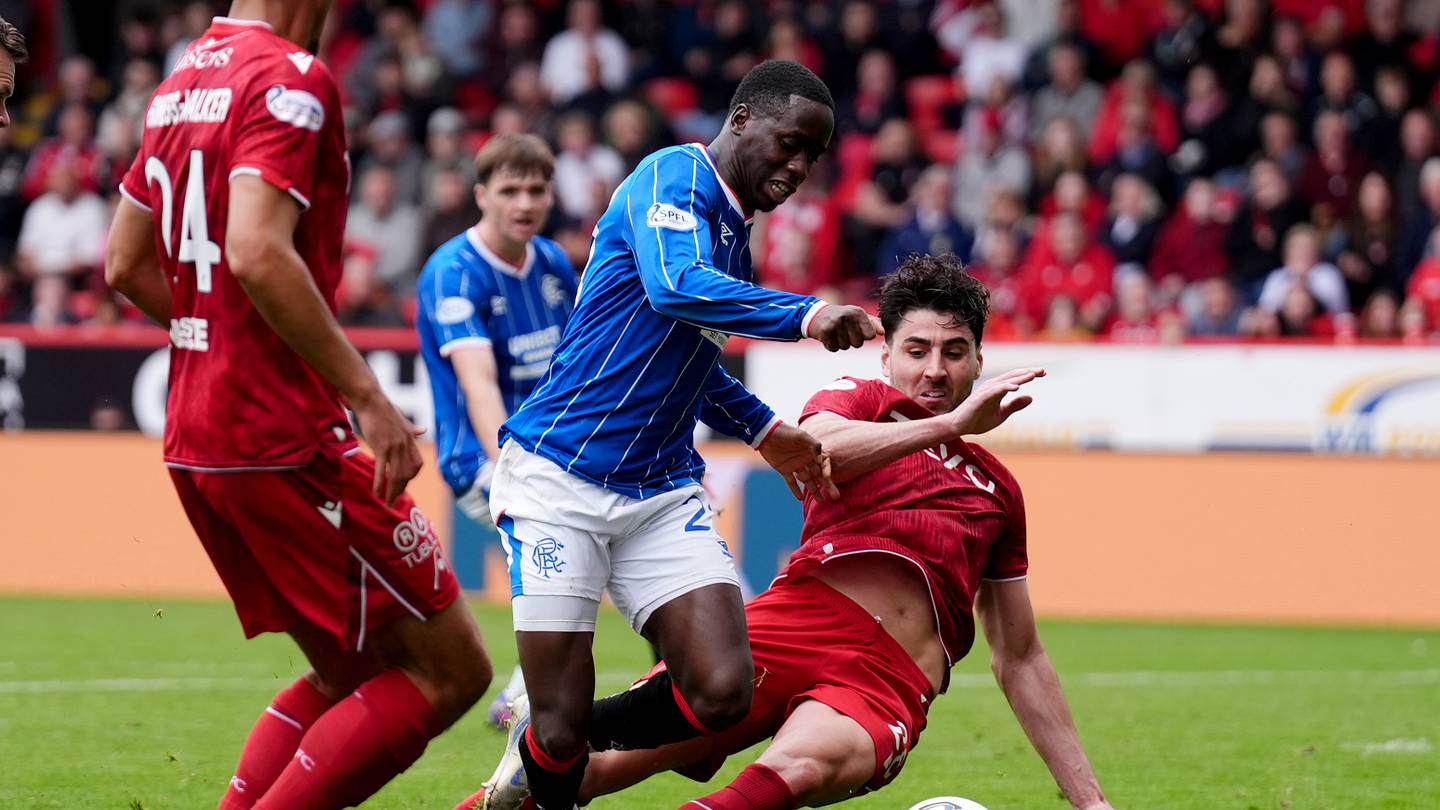
The timing of the offer is also worth noting. It arrived on the same day, according to reporting, that Gassama started against Aberdeen and played a direct role in the only goal of the match — involved in the buildup that saw Rangers awarded the penalty Lawrence Shankland would go on to convert. That juxtaposition, a player delivering for his current club on the pitch even as an offer for his signature lands on his club’s desk, is one of the more familiar rhythms of deadline-week transfer sagas, and it puts genuine pressure on Rangers to make a swift, considered decision rather than simply drifting toward a default outcome.
Details of exactly what Salzburg have offered haven’t yet emerged publicly, but the broader context of Rangers’ valuation gives some sense of the scale involved. Reports consistently place Rangers’ asking price for Gassama at around £8.5 million, a figure the club is said to want if they’re to sanction his departure at all. Given that Gassama only signed for Rangers in a deal worth a reported £2.5 million from Sheffield Wednesday — a transfer completed amid Wednesday’s well-documented financial troubles under owner Dejphon Chansiri, who was attempting to sell the club at the time — an £8.5 million departure would represent a considerable profit on the original investment, the kind of value uplift that makes a sale considerably more palatable for a club’s hierarchy even when a player remains popular with supporters and useful to the manager.
Gassama’s situation didn’t emerge suddenly this week — it’s the culmination of a story that’s been building, in fits and starts, for the better part of a year. Interest first crystallized publicly back in January, when Monaco submitted an offer reported to be worth around £10 million, a bid that Rangers, then still under Rohl’s management, opted to reject. At the time, reporting suggested Rohl was “unwilling to lose any first-team players” mid-season, prioritizing squad stability during a Rangers campaign that would ultimately end in a third-place finish and missed Champions League qualification — outcomes that themselves shifted the calculus around several players’ futures, Gassama’s included.
Once that disappointing end to the season became clear, reporting from Football Insider suggested Rangers’ resolve to keep hold of Gassama would likely soften considerably heading into the summer, with sources describing him as “growing increasingly likely to leave” once Champions League qualification had definitively been missed. Former Manchester United chief scout Mick Brown offered a blunt assessment of the situation at the time, telling Football Insider that clubs across Europe keep a close eye on Scottish football, and that if a player like Gassama has impressed enough to attract genuine interest, “now might be the time” for him to make the step up. Brown’s framing — a “nightmare season” for Rangers making the club more susceptible to accepting offers it might otherwise have rejected — set the tone for how Gassama’s situation would be covered throughout the following months.
That pattern continued into the summer proper. Monza and Parma both tabled £6 million bids in recent weeks, both of which fell short of Rangers’ valuation and were turned down. Monaco, despite their initial rejection back in January, have reportedly not given up on their pursuit either, with Foot Mercato indicating the French club could step up their efforts before the window closes given their prior, sustained interest in the Paris Saint-Germain academy graduate and 2022 Ligue 1 champion.
What emerges from the range of reporting on Gassama’s situation is a club occupying a genuinely nuanced middle ground — neither actively pushing him toward the exit nor entirely closed off to the idea of a sale, but willing to listen if the price is right. Multiple reports describe Rangers as being “open to the idea of parting ways” with Gassama, while simultaneously preferring, in an ideal world, to keep him at Ibrox for the upcoming season. That’s a stance shaped significantly by timing and circumstance: Rangers are not desperate sellers driven by financial necessity in the way a genuinely cash-strapped club might be, but they’re also not so wedded to Gassama’s presence that they’d reject a fee at or above their stated valuation purely on sentimental or tactical grounds.
Derek McInnes’s own view of Gassama as a player appears to be genuinely positive — his inclusion in the starting XI against Aberdeen, in a match carrying enormous significance for McInnes’s own managerial position, speaks to that trust. But football club decision-making, particularly under an ownership model as commercially and financially disciplined as Rangers’ current 49ers Enterprises structure, rarely allows individual managerial preference to override a genuinely lucrative sale opportunity, especially for a player whose contract situation — running until 2029 — gives Rangers considerable negotiating leverage and no pressing need to sell at anything below their stated valuation.
There’s also a specific tactical logic underpinning Rangers’ relative openness to a Gassama sale: the arrival of Kim Min-su. Football Insider’s Transfer Insider podcast has specifically flagged Min-su’s signing from Girona as a potential “catalyst” enabling Gassama’s departure — the logic being that Rangers, having already reinforced their wide attacking areas with a significant, £8.5 million investment in Min-su, may feel less exposed to losing Gassama than they would have done earlier in the window, before that reinforcement had arrived. Min-su’s own promising full debut against Aberdeen, in which he was widely regarded as Rangers’ standout attacking performer, will only have reinforced that sense of adequate cover in the position.
Should Gassama depart, reporting consistently points toward one specific replacement target: Amario Cozier-Duberry of Brighton. Rangers have already seen an initial offer for the young English winger rejected by the Premier League club, but a Gassama sale would likely see that pursuit intensify considerably, with Cozier-Duberry described as attracting interest from “a host of clubs” in England’s second tier as well, suggesting Rangers would face genuine competition to complete any such deal even with fresh funds from a Gassama sale in hand.
While Gassama’s situation has moved with real urgency in the past 24 hours, the Nico Raskin saga continues to simmer without resolution — a story that’s arguably been the defining subplot of Rangers’ entire summer transfer window. As McInnes confirmed in his post-match comments following the Aberdeen win, there remains, as of now, no formal offer on the table for the Belgian midfielder, despite reported interest from clubs across England, Italy and Spain throughout the window, and more recent, specific links to Turkish sides Besiktas and Fenerbahce.
Rangers’ stance on Raskin has been consistent throughout the summer: a willingness to sell, but only at their own valuation, which has fluctuated across various reports but has generally sat somewhere in a broad £10-20 million range depending on the source and the point in the window at which the figure was reported. With Raskin still contracted for a further two years, Rangers retain genuine structural leverage — there’s no pressing contractual urgency forcing a sale, and the club has already demonstrated a willingness to reject bids from three separate countries that fell short of their expectations.
What makes the Raskin situation particularly interesting in the context of deadline week is the sheer volume of circling interest without any single party yet stepping forward with a concrete, acceptable offer. That pattern — widespread, genuine interest that hasn’t yet translated into action — is often exactly the dynamic that produces late, dramatic deadline-day movement, as clubs weigh up their other targets, assess their own budgets in the window’s final hours, and sometimes move suddenly once a alternative target falls through elsewhere in Europe. Whether that dynamic plays out in Raskin’s favour, or whether he ultimately remains at Ibrox into the new season by default rather than design, remains genuinely uncertain with the deadline fast approaching.
Beyond the two headline situations, Rangers’ extraordinary summer recruitment drive — twelve new signings and counting, an almost unprecedented scale of turnover for a single transfer window at the club — has inevitably created knock-on pressure on several existing squad members whose path to regular first-team football has been increasingly blocked by new arrivals. Lyall Cameron is perhaps the clearest example of this dynamic. Having fallen down the pecking order amid Rangers’ heavy investment in central midfield reinforcements this summer — Vanja Dragojevic, Cammy Devlin and Dan Neil have all arrived or been established as first-choice options in that area of the pitch — Cameron finds himself squeezed toward the periphery of McInnes’s plans, and has been strongly tipped to depart on a permanent basis before the window closes.
This is a fundamentally different kind of departure story from Gassama’s or Raskin’s — not a case of a thriving, in-demand player attracting suitors despite his club’s preference to keep him, but rather a player whose path back into regular contention has simply narrowed to the point where a move elsewhere, likely to a club offering more regular first-team football, makes sense for all parties. That’s a common and often underappreciated feature of transfer windows involving clubs undergoing wholesale squad rebuilds: for every headline-grabbing arrival or sought-after departure, there are several quieter, more straightforward exits driven simply by a numbers game that no longer favours a given individual.
Mohamed Diomande finds himself in broadly comparable circumstances to Cameron, with reports suggesting he too is unlikely to figure prominently in what Rangers’ coaching staff consider their strongest available starting eleven following the summer’s raft of new arrivals. As with Cameron, a sale in Diomande’s case looks like a logical outcome driven by squad management necessity as much as any specific external interest or pressing need to balance the club’s books after a summer of heavy spending elsewhere — freeing up wages, clearing space in an increasingly crowded midfield and wide-area roster, and giving a player who may otherwise face a season of limited game time the chance to find regular football at a different club.
One structural factor worth understanding in the context of all four situations is the specific timing quirk that governs Scottish football’s transfer deadline relative to most of the rest of Europe. Scottish clubs operate with somewhat more leeway than many of their continental counterparts, with the domestic deadline typically falling a few days later than the corresponding cut-off in England and several major European leagues. That gives Rangers a genuinely useful buffer: were Gassama to depart in a deal completed close to the English or French deadlines, Rangers would still retain additional days beyond that point to identify, negotiate, and complete a replacement signing — reducing the risk of being left short-handed in a key attacking area purely due to timing mismatches between different leagues’ respective windows.
That buffer cuts both ways, though. Rangers’ own remaining incoming transfer targets — the pursuit of Cozier-Duberry chief among them — could equally be complicated by other clubs’ deadlines having already passed elsewhere in Europe, with player availability, agent priorities, and selling clubs’ own end-of-window urgency all shifting once the major continental deadlines have come and gone, potentially leaving Rangers negotiating from a position of reduced leverage in the closing days of their own, slightly extended window.
What ties all four of these situations together — Gassama, Raskin, Cameron, and Diomande — is the broader story of a Rangers squad in the midst of genuinely wholesale transformation under new ownership and a new manager, spending unprecedented sums on incoming reinforcement while simultaneously fielding serious, sometimes lucrative interest in several of the very players who’ve been part of delivering results on the pitch. Gassama’s direct involvement in Sunday’s winning goal against Aberdeen, arriving on the very same day reports of Salzburg’s formal offer emerged, is perhaps the sharpest illustration imaginable of the tension running through Rangers’ current recruitment approach: a club trying to simultaneously build for the future and cash in on present value, often involving the exact same individuals.
For Derek McInnes, already navigating one of the more turbulent opening months any Rangers manager has faced in recent memory — European exits, mounting external scrutiny, and a squad still bedding in amid record levels of turnover — the coming 72 hours add yet another layer of complexity to an already demanding managerial brief. Losing Gassama, even for a substantial fee and even with Min-su already integrated as cover, would represent the loss of a player who’s proven himself directly influential in matches that have mattered enormously to Rangers’ season so far. Losing Raskin, whenever that eventually happens, would represent the departure of a genuinely internationally coveted midfielder whose stock has risen considerably following his exposure at the World Cup with Belgium. And the quieter exits of Cameron and Diomande, while less dramatic individually, speak to the sheer scale of the squad overhaul McInnes and Rangers’ recruitment department have undertaken in a remarkably short space of time.
Whether Rangers emerge from this transfer window with a squad genuinely strengthened on balance, or one whose overall quality has simply been reshuffled — significant sales offsetting significant incoming investment rather than adding meaningfully to overall squad depth and quality — is a question that will likely only become fully answerable once the dust has settled on deadline day itself, and McInnes has had the chance to assess exactly which combination of players he’s left working with as Rangers head into the September international break and the business end of an already eventful season.