The scale of the financial sacrifice James Tavernier made in choosing to leave Rangers this summer has now become clear, with reports revealing the long-serving former captain has taken an enormous pay cut in moving to Israeli side Maccabi Tel Aviv. Tavernier, who spent 11 years as one of the most influential and highest-paid figures at Ibrox, is now reportedly earning roughly a third of his previous salary — a striking illustration of just how significant a step this move represented, both financially and in terms of the next chapter of his career.
According to reporting picked up by Yahoo Sports via the Glasgow Times, Tavernier’s wages at Rangers stood at more than £35,000 per week, reflecting his status as the club’s top earner and one of the most important figures in the dressing room for the best part of a decade. At Maccabi Tel Aviv, by contrast, he is reportedly on an £11,500-a-week deal, signed on a one-year contract with an option for a further 12 months attached.
Even accounting for the usual uncertainty around exact figures in transfer and wage reporting, the scale of the drop is difficult to ignore. Moving from north of £35,000 a week down to £11,500 represents a reduction of somewhere in the region of two-thirds — a genuinely substantial pay cut for any professional footballer to accept, let alone one who had spent over a decade establishing himself as a genuine institution at one of Scottish football’s two dominant clubs.
That kind of financial sacrifice doesn’t happen by accident, and it invites a closer look at exactly why Tavernier chose to walk away from Ibrox on these terms, at this particular stage of his career, rather than pursuing other options that may well have offered more lucrative terms elsewhere.
Tavernier’s departure comes at the age of 34, a point in almost any outfield player’s career where the number of realistic contract offers — particularly from clubs operating at the level Rangers compete at — begins to narrow considerably. Historically, Tavernier had resisted a string of opportunities to leave Ibrox during his time there, including reported interest from clubs in Saudi Arabia and Turkey in previous transfer windows, both markets that would typically have offered financial terms considerably more lucrative than what he ultimately agreed to at Maccabi Tel Aviv.
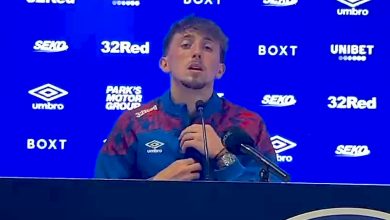
That history makes the specifics of this particular move all the more interesting. Speaking about the transfer, Maccabi Tel Aviv manager Kenny Miller — himself a former Rangers striker with his own history at Ibrox — offered some insight into the thinking behind Tavernier’s decision. Miller explained that the two of them had talked extensively in the lead-up to the move, and that Tavernier’s motivation centred largely around wanting to try something new, given that he had never previously played football outside of the United Kingdom during his long professional career.
That framing suggests this wasn’t purely, or even primarily, a financially driven decision. A player choosing to take a substantial pay cut specifically to experience a different league, culture, and footballing environment for the first time late in his career points toward motivations rooted at least partly in personal fulfilment and a desire for a fresh challenge, rather than simply chasing the biggest available paycheck. Miller also noted that the club had worked hard to get the deal over the line, suggesting a genuine mutual desire on both sides to make the move happen rather than a reluctant fallback option for either
To fully appreciate the significance of Tavernier’s departure, it’s worth reflecting on exactly what he leaves behind at Ibrox. His Rangers career began back in 2015, when he arrived from Wigan Athletic for a relatively modest fee under then-manager Mark Warburton. What followed was one of the most consistent and influential individual spells any player has enjoyed at the club in the modern era.
Tavernier quickly established himself not just as a regular in the Rangers side, but as one of its defining figures — a right-back with an unusual and highly productive attacking output that saw him regularly contend for, and often top, the club’s goalscoring charts from a defensive position, largely thanks to his penalty-taking duties and a reliable delivery from set-pieces and open play alike. Across his time at the club, he made well over 400 appearances, scoring more than 100 goals along the way — extraordinary numbers for any full-back at any level of the professional game, let alone one playing in a title-winning side.
The high point of his Ibrox career came in 2021, when he captained Rangers to a Scottish Premiership title triumph under Steven Gerrard — a genuinely historic achievement that ended a lengthy wait for the club’s supporters and cemented Tavernier’s status as a Rangers legend in the eyes of many. He followed that up by leading the side to a Europa League final appearance under Giovanni van Bronckhorst the following year, further underlining his standing as one of the most important on-field leaders the club had during that period.
Beyond the trophies and individual statistics, Tavernier’s longevity itself tells its own story. Remaining a first-team regular and, for much of his time at the club, the captain, across more than a decade at a club with the kind of pressure, scrutiny, and demand for consistent success that comes with being one of Scottish football’s two giants, speaks to a level of professionalism, fitness management, and sustained quality that few players at any club manage to replicate over such an extended period.
From Rangers’ perspective, Tavernier’s departure — and the significant reduction in his personal earnings that came with it — fits into a broader and increasingly familiar pattern across modern football: clubs looking to move on ageing, high-earning veterans in order to free up valuable space within the wage structure, even when that veteran remains a popular and respected figure among supporters.
As the club’s top earner for a significant stretch of his time at Ibrox, Tavernier’s contract represented a substantial ongoing commitment on Rangers’ books. At 34 years old and with his contract having been due to expire, the calculus facing the club’s hierarchy would have been a familiar one: continuing to carry one of the largest individual salaries in the squad for a player entering the latter stages of his career, weighed against the opportunity to redirect that financial commitment toward reshaping the squad with fresh investment elsewhere.
That dynamic has played out publicly in various ways over recent seasons, with previous reporting suggesting Rangers had explored the idea of offering Tavernier a new contract but only on considerably reduced terms compared to what he had previously been earning — an approach not uncommon across football when clubs look to retain experienced, influential players while managing the financial realities of an ageing squad member whose transfer value and on-field output may be gradually declining relative to his historic peak.
Ultimately, rather than accepting a reduced deal to stay at Ibrox, Tavernier instead chose to take an even more significant pay cut to leave altogether and experience a different league entirely — a decision that, on the surface, might seem counterintuitive from a purely financial perspective, but one that aligns with Miller’s suggestion that the move was driven substantially by a personal desire for a new experience rather than simply chasing the best available financial terms.
For Tavernier, the early signs from his new environment appear broadly positive, at least according to his new manager’s public comments. Miller struck an optimistic tone when discussing his new signing, suggesting supporters and teammates were still in the process of getting to know him but had already warmly accepted him into the fold. He also expressed confidence that Tavernier’s performances would continue to improve as he becomes fully accustomed to the demands of his new surroundings, both physically and in terms of adapting to an unfamiliar league and playing environment.
Miller’s comments came in the context of discussing a recent match in which his side delivered what he described as a genuinely excellent overall team performance, scoring four goals in a game he felt could easily have produced as many as six given the chances created. While that specific result reflects the team’s broader form rather than being a direct commentary on Tavernier’s individual influence, the general context suggests a positive early atmosphere around the club that Tavernier is now settling into.
Adapting to a new football culture at 34, after over a decade spent entirely within the UK footballing system, represents its own significant challenge regardless of a player’s experience level or quality. Different tactical demands, an unfamiliar league structure, new teammates, and simply the broader logistics of relocating to a different country all require an adjustment period that even the most seasoned professionals need time to navigate. Miller’s suggestion that fans will see an even better version of Tavernier once he’s fully up to speed implies the club is taking a patient, long-term view of his integration rather than expecting an instant, seamless transition.
Tavernier’s exit leaves Rangers needing to solve a significant on-field puzzle at right-back, a position he had effectively made his own for the best part of a decade. Replacing that level of consistency, goal output, and leadership from the position is unlikely to be a straightforward task, and it’s a challenge that sits alongside several other significant squad rebuilding priorities facing Derek McInnes this season, including navigating injury absences elsewhere in the squad and continuing to integrate a number of new signings into his first-team plans.
There is, however, a clear financial upside for the club in moving on from their long-time captain. Freeing up more than £35,000 a week in wage commitments provides Rangers with meaningfully greater financial flexibility, whether that’s redirected toward funding further squad investment, easing pressure on the club’s overall wage-to-turnover ratios, or simply providing a more sustainable financial platform as the club continues navigating its various on-pitch priorities under new ownership interest and a new management setup.
That trade-off — losing a legendary, highly consistent servant of the club in exchange for significant wage relief — is one that plenty of supporters will have mixed feelings about, even while broadly understanding the financial logic behind it. Tavernier’s departure closes the book on one of the most successful individual eras in recent Rangers history, and no amount of financial flexibility fully compensates for the loss of that kind of sustained quality, leadership, and reliability from within the dressing room and on the pitch itself.
Tavernier’s situation is far from unique in the modern game. Veteran players moving from clubs in Europe’s leading leagues to markets in the Middle East, the United States, or elsewhere later in their careers has become an increasingly familiar storyline, though it’s worth noting that this particular move runs somewhat against the more common pattern, given the significant pay cut involved rather than the substantial financial upgrade that typically accompanies moves to markets like Saudi Arabia.
That distinction is important. Much of the recent conversation around veteran players moving to less prominent leagues later in their careers has centred on lucrative financial packages, often dramatically exceeding what a player could earn remaining in one of Europe’s leading competitions. Tavernier’s move to Maccabi Tel Aviv doesn’t fit that mould at all — instead representing a case of a player prioritising a genuinely new footballing and life experience over maximising his final major payday, a rarer and, in some ways, more interesting decision within the broader context of how veteran players typically approach the twilight stages of their careers.
It’s also worth noting the specific challenges associated with playing football in Israel at present, given the broader geopolitical context surrounding the region. Any player considering such a move would need to weigh a range of practical and personal considerations well beyond simple footballing or financial factors, adding a further dimension to just how significant a decision this represented for Tavernier and his family.
As the dust settles on Tavernier’s departure, the broader assessment of his time at Rangers is likely to remain overwhelmingly positive among supporters, regardless of the financial specifics of how his exit was eventually structured. Few players in the club’s modern history have combined longevity, consistency, individual goalscoring output, and genuine on-field leadership in quite the way Tavernier did across his 11 years at Ibrox.
The 2021 title win alone secures his place among the most significant figures of that particular Rangers era, ending a period of considerable frustration for the club’s supporters and doing so with Tavernier as captain and one of the side’s most influential performers. The subsequent Europa League final run added a further significant achievement to a résumé that already stood out among his contemporaries at the club.
His departure, and the significant financial sacrifice attached to it, in many ways reflects the natural conclusion of that kind of career arc — a player who gave over a decade of consistent, high-level service to a single club, reaching the natural end of that particular chapter, and choosing to prioritise a new personal and professional experience over simply maximising his remaining earning potential within the sport. Whether his time at Maccabi Tel Aviv ultimately proves to be a short-term adventure before eventual retirement, or the beginning of a longer international chapter to his career, remains to be seen. What’s clear from the reporting around his wages, though, is that this was a decision made for reasons that went well beyond simple financial calculation — a rare and, in its own way, refreshing example of a veteran professional prioritising experience and fresh challenge over the biggest available paycheck at this stage of a long and successful career.
For Rangers, the immediate priority will be continuing to build a settled and effective long-term solution at right-back, a position that has already seen change since Tavernier’s exit as part of the club’s broader summer rebuild under Derek McInnes. How successfully the club manages that transition, both in terms of on-field performance and squad cohesion, will go some way toward determining how smoothly this particular chapter of change is navigated across the season ahead.
For Tavernier himself, the coming months at Maccabi Tel Aviv will offer the clearest indication yet of how well he adapts to life in a new league, working under a manager in Kenny Miller who shares his own connection to Rangers and who has expressed clear confidence in what his new signing can offer once fully settled. Given the scale of the financial sacrifice involved in making this move, there will understandably be considerable interest in seeing whether the on-field rewards and personal fulfilment Tavernier was reportedly seeking in taking this leap ultimately prove worth the considerable reduction in his weekly earnings.
Either way, the revelation of just how significant a pay cut Tavernier accepted to leave Ibrox adds a fascinating final layer to the story of his departure — transforming what might otherwise have been read simply as a routine end-of-career move into a genuinely notable case study in a veteran professional prioritising personal and footballing fulfilment over financial reward, at the close of one of the most successful individual careers in recent Rangers history.